The legend of Noah’s Ark has captivated minds for centuries, straddling the line between faith and history. Recent discoveries on a Turkish mountain have reignited the debate, prompting an international collaboration of researchers eager to uncover the truth behind this ancient tale and the Great Flood.
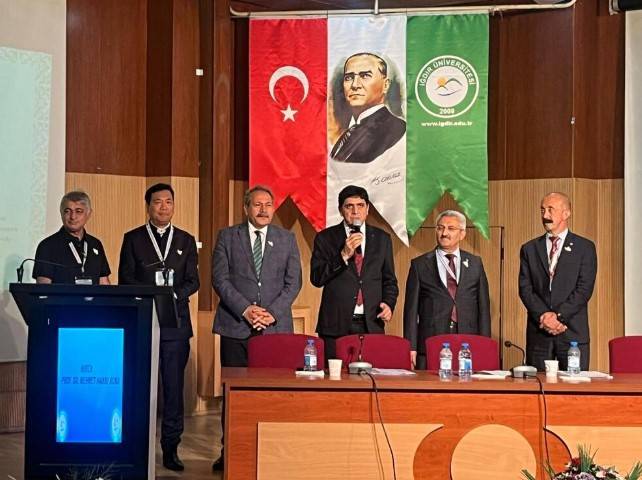
In a groundbreaking move, an international conference was recently held at Igdir University in Turkey, bringing together experts from multiple disciplines to share their findings on Noah’s Ark and its historical context. This two-day event, titled “International Conference On Archaeological-Ethnographic Traces Of The Great Flood In Mount Ararat And Igdir Plain And The Research Of Noah’s Ark Within The Scope Of Cultural Heritage,” was co-hosted by the Noah’s Ark International Scientific Search & Artefacts Conservation Foundation, Igdir University, and the General Directorate of Mineral Research & Exploration.

Over 20 specialists from fields such as archaeology, geology, anthropology, and more gathered to discuss their latest research. Notable contributions came from Mr. Korhan ÇAKIR, the Museum Director of MTA, who presented intriguing findings from the Snow Ridge, including an impressive fossil of a giant rhinoceros. Dr. Irakli Anachabadze from the European University of Tbilisi recounted his expedition experiences, while American archaeologist Ted Wright provided fresh insights into human migration patterns post-Flood.
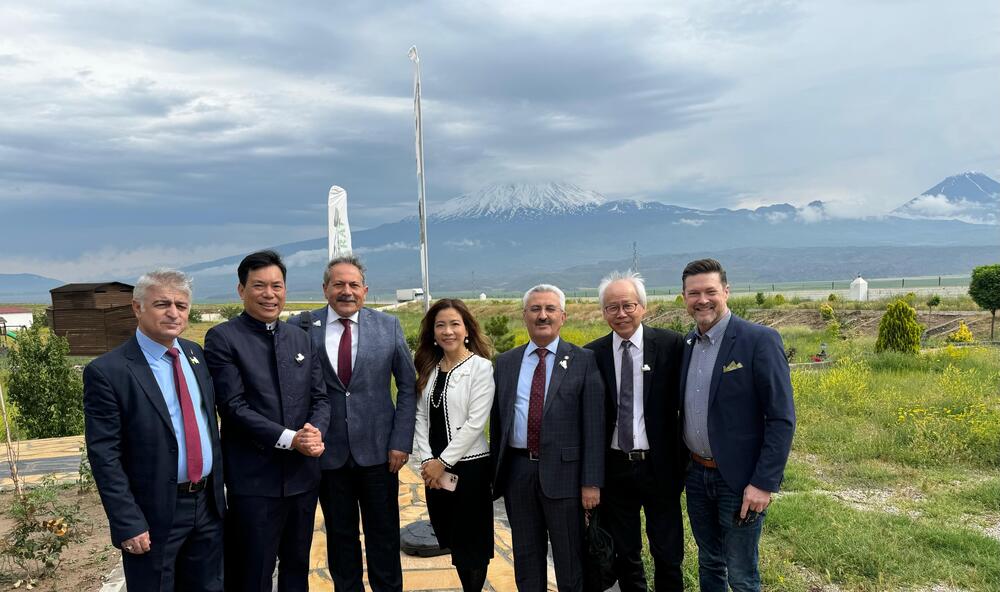
The conference also marked a significant milestone with the announcement of the “Mount Ararat Research Center,” a collaborative effort between the foundation and Igdir University. This center aims to spearhead extensive archaeological and geological projects, with hopes of unveiling the Ark’s true existence. Andrew Yuen, chairman of Noah’s Ark Ministries International, expressed optimism that the center could attract cultural heritage status for Mount Ararat, potentially drawing tourists and scholars alike.

With plans to establish the “Noah’s Ark National Geopark,” the research center is set to delve into ancient history through a collaborative lens. Wing-Cheung Yeung, director of the foundation, highlighted the importance of public engagement and transparency in their research efforts. As they embark on this journey, the collaboration aims to unearth more truths about Noah’s Ark and the Great Flood, while preserving invaluable historical relics.
What new revelations might emerge from this ambitious project, and how will they reshape our understanding of this ancient narrative?