
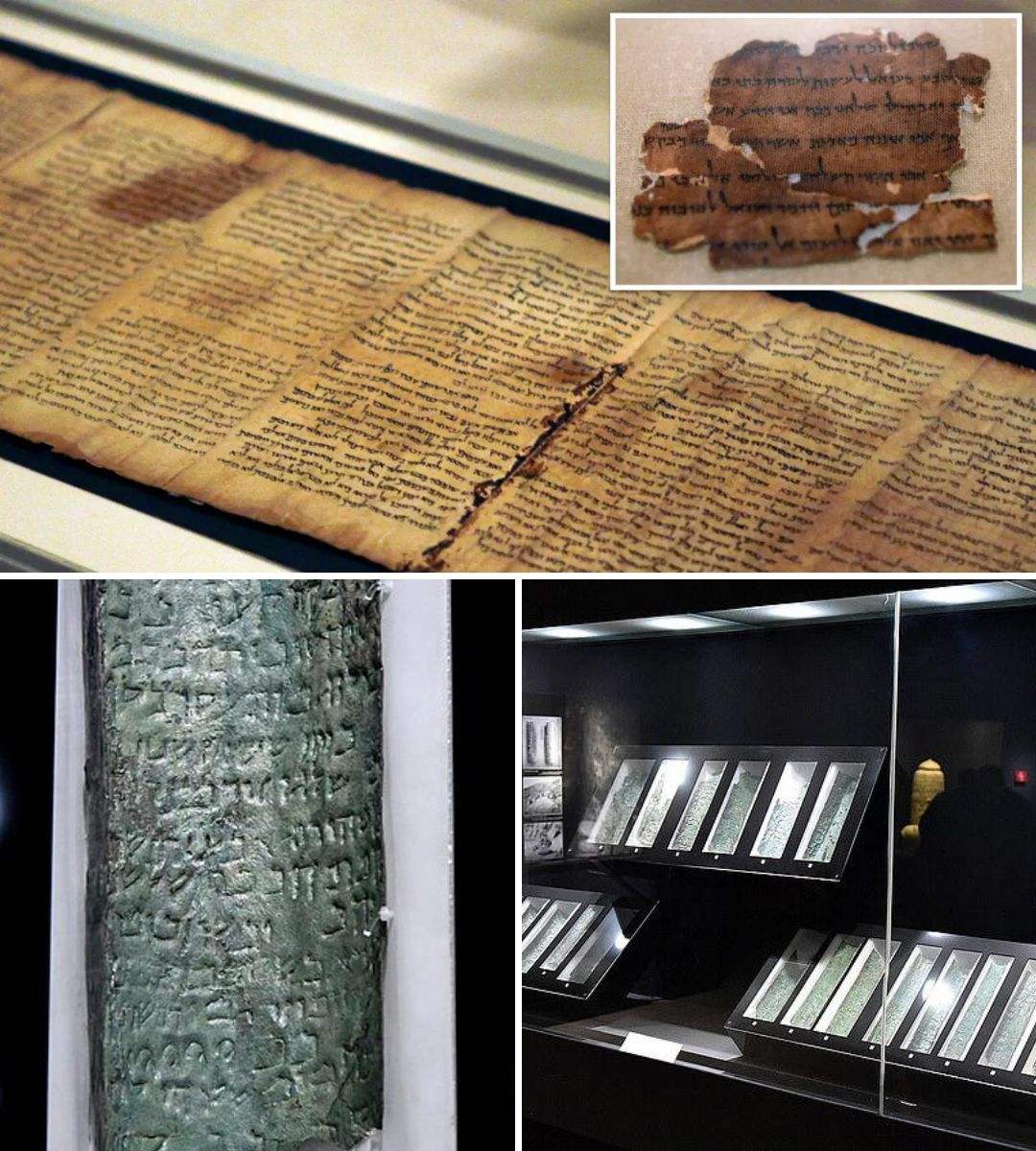
A groundbreaking discovery linked to the enigmatic Dead Sea Scrolls has emerged, igniting fresh theories surrounding one of the most tumultuous times in ancient Jewish history. The Copper Scroll, unlike its parchment counterparts, is a metal artifact that may hold secrets about sacred wealth and the prophetic ‘End of Days.’

Unearthed in 1952 from Cave 3Q near Qumran, the Copper Scroll stands apart from the other scrolls, which primarily contain biblical texts and religious writings. Instead, this peculiar document is engraved on metal sheets, suggesting it was meant to endure the test of time, perhaps even remaining sealed for eternity.
Scholars and archaeologists have long speculated that the scroll details hidden treasures—gold and silver caches supposedly concealed across the ancient Holy Land. Its cryptic entries provide vague clues, referencing tombs, cisterns, and buried containers, yet despite extensive searches, none of these treasures have been located.
Recently, archaeologist Shimon Gibson from the University of North Carolina at Charlotte has proposed a radical new interpretation of the Copper Scroll. He suggests it may not be a mere treasure map but rather a clandestine record linked to the Bar Kochba revolt, a fierce uprising against the Roman Empire that took place between 132 and 136 AD.

Gibson posits that the valuables mentioned in the scroll could represent funds secretly amassed to support this rebellion, which many Jews believed could herald a divine showdown with Rome. His bold theory, published in March, indicates that the scroll might encapsulate evidence of wealth gathered during a time of intense apocalyptic sentiment.
The Copper Scroll’s uniqueness was apparent to researchers from the moment it was discovered. While the broader collection of Dead Sea Scrolls includes biblical manuscripts and religious commentaries, the Copper Scroll merely lists an inventory of valuables hidden in uncertain locations. One entry, translated by Józef Tadeusz Milik, suggests digging at Khorrebeh for a coffer filled with money, while another hints at 100 gold ingots buried in a funerary monument.
For years, experts debated whether the scroll referred to real treasures hidden before the Roman destruction of Jerusalem and the Second Temple in 70 AD or if it was merely symbolic. Some even speculated it might reference lost Temple treasures that evaded Roman looting.
However, Gibson challenges the notion that the scroll pertains to Temple riches, pointing out that if the treasures had been successfully hidden, it seems unlikely that the famed menorah would have fallen into Roman hands. Instead, he connects the scroll to the Bar Kokhba revolt, led by Simon bar Kokhba, who was seen by some as a messianic figure destined to liberate Jerusalem from Roman control.

The revolt, which erupted in response to Roman restrictions and plans for a new colony, ended in tragedy, leaving devastation in its wake. This dark period is often associated with apocalyptic beliefs, prompting some experts to draw connections between the Copper Scroll and the ‘End of Days’ expectations that permeated Jewish thought at the time.
Yonatan Adler, an ancient Judaism expert, described Gibson’s hypothesis as “intriguing,” noting that discoveries like the Copper Scroll encourage scholars to think creatively. He emphasized the importance of novel theories in advancing historical inquiry, even in the absence of definitive proof.
Gibson and fellow researcher Joan Taylor have revisited Cave 3Q, reexamining archival records from the original excavation. They believe they have identified the exact location where the Copper Scroll was originally hidden, adding another layer of mystery to this already enigmatic artifact.
One lingering question remains: why was the scroll engraved on copper in the first place? Gibson theorizes that the metal’s tendency to crack when unrolled suggests it was never meant for casual reading. Instead, it may have served as a permanent record intended for a select few.
More than seventy years after its discovery, the Copper Scroll continues to captivate the imagination, hinting at hidden treasures, rebellion, and the final days of ancient Judea. What other secrets might this ancient artifact still hold?


