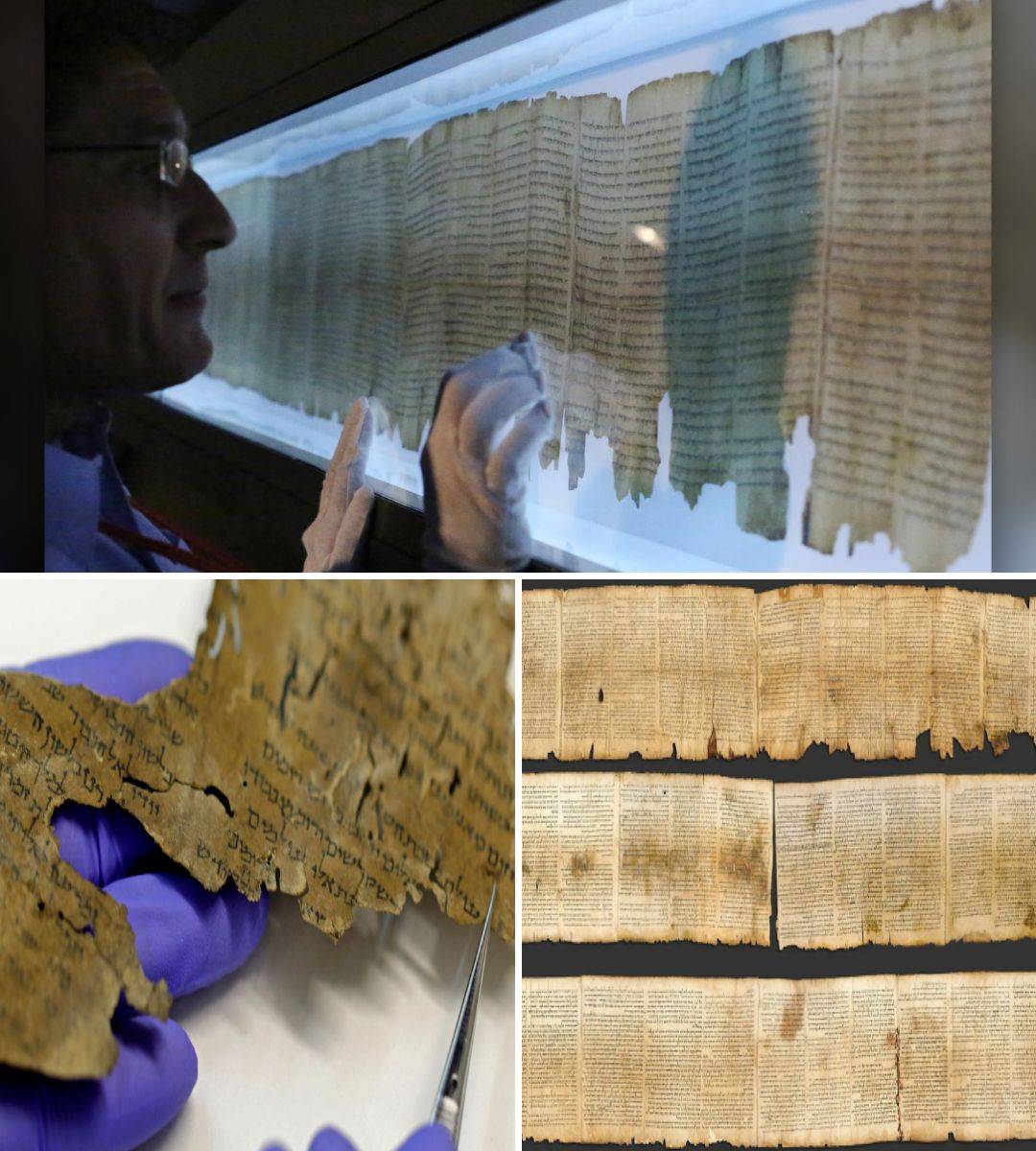

A groundbreaking revelation about the Dead Sea Scrolls has emerged, thanks to the power of artificial intelligence. Researchers have determined that the iconic Great Isaiah Scroll, a significant ancient manuscript, was actually the work of two distinct scribes, each with remarkably similar handwriting.
Discovered in the mid-20th century in caves near the Dead Sea, the Dead Sea Scrolls consist of a treasure trove of ancient Hebrew texts, including Biblical and Jewish writings. The Great Isaiah Scroll, a version of the Book of Isaiah found in both the Hebrew Bible and the Old Testament, dates back to around the 2nd century BC and is inscribed in the Hebrew alphabet.

Mladen Popović, a scholar from the University of Groningen in the Netherlands, expressed the importance of these scrolls, stating, “Before we found the scrolls, our earliest manuscripts dated back to around the year 1000. These ancient texts act like a time machine, allowing us to explore the era when the Hebrew Bible was still being crafted.”
For years, experts grappled with the question of whether the Great Isaiah Scroll was authored by a single individual or multiple scribes. The scroll stretches over seven meters, and its consistent handwriting made it challenging to pinpoint the number of authors.

To unravel this mystery, Popović and his team turned to AI technology, analyzing digital images of the scroll. Their findings revealed that the manuscript is divided into two sections, each penned by a different scribe.
Charlotte Hempel, a researcher at the University of Birmingham in the UK, noted the significance of AI in this study. “The two scribes’ handwriting is so similar that it could easily be mistaken for a single author who simply changed their writing style,” she explained. Hempel also raised intriguing questions about the nature of the scribes’ training, suggesting that they may have shared a common background or exceptional skill.
As researchers continue to delve into the remaining Dead Sea Scrolls, there’s a world of possibilities waiting to be uncovered about these ancient scribes and their craft. What other secrets might these ancient texts hold?