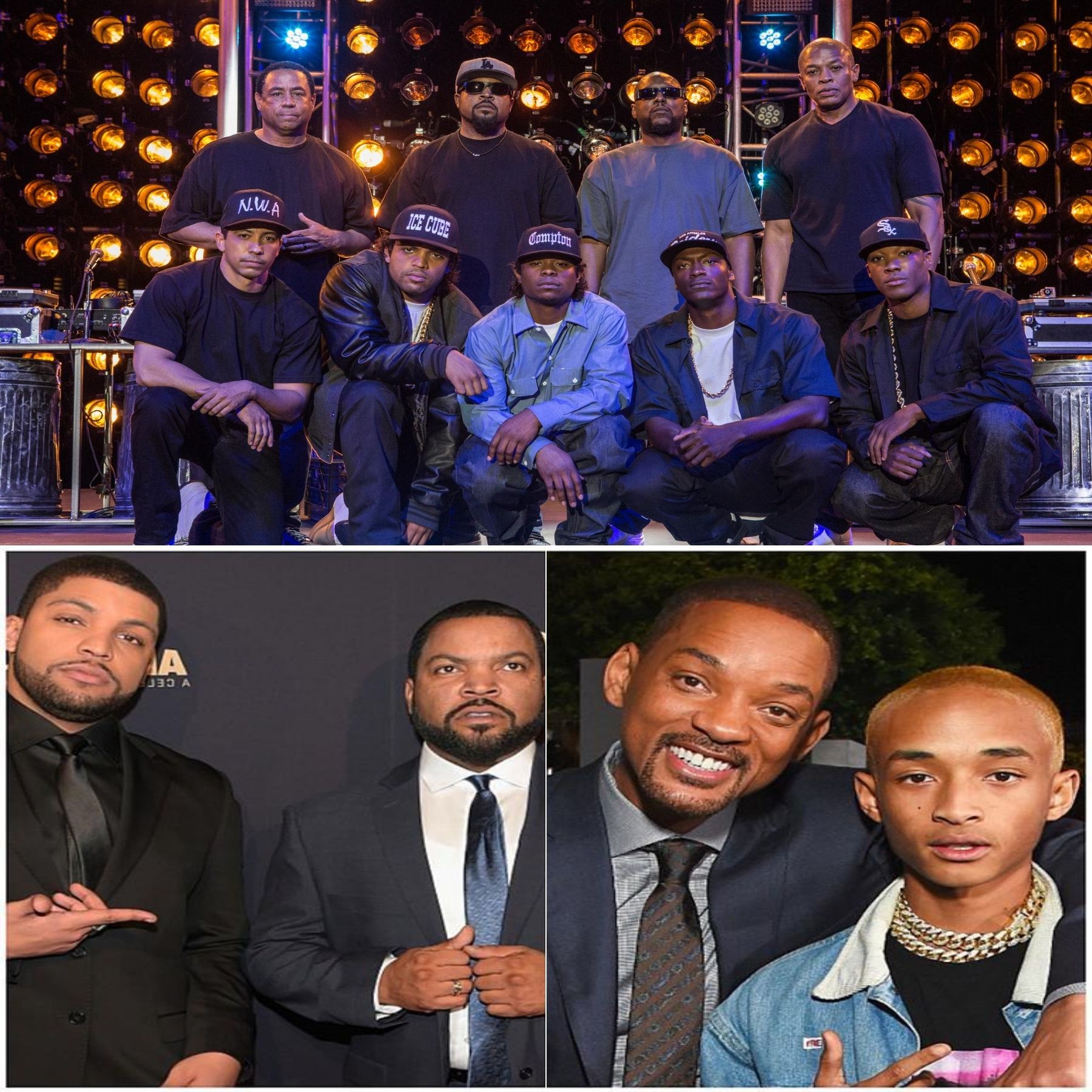
The split between Ice Cube and N.W.A became one of the most dramatic breakups in rap history. What began as a powerful partnership helping define gangsta rap eventually collapsed into accusations of financial betrayal, public insults, and vicious diss tracks that shocked hip-hop fans across America.

During the late 1980s, N.W.A emerged from Compton and revolutionized rap music with aggressive lyrics about police brutality, street violence, and life in South Central Los Angeles. The group included Ice Cube, Dr. Dre, Eazy-E, MC Ren, and DJ Yella. Their groundbreaking album Straight Outta Compton transformed West Coast rap into a national cultural force.
Ice Cube quickly became recognized as one of the group’s strongest lyricists, writing many of N.W.A’s most controversial and politically charged songs. But behind the scenes, tensions were growing over money and business contracts. Ice Cube reportedly believed he was not being paid fairly and accused the group’s management, particularly manager Jerry Heller, of financial manipulation.

In 1989, Ice Cube officially left N.W.A, creating massive controversy within hip-hop. The remaining members publicly criticized him in interviews and music. Many fans wondered whether Ice Cube could survive as a solo artist after separating from one of rap’s most dangerous and influential groups.
The feud escalated dramatically when N.W.A released tracks mocking Ice Cube and questioning his loyalty. Ice Cube answered with one of the harshest diss songs of the era: No Vaseline.
The song stunned the rap world with its raw anger and brutal insults. Ice Cube attacked his former bandmates individually, accused them of being controlled by management, and mocked the group’s business decisions. Many hip-hop fans still consider “No Vaseline” one of the greatest diss tracks ever recorded because of its aggressive lyricism and direct attacks.

Despite the hostility, Ice Cube’s solo career became a huge success. Albums like AmeriKKKa’s Most Wanted proved he could thrive independently while continuing to address political and social issues in his music. Meanwhile, N.W.A itself later began falling apart as internal conflicts and contract disputes affected other members as well.
Over time, relations between surviving members improved. The legacy of N.W.A eventually became celebrated as one of the most important movements in hip-hop history, especially after the release of the biographical film Straight Outta Compton.


Today, the Ice Cube vs. N.W.A conflict is remembered as a defining moment in rap history — a battle driven by money, power, loyalty, and artistic control that helped shape the culture of hip-hop diss records for generations.
:max_bytes(150000):strip_icc():focal(705x387:707x389)/Cardi-B-and-Stefon-Diggs-Twitter-051126-78b2b05cd8e041ef8a97ad6d89c6a57a.jpg)

