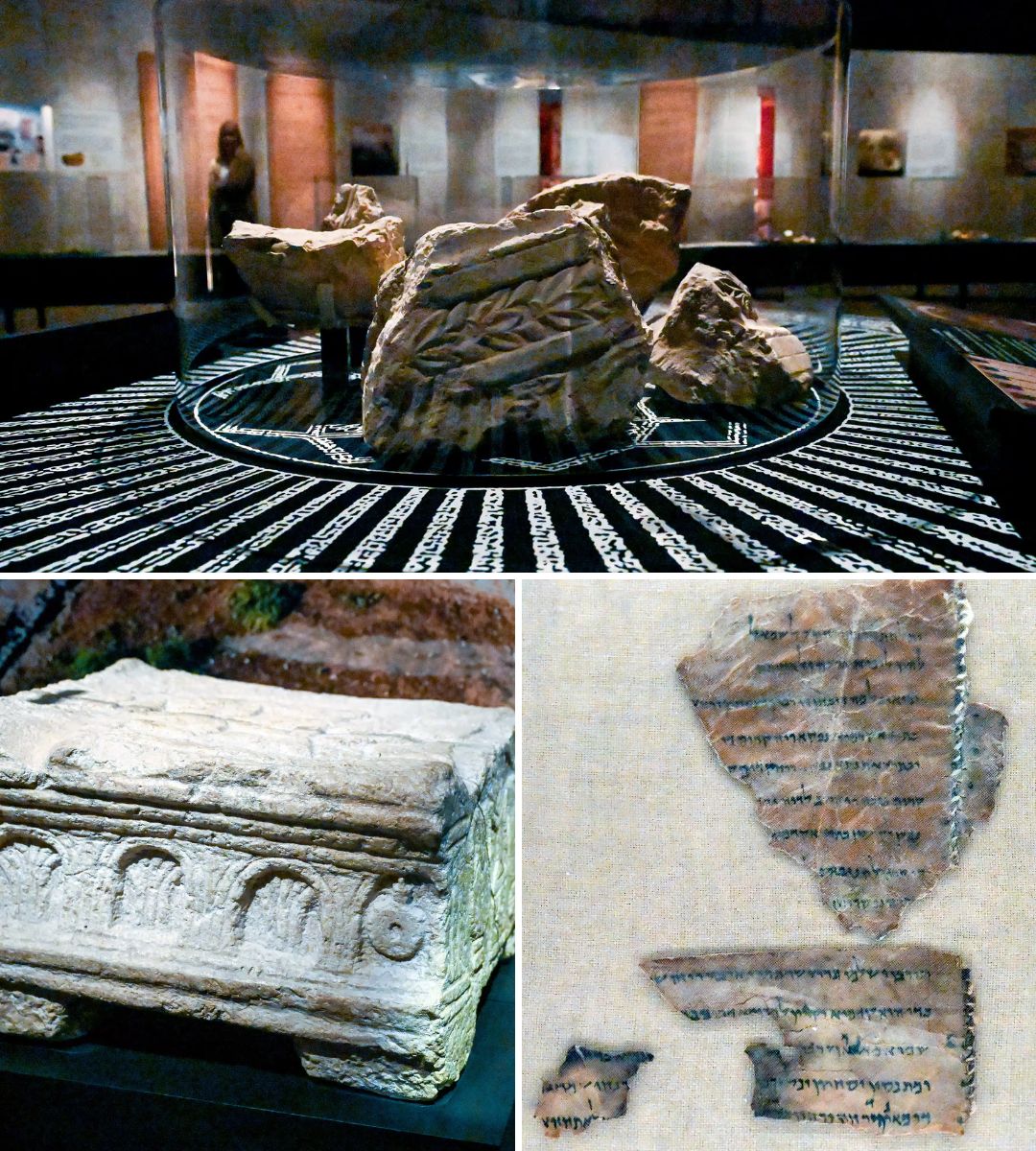
Ever wondered what an ancient copy of the Bible looked like? Starting Nov. 22, you will be able to see just that.
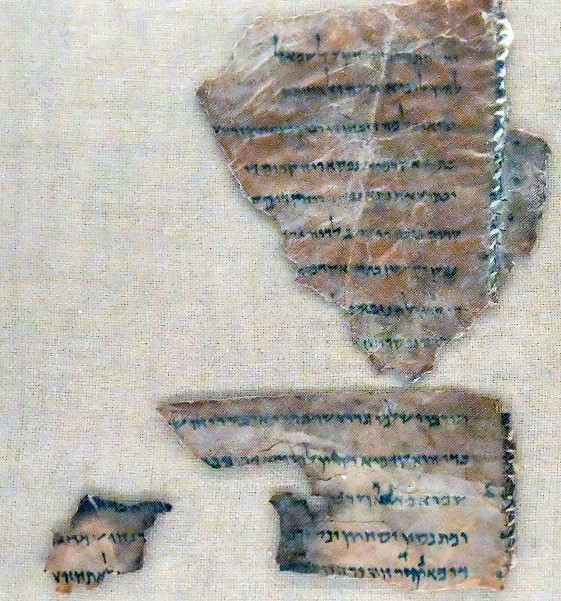
The Museum of the Bible in Washington will host a rare exhibition of the Sea Scrolls, which feature fragments of the Psalms, Genesis, and the Ten Commandments, among other Jewish religious texts not featured in the Hebrew Bible. The exhibition will have three “rotations” of different scroll fragments, with one rotation every three months.
Shepherds discovered the Dead Sea Scrolls in a cave in Qumran in 1947. Over the next decade, more scroll fragments were discovered in surrounding caves, numbering more than a thousand. The scrolls date from the third century B.C. to the first century A.D. The Israel Antiquity Authority, an Israeli museum, maintains the scrolls and is partnering with the Museum of the Bible on the exhibition.
Ahead of the exhibit’s opening, Israel Antiquity Authority officials spoke with the Catholic Herald on the scrolls’ history and significance. “The million-dollar question is, why were they in the caves?” said curator Risa Levitt. “We simply don’t know. What’s amazing though, is that because they were placed in the caves, and because of the climatic conditions around the Dead Sea — that’s what enabled them to survive.”
Each of the rotations features one document that has never been on public display before. Through February 2026, the first rotation will feature the “Books of Enoch,” one of the earliest surviving Jewish religious texts that is not a part of the traditional Hebrew Bible. The manuscript fragments date back to the third or fourth century B.C. and tell the story of Noah’s great-grandfather Enoch on his journey to heaven.
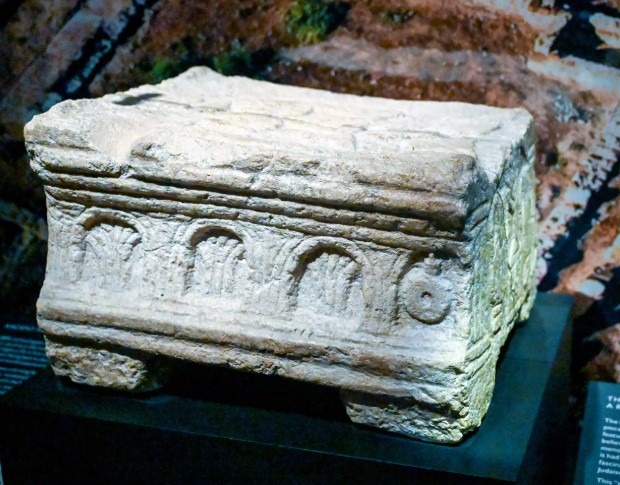
The exhibition includes other artifacts that paint a picture of Jewish life during the Second Temple period — when the scrolls were transcribed — from the Second Temple’s construction in the sixth century B.C. to its destruction by the Romans in 70 A.D. One highlight is the “Magdala stone,” discovered in a first-century synagogue in Magdala, the hometown of St. Mary Magdalene. According to the museum, the stone likely served as a stand from which the Torah and other liturgical scrolls were read. Embedded in the exhibit’s floor is a large, first-century paver from the “Pilgrims’ Road,” or the “Stepped Street,” upon which pilgrims processed to the Temple. Visitors may walk upon the paver, following in the early pilgrims’ footsteps.
The exhibit also features wooden fragments from a first-century fishing boat discovered in the Sea of Galilee in 1986, called “the Jesus boat.” It is unlikely that Jesus used this boat, but the artifacts nonetheless give insight into Galilee’s fishing industry at the time of Christ.
Several interactive displays include a “Select a Commandment” display next to a Ten Commandments scroll, and an archaeological game where the user must piece together several scroll “fragments” on a touchscreen.
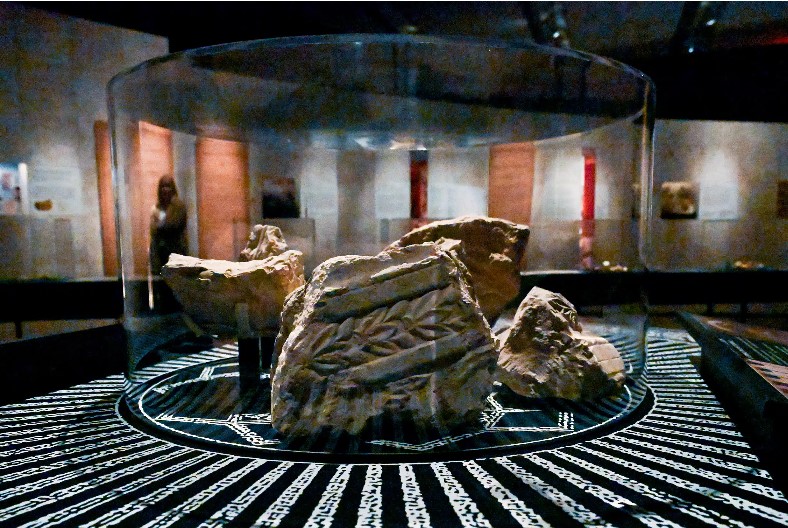
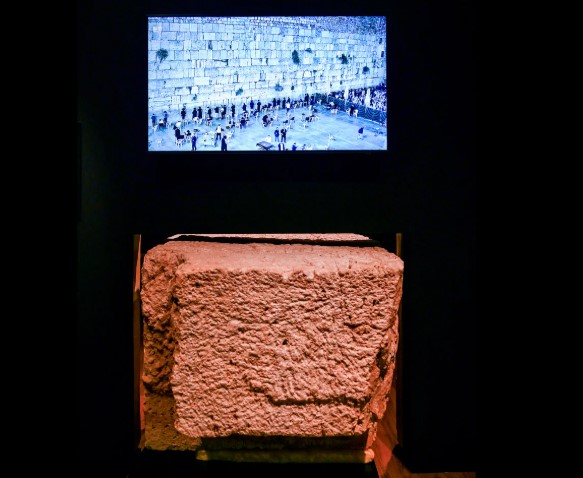
The exhibition concludes with a large stone block from the Western Wall, also known as the “Wailing Wall” and the last remaining structure of the Temple. Visitors may write and leave notes at the stone, similar to pilgrims who visit the wall in Jerusalem.
Due to their fragile state, the scrolls are preserved in climate-controlled display cases under very dim lighting. But even the smallest bit of light from the display does minimal damage to the documents, according to curator Levitt: “They won’t be on display again for at least another five years.”
The Museum of the Bible is the only museum on the East Coast to feature the scrolls. “This is our ‘Mona Lisa,’ ” said museum CEO Carlos Campo, adding that the goal of the exhibit is to foster unity in an often-divided world. “While hope remains fleeting in our day, in some ways, we believe that with the opening of this exhibit, it is an attempt to gather people together.”