My grandfather, Harold Mercer, died on a Tuesday, and by the following Wednesday, my brother was already asking me to give him the house. I guess I shouldn’t have been surprised, but sitting in the estate attorney’s office, hearing Derek laugh when the will was read, I felt something twist in my chest that wasn’t grief. Pop raised me. My parents divorced when I was eleven, my dad moved to Nevada and became a once-a-year phone call, and my mom, Rita, worked double shifts just to keep things together.

So I spent my afternoons at Pop’s house. He taught me how to change brake pads, how to measure twice before cutting, how to make chili that would make your eyes water. He built that back deck himself when he was fifty-three, and never hired a contractor for anything in his life. Derek, my older brother, is four years ahead of me.
He’s in pharmaceutical sales, has a wife named Tanya, and two kids, Aiden and Lily. He’s the kind of guy who leases a BMW, sends his kids to private school, and then complains about money being tight. Over the last five years, he visited Pop maybe a dozen times. Holidays, mostly.
He’d stay for an hour, check his phone, make sure the kids said hi, and then announce they had somewhere else to be. Me? I was at Pop’s house almost every day after work for the last three years once the COPD got serious. I picked up his prescriptions, drove him to appointments, mowed his lawn every Saturday, fixed the leaking kitchen faucet, and replaced the water heater when it died at two in the morning in February.
I didn’t do it for credit. I did it because he was Pop, and he would have done the same for me without thinking twice. When Pop passed, I was sitting right next to him. Uncle Gene was there too.
Derek texted me at 6:15 that evening asking how he was doing. Pop had died at 4:47 in the afternoon. The funeral was on Friday. Derek gave a nice speech.
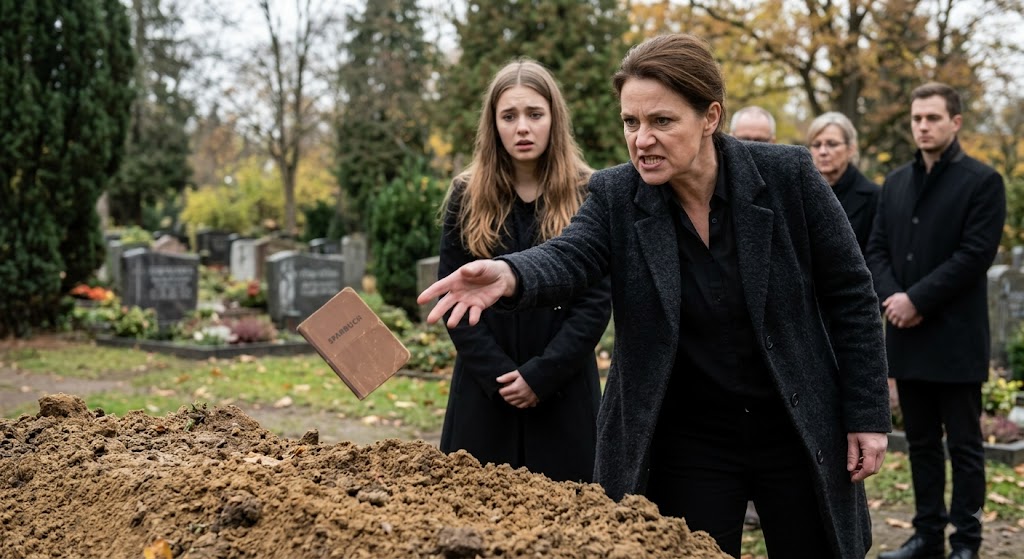
Talked about how Pop taught him to fish, how Pop always had butterscotch candies in his jacket pocket. Tanya cried the exact right amount. I stood at the back of the church, feeling hollow. The will reading was the following Wednesday at the office of Marcy Kimball, Pop’s estate attorney.
Mom was there, Derek and Tanya were there, Uncle Gene was there, and I was there. Marcy explained that Pop’s estate included the house on Birch Lane, a savings account with approximately eighty-five thousand dollars, his 1967 Ford F-100 pickup truck, and a rented storage unit containing his woodworking tools and equipment. Everything went to me. All of it.
There was a long silence. I remember hearing the air conditioning click on. Then Derek laughed. Not a real laugh.
That short exhale through the nose people do when they think someone’s made a mistake. “That can’t be right,” he said. Marcy looked at him over her reading glasses. “The documents are clear, Mr.
Mercer. ”
“No, I mean everything. There’s nothing for the rest of the family? ”
“Mr.
Mercer’s wishes were specific and unambiguous,” Marcy said. “Shane is the sole beneficiary. ”
Tanya put her hand on Derek’s arm. That supportive wife gesture that actually means hold it together.
Afterward, in the parking lot, Derek caught up to me. He had his hands in his pockets, doing that thing where he tilts his head slightly, like he’s about to explain something to someone who doesn’t quite understand. “Look, I know Pop was particular. But you have to see how this looks, right?
Everything to you, nothing to me, nothing to Mom. ”
“That’s what he wanted,” I said. “Yeah, but come on. You’re single.
You already have an apartment. What are you going to do, rattle around in a three-bedroom house by yourself? ” He paused. “I’ve got two kids, Shane.
That house on Birch Lane, we could actually use it. ”
“Derek, Pop left it to me. ”
“I’m not saying he didn’t. I’m saying maybe we should talk about what makes sense for the family.
You could sign the house over, keep the savings and the truck. That’s still a great deal for you. ”
A great deal. Like we were splitting a restaurant check.
“I’m not signing the house over,” I said. His expression shifted. Just slightly. The mask of reasonableness cracked for half a second, and I saw what was underneath.
Not anger, exactly, but the genuine confusion of someone who cannot understand why the world isn’t arranging itself around what he wants. “We’ll talk about it later,” he said, “when things have settled down. ”
I drove home and sat in my apartment for a long time. Then I remembered something.
When I’d been going through Pop’s nightstand earlier that week, packing up his personal things, I’d found a sealed envelope with my name on the front in Pop’s handwriting. I’d set it aside because I wasn’t ready. I still wasn’t ready, but I had a feeling I was going to need whatever was inside it very soon. Derek didn’t wait long.
Three days after the will reading, Mom called me on a Sunday morning, using that careful voice she gets when she’s been rehearsing what to say. “Shane, honey, I think we should all sit down together, as a family, just to talk things through. ”
“Talk what through, Mom? ”
“The estate.
Pop’s things. I just think it would be good for everyone to feel heard. ”
“Did Derek ask you to call me? ”
There was a pause, just long enough.
“He mentioned some concerns, yes, but I have my own thoughts, too. I’m your mother. I want what’s best for both of you. ”
“Mom, Pop worked with an attorney.
He didn’t scratch it on a napkin. ”
“I know that, but people get set in their ways, and Derek has children, Shane. Real responsibilities. I’m not saying Pop was wrong.
I’m just saying maybe you could consider being generous. You’ve always been the generous one. ”
There it was. The reframe.
I wasn’t being pressured; I was being given an opportunity to be the bigger person. It’s a move Mom has perfected over thirty years. She never asked you to do something unfair; she asked you to prove you’re the kind of person who would do it willingly. “I’ll think about it,” I said, which we both knew meant no.
That Tuesday, I went by Pop’s house to check on things. The house still smelled like him, Old Spice and sawdust. I was standing in the kitchen when my neighbor Helen Ortiz came over. Helen’s in her seventies, lives next door, been there almost as long as Pop.
She brought me a casserole because that’s what Helen does. “How are you holding up, sweetheart? ” she asked. “Getting there.
”
She set the casserole on the counter, then did that thing where she looked like she wanted to say something but wasn’t sure if she should. “What is it, Helen? ”
“It’s probably nothing, but a few weeks ago… this was maybe three weeks before your grandfather passed.
I saw someone in the driveway. A woman I didn’t recognize. She was taking pictures of the house. Front, sides, she even walked into the backyard.
”
I stared at her. “Taking pictures? ”
“She had a clipboard. I thought maybe it was an insurance thing or the city, but then she got in her car and I saw a magnetic sign on the door.
A real estate company. Prestige Properties, I think. ”
My stomach went cold. Pop was still alive three weeks before he died.
He was in hospice, barely able to get out of bed, and someone was already photographing his house for a real estate assessment. I thanked Helen and sat in Pop’s kitchen for a long time after she left. A real estate agent doing a market analysis on a house that belonged to a man who was still breathing. There was only one person who would have arranged that.
I didn’t call Derek about it. Not yet. Instead, I called Uncle Gene. Gene is Pop’s younger brother, retired electrician.
The kind of guy who says exactly what he means and has never once worried about whether it would land well. “Yeah, that sounds like Derek,” Gene said when I told him about the real estate agent. “Kid’s been circling that house for two years. You know he asked Pop about it at Thanksgiving, right?
Two Thanksgivings ago. ”
“Asked him what? ”
“Asked him if he’d considered what would happen to the property. Those were his words.
‘The property,’ not ‘your home,’ not ‘the house. ‘ ‘The property. ‘”
“What did Pop say? ”
“Pop told him the house was taken care of and changed the subject.
But he was rattled. I could tell. He called me the next day and said he wanted to talk to Marcy about tightening things up. ”
“Tightening things up how?
”
Gene paused. “I think that’s a conversation you should have with Marcy directly. Pop asked me to let her handle it. ”
Meanwhile, Derek escalated.
He sent me a long text message, the kind you have to scroll through like it’s a terms of service agreement. The gist was this: he wasn’t trying to be difficult, but he had a moral obligation to his children to ensure they had stable housing. Surely I could understand that a single man with no dependents didn’t have the same needs as a family of four. He was willing to offer me fair compensation, well below market value, naturally.
Or alternatively, I could sign it over and he would make it right down the road. I didn’t respond. Not because I was playing games. I just genuinely didn’t know what to say to someone who could type all of that without once acknowledging that the man who built that house had been dead for less than two weeks.
Thursday morning, I sat across from Marcy Kimball. “Shane, I want to show you something your grandfather set up about six months before he passed,” she said, pulling a folder from her filing cabinet. “He asked me not to discuss it until after the estate was settled, but given the circumstances, I think now is the right time. ”
She slid the folder across the desk.
“Your grandfather didn’t just leave you the house in his will. He transferred it into an irrevocable trust. You are the sole trustee and sole beneficiary. The house has been legally yours since January.
”
I looked at the paperwork. Pop’s signature, Marcy’s notarization, dated five and a half months before he died. “What does that mean exactly? ” I asked.
“It means the house isn’t part of the probate estate. It can’t be contested through a will dispute. It’s already yours. Has been for months.
Your brother could hire every attorney in Ohio and it wouldn’t matter. ”
I sat back in my chair. “Pop knew. ”
Marcy nodded.
“He knew exactly what was coming. He told me, and I’m quoting him here, ‘Derek’s going to throw a fit the second I’m gone, and I want Shane protected. ‘”
That hit me harder than the funeral. My first instinct was to call Derek immediately and end the whole thing.
But Marcy advised against it. “Let me be direct with you,” she said. “If your brother is the type of person who arranged a real estate evaluation on your grandfather’s house while he was still in hospice, he’s not going to hear the word trust and accept it gracefully. He’s going to look for another angle.
Let him make his moves first. You’re protected either way, and the more he overextends, the less credibility he’ll have if this ever does go in front of a judge. ”
She was right. And honestly, there was a part of me, maybe not the most noble part, that wanted to see exactly how far Derek was willing to go.
So I played it normal. Returned his texts with short, neutral responses. “Still thinking about it. Let’s not rush anything.
We’ll figure it out. ” The kind of answers that don’t commit to anything but keep the other person from detonating. I opened Pop’s sealed letter that night. It was two pages, handwritten in Pop’s blocky print.
He wrote that he loved both his grandsons, but that love didn’t mean pretending they were the same. He said Derek was charming and ambitious, but had never learned that showing up was the price of admission to someone’s life. He said I was the one who was there when it counted, not because I had to be, but because I understood something Derek never did: people aren’t investments, and you don’t get returns on time you never spent. He wrote that the house was mine because I was the one who took care of it, who took care of him.
The last line was, “Don’t let your brother make you feel guilty for being the one who stayed. ”
I sat on my couch and read it three times. Then I folded it up, put it back in the envelope, and locked it in my fireproof safe. Over the next two weeks, I went about my life.
Worked my engineering job, stopped by Pop’s house to maintain things, slowly started going through his belongings. I brought Uncle Gene over one Saturday to help sort through the storage unit. Pop had a table saw in there that Gene had been eyeing for twenty years, so I told him to take it. Here’s where it gets interesting.
Derek apparently went to Pop’s storage unit on his own, without asking me. The property manager called me because I’m listed as the authorized contact, and she said a man claiming to be a family member had shown up wanting access. “I told him the unit is in your name now, and he’d need your authorization,” she said. “He wasn’t happy about it.
”
“Did he say what he wanted? ”
“He mentioned some tools, said they were promised to him. ”
They were not promised to him. Pop’s woodworking tools were his pride.
He would have sooner promised them to a stranger on the street than to someone who’d never once shown interest in learning to use them. Then Mom called again. This time she was less rehearsed and more emotional. “Shane, Derek is really struggling with this.
Tanya says he’s not sleeping. He feels like Pop punished him. ”
“Punished him for what? ”
“For not being around more.
But Shane, he has a family. He has responsibilities. He couldn’t just drop everything and go sit with Pop every afternoon like you could. ”
I let that one sit for a second.
Like I could. As though I didn’t also have a full-time job. As though driving to Pop’s house every day after an eight-hour shift was something I did because I had nothing better to do. “Mom, I worked the same hours Derek did.
I just made different choices about what I did after. ”
She got quiet. Then, “I just wish you boys could work this out. ”
“There’s nothing to work out.
Pop made a decision. I’m respecting it. ”
That’s when she said something that changed everything. “Shane, I tried.
I went to Pop when he was in hospice and I asked him, I begged him to reconsider. To leave Derek something. At least part of the house. He wouldn’t listen.
”
I gripped the phone. “You went to Pop while he was dying and asked him to change his will? ”
“I was trying to prevent exactly this situation. ”
“Mom, he was on oxygen.
He could barely talk. And you went in there to lobby him about his estate. ”
“It wasn’t like that. ”
But it was exactly like that.
I called Uncle Gene. He confirmed it. “Yeah, Rita came by the hospice about a week before he passed. I was there.
She sat with him for maybe twenty minutes and then she brought up the will. Pop just looked at her and said, ‘It’s handled, Rita. ‘ She tried again and he closed his eyes. I walked her out and told her that was the last time she was going to do that.
”
“Did Derek put her up to it? ”
“I don’t know for certain, but Rita doesn’t usually push for things on her own. Draw your own conclusions. ”
I drew them.
So here’s where things stood. My brother had arranged a real estate evaluation of Pop’s house before Pop was even dead. My mother had pressured a dying man to change his estate plans. Derek had tried to access Pop’s storage unit without permission.
And through all of this, they genuinely believed they were the reasonable ones and I was the one being difficult. The beautiful part? Derek still had no idea about the trust. He thought the house was part of the will, sitting in probate, vulnerable to a legal challenge.
He was gearing up for a fight over something he’d already lost before it started. I decided to let him find out the hard way. What I didn’t expect was how quickly he’d escalate. The following Monday, I got a call from Marcy.
“Shane, I received a letter from an attorney representing your brother. He’s filing a formal contest of the will on the grounds of undue influence and diminished capacity. ”
She said it the way someone might say they found a parking ticket on their windshield. Mildly annoyed, completely unworried.
“He’s claiming Pop wasn’t mentally competent when he wrote the will, and that you manipulated him. And the trust… his attorney clearly doesn’t know about it. If he did, he wouldn’t have filed.
This is going to be a very short conversation. ”
The will contest was built on two claims. First, that Pop lacked mental capacity when the will was drafted, given his age and declining health. Second, that I had exercised undue influence over Pop by being his primary caregiver and isolating him from other family members.
Let me just say, the idea that I isolated Pop from Derek is the most backwards thing I’ve ever heard. Derek isolated himself. He chose not to visit. He chose not to call.
He chose not to show up until Pop was already in the ground and there was something to inherit. But sure, I was the manipulative one. Marcy wasn’t worried, and she told me not to be either. “Here’s what’s going to happen.
I’ll respond to the contest with documentation of the trust. Once Fenton sees that the house was transferred out of the estate six months before your grandfather passed, with full mental competency evaluations on file, the contest dies. ”
“Pop did a competency evaluation? ”
“He insisted on it.
He told me, ‘If Derek’s going to say I was senile, I want paperwork that says I wasn’t. ‘ Your grandfather was sharper than most people half his age, and now we have a psychologist report confirming it. ”
She sent the trust documents, the competency evaluation, and a very polite letter explaining that the house was not and had never been part of the probate estate. I read it twice just for the satisfaction.
While the legal side played out, I started moving forward with my own plans. I gave notice on my apartment. I started making a list of updates I wanted to do at Pop’s house. New paint in the living room.
Refinish the hardwood floors he’d installed himself in the nineties. Maybe update the bathroom eventually. Nothing that would erase him from the place. Just things that would make it mine while keeping his fingerprints on it.
Uncle Gene came over to help me measure for new kitchen cabinets. We were sitting on the back deck, Pop’s deck, the one he built himself, drinking coffee when Gene said something I wasn’t expecting. “Your mother called me yesterday. ”
“About what?
”
“About whether I talked to you. Convince you to find a middle ground. ” He took a sip of his coffee. “I told her the middle ground was the one Harold picked, and she could take it or leave it.
”
“What did she say? ”
“She cried. Then she told me I was being heartless, and I told her that going to a dying man’s bedside to negotiate real estate was heartless, and we both hung up. ”
Derek went quiet for about a week after Marcy sent the documents.
I figured Fenton had explained the situation and Derek was processing. I was wrong. What Derek was actually doing was calling every estate attorney in the area looking for someone who would tell him what he wanted to hear. I know this because one of them, a woman named Patricia Huang, actually called Marcy to give her a heads-up.
“She said your brother contacted her office, described the situation, and she told him the trust was airtight,” Marcy told me. “She said he was, quote, ‘very persistent and very unhappy with the answer. ‘”
The silence broke on a Wednesday night. I was at Pop’s house taping off the living room trim to start painting when my phone rang.
Derek. “You knew,” he said. No hello. “You knew about the trust the whole time, and you let me go through the contest process, and you let me hire an attorney, and you never said a word.
”
“I found out about the trust after you started threatening to contest the will,” I said, which was technically true. I found out before he filed, but after he made it clear he was going to fight. “That house should be for this family, for the kids. Pop would have wanted his great-grandchildren to grow up there.
”
“Pop wanted me to have it, Derek. He spent six months making sure of it. ”
“Because you were in his ear every single day, feeding him whatever you wanted him to hear about me. ”
“I never once talked to Pop about you.
I didn’t have to. ”
That landed. I could hear it in the silence. Then Tanya’s voice in the background.
“Ask him about the storage unit. ”
Derek cleared his throat. “Pop’s woodworking tools. I want to go through them.
Some of those pieces were valuable, and the kids might want them someday. ”
“Aiden is seven. He doesn’t want a bandsaw. ”
“That’s not the point.
”
“The tools are mine, Derek. Legally and otherwise. Pop left them to me because I actually used them with him. You never once stepped foot in his workshop.
”
He hung up. I finished taping the trim, rolled primer on two walls, and went home. That night I couldn’t sleep. Not because of Derek, but because of Pop.
I kept thinking about him sitting in Marcy’s office, barely able to breathe, signing trust documents because he knew his own grandson was already measuring the house for curtains. The next morning, I got a text from Mom. Just one line: “Derek and Tanya listed their house for sale. They’re moving.
”
I stared at it. The house in the expensive neighborhood with the leased BMW in the driveway. The house they couldn’t actually afford. They’d been counting on getting Pop’s house to solve their financial problems.
And now that it was gone, the whole thing was unraveling. I didn’t respond to Mom’s text. Instead, I called Marcy. “Has Fenton officially withdrawn the contest?
”
“As of this morning, yes. It’s over. The estate will proceed through probate normally. You’ll have full access to the savings account and remaining assets within thirty days.
”
I thanked her and hung up. Then I drove to Pop’s house, sat on the back deck, and let myself just sit there for a while. The wood was still solid. He’d used cedar.
Built to last. My phone buzzed. A text from Derek. Two words: “We need to talk.
”
Derek wanted to meet at a coffee shop. Neutral ground. I agreed. Partly because I was curious what he had left to say, and partly because Pop’s letter was still echoing in my head.
“Don’t let your brother make you feel guilty for being the one who stayed. ”
We met on a Saturday morning. He was already there when I arrived, sitting in a booth near the window. He looked tired.
Not the performative kind of tired people put on when they want sympathy. Actually tired. Bags under his eyes, wrinkled polo, hair uncombed. I’d never seen Derek look like he didn’t care how he was presenting.
I sat down across from him. The waitress came by, and I got a black coffee. “Tanya’s staying with her parents,” he said. “She’s taking the kids.
”
“I’m sorry to hear that. ”
“Are you? ”
“Yeah, Derek, I am. Your kids don’t deserve that.
”
He flinched. Not at the words, but at the fact that they were about Aiden and Lily and not about him. “We can’t afford the house. Our house.
We’re three months behind on the mortgage. Private school tuition is killing us. The BMW lease is upside down. ” He rubbed his eyes.
“I was counting on Pop’s house. I know that sounds terrible. I know how it looks. But I was counting on it.
”
“You were counting on inheriting a house from a man you barely visited for five years. ”
“I visited. ”
“You stopped by, Derek. That’s not the same thing.
You showed up on Christmas with a bottle of wine, stayed ninety minutes, and left. You never once picked up his prescriptions, or took him to a doctor’s appointment, or sat with him when he couldn’t breathe at three in the morning. Not once. ”
He stared at his coffee.
“I had the kids, Tanya’s schedule, my job. It wasn’t like I didn’t care. ”
“It was exactly like you didn’t care. Not because you’re a monster, but because Pop wasn’t a priority, and that was your choice.
But you don’t get to make that choice for five years and then be surprised when he makes his. ”
The coffee shop was mostly empty. Nobody was paying attention to us, but it felt like the most exposed conversation I’d ever had. “Did you know he got a competency evaluation?
” I asked. Derek looked up. “What? ”
“Pop went to a psychologist six months before he died.
Got evaluated. Clean bill of mental health. He did it specifically because he knew you were going to claim he wasn’t in his right mind. ”
Derek’s face went through about three expressions in two seconds.
Surprise, then something like shame, then anger. “So he was planning against me. ”
“He was planning for you. He knew exactly who you were and what you’d do.
He wasn’t angry about it, Derek. He was sad. There’s a difference. ”
“How do you know he was sad?
”
I almost told him about the letter. I almost pulled it up on my phone and read him Pop’s words. But I didn’t. That letter was between Pop and me.
It wasn’t ammunition, and using it like one would have been the kind of thing Derek would do. “Because I was there,” I said. “Every day. I saw his face when you didn’t show up.
When you called for five minutes on his birthday and spent half of it talking about your sales numbers. When you brought the kids over and spent the whole time on your phone while they watched Pop’s TV. He noticed all of it. ”
Derek didn’t say anything for a long time.
“So that’s it,” he finally said. “I get nothing. ”
“You got his love for thirty-four years. You just didn’t do anything with it.
”
We sat there. He finished his coffee. I finished mine. Then he stood up.
“I don’t know if I can forgive you for this,” he said. “I’m not asking you to. But Derek, I’m not the one who needs forgiving. ”
He left.
I stayed for another cup. That was four months ago. Here’s where things landed. I moved into Pop’s house.
Refinished the floors, painted the living room a warm gray that Gene helped me pick out, updated the bathroom with a new vanity and tile. The bones of the house are Pop’s. The details are starting to become mine. I kept the back deck exactly the way it is.
Cedar, solid, built by hand. Pop’s truck is in the garage. I drive it on weekends. It’s not practical, twelve miles to the gallon and the suspension is basically decorative at this point.
But rolling down the windows on a summer evening feels like sitting with him again. The savings account cleared through probate, eighty-five thousand minus Marcy’s fees. I put most of it aside. Some went toward the house updates.
Some I set aside for property taxes. I’m not rich, but I’m comfortable, and the house is paid off. Uncle Gene comes over every Sunday for dinner. We’ve been working through Pop’s woodworking tools, organizing them, cleaning them, getting the ones that needed sharpened and tuned.
Gene’s teaching me dovetail joints. I’m not good at them yet, but I’m getting there. Pop would have liked that. Mom and I talk, but it’s different now.
She knows I know about the hospice visit, and she’s never apologized for it. She did say once, “I was trying to help. ” And I said, “I know you believe that. ” And we moved on.
We have dinner once a month. It’s polite. It’s not warm. I don’t know if it’ll ever be warm again, but I’m not closing the door on it.
Derek and Tanya sold their house. They moved to a smaller place on the other side of town. Tanya came back eventually, but things between them are strained, from what I can tell. Derek got a job at a different pharma company.
Lateral move, but steadier territory. He hasn’t reached out since the coffee shop. I don’t hate him. I want to be clear about that.
Derek isn’t evil. He’s just someone who never learned that relationships require maintenance and that entitlement is not the same as deserving something. Pop tried to teach him that. I don’t think the lesson landed.
Aiden’s birthday was last month. I sent a gift, a model car kit, the kind Pop and I used to build together on rainy Saturdays. I got a thank-you text from Tanya, not from Derek. That’s fine.
Last week I was sitting on the back deck after work watching the sun go down behind the neighbor’s oak tree, and I realized something. Pop didn’t just leave me a house. He left me a decision. Stay or go.
Keep or sell. Hold on or let go. He trusted me to make the right call the way he trusted me with everything else. Not because I was perfect, but because I was present.
I stayed. And I’m at peace with that. So yeah, that’s the story of how my brother told me I was wasting a house by living in it alone, and how a man who planned everything, right down to the legal structure that would protect his wishes after he was gone, made sure the one who showed up was the one who got to stay. Pop, if you’re reading this wherever you are, the deck’s still standing.
And so am I.