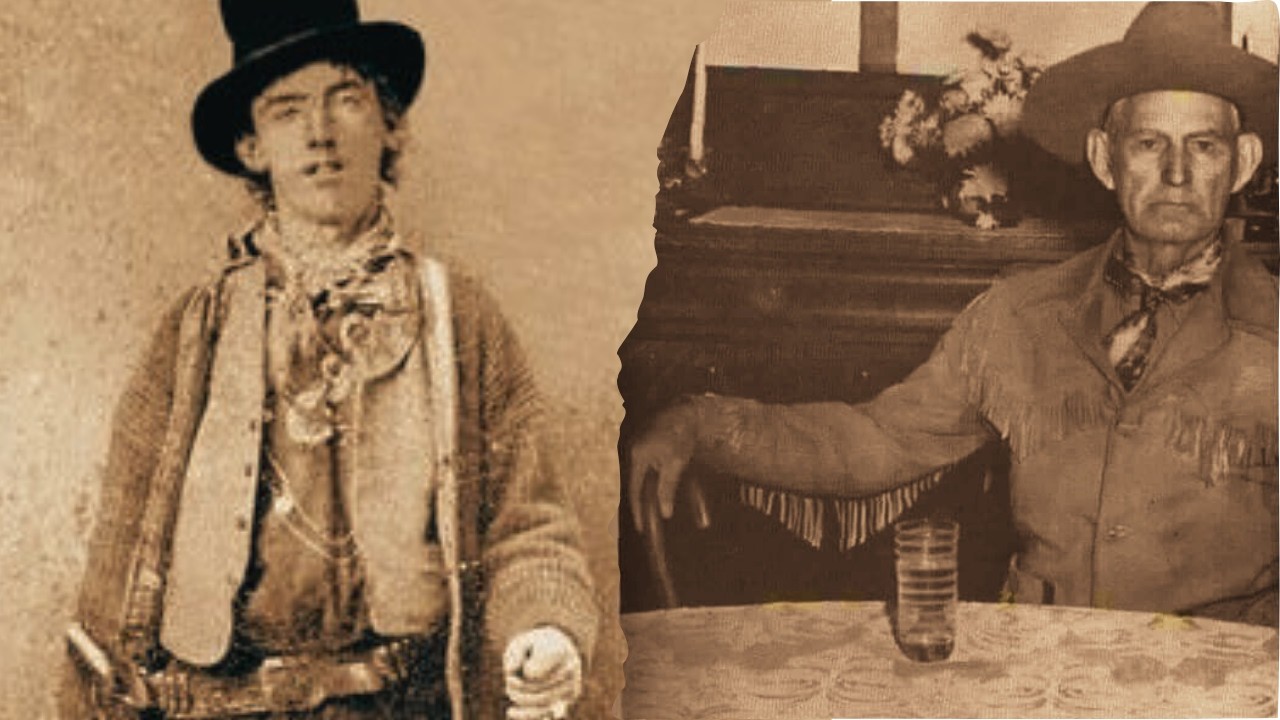
The mythology of the Old West was built on stories of heroic lawmen who always won in the end. The reality, as the fates of twenty real frontier sheriffs and marshals show, was far darker. Many of these men died betrayed, broke, forgotten, or shot in the back, their true stories buried under decades of Hollywood legend. Pat Garrett earned lasting fame by killing Billy the Kid in 1881, but fame did not bring him security.
After years of struggling as a tax collector and losing a bitter land dispute, the 57-year-old was shot in the back on a desert road in 1908. The accused claimed self-defense, and a jury acquitted him in under fifteen minutes, even though the bullet entered from behind. The question of who ordered the hit on the man who took down Billy the Kid remains unresolved to this day. Bill Tilman was hailed by Bat Masterson as the greatest of them all.
For 51 years, he served as a scout, sheriff, and state senator, arresting over 300 fugitives. In 1924, at age 70, he came out of retirement to clean up bootlegging in Cromwell, Oklahoma, during Prohibition. He was shot dead while trying to arrest a drunk federal agent named Wy Lynn. The man who survived decades of gunfights was killed by a corrupt government employee.
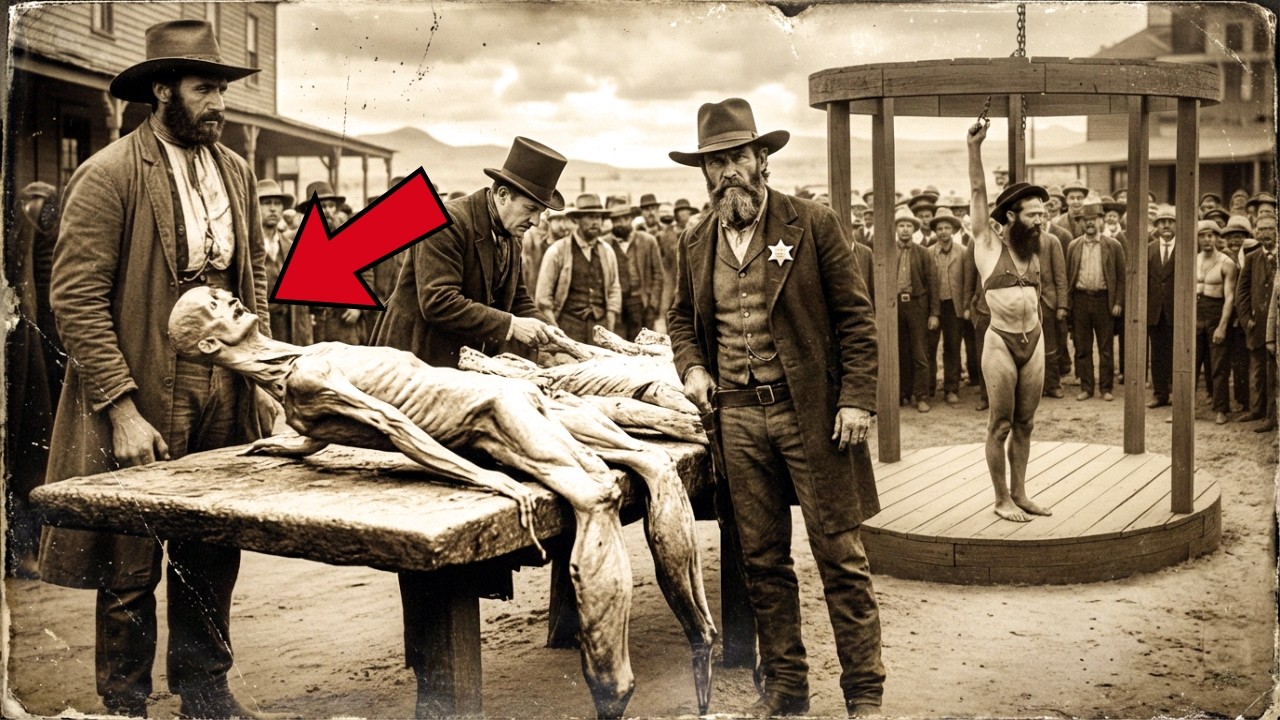
Henry Plummer was elected sheriff of Bannack, Montana, in 1863, but a wave of robberies on the region’s roads led many to suspect the sheriff himself was running the gang. Vigilantes took over, hanging more than 20 men in a few weeks, including Plummer. In a chilling detail, he was hanged on the very gallows he had built when he took office. Historians still debate whether he was genuinely guilty or merely a scapegoat.
Wyatt Earp became the most famous lawman of the West after the 30-second gunfight at the OK Corral in 1881, yet he spent his final years in Los Angeles trying to convince Hollywood directors to tell his story correctly. He died in 1929 at age 80 in his own bed of natural causes, a rarity among his peers. Bat Masterson kept order in Dodge City during its most dangerous years, surviving shootouts that killed other men. After hanging up his badge, he moved to New York and became a boxing writer for the New York Morning Telegraph.
He died of a heart attack in the newsroom in 1921, pen in hand, finishing a column on betting. Wild Bill Hickok was a sheriff in Hays City and Abilene, Kansas, but was haunted after accidentally killing his own deputy during a chaotic shootout. In his final years, he lived off poker in Deadwood, South Dakota, and always sat facing the door. On August 2, 1876, he broke that rule for the first time.
Jack McCall, whom Hickok had humiliated at the poker table, walked into the saloon and shot him in the back of the head. The cards that fell from Hickok’s hand, a pair of aces and a pair of eights, are still known as the “dead man’s hand. ”
John Slaughter, a Texas Ranger who later became sheriff of Cochise County, Arizona, preferred killing fugitives to arresting them. He used informants along the Mexican border to ambush and wipe out cattle rustlers.
Despite the violence of his career, he died peacefully at age 81 on his ranch in 1922. Fred White was the first sheriff of Tombstone, Arizona. In 1880, he was shot in the abdomen while trying to disarm the drunk cowboy Curly Bill Brocius. As he lay dying, White said the shooting was an accident and asked for Brocius to be released.
He never knew his town would become the most famous in the Old West. Dallas Stoudenmire took over as marshal of El Paso, one of the most dangerous towns on the frontier, and killed four men in his first four days. Alcohol soon took over, and his behavior became erratic. El Paso fired him.
In 1882, he returned to a saloon drunk to settle old scores, took three bullets, killed one of his shooters, and dropped dead. Elfego Baca was a 19-year-old with no badge or authority when he arrested a cowboy terrorizing residents in New Mexico in 1884. About 80 cowboys surrounded the adobe house where he took cover and fired an estimated 4,000 shots over 33 hours. Baca walked out without a scratch.
He later became a sheriff and lawyer, dying of natural causes in 1945 at age 80. Ben Thompson was the marshal of Austin, Texas, and one of the most feared card players in the West. In 1884, he and his partner were lured to a San Antonio theater and ambushed by gunmen firing from several angles. Over 14 shots were fired.
No one was ever convicted for his murder. John Selman shot the most dangerous gunslinger in Texas, John Wesley Hardin, in the back during a dice game in an El Paso saloon in 1895. He claimed self-defense and was accepted without question. Less than a year later, Selman was killed in a card game fight with Deputy US Marshal George Scarborough, shot without warning just as he had done to Hardin.
Hec Thomas was one of Oklahoma’s “Three Guardsmen” who brought the Indian Territory under control. He hunted the Dalton gang and cornered and killed the gang leader Bill Doolin in 1896. No bullet ever took him down. He died in 1912 at age 61 from kidney problems, his body worn out after decades of hard riding.
Harry Wheeler was the last captain of the Arizona Rangers and survived some of the final real gunfights of the Old West. In 1917, he organized the forced deportation of more than 1,200 striking miners in Bisbee, Arizona, packing them into train cars and dumping them in the desert. He was charged with kidnapping but never convicted. He died of tuberculosis in 1925, defeated by disease rather than a bullet.
Henry Newton Brown rode with Billy the Kid during the Lincoln County War before crossing over to become a respected marshal in Caldwell, Kansas, where he turned a violent town into a safe one. In 1884, frustrated by low pay, he and three partners tried to rob a bank in Medicine Lodge. The robbery failed. That night, an angry mob broke into the jail and killed Brown, who was only 27.
Jack Hays was a Texas Ranger captain who proved Colt revolvers could be used on horseback, turning the Rangers into a formidable force. He later became the first sheriff of San Francisco during the gold rush. He left law enforcement, got into politics and land, and died peacefully in 1883 at age 65. His survival is likely why his name is not better known today.
Dave Allison became the youngest sheriff in Texas history at age 27. He was reelected six times and later joined the Arizona Rangers, hunting dangerous fugitives. In 1923, at age 61, he and a partner were called to mediate a land dispute in New Mexico. What seemed like a routine talk turned into an ambush, and both were shot and killed.
Tom Logan was a quiet and efficient sheriff in Nye County, Nevada. In 1906, he was woken up with news that a gambler was causing trouble at a local brothel. He rushed out in his nightshirt without grabbing his gun. The gambler fired five times, killing him.
A jury acquitted the shooter, accepting self-defense against an unarmed man in sleeping clothes. While Wyatt Earp got the glory, the man who actually led the shootout at the OK Corral was his older brother Virgil, Tombstone’s chief of police. Two months later, he was ambushed by cowboys with shotguns and lost the use of his left arm. He spent years moving from town to town, dying of pneumonia in 1905 at age 62, while his younger brother became a legend.
Chris Madsen was born in Denmark and fought in the Franco-Prussian War before crossing the Atlantic. He served in the US Fifth Cavalry, fighting the Sioux, then became a deputy US marshal in Oklahoma, hunting fugitives beside Tilman and Thomas as one of the “Three Guardsmen. ” He survived two wars in Europe, the Indian Wars, and shootouts in the Old West, living until 1944, reaching ninety-two years old.
He watched World War II unfold from his window after living through nearly all the violence the century had to offer.