The gunfight at the OK Corral has been mythologized as the defining moment of the American Old West, but the confrontation itself lasted less than a minute. The real story, however, stretched far longer, unfolding into months of legal battles, retribution, and fractured authority that reshaped Tombstone and drove Wyatt Earp and Doc Holliday out of the Arizona Territory for good. . By the time shots were exchanged on October 26th, 1881, the Earp brothers had been in Tombstone for nearly two years.
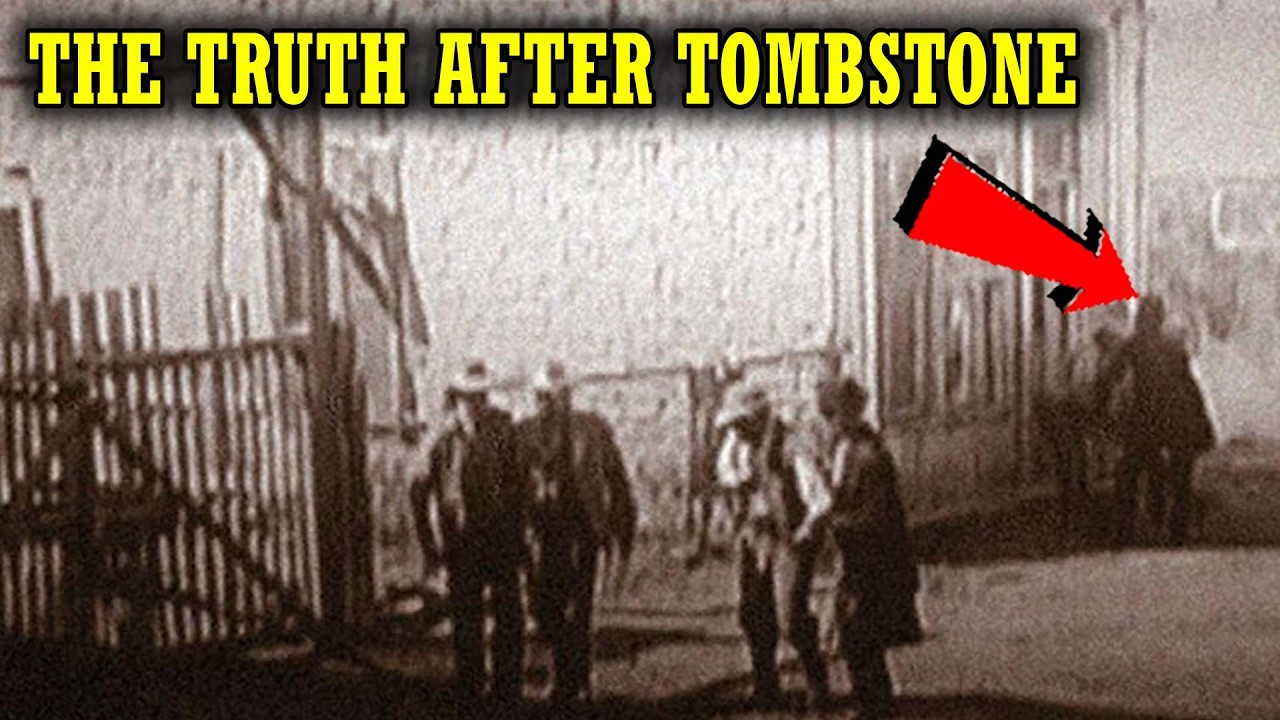
What had begun as a small mining camp of a few hundred residents had exploded into the largest community in the Arizona Territory, with more than 7,000 people drawn by highly productive silver mines. That rapid growth brought economic opportunity—but also cattle rustling, cross-border smuggling, and a loose network of outlaws known as the Cowboys, who operated across the region with little interference until federal authority began to expand
. The tension between the Earps and the Cowboys did not emerge overnight. Virgil Earp served as a Deputy US Marshal and later as town marshal, while his brother Wyatt worked alongside him, and the two repeatedly found themselves enforcing laws against figures like Ike Clanton, Billy Clanton, Frank McLaury, Tom McLaury, and Johnny Ringo.
Ike Clanton, in particular, was known for voicing open hostility toward the Earps, especially after drinking, and the rivalry deepened through a series of earlier incidents, including a stagecoach robbery near Contention City that left two passengers dead, and a deadly attack on Mexican travelers in Skeleton Canyon
. By March 1881, law enforcement efforts had already drawn threats, with Frank McLaury warning Morgan Earp that further attempts at enforcement could bring serious consequences. Those warnings set the stage for October 26th, when tensions reached a breaking point. The night before the gunfight, Ike Clanton and Doc Holliday had a heated disagreement, yet even amid hostilities, Virgil Earp and County Sheriff Johnny Behan spent that same evening playing cards and drinking alongside members of the opposing faction—a reflection of the fluid, overlapping personal and professional boundaries common in frontier boomtowns
.
The morning of the gunfight, Ike Clanton remained in town, drinking and carrying a weapon in violation of a local ordinance requiring visitors to deposit firearms upon entering town. Virgil Earp and Morgan Earp subdued him, removed his weapon, and escorted him to court, while Wyatt Earp separately disarmed Tom McLaury, who denied being armed but was found otherwise. Shortly afterward, Billy Clanton and Frank McLaury arrived in town, apparently to support their associates, and a witness alerted both Sheriff Behan and Virgil Earp that the group was armed and in serious discussion near Dunbar’s Corral. Harold
.
Virgil, as town marshal, decided to enforce the disarmament ordinance and organized a small group: his brothers Wyatt and Morgan, along with Doc Holliday. He retrieved a shotgun from the Wells Fargo office and handed it to Holliday. As the group moved toward the lot adjacent to the OK Corral, Johnny Behan, known for friendly ties with Cowboys, attempted to stop them, claiming the men had already surrendered their weapons. Virgil chose to proceed anyway, and because of Behan’s assurance, the Earps approached without full defensive precautions—a decision that may have put them at an early disadvantage
.
When the group encountered the Cowboys near the vacant lot, Virgil ordered them to raise their hands and surrender their arms. Some individuals scattered, others remained, and within seconds—by some estimates, around 30 shots fired in roughly 30 seconds—the confrontation was over. Tom McLaury, Frank McLaury, and Billy Clanton lay dead; Virgil Earp, Morgan Earp, and Doc Holliday were wounded; Wyatt Earp emerged physically unharmed
. The aftermath was far from the clean resolution often portrayed.
The bodies of the fallen Cowboys were placed on public display at a local undertaker’s establishment, accompanied by a sign emphasizing the circumstances of their deaths—and public opinion was divided, not overwhelmingly supportive of the Earps. On October 30th, Ike Clanton formally brought murder charges against the Earp brothers. Because Virgil and Morgan were recovering from injuries, only Wyattand Doc Holliday were taken into custody, remaining detained for over two weeks until Judge Wells Spicer ruled on November 30th that their actions fell within the bounds of the law
. Ike Clanton attempted again in December, filing charges in Contention City, but the case was dismissed quickly for lack of evidence.
Around the same time, Judge Spicer received anonymous threats and was advised to leave the area, and John Clum, a known Earp supporter, was also targeted. On December 28th, Virgil Earp was seriously wounded in an ambush, leaving him with a permanent injury that affected the use of his arm. The following day, Wyatt Earp was appointed Deputy US Marshal for Eastern Pima County, expanding his authority during an increasingly volatile period
. By February 1882, Ike Clanton had made yet another attempt to bring charges, again without success.
Meanwhile, the Earp family faced growing financial strain, relocating to the Cosmopolitan Hotel for security reasons, and Wyatt was forced to mortgage his home—which he ultimately lost when he could not meet payments. The consequences of the OK Corral extended far beyond the initial encounter, leaving the family under legal, financial, and personal siege
. On March 18th, 1882, tragedy struck again: Morgan Earp was critically wounded while playing billiards late at night, as shots were fired through a window of the billiard hall. He died less than an hour later.
Pete Spence, a suspected participant, surrendered to Johnny Behan—likely seeking protection in custody—but the case against him was dismissed due to insufficient evidence. In later accounts, Doc Holliday expressed the view that Behan bore responsibility for failing to prevent the incident
. Three days later, Wyatt Earp received information that Frank Stillwell, Ike Clanton, and others were waiting near the Tucson rail station, reportedly intending to intercept Virgil Earp as he prepared to leave the territory for California. Wyatt organized a group, including his brother Warren, Doc Holliday, and several associates, to escort Virgil and his wife safely from Benson to Tucson.
Upon arriving at the station, members of Wyatt’s group observed Stillwell and others present. According to later recollections, the opposing group initially withdrew upon seeing the escort but returned, and a confrontation followed during which Frank Stillwell lost his life. Local authorities then issued arrest warrants for Wyatt, Warren, and several members of their group
. In the aftermath, Wyatt concluded that the legal system in the Arizona Territory was unlikely to resolve the situation effectively.
With his appointment as Deputy US Marshal, he expanded his group with additional men, including Texas Jack Vermillion, forming what is often described as a federal posse. Meanwhile, Sheriff Johnny Behan organized his own posse, which included individuals associated with the Cowboy faction, such as Johnny Ringo and Phineas Clanton, with the objective of locating and arresting Wyatt and his associates. Authority in the region had become deeply divided, with competing groups attempting to enforce the law from opposing perspectives
. On March 24th, 1882, Wyatt’s group unexpectedly encountered members of the Cowboy faction near Iron Springs.
Both sides were taken by surprise, and a briefyet intense exchange followed. Historical accounts, many based on later recollections, indicate that Curly Bill Brocius was struck during this encounter and died at the scene, though details remain debated among historians. During the confusion, several of Wyatt’s men were forced to take cover, while Wyatt, positioned in a more exposed area, returned fire and reportedly struck at least two opposing individuals before withdrawing. Despite later narratives claiming his clothing was hit multiple times, Wyatt himself was not physically injured—an outcome that contributed to his enduring reputation, though some elements of those accounts may have been embellished over time
.
The following day, Behan organized a larger search party of around 25 men to pursue Wyatt’s group, but was unable to locate them after more than a week of effort. The historical record suggests that Wyatt Earp’s so-called Vendetta Ride was far less dramatic than later films have depicted. The actual events were more restrained, shaped by uncertainty, limited resources, and the realities of frontier life. Following the deaths of individuals believed connected to earlier conflicts, including Curly Bill Brocius, Wyatt appears to have felt that the immediate objective had been achieved—or at least that continuing the pursuit carried increasing risk.
Some accounts suggest the group recognized how precarious their situation had become, influencing their decision to withdraw. Soon afterward, the Earp group left the Arizona Territory and spent several weeks in New Mexico. By late April 1882, the group dispersed, and Wyatt Earp, along with Doc Holliday, chose to leave the region entirely
. The gunfight at the OK Corral may have lasted less than a minute, but its consequences echoed for months, reshaping lives and deepening divisions across Tombstone and beyond.
What followed was not a clean ending, but a tangled aftermath of legal battles, personal loss, and a fragile system of justice struggling to maintain control. Figures like Wyatt Earp and Doc Holliday did not simply walk away—they carried the weight of everything that came after, in ways that history does not always show