Wild Bill Hickok was one of the most feared lawmen and gunfighters of the American Old West, yet he was killed by a single shot from behind while playing poker in Deadwood. Jack McCall pulled the trigger, but the real mystery lies in whether he acted alone. A refused seat, changing stories, missing suspects, and claims of a paid assassination have all raised the same question for generations. Who really betrayed Wild Bill Hickok?

By the summer of 1876, Deadwood was one of the roughest new settlements in the American West. Gold attracted miners, gamblers, merchants, cowboys, drifters, and professional card players to the Black Hills at astonishing speed. Buildings went up almost overnight, but a stable legal system did not arrive as quickly. Deadwood had no established local court when Wild Bill Hickok arrived in town.
People still needed rules, so residents sometimes organized their own temporary courts and selected local men to serve as judges, sheriffs, or jurors. That could create order for daily disputes, but it was not the same as a legally recognized territorial court. James Butler Hickok, known across the Old West as Wild Bill, arrived in the Black Hills with a wagon train organized by his friend Colorado Charlie Utter. The group reached the Deadwood area in July 1876, just weeks before Hickok was killed.
Calamity Jane was also associated with the journey, though later popular stories greatly exaggerated the idea of a romance between her and Hickok. Hickok was 39 years old. His best years as an active lawman were behind him. He had served in places like Hays City and Abilene, Kansas, worked as an army scout and deputy U.
S. marshal, and by the mid-1870s gambling had become one of his main ways of earning a living. There were also reports that his eyesight had begun to fail, though the exact medical cause remains uncertain. On March 5, 1876, Hickok married Agnes Thatcher Lake in Cheyenne.
Shortly after, he headed toward the Black Hills, apparently hoping to improve his financial standing. Instead of becoming a successful gold prospector, he spent most of his short time in Deadwood gambling. People in town recognized him immediately. Wild Bill Hickok’s name carried enormous weight.
He had appeared in newspaper stories for years and had even performed on stage with Buffalo Bill Cody before deciding the acting life was not for him. But Deadwood was different from the towns where Hickok had worn a badge. He arrived as a famous private citizen, not as a formal lawman responsible for controlling the streets. Hickok had not built his reputation by avoiding dangerous people.
During his years as a lawman, scout, and gunfighter, he was involved in several deadly confrontations. One of the most significant incidents occurred in Abilene in October 1871. Hickok was working as town marshal when he confronted saloon owner Phil Coe. The two exchanged gunfire, and Hickok fatally wounded Coe.
In the confusion, another armed figure approached the scene. Hickok reacted instantly and fired. The man was Mike Williams, a friend and policeman who had apparently come to help him. Williams was killed accidentally.
The incident showed both sides of Hickok’s reputation. His quick reactions helped him survive dangerous situations, but the same instinct could lead to tragic consequences. Years of law enforcement work created another problem. Arresting armed men and confronting violent gamblers did not produce only friendships.
Hickok accumulated enemies and grudges. By the time he reached Deadwood, it was almost impossible for him to know whether every stranger was harmless. Someone might recognize him from newspaper stories while Hickok had no idea who that person was. One of the most repeated details about Wild Bill Hickok is that he preferred to sit with his back protected.
That basic idea makes perfect sense for a man with his history. If Hickok sat facing a wall, he could watch the room rather than constantly wonder if someone was approaching from behind. Accounts of his final days say that when he joined a poker game at Nuttall and Mann’s Saloon, the seat he wanted was already taken. A player named Charles Rich, often referred to as Charlie Rich in later accounts, was occupying the safer seat.
According to the traditional account, Hickok asked Rich to exchange seats with him. Some versions say he asked twice. Rich refused. That refusal created one of the easiest suspects for anyone looking for the person who supposedly betrayed Wild Bill.
If Rich had switched seats, Hickok might have been facing the direction from which Jack McCall approached. Hickok could have seen him coming. But there is no reliable evidence that Rich knew McCall was about to attack Hickok. There is no solid proof that McCall paid Rich, threatened him, or arranged the seating with him.
Perhaps Rich simply wanted to keep his own seat. The decision only became significant because of what happened afterward. Poker on August 1 gave McCall a potential personal motive without requiring any secret conspiracy. McCall sat with one of the most famous gamblers and gunfighters in the West.
He lost his money. Then Hickok offered him money for a meal and effectively told him not to keep playing unless he could cover his losses. Some men would have accepted that as kindness. Another man might have interpreted it as a public insult.
Later accounts often say McCall felt insulted, but the emotional sequence cannot be precisely determined. McCall himself changed his explanation more than once. While in custody after his first acquittal no longer protected him, McCall claimed that Hickok had cheated him at cards and treated him badly. That version differed from the original story about family revenge.
The poker motive does have one advantage over the more dramatic theories. We know McCall and Hickok had recently gambled together. There was a real interaction that could have created some kind of resentment. It also explains why McCall did not need inside information.
He already knew Hickok’s routine. He had been inside the saloon and in the game himself. At noon on August 2, 1876, Wild Bill Hickok was playing cards again at Nuttall and Mann’s Saloon in Deadwood. This time, he was sitting in a position he normally avoided, with his back exposed to part of the room.
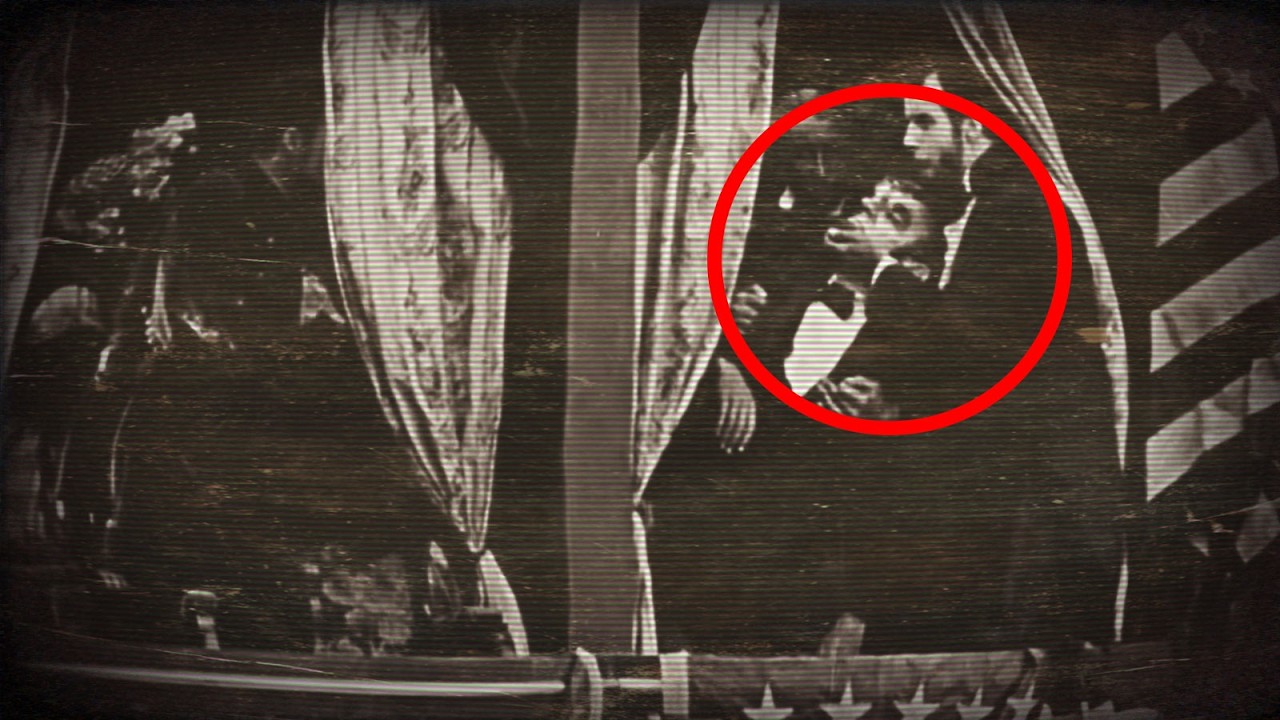
Jack McCall entered. He moved behind Hickok and fired a pistol shot into the back of his head at close range. Contemporary reports described a devastating wound, with the bullet passing through Hickok’s head and exiting his face. Another player at the table, Captain William Massie, was reportedly hit in the wrist by the bullet after it passed through Hickok.
Wild Bill died instantly. Accounts usually say McCall shouted words like “take that” as he fired. Hickok had almost no chance to react. This was not the classic Old West duel that movies later made famous.
There was no warning followed by two men drawing their weapons at the same time. Hickok was seated and McCall attacked him from behind. McCall tried to flee but was quickly captured. The people inside the saloon knew who had fired the shot.
There was no ambiguity about the gunman’s identity. The mystery lay in why he did it. The traditional account says Hickok was holding two black aces and two black eights when McCall shot him. That hand later became known as the Dead Man’s Hand.
The exact details are not as simple as popular culture sometimes suggests. Historical accounts have differed on the fifth card and even on the details of the poker game being played. What matters in the crime story is that Hickok was focused on the game when McCall approached. After his arrest, Jack McCall needed an explanation that would make killing Hickok seem justifiable to men living in a frontier mining camp.
He claimed revenge. At his first trial, McCall said Wild Bill Hickok had killed his brother in Abilene and that he killed Hickok to settle the score. The story was powerful because revenge for a murdered relative was something frontier jurors might understand even if it did not meet formal legal standards. Hickok had indeed killed men while serving as a lawman in Kansas, so the claim was not impossible in principle.
But investigators later found serious problems with the story. No conclusive evidence ever proved that Hickok killed McCall’s brother. Later information about McCall’s family did not support the revenge account. Shortly before McCall’s execution, a letter from his sister helped identify him and indicate his family, but it provided no support for the existence of the mysterious murdered brother said to have driven McCall to commit the crime.
The key point is not that every detail about McCall’s family can now be perfectly reconstructed. The key point is that McCall could not prove his main claim. His story also changed. At different times, he blamed family revenge, a gambling dispute, and eventually other men allegedly paid to kill Hickok.
Deadwood residents moved quickly after Hickok’s murder. A trial was organized at McDaniel’s Theatre on August 3, the day after the crime. This was not a regular territorial court. Because of Deadwood’s unusual legal status, the community created an informal miners’ court to handle the case.
Local men were selected to perform the roles usually filled by official judges, law enforcement officers, and jurors. McCall admitted to the shooting but presented the revenge story. He claimed Wild Bill had killed his brother. The jury acquitted McCall.
The speed of the acquittal shocked people who believed Hickok had clearly been murdered. A contemporary newspaper report later criticized the outcome, and the verdict quickly became part of the mystery surrounding the case. The acquittal also fueled darker suspicions. Rumors spread that McCall had received help, or that money had been paid, or that influential people wanted him released before he could reveal more about the crime.
Those claims are very difficult to prove. The first trial allowed conspiracy theories to grow almost immediately. Some reports claimed McCall seemed to have more money after his acquittal than he had before the trial. Stories circulated about cash and even a gold watch and chain.
These reports were repeated in later accounts as possible signs that McCall had been paid to kill Hickok. The problem lies in the evidence. A sudden increase in McCall’s money would certainly be suspicious, but suspicion is not the same as proof that someone hired him. Without a reliable record showing who gave McCall money and why, the story cannot identify the betrayer.
McCall himself later encouraged the conspiracy theory. After being arrested again, he eventually claimed that another man hired him to kill Wild Bill. That man was John Varnes. This changed the case entirely.
If McCall was telling the truth, the crime was not merely revenge for a brother and not just anger over a poker game. It was a planned assassination in which McCall worked as a hired gun for someone else. But the timing of this accusation makes it difficult to trust. McCall raised this claim while facing legal proceedings that could end in his execution.
He had offered other explanations before. He also had every reason to place blame on someone who was not in custody. John Varnes is the name that turns the murder of Wild Bill Hickok from a straightforward killing into a possible paid assassination. After McCall was placed in legal custody and was awaiting proceedings in Yankton, he reportedly attempted to escape jail with another prisoner.
The attempt failed. Afterward, McCall presented a new story. He claimed a man named John Varnes paid him to kill Wild Bill Hickok. According to the accusation, Varnes had previous problems with Hickok.
One account linked their hostility to an earlier incident in Denver. Another part of the story involved a dispute in Deadwood where Hickok allegedly intervened and used his weapon to break up a fight involving Varnes. McCall’s accusation was serious enough that officers went looking for Varnes. They could not find him.
That disappearance kept this theory alive for generations. If Varnes was innocent, why was he not available when authorities wanted to question him? If he was involved, did he leave because he learned McCall was talking? Unfortunately, these questions go beyond what the remaining evidence can answer.
People in mobile mining settlements disappeared for ordinary reasons all the time. Men changed locations, followed new gold discoveries, traveled under different names, or simply left town. Varnes’s disappearance only looks suspicious when viewed alongside McCall’s accusation. There is another problem.
McCall had already lied, or at least presented a story with no evidence, about his brother. A man whose first defense failed has a strong incentive to invent a second explanation. The authorities never seem to have obtained the evidence needed to charge Varnes with arranging Hickok’s murder. Some accounts suggest McCall also implicated a man named Tim Brady.
Like Varnes, Brady was not found when authorities tried to investigate this claim. This makes the story seem organized. Two men disappear, the killer says he was paid, and the victim is a former lawman with a long list of enemies. Later writers have sometimes presented very precise versions of the story, including specific amounts of money and detailed conversations between McCall and the men who wanted Hickok dead.
Some of those claims came from memories recorded years after the murder. That does not mean every part of the story is false. It means the level of certainty must remain limited. One of the oldest theories says some gamblers and violent men in Deadwood feared that Wild Bill Hickok would eventually become a lawman in the camp.
The idea seems plausible because Hickok had done that kind of work before. He had served as an officer in some of the toughest cattle towns in Kansas. If Deadwood wanted someone with a strong enough reputation to control armed men, Wild Bill was an obvious candidate. Later accounts mention rumors that Hickok might take a law enforcement position.
But there is a large gap between rumor and official appointment. No conclusive evidence shows that Hickok had been formally selected as Deadwood town marshal before his death. He had only been in town for a few weeks. His eyesight was reportedly failing.
He spent much of his time gambling, and his career as a full-time lawman had already faded. Charlie Rich is perhaps the easiest person to accuse if the word betrayal is taken in its literal sense. He was right there. He was sitting in the seat Wild Bill wanted.
He reportedly refused to move from it. Minutes or hours later, depending on how the day is reconstructed in various accounts, Hickok was killed because Jack McCall was able to approach him from behind. But no reliable evidence proves Rich intended any of this to happen. There is no known statement from McCall saying Rich arranged the seating.
There is no documentation of money being paid to Rich by Varnes, Brady, McCall, or anyone else. There is no established meeting in which Rich agreed to make Hickok vulnerable. The strongest claim supported by the traditional account is simple. Rich refused to exchange seats with Hickok, leaving Wild Bill in a position he normally tried to avoid.
Calling that betrayal adds intent that the evidence does not show. Another name sometimes pulled into Wild Bill Hickok stories is Colorado Charlie Utter, because he was one of Hickok’s closest companions in Deadwood. The evidence regarding Utter points to the opposite of betrayal. Utter had organized the wagon train that brought Hickok toward the Black Hills.
After the murder, he took charge of Hickok’s body and arranged the funeral service. Contemporary reports described him as a close friend of Wild Bill, and the grave marker he arranged carried a personal farewell from Colorado Charlie. Utter also paid for Hickok’s burial. Years later, when Hickok’s remains were moved to Mount Moriah Cemetery, Utter was involved again.
These are not the actions historians usually expect from a man secretly involved in arranging his friend’s murder. Calamity Jane became so closely associated with Wild Bill Hickok in popular culture that many assume she was one of the central figures in his final days. The evidence is far less dramatic. Martha Jane Canary, known as Calamity Jane, traveled in the same group heading toward the Black Hills, but later claims of a deep love story or marriage between her and Hickok are not supported by reliable records.
Hickok had recently married Agnes Lake. Calamity Jane later told stories that strengthened her connection to Wild Bill, and she was eventually buried near him in Deadwood. There is no reliable evidence that she betrayed Hickok, helped McCall, knew about the shooting plan, or arranged the fatal poker game. Jack McCall’s biggest mistake after leaving Deadwood was believing the first acquittal had ended the matter.
He traveled to Wyoming Territory and reportedly spoke openly about killing Wild Bill Hickok. Instead of disappearing quietly, he drew attention to himself. Authorities arrested him on August 29, 1876. McCall argued that he had already been tried and acquitted, but the first proceeding in Deadwood was not recognized as a valid legal trial.
Because Deadwood had been operating without a legal local court with jurisdiction over the murder, and because the first miners’ proceedings lacked that authority, McCall could be tried again. He was eventually taken to Yankton, the territorial capital. A formal murder indictment followed in October. His case went to trial in December 1876.
This time the process was completely different. Witnesses could be examined through an established legal system, and McCall’s original story about killing Hickok in revenge for his brother did not hold up well. Evidence was presented about the poker interaction. One witness also reported seeing McCall approaching Hickok with a gun before the fatal shot, but he was interrupted.
If that testimony was accurate, it supports the idea of planning rather than a sudden emotional reaction. The jury found McCall guilty. He was sentenced to death in January 1877. Appeals and attempts to obtain a pardon failed.
On March 1, 1877, Jack McCall was hanged in Yankton for killing Wild Bill Hickok. The execution settled McCall’s legal responsibility. It did not settle his motive. McCall had already offered too many explanations.
Revenge for a brother, gambling-related anger, and the claim that John Varnes hired him, not all of them could be accepted without contradiction. One of those stories might contain the truth. McCall made sure historians never got an easy answer. The strongest remaining evidence does not identify a close friend who secretly betrayed Wild Bill Hickok.
Charlie Rich refused to give up the safer seat, but nothing reliable connects him to Jack McCall’s killing plan. Colorado Charlie Utter was Hickok’s friend, organized his funeral, paid for his burial, and left a personal message on his grave marker. Nothing concrete ties Utter to the murder. Jack McCall is the only person whose direct role is beyond dispute.
He walked behind Wild Bill Hickok in Nuttall and Mann’s Saloon on August 2, 1876, drew his gun, and fired into the back of his head. The unresolved part is whether McCall acted entirely alone. His first explanation was revenge for a brother he claimed Hickok had killed. That claim was never successfully proven.
Another explanation focused on the earlier poker game and McCall’s anger or humiliation after losing money. Then came the more serious conspiracy claims. McCall said John Varnes paid him to kill Hickok. Varnes was not found when authorities tried to investigate.
Some accounts also link Tim Brady to the alleged plot. But McCall had already shown that his explanations could change with his circumstances. His accusation against Varnes came when McCall faced severe legal danger and had a clear reason to shift responsibility. No court ever proved Varnes hired him.
No remaining evidence shows Charlie Rich deliberately placed Hickok in the vulnerable seat. No document proves a group of Deadwood gamblers organized the assassination. The known facts support a murder committed by Jack McCall. They support several possible motives.
They support a genuine contemporary investigation into McCall’s accusation against John Varnes. But they do not provide enough evidence to turn that accusation into proven fact. That ambiguity is why the killing of Wild Bill Hickok remains different from many other Old West murders. Everyone knew who pulled the trigger.
More than a century later, the unanswered question remains who, if anyone, stood behind the man who did it.