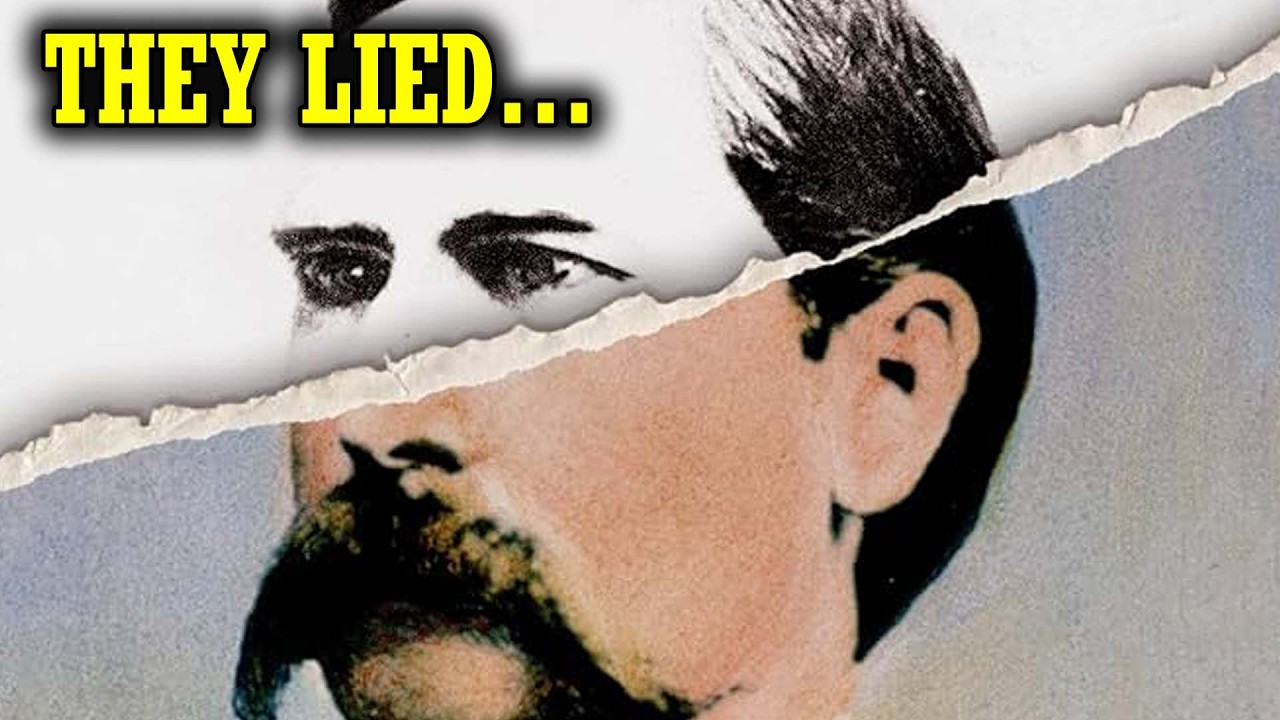
Wyatt Earp is remembered as one of the most famous lawmen of the American frontier, but modern historians increasingly argue that much of his legend was carefully shaped and embellished long after the gun-smoke cleared. The men who chronicled his life—most notably Stuart Lake in his 1931 book *Wyatt Earp, Frontier Marshal*—played a major role in crafting the narrative that would define his image, often presenting accounts that contemporary records do not support. ely
One of the most widely repeated stories involves Earp detaining the well-known Texas gunman Ben Thompson in Ellsworth, Kansas, during the 1870s. According to Lake, Earp arrived in town, frustrated by the lack of law enforcement, borrowed equipment, and calmly confronted Thompson, who reportedly chose to resolve the matter through legal channels.
But decades of research have failed to uncover any court filings, newspaper reports, or eyewitness testimony confirming that Earp ever arrested Thompson. Most modern historians have concluded that the episode lacks historical support. ley
A lesser-known manuscript by John Flood Jr. , an unfinished attempt to document Earp’s life, offers a different version of events.
In that account, Thompson was taken into custody in Ellsworth after an incident involving his brother, but the arrest was carried out by a local deputy named Ed Hogue—not Earp. Hogue would later cross paths with Earp again in Dodge City, where Earp briefly detained him for a minor offense, suggesting the two men moved in the same circles. About a year later, Earp became involved in a disagreement with a group of Texans believed to be acquaintances of Thompson. Earp reportedly told them to consult Thompson, implying a degree of mutual recognition and respect between the two men, rather than a dramatic confrontation.
While there is no evidence Earp intervened directly in Ellsworth as later stories claimed, historians note that his apparent approach—encouraging compliance with the law rather than relying on force—aligned with the day-to-day duties of frontier peace officers, whose primary goal was often to prevent trouble before it escalated. ely
Another celebrated tale, recorded by Lake, places Earp at the center of a dangerous standoff in Tombstone, Arizona, in January 1881. According to this account, a young gambler named Mike O’Rourke—nicknamed Johnny Behind the Deuce for his faro betting habits—was arrested after killing an engineer named W. P.
Schneider in Charleston, Arizona, following a brief exchange of sharp remarks. Local miners, many of whom knew Schneider, demanded swift justice, forcing Charleston constable George McKelvey to avoid the direct route to Tucson. Instead, he set out toward Tombstone to secure additional support. ely
Members of the Earp family became involved in safely moving O’Rourke ahead to Tombstone, where Virgil Earp and their brother James were located.
Tombstone authorities, including Marshal Ben Sippy, prepared for the next leg of the transfer to Tucson. In Lake’s telling, Wyatt Earp stepped forward and single-handedly held back a large, charged crowd. Modern historians, however, regard this version as largely embellished. Andreas Isenberg, author of *Wyatt Earp: A Vigilante Life*, has noted that earlier writers, including Forestine Hooker and John Flood Jr.
, described the episode in similarly exaggerated ways, suggesting later authors borrowed heavily from earlier versions. At the time, Wyatt Earp was not serving as a marshal or holding any official authority in Tombstone, making the claim that he could legally declare the prisoner his difficult to support. Contemporary records offer a more restrained picture. George Parsons, a well-known Tombstone resident, recorded in his journal that he witnessed the events along Allen Street that evening.
He described a tense situation in which officers worked to protect O’Rourke while temporarily swearing in additional deputies, some of whom were gamblers, to assist. Many miners armed themselves and made repeated attempts to reach the prisoner, creating moments of confusion, but the officers ultimately succeeded in escorting him out of town toward Tucson. The January 27 edition of the *Tombstone Epitaph* credited Ben Sippy, John Bean, and Virgil Earp with maintaining control of the situation—notably, Wyatt Earp was not mentioned, a significant omission given the importance later writers assigned to his role
ely
Years later, however, several witnesses placed Wyatt closer to the center of events. Fred Dodge, a Wells Fargo agent, later stated that Wyatt played a central role in keeping the crowd under control, while suggesting John Behan and Ben Sippy remained largely on the sidelines.
John Clum, writing years afterward, credited Wyatt with most of the action and was openly critical of Sippy. Even George Parsons revisited the event in a 1903 article, crediting Wyatt with playing a leading role in calming the situation. Since this was written before Wyatt’s legend fully took shape in national media, historians consider it less likely to have been influenced by later myth-making. Billy Breakenridge, who served under Sheriff Behan, went further in his 1926 book *Helldorado*, describing Wyatt as the one who confronted the crowd and held his ground—while curiously making no mention of Behan’s role at all.
While these conflicting accounts make it difficult to draw firm conclusions, most historians agree on two core points: Wyatt was present, and O’Rourke was successfully protected from harm and transferred out of Tombstone. The event appears less like a dramatic single-hero showdown and more like a coordinated effort by multiple individuals, with Wyatt likely playing a role—though perhaps not the dominant one later legend portrayed. ely
Another element of the legend, the relationship between Wyatt Earp and Josephine Sarah Marcus, known as Sadie, has also come under scrutiny. Early accounts of Earp’s life mentioned her only briefly, but later retellings portrayed her as a central figure—a beauty whose presence supposedly fueled tensions between Earp and John Behan.
Stuart Lake, while researching his book, began to view her as a key element in the story, even suggesting her relationship with Behan helped shape many of the events surrounding Earp’s time in Tombstone. However, modern historians find little evidence from contemporary records—such as newspapers, legal documents, or first-hand memoirs—indicating that Marcus and Earp were romantically involved during their time in Tombstone. The idea of a dramatic love triangle between Marcus, Behan, and Earp appears to have developed later, shaped more by storytelling than verifiable facts. Lake himself chose to minimize her role in his book, reportedly out of concern that she might take legal action if her portrayal was not to her liking.
After leaving Arizona, Wyatt and Josephine did live together in California and remained partners for the rest of their lives. But during their Tombstone years, the record is strikingly silent—no letters, newspaper references, or contemporary accounts clearly place them together as a couple. Later claims of a visible connection gained traction after the publication of Frank Waters’ *The Earp Brothers of Tombstone*, but subsequent scholarship has cast serious doubt on the book’s reliability. The discovery of Waters’ earlier manuscript, *Tombstone Travesty*, revealed notable differences from the published version, reinforcing concerns that parts of the narrative were altered or embellished.
Tombstone, while a busy frontier town, was still close-knit enough that notable relationships rarely went unnoticed. If Wyatt and Josephine had been openly involved, at least one reliable source would likely have mentioned it. Instead, the available evidence suggests their meaningful relationship developed later, after their departure from Tombstone, rather than during the events at the heart of Earp’s legend. The story of Wyatt Earp, stripped of myth, is less that of a flawless hero and more that of a complex figure navigating a rough and unpredictable frontier—a reminder that in the Old West, truth was often blurred by storytelling.
When examining his life closely, historians find that the record supports a more complicated portrait: a man who was present at key moments, who likely assisted in maintaining order, but whose role was magnified and dramatized by later writers eager to craft a legend. The most important consequence of the Earp saga may be the lesson it offers about history itself: that the stories we tell about the past are often shaped as much by the tellers as by the actual events. The real Wyatt Earp may not fit neatly into the role of hero or villain, but the effort to separate the man from the myth continues to fascinate historians, precisely because it reveals how legends are built, reshaped, and sometimes exaggerated over time.
.