The American frontier was not a single, sweeping narrative of cowboys and gunfights, but a brutal, chaotic patchwork of boomtowns, speculative ventures, and survival instincts. Long before the iconic gunfight at the O. K.
Corral cemented his name in history, Wyatt Earp was a drifter, a gambler, and an entrepreneur navigating the lawless edges of a rapidly expanding nation. His journey reveals a man who was less a fearless hero and more a shrewd survivor, constantly chasing the next economic wave across a continent being reshaped by railroads and mineral wealth.
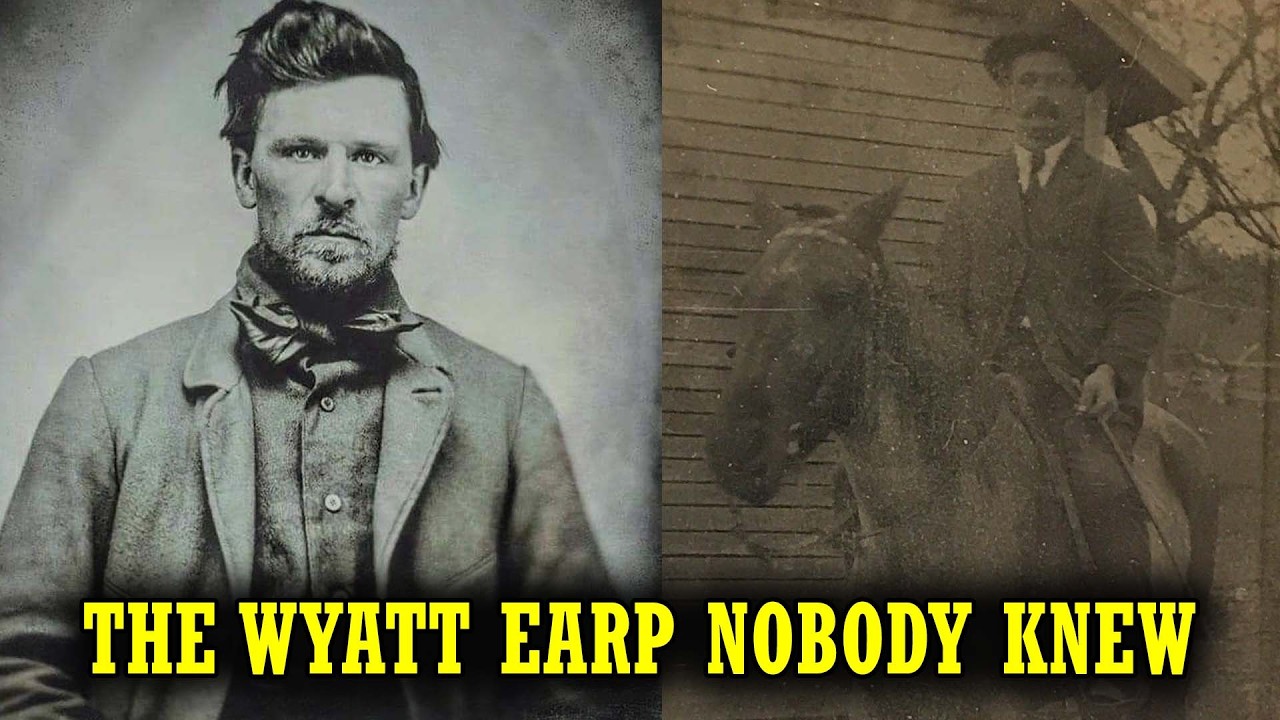 Born on March 19, 1848, in Monmouth, Illinois, Earp came of age during a period of profound national transformation. The Civil War had just ended when he was seventeen, and the country was pivoting westward with an almost manic energy. The discovery of gold at Sutter’s Mill in 1848 had already triggered a massive migration, but it was the completion of the Transcontinental Railroad in 1869 that truly connected the Eastern and Western United States.
This iron link made travel, trade, and the movement of goods and people faster than ever before, fueling the growth of isolated mining camps into bustling, dangerous towns.
Historian Richard Lingenfelter described the subsequent migration as one of the defining movements of the 19th century West. The Earp family, led by the restless Nicholas Earp, embodied this movement. They shifted from Illinois to Iowa, then to California in 1863, before eventually settling in Lamar, Missouri, in 1868.
For Wyatt, this nomadic existence was formative. He and his brother Virgil worked as teamsters, hauling freight across frontier communities, a job that required grit and an intimate knowledge of the harsh terrain. It was a life that taught him the value of nerve and the necessity of adaptability.
The frontier economy was not built on mining alone. It was sustained by the services that supported the miners. Wyatt once famously described his occupation as “mining the miners,” a candid admission that he earned his living from the economic activity surrounding the camps rather than from digging for ore.
This approach was common among savvy entrepreneurs who recognized that gambling halls, saloons, hotels, and transportation services could often yield greater and more consistent profits than the unpredictable search for precious metals. This philosophy would guide Earp’s career for decades.
By the early 1870s, Wyatt had relocated to Dodge City, Kansas, a town transformed almost overnight by the arrival of the Atchison, Topeka, and Santa Fe Railway. Dodge City became a primary shipping point for cattle, earning its reputation as one of the West’s most famous and violent cattle towns. Contemporary accounts describe a chaotic landscape filled with saloons, dance halls, and gambling establishments catering to cowboys and railroad workers.
It was here that Earp honed his skills as a professional gambler, first as a player and later as a faro dealer, a card game that was a staple of the era’s gaming tables.
His role in Dodge City was fluid, reflecting the nature of frontier employment. He worked in law enforcement occasionally, but his primary identity was that of a businessman and gambler. This was a common pattern for the Earp brothers, who learned that rapidly growing towns provided greater financial opportunities through business and public service than through traditional labor.
They were not settlers in the agrarian sense; they were economic opportunists who followed the money, and in the 1870s, the money was flowing toward the mining boomtowns of the West.
In September 1876, Wyatt and his younger brother Warren traveled north to the Black Hills of the Dakota Territory during a significant gold rush. They arrived in Deadwood shortly after the death of Wild Bill Hickok, an event that added to the town’s already notorious reputation. The economic opportunities in Deadwood proved inconsistent, however.
Warren left the area quickly, while Wyatt remained through the harsh winter of 1876-77 before returning to Dodge City. The experience illustrated the boom-and-bust cycle that defined many frontier settlements, where fortunes could be made and lost with the changing seasons.
 The next major chapter began when Wyatt’s older brother Virgil, serving as a constable in Prescott, Arizona, informed him of promising silver discoveries near a place called Tombstone. Prospector Ed Schieffelin had found silver in 1878, and the news was spreading. Wyatt and his brother James headed south to the Arizona Territory, arriving in late 1879.
By that time, Virgil had become a Deputy U. S. Marshal, and James was also involved in law enforcement.
The Earp brothers were positioning themselves at the center of a new economic boom.
By early 1881, the Earps were firmly entrenched in Tombstone’s economy. They held interests in mining claims and participated in the town’s gambling and saloon businesses. Wyatt gained a share in the Faro operation at the Oriental Saloon, working as both a manager and a security employee.
This move allowed him to transition from a professional gambler into a business owner with a vested interest in the town’s stability. He also occasionally assisted with police duties, balancing his commercial interests with the public authority that came with a badge.
The atmosphere in Tombstone, however, grew increasingly tense. Disputes developed between the Earps and a loosely connected group of ranchers and outlaws known as the Cowboys. These conflicts were rooted in political, economic, and personal rivalries that extended far beyond simple lawlessness.
The tension culminated in the famous confrontation near the O. K. Corral in October 1881.
While the gunfight itself lasted only about thirty seconds, its aftermath was devastating for the Earp family. The vendetta that followed, which included the murder of his brother Morgan, forced Wyatt to leave Tombstone for good.
After departing Arizona, Wyatt continued his pattern of following mining rushes. He traveled with his long-time friend Bat Masterson through places like Albuquerque, Trinidad, and Gunnison, all communities influenced by mining and railroad expansion. In 1884, he relocated with his brothers Warren and James to Eagle City, Idaho, after reports of rich placer gold discoveries in the Coeur d’Alene region.
There, they opened a saloon known as the White Elephant, continuing the business model that had defined Wyatt’s career.
Life in the Idaho mining camps was rugged and isolated. Disputes over land boundaries and mining claims were common and could turn violent quickly. In March 1884, a business associate of Wyatt’s, Jack Enright, became involved in a serious gunfight with a man named Bill Buzzard over the location of a building.
 Wyatt and his brother James stepped in to calm the situation before anyone was killed. Such incidents were a reminder of the unstable atmosphere in these frontier camps, where legal systems were still developing and personal property disputes could easily spiral into bloodshed.
Wyatt’s role in these communities was often ambiguous. He served in a deputy sheriff role in parts of the region while simultaneously running his saloon. This dual role as lawman and businessman was common, but it also created conflicts of interest.
Accusations later surfaced claiming that Wyatt may have used his law enforcement position to benefit his business interests or participated in questionable mining claim practices. Historians continue to debate these claims, as the surviving records are incomplete and often colored by personal rivalries and newspaper sensationalism.
The Earps left Idaho sometime between late 1885 and early 1887. Wyatt then settled in San Diego, where he became involved in the city’s booming real estate market. He continued to operate saloons and gambling businesses, but the frontier was changing.
The era of the open range and the wild boomtown was giving way to more established cities and corporate enterprises. Yet, the call of the gold rush remained strong, and in September 1897, Wyatt and his wife Josephine traveled north to the Yukon region to participate in the Klondike Gold Rush.
The journey was fraught with difficulty. The Yukon River froze, forcing the Earps to remain in Rampart for the winter of 1898-99. Life there was harsh and isolated, with extreme weather cutting the settlement off from the outside world for months.
When the river thawed, they continued to St. Michael, where Wyatt worked for the Alaska Commercial Company selling supplies to miners. His long-time friend Tex Rickard encouraged him to move to Nome, where another major gold rush was just beginning.
Wyatt arrived in Nome in 1899 and partnered with Charles E. Hoxie to build the Dexter Saloon. The building was a landmark, being the first two-story wooden structure in town, and it quickly became one of the busiest gathering places in Nome.
Wyatt’s reputation from Tombstone attracted large crowds, and the saloon was highly profitable. In 1900, Nome reached the peak of its boom, with an estimated population of 20,000 people crowding the town. For a time, the venture proved extremely lucrative for Wyatt and Josephine.
However, the boom was fragile. A massive coastal storm struck Nome in September 1900, causing widespread destruction and marking a turning point for the town’s economy. The excitement of the gold rush faded almost as quickly as it had appeared.
By the fall of 1901, Wyatt sold his interest in the Dexter Saloon and his mining claims, leaving Alaska with a substantial fortune estimated at around $80,000, a sum equivalent to several million dollars today. He had once again profited not by finding gold, but by providing services to those who sought it.
 Returning to the continental United States, Wyatt and Josephine quickly spent much of their Alaskan fortune on new investments. He put money into mining ventures, gambling operations, and loans to friends and relatives. In 1902, he partnered with Al Martin to open the Northern Saloon in Tonopah, Nevada, another growing mining town.
Yet, he still needed additional income and worked as a teamster transporting freight to railroad depots. He stayed in Tonopah for less than two years before selling his interest and moving on in 1903, just before the town expanded into one of Nevada’s most important mining cities.
In the winter of 1904-05, Wyatt organized another prospecting expedition to Goldfield, Nevada, during one of the largest gold rushes in the state’s history. Newspapers followed his movements closely, fascinated by his legendary past. He reunited with Tex Rickard, who operated a saloon there, and worked as a pit boss overseeing gambling.
His older brother Virgil served as a deputy sheriff in the area, continuing the family’s association with law enforcement. The Earp name was still a draw, but the West was becoming a different place.
After leaving Nevada, Wyatt spent most of his remaining years in California. He became involved in oil exploration and copper mining ventures, staking claims in remote areas near Death Valley and the Mojave Desert. In 1906, he reportedly located gold and copper deposits near Vidal and filed more than 100 mining claims along the Colorado River.
He and Josephine lived in rugged desert conditions while attempting to develop their claims, a testament to his enduring belief that another major discovery was just over the horizon.
Even in his later years, Wyatt was connected to regional disputes. In 1910, he was reportedly drawn into tensions surrounding the Mojave Desert Potash Wars, a series of conflicts over valuable mineral rights. In 1911, he faced legal trouble in Los Angeles after being accused of participating in a fraudulent faro gambling operation.
The case added further controversy to his complicated public image, but it also marked a turning point. He seemed ready to step away from the risky lifestyle that had defined his life.
Eventually, Wyatt purchased a modest home in Vidal, reportedly the only house he ever personally owned. After decades of moving from one boomtown to another, he finally settled into a quieter life. Wyatt Earp died on January 13, 1929, at the age of 80, the last surviving member of the famous Earp brothers.
By the time of his death, the world that had shaped him had largely disappeared, replaced by railroads, established cities, and modern industries.
Historians like Harry Sinclair Drago have described figures like Earp as part history and part legend. His life was not a simple tale of heroism or villainy, but a complex story of survival in a chaotic era. He was a gambler, a saloon keeper, a lawman, and a prospector, a man who consistently sought to profit from the relentless expansion of the American frontier.
The question of whether he was a heroic lawman or a skilled businessman remains open to interpretation, but his journey undeniably reflects the larger story of the American West itself.