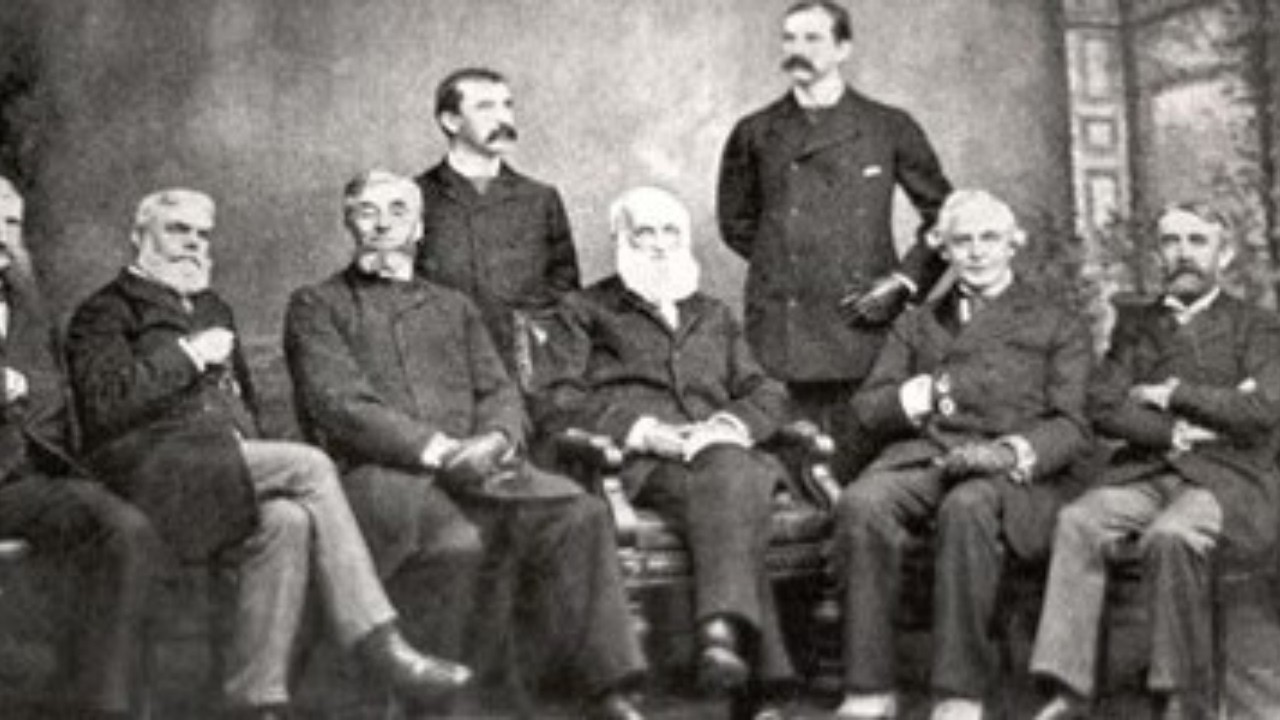
It was December 23, 1913.
Three days before Christmas.
Washington was emptying out.
Senators had gone home.
Representatives were preparing for the holidays.
Then, late that night, something happened that would permanently change the relationship between Americans, their government, and their money.
The Federal Reserve Act passed Congress.
President Woodrow Wilson signed it.
And America entered Christmas with a new central banking system.
But here is the part that makes 1913 so extraordinary.
That wasn’t the first fundamental transformation of the year.
Ten months earlier, the Sixteenth Amendment had authorized a federal income tax.
Two months after that, the Seventeenth Amendment changed how United States senators were elected.
Then came the Federal Reserve.
Taxation.
Representation.
Money.
Three pillars of American government transformed within ten months.
Each had been debated for years.
Some ideas had been resisted for generations.
Yet suddenly—
all three succeeded in 1913.
Why?
The standard historical explanation is the Progressive Era.
But buried inside old congressional records, banking investigations and thousands of interviews with Americans who actually remembered life before 1913, the source behind this story argues that another question deserves to be asked:
What did the people who lived through the transformation remember?
And why did some of their memories seem so different from the history their grandchildren were eventually taught?
Start with December 23.
The Senate voted on the Federal Reserve Act.
The House had already approved the legislation.
Wilson signed it that same day.
The Federal Reserve System was born.
Today, that sounds like another chapter in a textbook.
But imagine being alive when it happened.
Imagine being fifty years old in 1913.
You had already spent your entire adult life inside a different America.
No Federal Reserve.
No modern federal income tax.
United States senators were historically selected by state legislatures rather than directly elected by voters.
Then, within a single year, all three things changed.
There were millions of Americans alive who remembered both systems.
And some of them lived long enough to tell government interviewers about it.
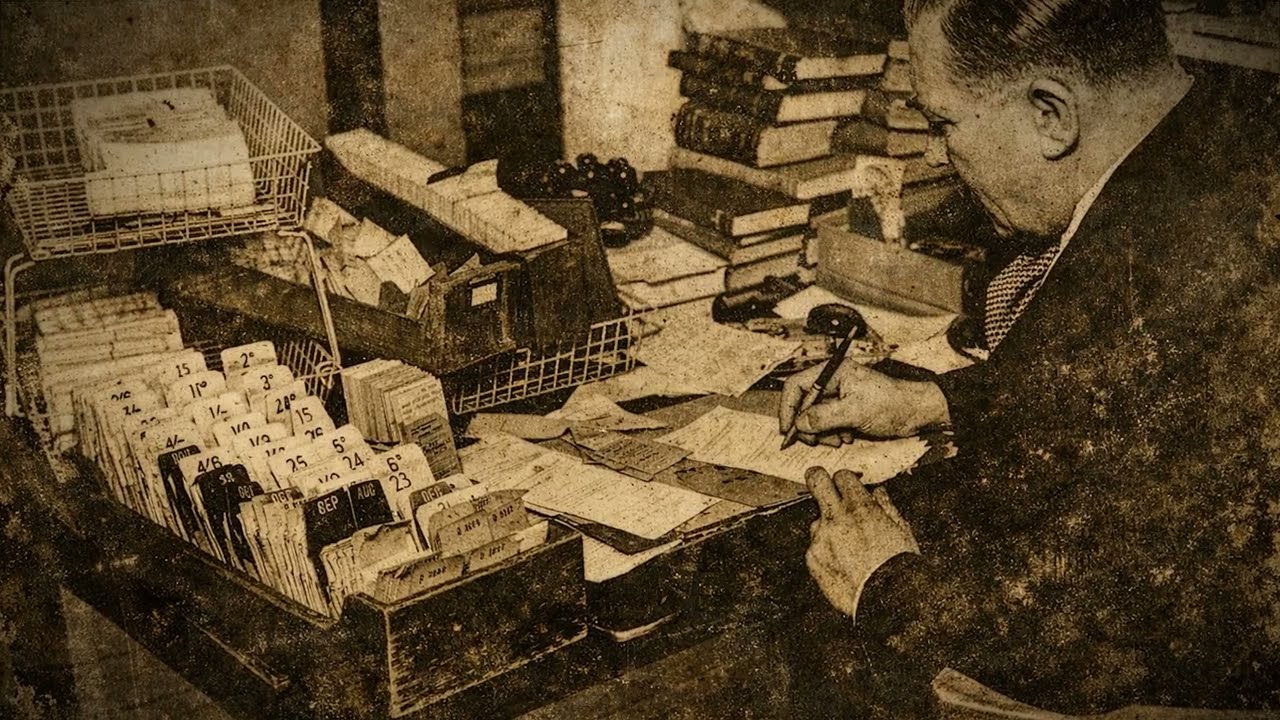
Between 1936 and 1940, during the Great Depression, the Federal Writers’ Project sent interviewers across America.
They recorded thousands of life histories.
Ordinary people.
Farmers.
Teachers.
Laborers.
Former clerks.
Business owners.
People whose lives stretched deep into the nineteenth century.
An eighty-year-old interviewed in 1938 had been born around 1858.
That person would have been approximately fifty-five when the transformations of 1913 occurred.
Not a child remembering fragments.
An adult.
Someone who had paid bills.
Used banks.
Paid taxes.
Voted.
Owned property.
Raised children.
Run businesses.
They knew what America looked like before the transition.
And they watched what happened afterward.
The source behind this story claims that scattered through those interviews are seemingly insignificant remarks.
A farmer remembering when he first had to deal with federal income taxes.
A former bank employee describing banking before what he called “centralization.”
A teacher remembering when local schools selected their own books.
Former political figures recalling the old system of choosing senators.
Individually, these memories might mean very little.
But put them together—
and the source argues that 1913 begins to look less like another year of reform and more like a dividing line.
Before.
After.
So let’s reconstruct those ten months.
February 3, 1913.
The Sixteenth Amendment was declared ratified.
The federal government now possessed explicit constitutional authority to tax incomes without apportionment among the states.
Income taxes themselves weren’t entirely new to America.
The federal government had used income taxation during the Civil War.
Another federal income tax enacted in the 1890s ran into constitutional problems.
But the Sixteenth Amendment changed the foundation permanently.
At first, most Americans weren’t paying it.
The Revenue Act of 1913 imposed a relatively small tax on higher incomes.
To an ordinary worker, the transformation might initially have seemed distant.
Something affecting rich people.
Something Washington was doing to make taxation more progressive.
But constitutional powers don’t expire when the original political crisis disappears.
Once established, they remain available.
And World War I would soon demonstrate how powerful this particular tool could become.
Rates increased.
The tax base expanded.
More money flowed directly from individual incomes into Washington.
What began as a relatively narrow tax became increasingly important to federal finance.
One structural transformation was complete.
Then—
only two months later—
came another.
April 8, 1913.
The Seventeenth Amendment was ratified.
Before it, United States senators were generally chosen by state legislatures.
The original constitutional theory was deliberate.
Members of the House represented voters directly.
Senators represented states through their legislatures.
The two chambers reflected different political relationships.
But the old system had serious problems.
Legislative deadlocks could leave Senate seats vacant.
Corruption allegations were common.
Reformers argued that direct election would make senators more accountable to ordinary citizens.
The Seventeenth Amendment gave voters direct control.
To supporters, it was democracy expanding.
To critics, however, something else had happened.
State legislatures had lost one of their most important direct mechanisms of influence over Washington.
The source highlights alleged recollections from older Americans who supposedly remembered that distinction.
Former state political figures described Senate selection as intensely political but directly connected to state legislative priorities.
After the amendment, Senate campaigns became statewide public contests.
Larger campaigns.
More advertising.
More money.
More dependence on political parties and donors capable of reaching enormous electorates.
Was that more democratic?
Yes, in the obvious sense that citizens now voted directly.
Did it also change the balance between state governments and Washington?
Absolutely.
Whether that change was good or bad depends on what part of the constitutional structure you value most.
But there is no question that it was structural.
Two transformations.
Two months apart.
And the year wasn’t even half over.
At roughly the same moment, another battle was unfolding.
Banking.
For years, America had struggled with financial instability.
Bank runs.
Credit contractions.
Regional shortages of currency.
Financial panics.
The Panic of 1907 had terrified bankers, businesses and politicians.
The United States needed reform.
Almost everyone agreed on that.
The fight was over what reform should look like.
Who would control reserves?
Who would issue currency?
How centralized should the system become?
How much influence should private bankers possess?
Behind these debates sits one of the most famous episodes in American financial history:
Jekyll Island.
In 1910, a small group of powerful financial and political figures secretly traveled to Jekyll Island, Georgia.
They discussed a plan for restructuring America’s banking system.
The secrecy later became irresistible material for conspiracy theories.
But the meetings themselves were real.
The final Federal Reserve Act was not simply identical to the Jekyll Island proposal.
Political battles transformed the plan significantly.
Still, the involvement of powerful banking interests understandably generated suspicion.
And while banking reform was being debated, Congress was investigating something else.
The concentration of financial power.
The Pujo Committee examined what critics called the “money trust.”
Its investigation explored the extraordinary influence exercised by interconnected banks, financiers and corporate directors over American industry.
Railroads.
Utilities.
Industrial corporations.
Finance.
The committee documented substantial concentrations of economic power.
Then came the historical juxtaposition that fuels so much suspicion around 1913.
Congress investigates concentrated financial power.
America debates banking reform.
And before the year ends—
the Federal Reserve is created.
Was that evidence of a conspiracy?
Not by itself.
Political reform often happens precisely because existing systems have become concentrated or unstable.
But to the source behind this story, the timing demands closer attention.
Because something else happened that year.
The Rockefeller Foundation received its New York charter in 1913.
John D. Rockefeller’s philanthropic ambitions had already encountered political controversy.
Critics feared allowing one of the richest fortunes in history to create an institution with enormous influence over education, medicine and scientific research.
Eventually, the foundation moved forward under state rather than federal incorporation.
Over the following decades, Rockefeller philanthropy would become enormously influential.
Medical education.
Public health.
Universities.
Scientific research.
Agricultural programs.
Education.
The source treats this as another piece of the 1913 puzzle.
Government finance changes.
Senate elections change.
Banking changes.
Powerful private philanthropy expands.
And around the same period—
America’s physical appearance seems to begin changing too.
Look at Grand Central Terminal.
Opened in February 1913.
Massive.
Monumental.
Beaux-Arts grandeur.
A soaring main concourse.
Stone.
Sculpture.
Astronomical imagery overhead.
Architecture designed not merely to function—
but to overwhelm.
Now look backward.
Pennsylvania Station.
Boston Public Library.
The Library of Congress Jefferson Building.
Courthouses.
Post offices.
Railroad terminals.
Banks.
Civic structures from the late nineteenth and early twentieth centuries often possessed extraordinary ornamentation.
Then look at later decades.
Architecture changes.
Decoration becomes simpler.
Modernism grows.
Government buildings become increasingly functional.
The source interprets this shift as another clue.
But here again, correlation is not proof.
Architecture changes because technology changes.
Labor costs change.
Materials change.
Aesthetic movements change.
Wars change budgets.
Modernism rejected ornament deliberately.
The fact that architectural styles evolved after 1913 doesn’t establish that monetary reform caused the transformation.
Still, visually—
the contrast is irresistible.
And that contrast was apparently what led the narrator of the original account deeper into the archives.
Not banking.
Buildings.
Why did so many monumental structures appear before the modern income-tax era?
Why did their style seem to change afterward?
Follow that question long enough, the source suggests, and eventually you arrive at 1913.
Then the buildings disappear from the center of the story.
The legislation takes over.
February.
Income taxation.
April.
Direct election of senators.
December.
Federal Reserve.
Three transformations.
Ten months.
And then America entered World War I.
Suddenly the government’s financial requirements exploded.
Federal taxation expanded dramatically.
Millions of Americans who might once have viewed income taxation as something affecting only the wealthy increasingly encountered the system personally.
Imagine a farmer filing his first federal income tax return.
He looks at the paper.
“Is this because of the war?”
Perhaps someone tells him yes.
Perhaps he assumes it will disappear when the war ends.
It doesn’t.
That’s how institutional change often feels while you’re living through it.
Temporary.
Necessary.
Exceptional.
Then twenty years pass.
The emergency disappears.
The institution remains.
A child born after 1913 grows up believing the new system has always existed.
By 1938, that child is twenty-five.
The seventy-eight-year-old grandfather across the dinner table remembers something completely different.
But whose version becomes history?
Usually—
the one printed in the textbook.
Education itself was changing during these decades.
School systems became increasingly standardized.
Teacher training became more professionalized.
State oversight expanded.
Textbook selection became more organized.
Large philanthropic organizations funded education initiatives.
The source connects these developments with Rockefeller philanthropy and argues that local educational independence began disappearing.
Again, the historical reality is more complicated than a single institution controlling American education.
Thousands of school districts, state governments, universities, publishers, reformers and foundations shaped what happened.
But for someone who had taught in a small community around 1900, the change could have felt dramatic.
One decade:
Local materials.
Local practices.
Local control.
Another decade:
State requirements.
Standardized methods.
Approved books.
Professional administrative systems.
To younger Americans, this was modernization.
To some older Americans, it may have felt like centralization.
And that word—
centralization—
runs through the entire mystery.
Money becomes more centrally coordinated.
Federal revenue becomes more dependent on direct taxation.
Senate elections move away from state legislatures.
Education becomes increasingly standardized.
National institutions grow.
America is transforming from a nineteenth-century republic into a twentieth-century administrative state.
Perhaps nothing secret happened at all.
Perhaps 1913 simply sits at the center of forces that had been building for decades.
Industrialization.
Urbanization.
National markets.
Financial crises.
Progressive reform.
Mass politics.
Modern bureaucracy.
But the source asks a different question.
If that’s all it was—
why do the changes appear so concentrated?
Then comes December 23.
The final act.
Congress considers the Federal Reserve bill as Christmas approaches.
The Senate approves it 43 to 25.
Twenty-seven senators are recorded as absent.
The House also passes the legislation.
Wilson signs it.
The timing would later become legendary among Federal Reserve critics.
“Passed while Congress was empty.”
“Passed secretly before Christmas.”
“Bankers took control while everyone was home.”
Those claims are often exaggerated.
Congress was still formally conducting business.
The votes were recorded.
The legislation had been publicly debated for months.
But symbolism matters.
December 23.
Late in the year.
Members absent.
Christmas approaching.
A law transforming American banking.
It’s almost designed to produce mythology.
And mythology grew.
Especially because of Jekyll Island.
Especially because of the power of Wall Street.
Especially because of the Pujo investigation.
Especially because Americans already distrusted concentrated financial power.
But there is a difference between suspicious timing and historical proof.
To determine whether something extraordinary was deliberately coordinated, we need more than a timeline.
We need correspondence.
Minutes.
Financial records.
Letters.
Diaries.
Legislative negotiations.
Banking documents.
Evidence connecting intention to outcome.
And that is where the WPA interviews become so tantalizing in the source’s narrative.
Because perhaps—
somebody remembered.
From 1936 to 1940, thousands of Americans told government interviewers about their lives.
They weren’t necessarily trying to document a conspiracy.
Most weren’t discussing constitutional theory.
They were simply remembering.
Their parents.
Their farms.
Their businesses.
Their schools.
Money.
Work.
Buildings.
Politics.
Life.
That’s precisely why such interviews can be valuable.
A casual remark can preserve something no official report considered worth documenting.
But oral history also has limits.
Memory changes.
Dates blur.
Stories inherited from parents become confused with personal experience.
An eighty-year-old remembering something that happened fifty years earlier can be both extraordinarily valuable and imperfect.
So every explosive claim must be checked against contemporary documents.
Still—
imagine what might be sitting there.
A former bank clerk casually describing how currency moved through his town before the Federal Reserve.
A retired teacher remembering when textbooks changed.
A farmer remembering the first year he encountered federal income taxation.
A former legislator explaining how Senate selection worked before direct elections.
None of them realizes that eighty years later someone will place their stories beside one another.
But someone does.
And suddenly—
patterns appear.
Maybe genuine patterns.
Maybe coincidences.
Maybe artifacts created by selecting only the interviews that fit the theory.
There’s only one way to know.
Read them.
All of them.
Then verify them.
By the 1950s, the Americans who had been mature adults before 1913 were disappearing rapidly.
A person born in 1860 would be ninety.
Someone born in 1850 would be one hundred.
Living memory was closing.
Their children still remembered their stories.
Their grandchildren remembered fragments.
Then another generation passed.
Today, 1913 feels ancient.
But it wasn’t ancient to the WPA interviewees.
For them, it was personal history.
They had lived on both sides of the line.
And that is what makes the surviving archives fascinating.
Not because they automatically prove a hidden transformation.
They don’t.
But because they allow us to ask the people who were actually there:
What changed?
What did you notice?
What disappeared?
What stayed the same?
And what did later generations misunderstand about the world you knew?
There is a temptation when looking at history to search for one secret meeting that explains everything.
One room.
One group.
One plan.
Reality is usually messier.
Political movements collide.
Economic crises create opportunities.
Reformers push ideas for decades.
Powerful interests protect themselves.
Ordinary voters demand change.
Unexpected alliances form.
Then suddenly, proposals that seemed impossible become law.
1913 may be one of those moments.
Or—
perhaps the source is correct that the simultaneity deserves far more attention than it usually receives.
Either possibility leads to the same place.
The archives.
The Congressional Record still exists.
The amendment debates survive.
The Federal Reserve’s early documents survive.
The Pujo Committee records survive.
The Federal Writers’ Project interviews survive.
Thousands of pages.
Thousands of voices.
Thousands of opportunities to test the story.
And that’s where this mystery becomes much more interesting than a conspiracy theory.
Because you don’t have to believe anything.
You can check.
Start with February 1913.
Then April.
Then December.
Follow the votes.
Follow the people.
Follow the money.
Then open the WPA interviews and search for the Americans who were already adults when those votes happened.
Listen to what they remembered.
Compare memory with records.
Separate folklore from evidence.
Separate coincidence from coordination.
And then ask the question that sits beneath this entire story:
Why 1913?
Why did reforms debated for years—or even generations—converge so dramatically during those ten months?
Was America simply reaching the inevitable end of the Progressive Era?
Or did financial crisis, political power and concentrated private interests create a rare moment when the entire structure could be changed at once?
More than a century later, the witnesses are gone.
But their words aren’t.
The votes aren’t.
The legislation isn’t.
The banking records aren’t.
And somewhere inside those thousands of forgotten pages may be enough evidence to tell us whether 1913 was simply a remarkable year of reform—
or the year America quietly became something fundamentally different.