The Hilton name is synonymous with luxury, glamour, and a global hotel empire that has defined hospitality for over a century. But behind the gilded facades of the Waldorf Astoria and the glittering lifestyle of socialites like Paris Hilton, lies a family saga riddled with allegations of sexual assault, domestic violence, substance 𝓪𝓫𝓾𝓼𝓮, and a bitter inheritance war that tore siblings apart. The story of how a Norwegian immigrant’s son built an empire, only to leave a trail of broken marriages, estranged children, and a daughter who died homeless, is a chilling reminder that wealth cannot buy happiness, nor can it erase the darkest chapters of a family’s history.
This is the dark history of the Hilton family, a tale of ambition, betrayal, and tragedy that spans generations.
 The saga begins not in a boardroom, but in the dusty frontier towns of the American Southwest. Augustus Halverson Hilton, a Norwegian immigrant, arrived in the United States in 1870, eventually settling in San Antonio, Mexico, a region that would later become part of the state of New Mexico. He and his wife, Mary Genevieve, built a modest home and raised eight children, instilling in them the values of hard work and perseverance.
Among those children was Conrad Nicholson Hilton, a boy born in 1887 who would grow up to redefine the American dream. Conrad’s early life was shaped by the unique circumstances of his birthplace. New Mexico did not achieve statehood until 1912, meaning Conrad was already 25 years old when his homeland joined the Union.
This timing proved fortuitous, as it allowed him to become one of New Mexico’s first Republican representatives in the new state legislature. However, Conrad’s foray into politics was short-lived and disillusioning. He reportedly grew to despise the bureaucracy, the slowness, the 𝒸𝒽𝑒𝒶𝓉𝒾𝓃𝑔, and the inside deals that defined political life.
Seeking a field he naively believed was built on integrity, Conrad turned his sights to banking, a decision that would inadvertently set him on the path to hotel magnate.
Conrad headed southwest to Texas, where the oil boom was creating unprecedented wealth and opportunity. He reasoned that if everyone was striking it rich from oil, they would inevitably need a bank to handle their new fortunes. Yet, despite his ambition, Conrad found himself unable to secure the necessary financing to purchase a bank.
Faced with this setback, he was forced to pivot quickly, and fate intervened in the form of the Mobley Hotel in Cisco, Texas. The Mobley was a modest establishment with just 40 rooms, but it operated like a revolving door of guests, generating steady profits that caught Conrad’s entrepreneurial eye. He purchased the hotel in 1919, marking his official entry into the hospitality industry.
By 1930, he had expanded his portfolio to include four additional hotels throughout Texas, laying the groundwork for what would become a global empire. However, the economic devastation of the Great Depression, triggered by the stock market crash of 1929, threatened to wipe out everything he had built. With Americans struggling to afford basic necessities, hotel stays became a luxury few could justify.
Yet, against all odds, Conrad managed to hold on to his remaining eight hotels, weathering the storm while many of his competitors went bankrupt. The Depression, it turned out, was merely a temporary setback for a man whose determination was as formidable as his ambition.
As Conrad’s hotel empire began to recover and expand beyond Texas, he also turned his attention to building a personal legacy, one that would prove far more complicated and tragic than his business ventures. In 1925, he married Adelaide Barron, and together they had three sons, Conrad Nicholson Hilton Jr. , known as Nikki, Baron Hilton, and Eric Hilton.
The marriage, however, was not built to last, and the couple divorced just one year after the birth of their third son. Conrad, nursing his emotional wounds, threw himself even deeper into his work, spending nearly eight years before he would consider remarrying. When he finally did, it was to a woman whose fame would rival his own, Hungarian socialite and actress Zsa Zsa Gabor.
The couple wed in 1942, just a year after Gabor had fled the chaos of war-torn Europe for the safety of America. Initially, Conrad appeared to be Gabor’s savior, even helping her parents escape Hungary. But the facade of heroism quickly crumbled, revealing a marriage built on possession rather than love.
Gabor later wrote devastatingly about their union, describing how Conrad insisted on changing her name to Georgia, a symbolic act that stripped her of her identity. She wrote that this name change symbolized everything her marriage would become, with her Hungarian roots ripped out and her background ignored. She declared that her marriage to Conrad meant the end of her freedom, that her own needs were completely ignored, and that she belonged to him.
The relationship was doomed from the start, and its darkest secret would only emerge years later, tainting the Hilton legacy forever
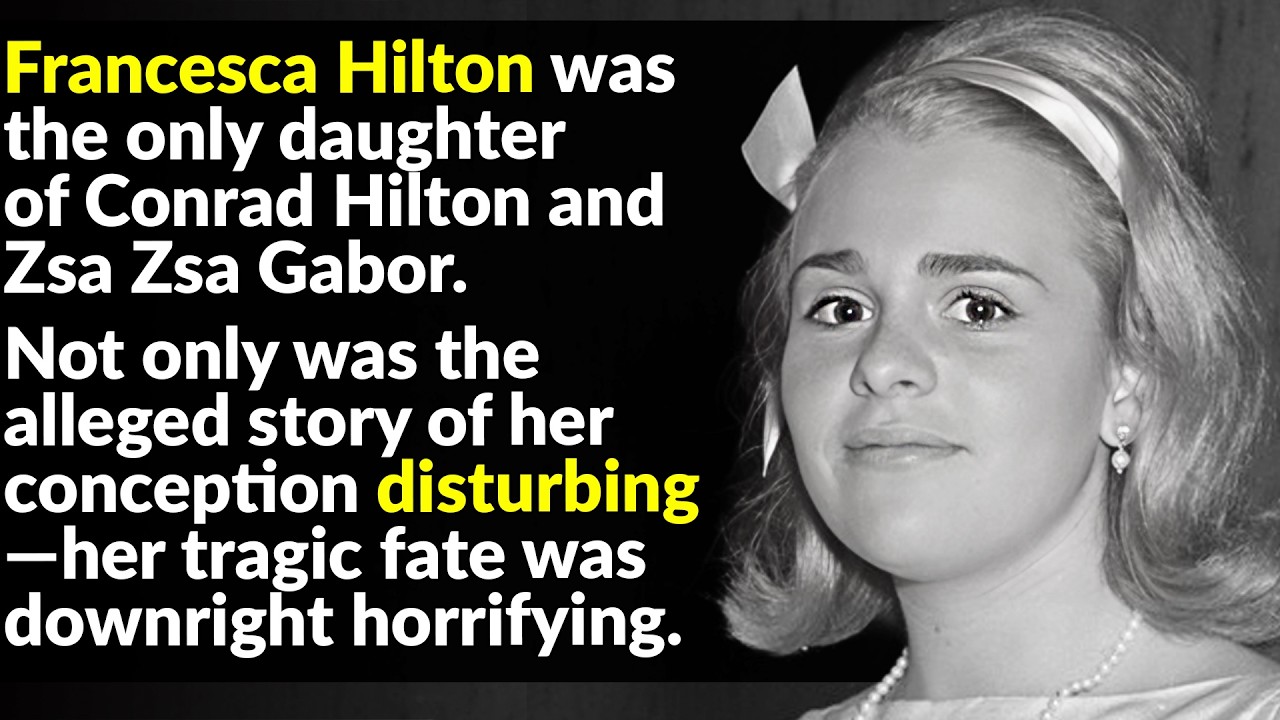
 The most horrifying allegation to emerge from the Hilton family history concerns the conception of Francesca Hilton, the only child of Conrad and Zsa Zsa Gabor. According to Gabor’s own biography, she did not consent to the intimate encounter that resulted in Francesca’s birth. This allegation, which surfaced decades later, painted Conrad not as a loving husband, but as a man who took what he wanted, regardless of his wife’s will.
Francesca was born just a few months before her parents’ divorce was finalized in October 1947, a child conceived in darkness and destined for a life of struggle. While Gabor went on to become one of Hollywood’s most glamorous and notorious figures, marrying eight more times over the course of her life, Francesca grew up in the shadow of her parents’ toxic relationship and the immense wealth she was seemingly denied. Conrad’s eldest son, Nikki, proved to be a different kind of trouble, one that would bring 𝒔𝒄𝒂𝓃𝒹𝒶𝓁 to the family name through his reckless behavior and violent tendencies.
From an early age, Nikki was a handful, dropping out of or being expelled from nearly every school he attended. He showed little interest in the family business, preferring instead the hedonistic pursuits of wild parties and beautiful women. According to Zsa Zsa Gabor, her relationship with her stepson was shockingly inappropriate, with claims that she got to know Nikki much too well during her marriage to Conrad.
Whether or not these allegations were true, Nikki certainly shared his father’s taste for famous and glamorous women, culminating in his disastrous marriage to screen legend Elizabeth Taylor
Nikki Hilton married Elizabeth Taylor in October 1949, in a ceremony that was less a private union and more a Hollywood spectacle, with Taylor’s studio, MGM, footing the bill for the lavish public event. Taylor was just 18 years old, while Nikki was 23, already deeply entrenched in substance 𝓪𝓫𝓾𝓼𝓮 and gambling addiction. What appeared to be a fairy tale romance quickly soured into a nightmare, as Nikki’s playboy lifestyle and volatile temper turned him into an aggressive husband who would lash out at Taylor at the slightest provocation.
The consequences of his violence were devastating. Not long after their wedding, Taylor became pregnant, but during one of Nikki’s violent rages, he assaulted her, causing her to suffer a miscarriage. The marriage, unsurprisingly, lasted less than a year, ending in divorce on the grounds of mental cruelty.
Shockingly, despite his behavior, Nikki remained a sought-after bachelor in Hollywood circles. He quickly became engaged to another actress, Betsy Von Furstenberg, but that relationship also soured due to his violent temper and lack of ambition. Von Furstenberg later recalled that Nikki would sleep until late afternoon, then wake up, start drinking, and play cards all day, never bothering to go to work.
The engagement was called off before it could lead to marriage, sparing Von Furstenberg a fate similar to Taylor’s
While Nikki stumbled through his life, his father continued to build the family’s legacy, expanding the Hilton name across America and then the world. During the 1940s and 1950s, Conrad acquired some of the most iconic hotels in the country, including the historic Waldorf Astoria in New York City. When he secured the management rights to that legendary establishment, he also absorbed the legacy of another famous American family, the Astors.
Unlike the Astors, however, Conrad was determined not to let his family’s name implode through the carelessness of his descendants. He founded the Hilton Hotels Corporation in 1946 and the Hilton International Company in 1949, making his enterprise the first international hotel chain in the world. This grand empire, however, presented a pressing question, what would happen to it all once he was gone?
Conrad, despite his disappointment in Nikki, eventually brought his eldest son into the business, appointing him vice president of the Hilton Corporation in 1951 and manager of the Bel Air Hotel. But Nikki’s personal demons proved insurmountable. He ran into trouble with authorities in 1954, married again in 1958, had two sons, but that marriage also collapsed.
Nikki could not hold on to anything, and his reckless lifestyle eventually settled the matter of succession in a truly tragic way. As a direct consequence of his years of substance 𝓪𝓫𝓾𝓼𝓮 and hard living, Nikki died of a heart attack at the age of just 42, ten years before his father, leaving Conrad to look to his other sons to carry on the family name
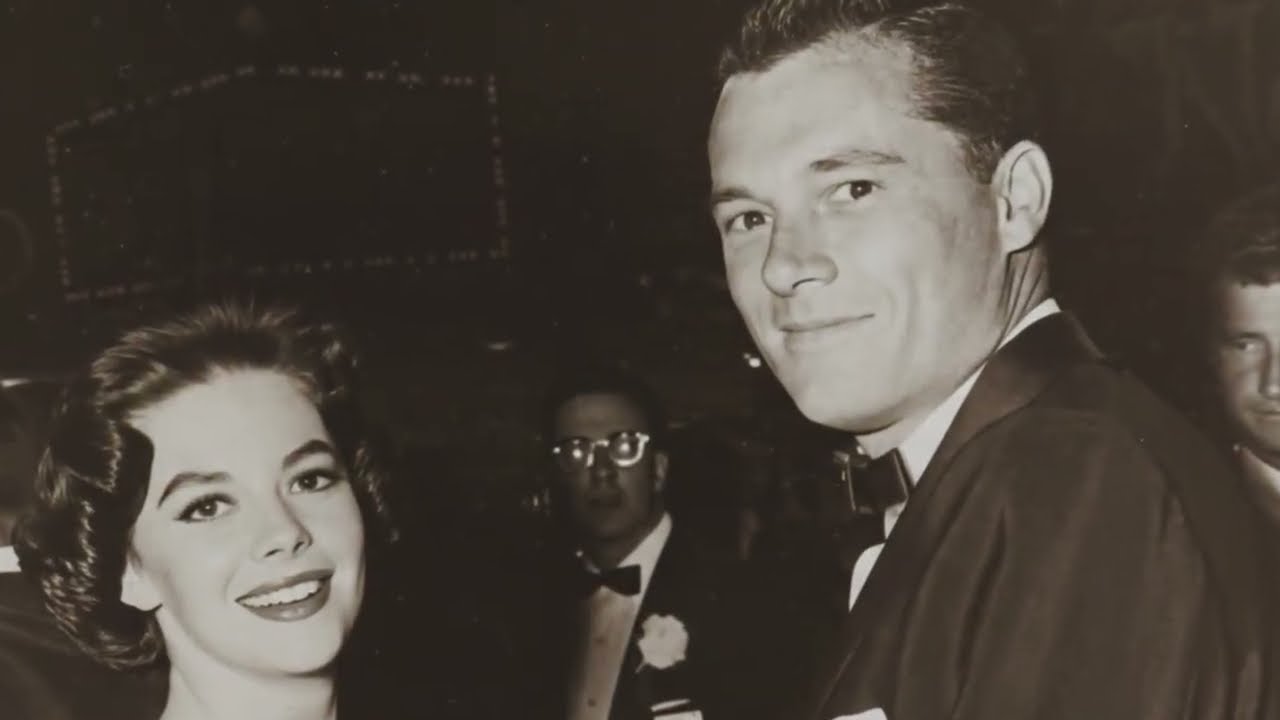 Baron Hilton, Conrad’s second son, proved to be everything his older brother was not. He became involved in the hotel business at an early age, displaying his father’s sharp business acumen and dedication to the family enterprise. Surely, after all Baron had done for the company, Conrad would want to leave his legacy in his capable hands.
However, reality proved far more complicated. When Conrad Hilton died in 1979 at the age of 91, he left behind a multi-million dollar business empire and three surviving children, his two sons, Baron and Eric, and his daughter, Francesca. Shockingly, however, his children received very little of his vast fortune.
Instead, Conrad left 97% of his estate to the Conrad N. Hilton Foundation, a charitable organization he had founded over 30 years earlier. At first glance, it appeared that Conrad had callously neglected his children in his final will.
But the reality was more nuanced. Conrad left 13. 5 million shares of Hilton Hotels stock to the foundation, but his will also included a clause granting Baron the right to purchase those shares, which would allow him to retain control of the company within the family.
Unfortunately, Conrad failed to anticipate that the foundation would not willingly give up those valuable shares once they had them. When the clause was revealed, the foundation challenged it, sending the entire matter to probate court, where the funds remained locked in legal limbo for years. The appeals court finally ruled in Baron’s favor in March 1988, but by that time, Baron had continued to steer the company successfully, meaning that the shares he eventually received had quadrupled in value.
This legal victory secured Baron’s control of the Hilton empire, but it also 𝓮𝔁𝓹𝓸𝓼𝓮𝓭 deep rifts within the family, particularly regarding how Conrad had treated his only daughter
Francesca Hilton was furious when she learned of her father’s will. Despite the vast fortune the Hilton family had amassed, Conrad had left her only $100,000, a paltry sum compared to the billions at stake. It is possible that Conrad believed he did not need to provide for his daughter, reasoning that through her mother, she would one day inherit the Gabor family’s wealth.
But Francesca felt her father owed her far more, and she was determined to contest the will. Unfortunately for her, the courts ruled against her, forcing her to accept the original amount. This moment marked the beginning of her long, tragic decline.
While her half-brothers continued to prosper, Francesca’s life began to spiral out of control, plagued by financial woes and a bitter, decades-long feud with her mother’s final husband, Frederick Prinz von Anhalt. Zsa Zsa Gabor married von Anhalt in 1986, and he remained her husband until her death in 2016. This marriage proved to be a constant source of conflict for Francesca, who clashed with von Anhalt over control of her mother’s care and estate.
The situation escalated dramatically after Gabor was left paralyzed following a severe car accident at the end of 2002. From that point on, Gabor’s health steadily declined, and von Anhalt gained more and more control over her life, creating an even bigger problem for Francesca. In 2005, von Anhalt accused Francesca of attempting to manipulate her mother for personal gain, alleging that she tried to use her mother’s house to obtain a loan and interfered with Gabor’s will.
He filed lawsuits against her, but when Gabor failed to appear in court, the charges were dropped. A few years later, the situation changed again, as Francesca attempted to wrest control away from von Anhalt. By 2012, Gabor’s health had deteriorated so severely that she could no longer care for herself.
Francesca sued to establish an independent conservatorship for her mother, likely hoping to gain some control over Gabor’s estate. However, the judge granted that power to von Anhalt, leaving Francesca out in the cold, both financially and emotionally. By the end of her life, Francesca could have desperately used even a fraction of either of her parents’ fortunes.
 Despite being the daughter of two wealthy families, she died in poverty. Reports suggest that she was homeless just a month before she died from complications of a stroke, living between short-term rentals and her car. Her mother never learned of her daughter’s death, as von Anhalt chose not to tell her.
Francesca’s tragic end was a stark contrast to the opulence of her family’s name, a cautionary tale of how even the most privileged can fall through the cracks
While Francesca’s life ended in tragedy, the Hilton legacy continued through Baron and his descendants. Baron married Marilyn June Hawley in 1947, and they remained married for their entire lives, raising eight children together. Most of their children lived relatively quiet lives, but one, Richard Howard Hilton, would go on to change the way the world viewed the Hilton name.
Richard followed in his father’s footsteps by entering the business world, founding Hilton Realty Investment, which helped further expand the family empire. In 1979, the same year Conrad Hilton died, Richard married Kathy Avanzino, an American socialite and actress. Richard was 24 and Kathy was 20, but despite their youth, their marriage became one of the strongest in the family.
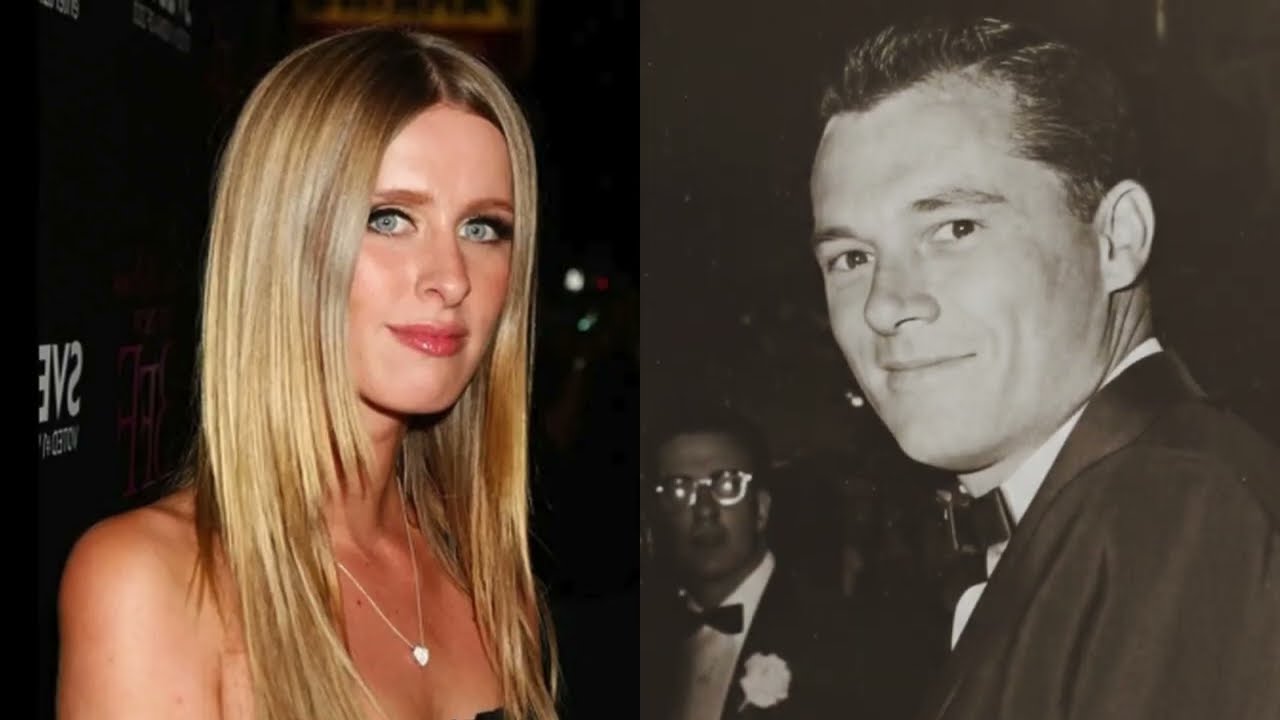
They are still together today and have four children, including two daughters whose names would become globally recognizable, Paris and Nikki Hilton. Although Nikki was named after her great-uncle’s troublesome brother, she managed to avoid most of his vices, launching her own fashion line in 2004 and eventually settling down after a brief, failed Las Vegas marriage. While Nikki is certainly a recognizable name, she still lives in the shadow of her more famous sister, Paris.
Before Paris Hilton, the name Hilton was synonymous with hotels, a symbol of business success and understated luxury. A few people might have been aware of the scandals of earlier generations, but most thought little about the family beyond their commercial achievements. Then Paris Hilton appeared on the scene with The Simple Life, a reality show she starred in with her friend Nicole Richie, catapulting her to global fame in the early 2000s.
During her meteoric rise, Paris Hilton proved that there is no such thing as bad publicity, at least not for the Hiltons. Her brand, built on partying, glamour, and a carefully curated persona of the “dumb blonde,” made her one of the most famous socialites in the world, but it also brought unprecedented scrutiny to the family name. The dark history of the Hiltons, with its allegations of rape, domestic violence, addiction, and familial betrayal, now coexists with the glittering image of Paris Hilton’s media empire.
The family has come to represent both the pinnacle of American success and the perils of unchecked wealth and privilege, a duality that continues to fascinate and horrify in equal measure
The Hilton story is one of stark contrasts, from the humble immigrant beginnings of Augustus Halverson Hilton to the global empire built by his son Conrad, from the glamorous Hollywood marriages to the tragic deaths of Nikki and Francesca, from the boardroom battles over inheritance to the reality TV antics of Paris. It is a saga that spans over a century, marked by 𝓈𝒽𝓸𝒸𝓀𝒾𝓃𝑔 twists and turns that reveal the human cost of ambition. Conrad Hilton built an empire on the principles of hard work and determination, but his personal life was marred by allegations of 𝓪𝓫𝓾𝓼𝓮, control, and neglect.
His treatment of Zsa Zsa Gabor, his estrangement from Francesca, and his favoritism toward Baron all contributed to a family dynamic rife with resentment and conflict. The legal battles over his estate dragged on for years, pitting brother against sister and exposing the greed that lurked beneath the surface of the family’s polished image. Nikki Hilton’s life was a cautionary tale of privilege gone wrong, as his addictions and violence destroyed his marriage to Elizabeth Taylor and ultimately led to his premature death.
Francesca Hilton’s fate was even more tragic, as she descended into poverty and homelessness despite being the daughter of one of the wealthiest men in America. Her death, alone and forgotten, serves as a grim reminder that wealth does not guarantee happiness or security. The Hilton family’s dark history is not just a story of individual failings, but also a reflection of the corrosive effects of extreme wealth, which can distort relationships, breed entitlement, and leave lasting scars on those caught in its orbit.
As the family continues to evolve, with Paris Hilton now a mother herself, the legacy of Conrad Hilton remains a complex and troubling one, a testament to the fact that even the most successful dynasties can harbor deep, dark secrets that echo through generations. The name Hilton will forever be associated with luxury hotels and celebrity glamour, but it will also carry the weight of a history marked by pain, betrayal, and loss, a history that serves as a powerful reminder of the fragility of human happiness in the face of immense fortune.