Long before settlers ever reached the frontier, Native American tribes were engaged in fierce and ongoing conflicts with one another. Captives taken in these battles faced grim fates, often subjected to torture and execution. But there was a twist: these warriors were expected to meet their deaths with unflinching defiance. They would boast about their strength in battle, sing their death songs, and stare down their captors with unshakable courage.
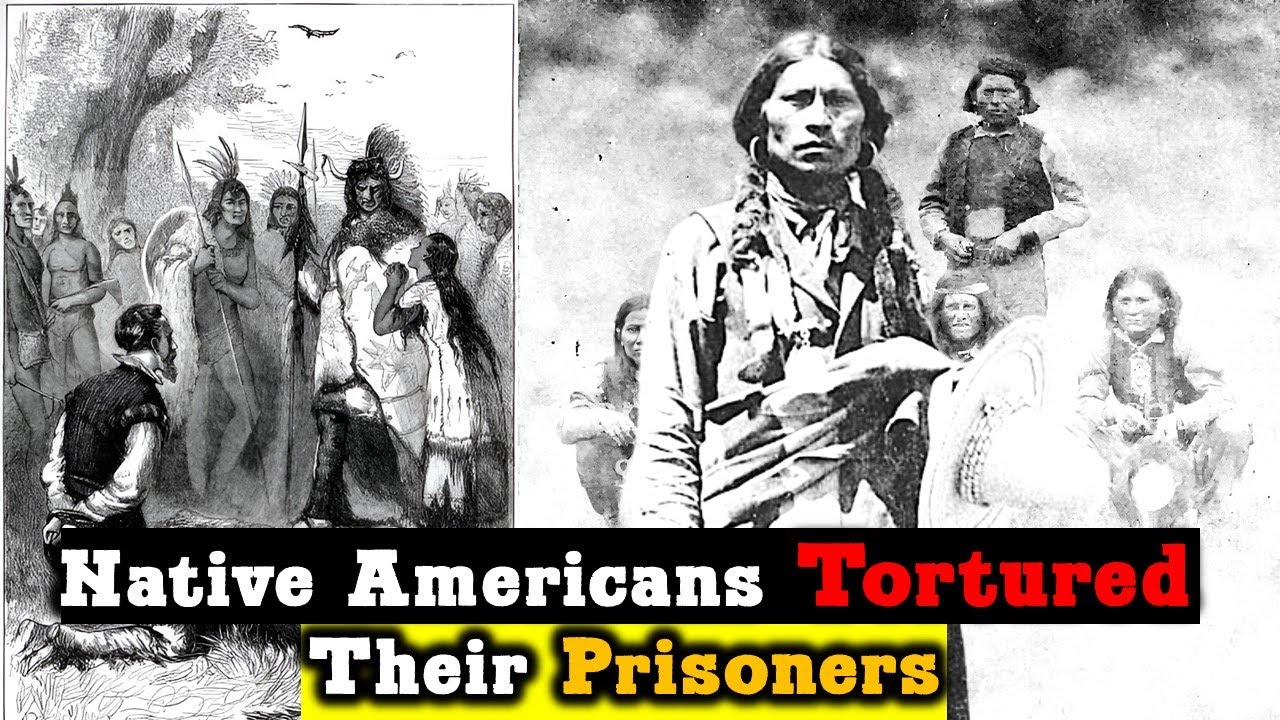
These executions were not hidden in the shadows. They were public spectacles, with entire villages gathering to witness the event. Even children watched, and the women, especially those who had lost husbands or sons in battle, often took part in the torment. Captives were sometimes burned, and in the case of adult males, the ordeal could stretch on for days.
Yet, not every captive faced such a fate. Some tribes would spare their lives, adopting them into their communities instead. When Euroamericans arrived on the scene, they found themselves subjected to these long-standing traditions—a chilling initiation into the raw realities of life in the Old West. Captivity in the Old West was a grim and often horrifying experience, with nearly all tribes practicing some form of torture on their captives.
Some, like the Plains tribes and the Apache, were infamous for their brutality. For women, the ordeal was even harsher: rape and disfigurement were tragically common. Yet, for those taken at a young age, life didn’t always end in suffering. Many women who weren’t ransomed grew up as part of the tribe, often becoming wives.
Olive Oatman, for instance, was taken by Native Americans and returned to white society after 5 years. Others, like Cynthia Anne Parker, never went back. Captured by the Comanche at just age 9 in 1836, Cynthia became a part of their world. She eventually married Peta Nona, a prominent Quadi chief, and bore him three children.
Her oldest son, Quana, would go on to become one of the greatest Comanche leaders in history—yet her story took a far more tragic turn before he rose to prominence. On December 18, 1860, a group of Texas Rangers led by Captain Sul Ross launched a daring raid on a Comanche hunting camp. Among those they captured was a woman known as Naura—Cynthia Anne Parker—along with her infant daughter. But bringing her back to her original people wasn’t the happy ending anyone might have imagined.
Cynthia, or Naura as she had come to identify, longed for her life among the Comanche. She made several attempts to escape and return to her adopted people, but heartbreak would soon weigh heavy on her. She learned that her young son Pos had died of smallpox, and later her infant daughter Tops Santa succumbed to pneumonia. The devastating loss of her children, combined with her inability to reunite with the Comanche, plunged Cynthia into deep despair.
Her depression took a severe toll, and by 1870, her life ended. After Colonel Ranald Mackenzie’s crushing victory over the Comanche inthe Red River War of 1874 to 1875, the once mighty tribe faced a new reality. Forced onto a reservation near Fort Sill, Oklahoma, their way of life was forever changed. But one man rose to lead them through the storm: Quana Parker.
Quana didn’t just adapt; he thrived. With sharp wit and unmatched resilience, he forged alliances with Texas ranchers. He struck deals that allowed their cattle to pass through the Comanche reservation for a price that benefited his people. But Quana didn’t stop there: partnering with the Texans, he became a wealthy cattleman in his own right.
In 1905, two legends of the Old West—Quana Parker and Geronimo—captivated the nation as they donned their Native American regalia and became the star attractions of President Theodore Roosevelt’s inauguration parade in Washington. Their presence was a powerful reminder of a bygone era, even as the country forged ahead into a new century. Just a few years later, in 1910, Quana made one final tribute to his family’s legacy: he arranged for his beloved mother’s remains to be reinterred at a mission near his ranch in Cache, Oklahoma, a place he held dear. The following year, Quana passed away, and as he wished, was buried beside his mother.
Their story didn’t end there: in 1957, both were moved to Fort Sill, where they now rest inthe post cemetery—a lasting legacy of a man who bridged two worlds and left an indelible mark on American history