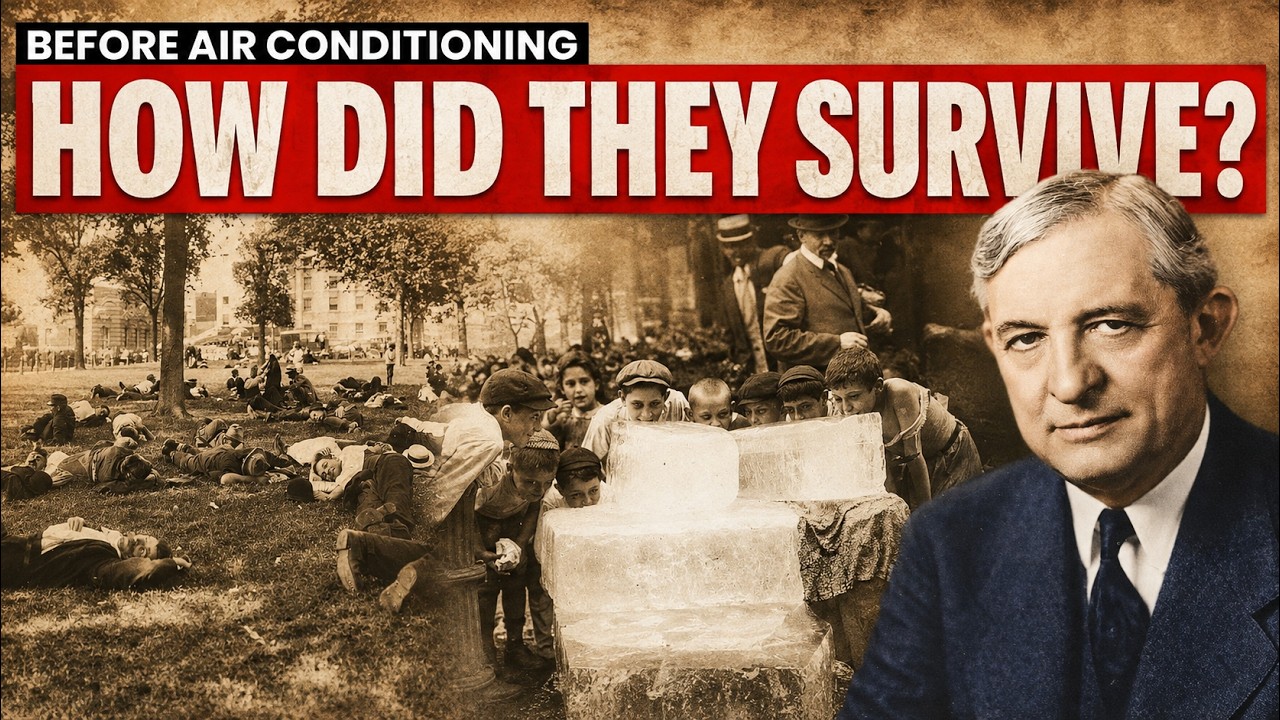
At two in the morning, New York was still burning.
The sun had been gone for hours, but inside the tenements of the Lower East Side, the walls were still throwing heat back into the rooms like ovens.
Children cried.
Men lay shirtless on floors.
Women soaked cloth in water and pressed it against their necks.
Families dragged mattresses onto fire escapes because the bedrooms were too hot to breathe in.
Some climbed onto rooftops.
Others slept on sidewalks.
And by sunrise, not everyone woke up.
This was summer before air conditioning.
No thermostat.
No window unit humming in the dark.
No cold supermarket.
No refrigerated car.
No button you could press and make the heat disappear.
If the temperature climbed to ninety-five degrees and stayed there for a week, you didn’t escape it.
You endured it.
And sometimes—
the heat won.
Long before Americans learned how to cool buildings mechanically, they had to redesign their entire lives around summer.
Their houses were different.
Their schedules were different.
Their food was different.
Even the place where they slept could change with the season.
Because before air conditioning, surviving summer wasn’t about comfort.
It was strategy.
And the first weapon against the heat was the house itself.
Walk through an old Southern home built before modern cooling and almost everything seems oversized.
The ceilings might rise ten or twelve feet.
The windows are enormous.
The porch stretches across the front, sometimes wrapping around the entire house.
Doors line up from one end of the building to the other.
None of this was accidental.
Hot air rises.
So builders pushed the ceiling higher, letting the worst heat collect above people’s heads.
Tall windows were designed to catch whatever breeze existed.
Open a window at the front of the house.
Open another at the back.
And suddenly the entire building could breathe.
Deep porches blocked the brutal afternoon sun before it ever reached the walls.
Shade wasn’t decoration.
Shade was survival.
Then there were transom windows—the small openings above interior doors.
They allowed air to continue moving from room to room even when someone wanted privacy.
Shutters were angled so they could block direct sunlight while still letting air through.
Trees were planted where they could shield the house during the hottest part of the day.
People didn’t call this passive cooling.
They simply knew that if they built the house wrong—
summer would punish them.
But perhaps the strangest-looking house was also one of the smartest.
The dogtrot.
Imagine two small cabins under one roof.
Between them is a wide open hallway.
No walls at either end.
Just shade and moving air.
That open passage became a natural wind tunnel.
The breeze entered one side and rushed through the center.
Families ate there.
Worked there.
Sat there.
Sometimes slept there.
Dogs stretched out across the floor because even they knew it was the coolest place on the property.
One side of the house might be used for sleeping.
The other for cooking.
And separating the kitchen was important.
A wood-burning stove in July could turn a house into a furnace.
So in many homes, the kitchen was pushed away from the main living space.
Sometimes it was an entirely separate building.
If the cook wanted to roast meat or bake bread during a Southern summer, everyone else didn’t have to suffer for it.
Even with all of these tricks, there were days when architecture simply wasn’t enough.
When the air stopped moving.
When humidity climbed.
When the night brought no relief.
And on those days, Americans wanted something almost impossible.
Winter.
In July.
That desire created one of the strangest fortunes in American history.
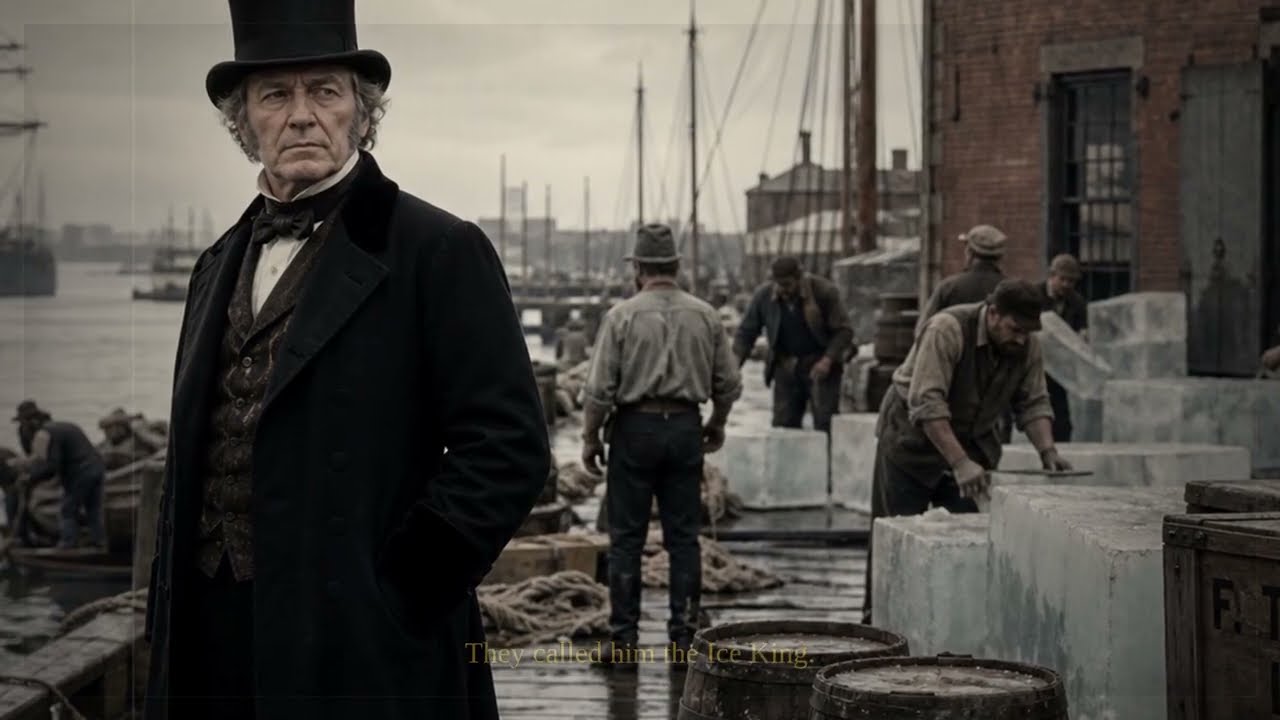
Frederick Tudor looked at frozen New England ponds and saw money.
Everyone else saw ice.
Tudor saw something people in hot climates would pay for desperately.
So in 1806, he began cutting ice from New England and loading it onto ships.
His plan was simple.
Sail south.
Sell cold.
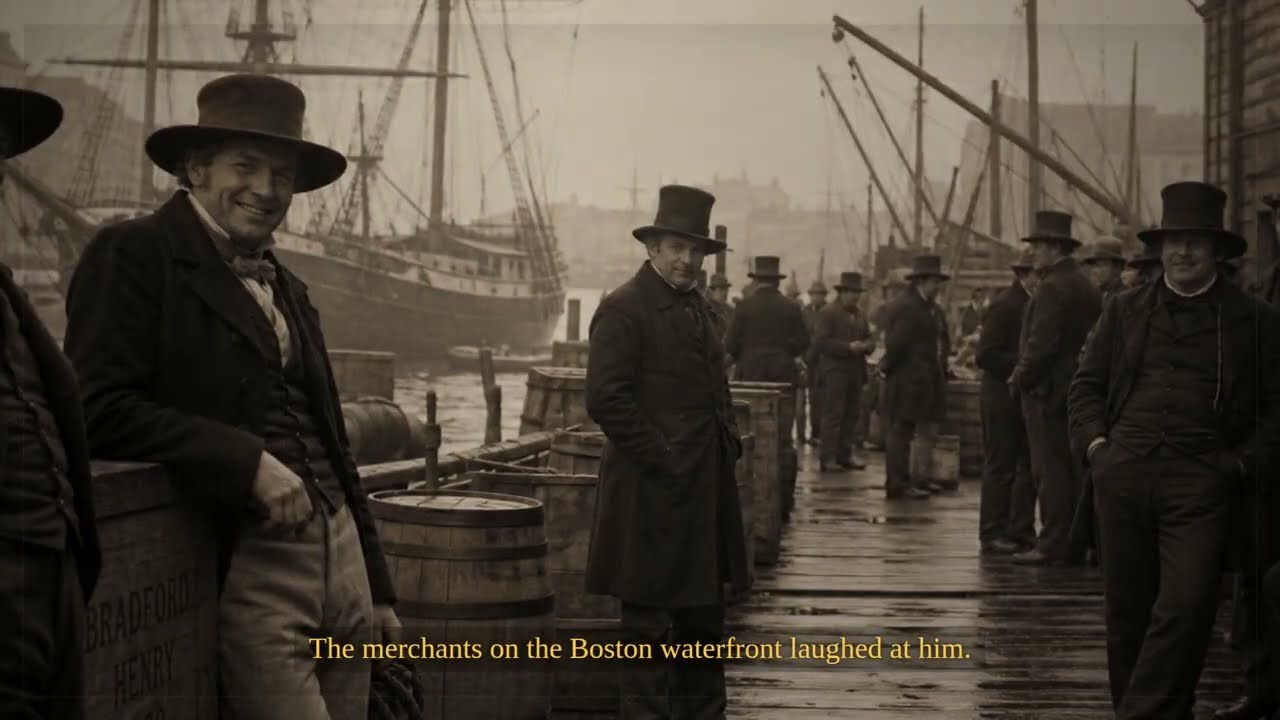
People laughed at him.
Because there was one obvious problem.
Ice melts.
His first shipment to Martinique was a disaster.
Much of it disappeared during the voyage.
He lost money.
He tried again.
Lost more.
Again.
More losses.
Eventually, Tudor ended up in debtor’s prison.
Most men would have abandoned the idea.
He became obsessed with fixing it.
Then he found the answer in something almost worthless.
Sawdust.
Pack ice tightly.
Insulate it with sawdust.
Keep air away from the blocks.
Suddenly, winter could survive the voyage south.
Tudor began shipping ice to Havana.
Charleston.
New Orleans.
Then across oceans.
India.
Southeast Asia.
Places where people had lived their entire lives under tropical sun could suddenly buy blocks cut from a frozen American lake months earlier.
The man everyone had mocked became known as the Ice King.
And America created an entire industry around frozen water.
Every winter, workers descended onto lakes and rivers.
Horses dragged cutting equipment across the ice.
Men scored enormous grids into the frozen surface.
Then they sawed through the lines.
Huge blocks broke free.
Some weighed hundreds of pounds.
Workers pushed them through channels toward shore.
Steam equipment and horse teams hauled them into giant wooden ice houses.
Inside, thousands upon thousands of tons of ice were stacked beneath layers of insulation.
Buildings the size of warehouses filled with winter.
Waiting for July.
The work was dangerous.
Men slipped.
Ice cracked.
Horses fell.
Fingers froze.
Sometimes workers went straight through the surface into the black water below.
But for many farmers, winter ice harvesting meant money during a season when there was little other work.
Then summer arrived.
And the ice began moving.
Ships.
Railroads.
Barges.
Wagons.
Eventually it reached the city neighborhood.
And then came the iceman.
Every morning his wagon rolled down the street carrying enormous frozen blocks.
Families put signs in their windows.
Twenty-five pounds.
Fifty.
One hundred.
The iceman stopped.
Took out his pick.
Split off the right amount.
Grabbed the block with iron tongs.
Then carried it inside.
Children followed behind him hoping a piece would fall.
A broken sliver of ice on a blistering afternoon could feel like candy.
Inside the house, the block went into an icebox.
The ancestor of the refrigerator.
The cold air sank around milk, meat and vegetables.
Then the ice slowly melted into a drip pan underneath.
Someone had to empty it.
Forget—
and the kitchen floor flooded.
But there was another problem.
That beautiful clear block wasn’t necessarily clean.
Natural ice came from rivers and ponds.
Those waterways might also contain mud.
Animal waste.
Industrial pollution.
Anything trapped in the water could end up frozen inside.
Then dozens of people handled the block before it reached your kitchen.
In the heat, part of it melted away.
Sometimes a great deal of it.
Ice was precious.
And expensive.
The wealthy could buy more.
The poor often could not.
That mattered enormously when the heat stopped being uncomfortable and became deadly.
August 1896.
New York City.
For ten days, a wall of heat settled over the city.
Temperatures rose above ninety degrees.
Again.
And again.
And again.
But outside temperature wasn’t the worst part.
The tenements were worse.
Brick buildings packed shoulder to shoulder.
Tiny rooms.
Bad ventilation.
Families crowded together.
The walls absorbed heat all day and released it all night.
Some apartments were reported to feel like furnaces.
People fled upward.
Rooftops.
Fire escapes.
Anywhere the air might move.
Mattresses appeared outside windows.
Men slept half-dressed beneath the open sky.
Mothers tried to keep infants cool with wet cloth.
Workers already exhausted from long factory shifts returned home to rooms that offered no recovery.
People collapsed.
Some died from heatstroke.
Others lost consciousness while sleeping on rooftops or fire escapes and fell.
Horses dropped in the streets.
Their bodies remained under the blazing sun.
The city began to smell of heat, sweat, garbage and decay.
And the people dying were overwhelmingly those who couldn’t afford to escape.
The rich had another solution.
They left New York.
Newport.
The Adirondacks.
The mountains.
Coastal estates.
A wealthy family could simply move for the summer.
Take the servants.
Pack the trunks.
Spend July somewhere cooler.
For the poor, there was no second house.
There was the rooftop.
The fire escape.
The street.
And whatever piece of ice they could afford.
The heat wave killed enormous numbers of people and helped expose the horrific conditions inside crowded tenements.
Housing reformers demanded windows.
Air shafts.
Better ventilation.
More humane buildings.
But a window can only move air.
It cannot make air cold.
The same problem returned again and again.
Then, in 1936, it became catastrophic.
America was already suffering through the Great Depression and the Dust Bowl.
Then a brutal heat wave spread across the continent.
Temperatures soared above one hundred degrees in city after city.
Workers collapsed inside factories.
Fields withered.
People rushed into rivers and lakes just to cool their bodies.
Some drowned.
Thousands died from heat-related causes across the United States and Canada.
People had survived summers without air conditioning for generations.
But survive didn’t mean comfortable.
And it certainly didn’t mean safe.
So people organized their entire day around avoiding the worst heat.
Work began early.
Before the sun reached its full strength.
Farmers and laborers tried to perform the hardest tasks in the morning.
When possible, the hottest afternoon hours became a time for slowing down.
Resting.
Waiting.
Then work could continue again as evening arrived.
Cooking changed too.
A family wasn’t going to keep a hot stove running unnecessarily in August.
Cold meals made sense.
Fruit.
Bread.
Cold meat.
Vegetables.
Anything that didn’t turn the kitchen into an inferno.
If a meal required serious cooking, do it early.
Or late.
Or outside.
Clothing changed.
Linen.
Cotton.
Lighter fabrics.
Loose garments.
Children went barefoot.
Men rolled sleeves.
People carried fans.
Not electric fans.
Paper fans.
Palm-leaf fans.
Anything that could move a little air across sweating skin.
Then came water.
Rivers became swimming pools.
Creeks became air conditioners.
Children ran under opened fire hydrants.
People sat beside fountains.
And when night came, many families didn’t even try to sleep inside.
They went to the porch.
The sleeping porch became one of the defining features of life before mechanical cooling.
It was usually screened to keep mosquitoes away.
Often on the second floor.
Open to every possible breeze.
When the heat arrived, mattresses came out.
Sheets came out.
Pillows came out.
Entire families slept there night after night.
In cities, people created their own version.
Fire escapes.
Rooftops.
Balconies.
Sidewalks.
There are old photographs showing people sleeping outdoors in rows.
Not because they had no homes.
Because their homes were hotter than the street.
Think about that the next time you lower your thermostat by two degrees.
But there was one place where Americans would eventually discover something that seemed almost supernatural.
A room colder than the street.
The movie theater.
By the 1920s, theaters began installing modern mechanical cooling systems.
And the reaction was immediate.
Imagine walking down a city street in July.
Your shirt is soaked through.
The pavement is radiating heat through your shoes.
Your apartment is waiting for you like an oven.
Then you see a theater marquee.
AIR COOLED.
You buy a ticket.
The doors open.
Cold air hits your face.
For the first time in human history, ordinary people could pay a small amount of money and escape summer completely.
Not shade.
Not wind.
Not ice held against your neck.
Cold air.
People began entering theaters partly because they wanted to see films—
and partly because they wanted two hours in another climate.
Theaters knew exactly what they were selling.
Some advertisements barely talked about the movie.
The attraction was simple:
Come inside.
It’s cool.
That helped transform summer from a weak moviegoing season into an important period for theaters.
But none of this would have happened without an engineer who wasn’t trying to cool moviegoers at all.
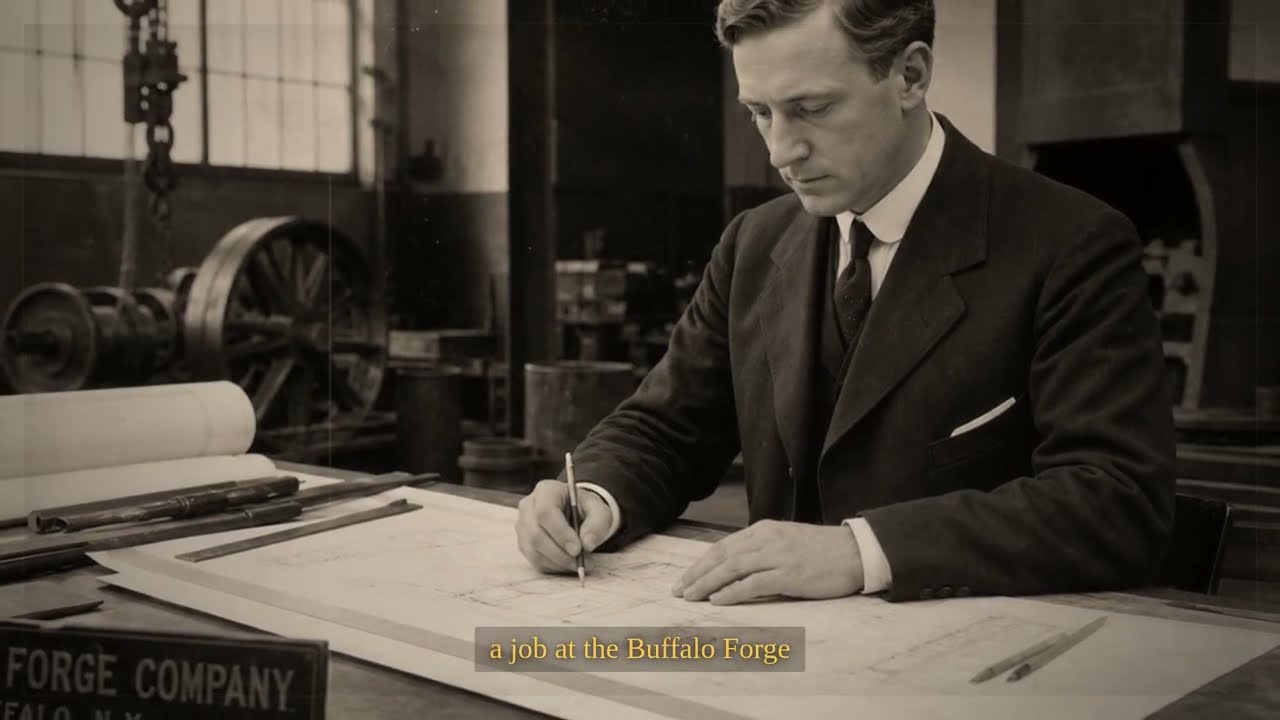
Willis Haviland Carrier.
Brooklyn.
A printing company had a problem.
Humidity.
Its paper kept changing size.
Color printing required a sheet to pass through the press multiple times.
Blue.
Red.
Yellow.
Black.
If humidity caused the paper to expand between passes, the colors no longer lined up.
A fraction of an inch could ruin the entire job.
Carrier was twenty-five years old.
Quiet.
Methodical.
An engineer from rural New York.
His assignment wasn’t:
“Make this factory comfortable.”
It was:
“Stop the paper from moving.”
Carrier began experimenting with cooled coils.
He realized that when warm humid air touched a sufficiently cold surface, moisture condensed out.
So if he could control temperature—
he could control humidity.
He built a system.
Air moved across chilled coils.
Moisture dropped out.
The paper stabilized.
The printing improved.
And then workers noticed something unexpected.
The room was cooler.
Carrier had accidentally solved a problem humanity had struggled with for thousands of years.
He had found a way to manufacture summer relief.
But the first systems were huge.
Expensive.
Industrial.
Factories wanted them because temperature and humidity affected production.
Textile mills.
Printing plants.
Tobacco companies.
Commercial businesses.
Ordinary people couldn’t buy one.
Not yet.
Even after the invention existed, most Americans continued sleeping on porches.
Buying ice.
Opening windows.
Suffering.
The first residential systems were custom luxuries for rich homeowners.
Window units came later.
They were still expensive.
Then World War II accelerated technology.
After the war, factories shifted back toward consumer goods.
America entered an economic boom.
Suburbs exploded.
House construction exploded.
Electricity spread.
Air conditioners became smaller.
Cheaper.
More reliable.
And suddenly a machine that had once belonged inside factories began appearing inside ordinary homes.
That is when America changed completely.
Because once you can make your own climate—
you no longer have to design around nature.
High ceilings became less important.
Huge windows became inefficient.
Sleeping porches were enclosed and converted into ordinary rooms.
Detached kitchens disappeared.
Modern homes became tighter.
More sealed.
Designed to keep conditioned air inside.
And people disappeared from their porches.
Before air conditioning, a Southern neighborhood on a summer evening might have been full of people sitting outside.
Why?
Because outside was cooler.
Neighbors talked.
Children played.
People walking past stopped.
The porch was social life.
Then families could make the living room seventy-two degrees.
The front door closed.
The windows closed.
Everyone went inside.
Mechanical cooling didn’t just cool the house.
It changed the neighborhood.
Then it changed the map.
Before widespread air conditioning, living in places like Phoenix or Houston came with a brutal climatic penalty.
Summer could be relentless.
Once every house, office, store and automobile could be cooled—
that penalty began disappearing.
People moved south.
Businesses followed.
Phoenix exploded.
Houston exploded.
Atlanta grew.
Miami expanded.
Las Vegas grew in the desert.
The American Sunbelt became one of the fastest-growing regions in the country.
Population brought money.
Population brought congressional seats.
Population brought electoral votes.
Think about the strange chain of events.
Humidity ruins printing paper in Brooklyn.
A twenty-five-year-old engineer fixes it.
Decades later, millions of Americans move into hot regions because they can now live comfortably there.
Congressional representation shifts.
Presidential politics shifts.
Real estate changes.
Architecture changes.
Cities appear where enormous populations would once have found summer nearly unbearable.
Willis Carrier didn’t merely cool rooms.
His invention helped rearrange America.
But every invention destroys another world.
The ice industry disappeared.
Those enormous winter harvests vanished.
The iceman disappeared from the street.
Ice houses rotted.
Sleeping porches closed.
Dogtrot houses became historical curiosities.
Buildings stopped being designed primarily around natural ventilation.
People stopped organizing their entire day around the sun.
And something else disappeared.
The memory of just how dangerous summer once was.
Today, people complain when the air conditioner breaks for three hours.
A century ago, nobody expected cold air to exist in July.
They expected heat.
They planned for it.
Built for it.
Worked around it.
Slept around it.
Sometimes fled from it.
And sometimes died from it.
That is why the little hum coming from your wall is more extraordinary than it sounds.
It represents two hundred years of people trying to defeat summer.
Frederick Tudor cutting winter out of frozen lakes.
Men risking their lives hauling ice.
Families placing mattresses on rooftops.
Children chasing the iceman’s wagon.
Women sleeping on screened porches.
Tenement families gasping through midnight heat.
Moviegoers buying tickets just to sit somewhere cold.
And finally—
one young engineer standing inside a Brooklyn printing plant in 1902, watching water condense on a cooling coil.
He thought he had fixed the paper.
He had no idea what he had really done.
Because from that moment on, Americans would slowly stop adapting themselves to summer.
Summer would be forced to adapt to them.