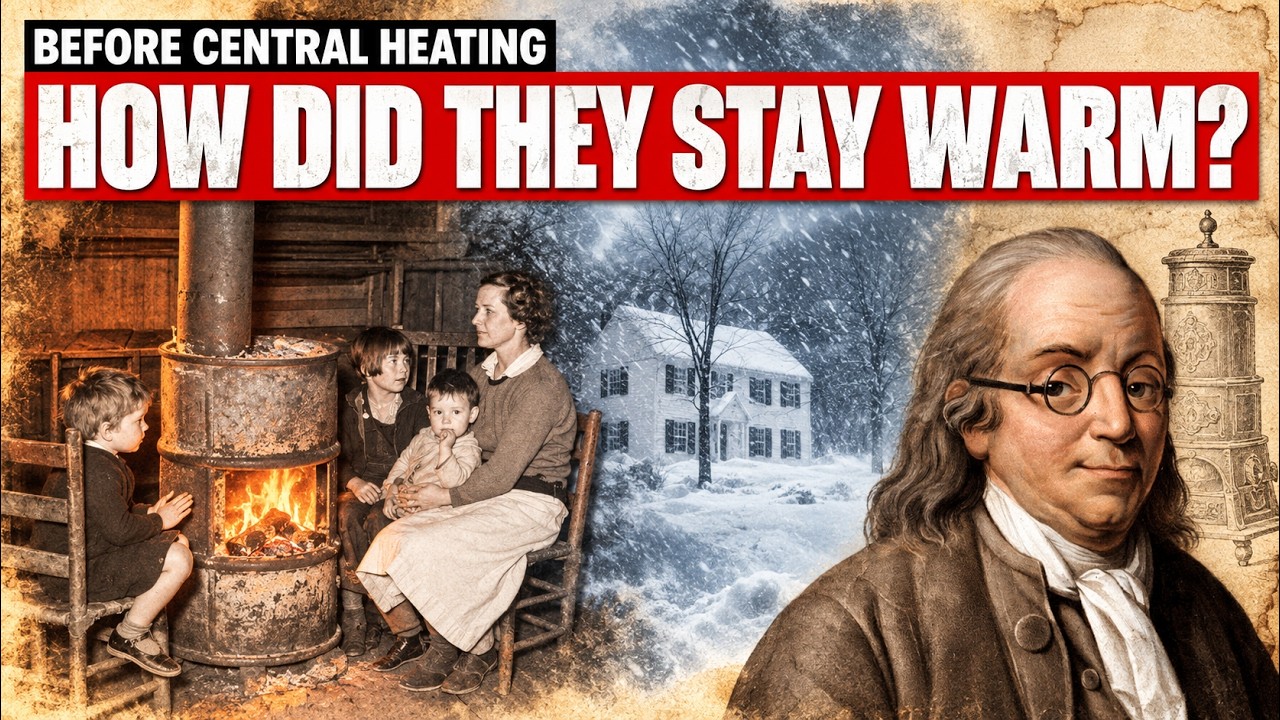
By the time spring reached Plymouth, nearly half of them were dead.
They had crossed the Atlantic believing the hardest part of their journey was behind them.
They were wrong.
There was no warm house waiting on the shore.
No furnace.
No radiator.
No insulated bedroom.
No switch to turn.
Only wet timber, frozen ground, inadequate shelter—and a New England winter that did not care whether they survived.
One hundred and two passengers had arrived aboard the Mayflower.
During that first winter, forty-five died.
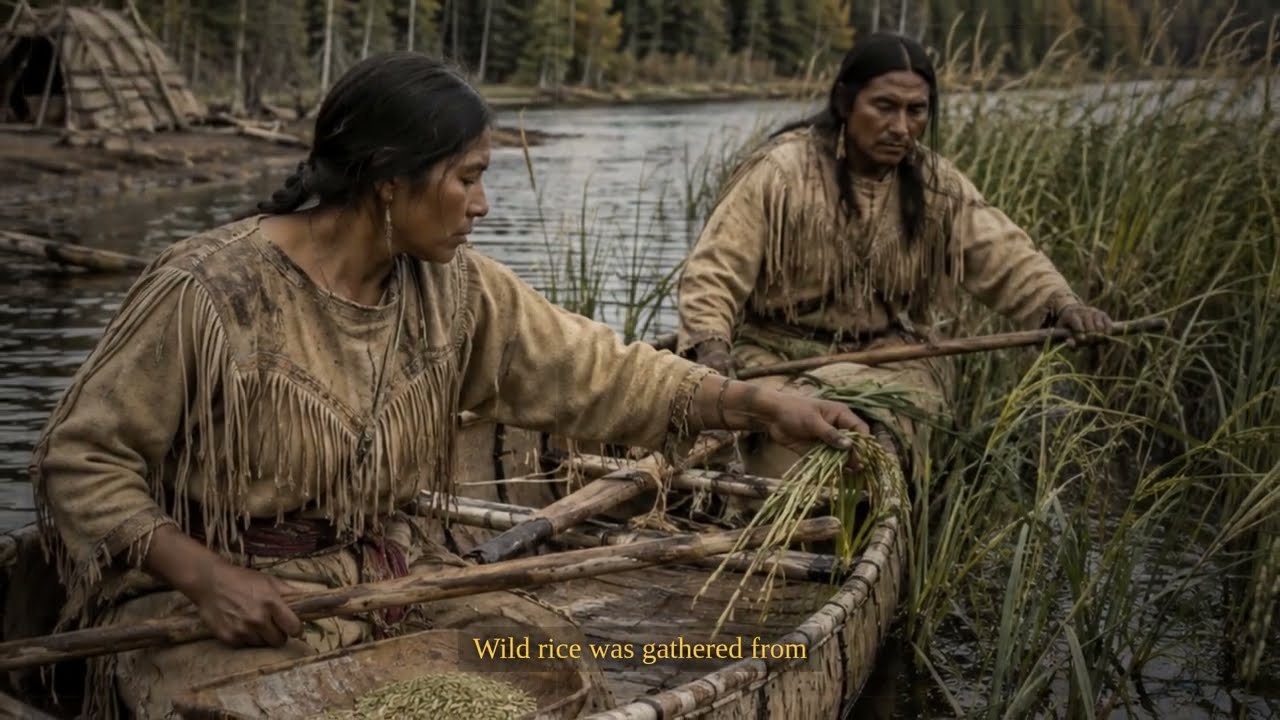
At the worst point, according to Governor William Bradford, only six or seven people remained healthy enough to care for everyone else.
Thirteen of the eighteen married women died before spring.
Inside the settlement, people weakened.
Families disappeared.
The dead were buried while the living wondered who would be next.
And Plymouth was not even America’s worst warning.
Ten years earlier at Jamestown, approximately 500 colonists entered the winter of 1609.
By spring—
only about sixty remained.
They ate horses.
Dogs.
Rats.
Snakes.
Leather.
And eventually—
the evidence suggests they ate one another.
This was winter in early America.
Not snowmen.
Not Christmas cards.
Not a fireplace glowing peacefully beneath stockings.
Winter could erase a settlement.
And for centuries, surviving it required an amount of preparation, fuel, food and physical labor that would be almost unimaginable to most Americans today.
But there is an important part of this story that the disaster narratives can hide.
The Europeans were not entering an impossible continent.
People had already been surviving its winters for thousands of years.
The newcomers simply did not yet understand how.
Long before Jamestown froze and Plymouth buried its dead, Indigenous peoples across North America had developed sophisticated systems designed around one brutal fact:
Winter had to be defeated before winter arrived.
And nowhere was that knowledge more visible than in the shelters they built.
On the Great Plains, winter could bring savage winds and temperatures far below zero.
There were few walls to break the wind.
Few forests in some regions to provide unlimited fuel.
Yet peoples including the Lakota, Cheyenne and Arapaho had developed a shelter almost perfectly suited to the environment.
The tipi.
From a distance, it looked simple.
A cone of hides stretched over wooden poles.
But nearly every part of its design served a purpose.
The sloping sides shed snow.
The shape resisted wind.
A central fire created warm air that rose toward adjustable smoke flaps at the top.
An interior lining created an insulating pocket of air between the living space and the outer hide.
Hides and furs covered the ground.
The result was not a modern heated room.
But it didn’t need to be.
It needed to keep human beings alive.
Farther east, Haudenosaunee communities solved the same problem differently.
The longhouse.
One structure could shelter numerous related families.
Hearths burned along a central corridor.
Dozens of bodies shared the enclosed space.
Instead of trying to heat separate houses—
people concentrated warmth.
Architecture became collective survival.
Then go farther north.
Much farther.
Into the Arctic.
And the solution becomes almost unbelievable.
Snow.
The very thing that seems capable of killing you becomes the material protecting you.
A properly constructed snow house exploits the air trapped inside compacted snow as insulation.
Outside temperatures could become lethal.
Inside, body heat and a small oil lamp could make the environment dramatically more survivable.
Sleeping platforms were elevated because colder air settled lower.
Entrances could be constructed below the main living area.
The structure minimized exposure to wind.
This was not primitive improvisation.
It was thermal engineering built from local materials and generations of observation.
Clothing followed the same principle.
Layers.
Fur.
Animal hide.
Wind protection.
Among Arctic peoples, caribou skin was extraordinarily valuable because its hollow hairs trapped insulating air.
Food was engineered for winter too.
Meat was dried.
Fish preserved.
Fat saved.
Corn, beans and squash stored.
And one food became almost perfectly suited to survival.
Pemmican.
Dried meat pounded and combined with rendered fat, sometimes with dried berries.
Dense.
Portable.
Long-lasting.
Loaded with calories.
The crucial difference was preparation.
Winter survival began in summer.
By autumn, the race was already underway.
Gather.
Hunt.
Dry.
Smoke.
Store.
Repair.
Sew.
Build.
Because once deep winter arrived—
nature stopped negotiating.
And when Europeans reached the continent, many of them learned this lesson through catastrophe.
Jamestown was founded in 1607.
The settlers arrived searching for opportunity.
Some expected precious metals.
Trade.
Profit.
They did not arrive as a perfectly adapted agricultural community prepared for years of survival in an unfamiliar environment.
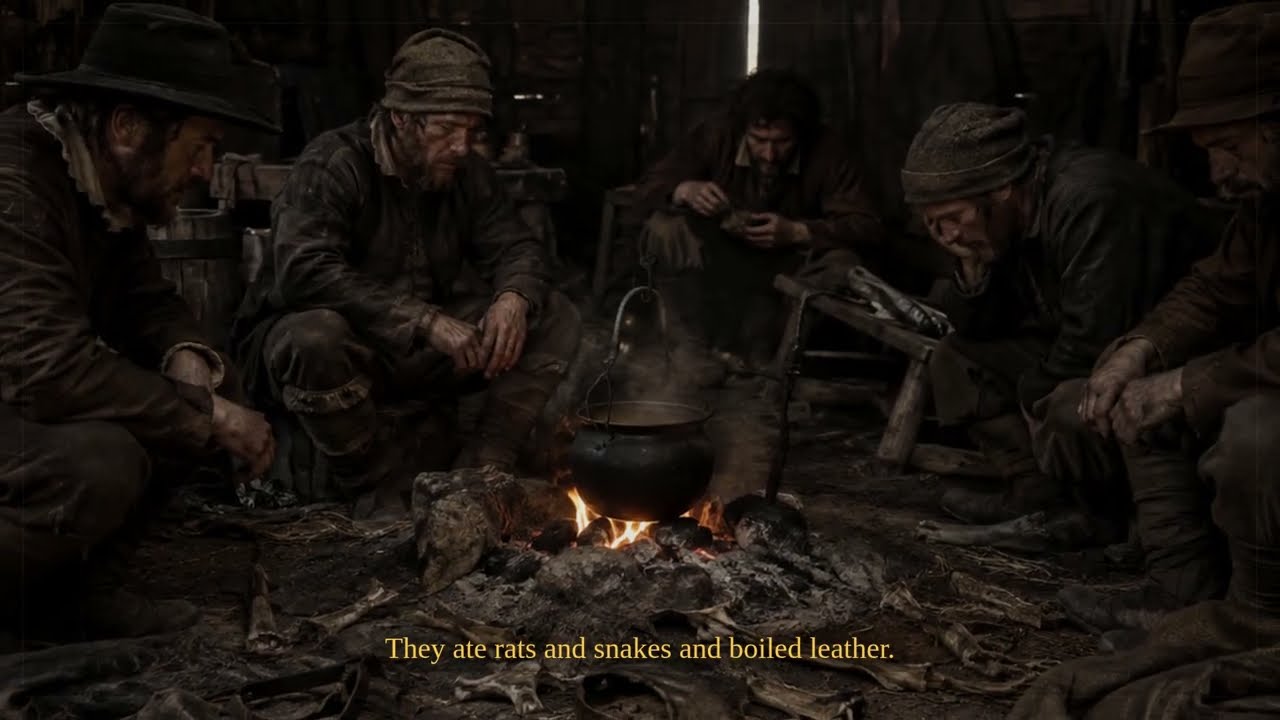
Then came disease.
Conflict.
Food shortages.
And eventually the winter of 1609–1610.
The Starving Time.
The colony’s population collapsed.
Archaeologists centuries later examined the remains of a teenage girl found at Jamestown.
Cut marks on her skull provided physical evidence consistent with survival cannibalism.
Think about what has to happen before a community reaches that point.
First the stored food disappears.
Then the livestock.
Then animals people never expected to eat.
Then leather.
Anything with calories.
And finally—
a boundary nobody imagined crossing.
Jamestown survived.
Barely.
Plymouth followed with its own devastating first winter.
But the colonies that endured began learning.
They adapted food systems.
Construction.
Clothing.
Seasonal preparation.
And at the center of almost every European-American household appeared one indispensable machine.
Fire.
Forget the romantic colonial fireplace.
The reality was enormous, hungry and inefficient.
Some fireplaces were large enough to stand inside.
Logs could be massive.
The flames looked impressive.
But much of the heat escaped directly through the chimney.
Stand close—
your face burned.
Turn around—
your back froze.
Move several feet away—
and the room could feel brutally cold again.
On severe nights, water left indoors could freeze.
Ink could freeze.
Families wore layers inside the house.
Hats stayed on.
Coats stayed on.
Bedrooms could be so cold that climbing into bed became its own ritual of survival.
Before sleeping, families might heat stones or bricks beside the fire.
Wrap them.
Carry them upstairs.
Push them beneath the blankets.
Another device was the bed warmer—
a long-handled metal pan holding hot coals.
Pass it beneath the sheets before climbing in.
Not to make the bed luxurious.
To make it tolerable.
Heavy curtains around beds trapped body heat.
Several children might sleep together.
Families crowded into the warmest part of the house.
During winter, entire rooms could essentially be abandoned.
Close the door.
Don’t waste heat.
Live near the kitchen.
Live near the fire.
And that fire demanded something modern heating hides from us completely.
Labor.
Enormous amounts of it.
A household could burn staggering quantities of wood through a winter.
Every log represented work.
Find the tree.
Cut it.
Trim it.
Split it.
Haul it.
Stack it.
Keep it dry.
Carry it inside.
Then feed the fire.
Again.
And again.
And again.
At two in the morning, the fire does not care that you’re tired.
Let it die during extreme cold—
and the house begins losing its only defense.
By morning, the room could be freezing.
This made firewood almost a form of winter wealth.
A large woodpile meant security.
A small one meant fear.
And as colonial cities expanded and nearby forests disappeared, fuel became more expensive.
For poor families, winter wasn’t simply colder.
It was financially dangerous.
Can you afford enough fuel?
Can you afford enough food?
Can you survive until spring?
And there was another cruel irony.
The fireplace saving your life could also kill you.
Cooking happened over open flame.
Heavy pots.
Hot coals.
Long dresses.
Wooden houses.
One spark in the wrong place could become catastrophe.
The device standing between a family and freezing was also one of the most dangerous objects inside the home.
America desperately needed something better.
Then Benjamin Franklin started thinking about where all that heat was going.
Up.
Pennsylvania.
Franklin looked at the traditional fireplace and saw waste.
Wood burns.
Heat rises.
Most of it disappears through the chimney.
Why not trap more of that heat inside the room?
His Pennsylvania fireplace—the design later associated with the Franklin stove—used cast iron and internal passages intended to transfer more heat into the living space while consuming less fuel.
Instead of depending only on the direct radiation of an open flame, heated metal itself could warm the room.
It was a major conceptual shift.
The original design was imperfect.
Draft problems limited its success.
Later modifications improved it.
And through the late eighteenth and early nineteenth centuries, increasingly effective cast-iron stoves spread through American homes.
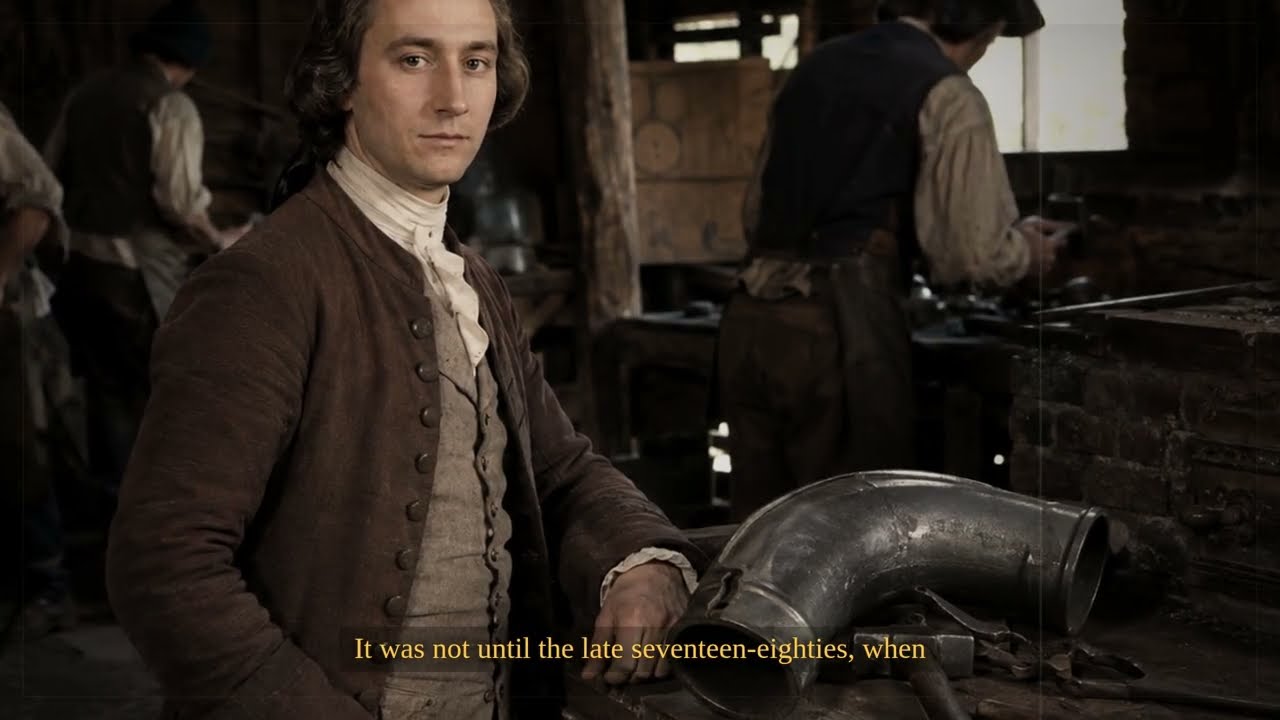
Suddenly a family could get more heat from less wood.
The stove occupied less space.
Heat radiated more effectively.
Fire was more contained.
It was still labor.
Still fuel.
Still smoke.
Still nowhere close to modern central heating.
But the balance was beginning to change.
Humans were no longer simply sitting beside fire.
They were learning to control how fire delivered heat.
And they would need every improvement they could get.
Because in 1816—
summer itself almost disappeared.
June.
New England.
Snow fell.
Then frost.
Farmers stared at fields that should have been growing—
and watched them die.
July brought more cold.
August brought more frost.
Corn failed.
Other crops suffered.
Food prices surged.
Families began asking a terrifying question:
If crops cannot survive summer—
what happens when winter returns?
The year became known as the Year Without a Summer.
“Eighteen hundred and froze to death.”
The cause began thousands of miles away.
Mount Tambora had erupted in Indonesia the previous year, throwing enormous quantities of volcanic material into the atmosphere.
The climate disturbance spread around the planet.
North America experienced bizarre temperature swings and destructive cold.
For families already living close to the edge—
one failed harvest could be devastating.
And suddenly winter preparation became almost impossible.
You cannot store corn that never matured.
You cannot preserve food that never grew.
You cannot feed livestock without fodder.
The crisis helped push families out of New England toward lands farther west.
Ohio.
Indiana.
Illinois.
Places they hoped would offer better agricultural futures.
Climate was moving people.
But westward migration created another winter problem.
The farther settlers moved onto the Great Plains—
the fewer trees they found.
And without trees—
what do you build your house from?
More urgently—
what do you burn?
The answer was sitting beneath their feet.
Sod.
Prairie grass formed thick mats of roots and soil.
Settlers cut that earth into blocks.
Stacked them.
Built walls two or three feet thick.
A sod house could look miserable from the outside.
Dark.
Low.
Made from dirt.
Rain could leak through.
Insects could live in the walls.
The interior could be cramped.
But during a plains winter—
those thick earthen walls did something beautiful.
They held temperature.
The same mass that kept the house cooler during summer helped protect it from winter cold.
A soddy could outperform a poorly built wooden house in insulation.
But shelter still required heat.
And the prairie had another problem.
No endless forest.
So families burned almost anything combustible.
Dried buffalo dung.
Buffalo chips.
Twisted prairie grass.
Corn cobs.
Stalks.
Whatever would burn long enough to warm the room.
Imagine a blizzard screaming across open prairie.
Snow hammering the walls.
Wind erasing the horizon.
Inside, a mother pushes another twist of dried grass into the stove.
It burns quickly.
She pushes in another.
Then another.
The children sleep beneath layers of quilts.
Nobody knows when the storm will end.
And if the fuel runs out first—
the walls alone may not save them.
This is why frontier survival was never truly individual.
The mythology celebrates the lone pioneer.
Reality often depended on the neighbor.
Families shared food.
Fuel.
Labor.
They helped raise barns.
Repair roofs.
Butcher animals.
Quilt blankets.
A household could be self-reliant—
until the moment it couldn’t.
Then community became the difference between hardship and disaster.
Winter exposed that truth more clearly than almost anything else.
But by the middle of the nineteenth century, another fuel was beginning to change the equation.
Black.
Dirty.
Dense.
Coal.
Wood had dominated American heating for generations.
Coal offered something different.
More concentrated energy.
Longer burning.
Easier bulk transportation once canals and railroads expanded.
And as American cities grew, coal became increasingly important.
Now heat could travel.
A city no longer needed a forest immediately outside its boundaries.
Fuel could arrive by rail.
By the late nineteenth century, coal was overtaking wood as a dominant heating fuel.
And coal made something else practical.
Central heat.
Instead of placing a stove or fireplace in every room—
what if one large fire heated the entire building?
Put the furnace in the basement.
Heat air.
Let hot air rise through ducts.
Or heat water.
Move steam or hot water through pipes.
Install radiators in individual rooms.
Now the fire disappears beneath the house.
The bedroom becomes warm without a flame beside the bed.
The hallway becomes warm.
The parlor becomes usable in January.
Children no longer need to dress beside a freezing washbasin.
This was more than comfort.
It changed the architecture of daily life.
For centuries, winter compressed families toward the hearth.
One room.
One fire.
One shared zone of survival.
Central heating allowed the family to spread through the house.
Privacy became easier.
Bedrooms became genuinely habitable through winter.
Large houses became practical in colder climates.
And slowly—
the ancient relationship between human beings and winter began to break.
But central heating first belonged mostly to institutions and wealthy households.
Ordinary Americans continued relying on stoves for decades.
The transformation came piece by piece.
Better furnaces.
Steam systems.
Radiators.
Gas.
Electricity.
Fans.
Ductwork.
And then came one tiny device that completed the revolution.
The thermostat.
For most of human history, controlling temperature meant controlling fire.
Too cold?
Add wood.
Still cold?
Add more.
Fire dying?
Wake up.
Too hot?
Open something.
Move away.
Let the fire fall.
Temperature was something you constantly negotiated.
Then automatic temperature regulation changed the relationship completely.
Set a desired temperature.
Let the heating system respond.
Eventually—
the house began watching the cold for you.
Think about how profound that is.
Your ancestors woke during the night to keep fire alive.
You sleep while a machine monitors the temperature.
They calculated whether the woodpile would survive February.
You hear a furnace click on and barely register the sound.
They closed rooms for months because heating them wasted precious fuel.
You walk from bedroom to kitchen in January wearing a T-shirt.
They warmed bricks before bed.
You complain because the thermostat is two degrees too low.
That isn’t weakness.
It is what successful technology does.
It makes yesterday’s survival problem so invisible that tomorrow’s generation mistakes the solution for a natural condition of life.
And nowhere is that more obvious than winter.
Go back to Plymouth.
Winter, 1620.
Imagine one of those colonists waking before dawn.
If he slept at all.
His breath visible.
Someone coughing nearby.
Someone else too weak to stand.
The shelter is damp.
Food is disappearing.
There is no doctor coming.
No truck bringing fuel.
No weather forecast telling them when the cold will break.
No hospital.
No furnace.
No rescue system.
Spring is not a date on a calendar.
Spring is something you have to remain alive long enough to see.
Now move forward.
A colonial farmhouse.
A child carries wood inside.
His mother tends the fire.
The family sleeps behind bed curtains.
A frozen pitcher waits beside them in the morning.
Move again.
A farmer walks into his field in June—
and finds frost.
Move again.
The Great Plains.
A blizzard covers a sod house.
A family burns dried grass because there is no wood.
Move again.
An American city in the late nineteenth century.
Down in the basement—
coal burns inside a furnace.
Warm air rises through ducts.
For the first time, someone wakes in a bedroom during winter—
and the room is already warm.
No one had to carry fire upstairs.
No one had to heat a brick.
No one had to wake at two in the morning and feed the hearth.
The house did it.
That is the real story of central heating.
Not the invention of comfort.
The automation of survival.
For thousands of years, human beings survived cold through knowledge, preparation and relentless physical effort.
Indigenous peoples engineered shelters and clothing around their environments.
Colonists learned through catastrophic failure.
Families cut forests into firewood.
Inventors trapped more heat inside iron.
Pioneers turned earth into walls and animal dung into fuel.
Industrial America dug coal from underground and moved fire into the basement.
Engineers sent heat through pipes and ducts.
And finally—
a small device on the wall took responsibility for deciding when the fire should burn.
Today, you touch that device with one finger.
The furnace starts somewhere you cannot see.
Warm air enters the room.
And the entire history disappears.
But on the coldest night of the year—
when the wind is hammering the windows—
listen for that click.
Because for most of American history, that sound did not exist.
There was only the fire.
And if the fire went out—
someone had to get up.
Because sometimes the difference between waking up in the morning—
and never seeing spring—
was whether there was enough fuel left to make it through the night.