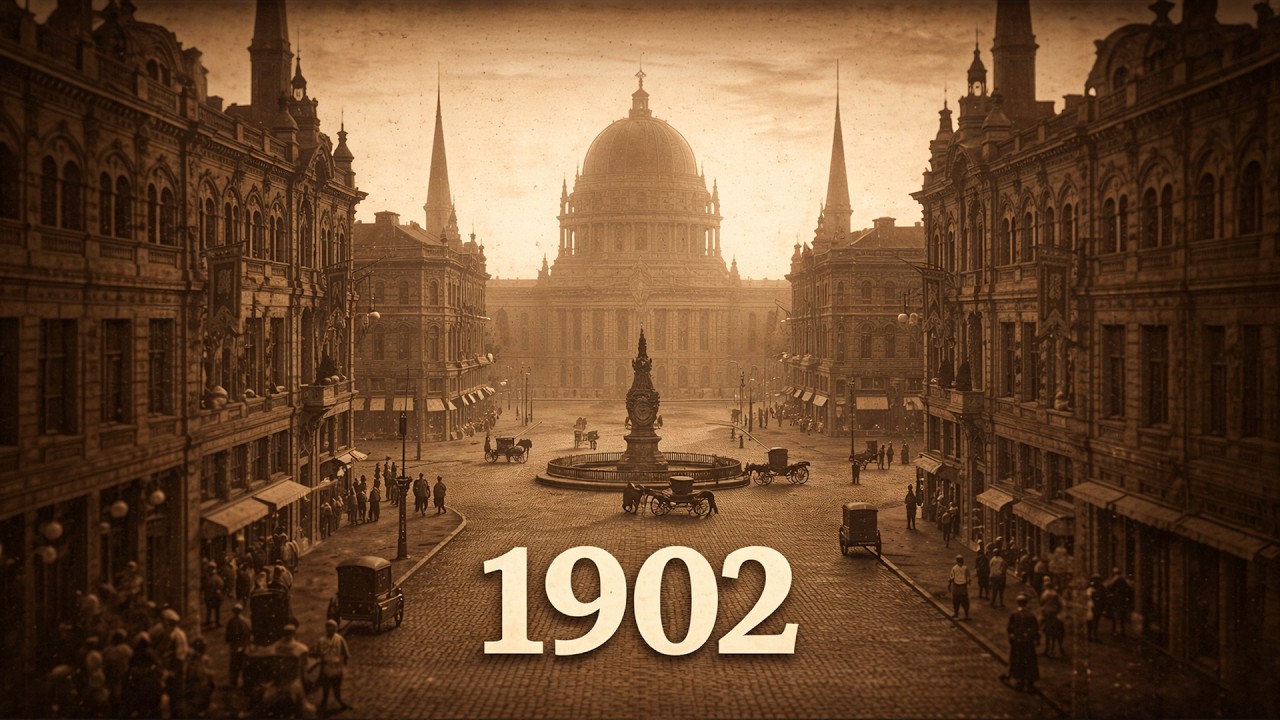
They told us these people were primitive.
Then explain this.
A city in the 1800s already had underground sewers stretching for miles.
Pressurized water moving through buried pipes.
Gas lighting.
Streetcars running on rails.
Railway stations larger than modern airports.
Factories filled with precision machinery.
Canals engineered across hundreds of miles.
Markets receiving goods from Asia, Africa, Europe and the Americas.
Buildings with ceilings fourteen feet high—
stonework so precise modern restoration teams struggle to reproduce it economically—
and drainage systems still functioning more than a century later.
All of this existed before computers.
Before radio.
Before trucks.
Before modern surveying equipment.

Before most of the technologies we assume are necessary to coordinate a modern city.
So here is the question nobody asks hard enough:
If they were so primitive—
who built the world they left behind?
And how did they coordinate it?
Because once you stop looking at the nineteenth century as a story of crude people slowly stumbling toward modernity—
and start looking at the physical evidence itself—
something changes.
The streets look different.
The buildings look different.
The canals look different.
The factories look different.
You begin seeing a civilization not defined simply by limitation—
but by astonishing organizational capacity.
Maybe there was no hidden global civilization.
Maybe there was no single “reset.”
Maybe nothing was deliberately erased.
But the idea that technological history always moves in a straight line from primitive to superior—
that idea becomes much harder to defend.
Because civilizations do lose skills.
Systems do disappear.
Technologies do get abandoned.
Knowledge can become uneconomic, unfashionable or forgotten.
And the nineteenth century contains enough extraordinary engineering to force a different question.
Not:
“How backward were they?”
But:
“What could they actually do?”
To answer that, begin with something ordinary.
A room.
Wake up inside a nineteenth-century urban building.
The first thing you notice is scale.
Ceiling:
twelve feet.
Maybe fourteen.
Tall windows.
Thick masonry walls.
Decorative plasterwork flowing across the ceiling.
Wood trim shaped by craftsmen who worked without CNC routers.
Doors taller than many modern equivalents.
A central stair constructed from stone, iron or hardwood.
To a modern developer, some of this looks extravagant.
Why waste so much volume?
More air to heat.
More wall to plaster.
More material.
More labor.
But these buildings were operating inside a different environmental logic.
Before widespread mechanical cooling, ceiling height helped manage heat.
Hot air rose above the occupied zone.
Tall windows improved ventilation.
Transoms allowed air to move between rooms even when doors were closed.
Thick masonry moderated temperature swings.
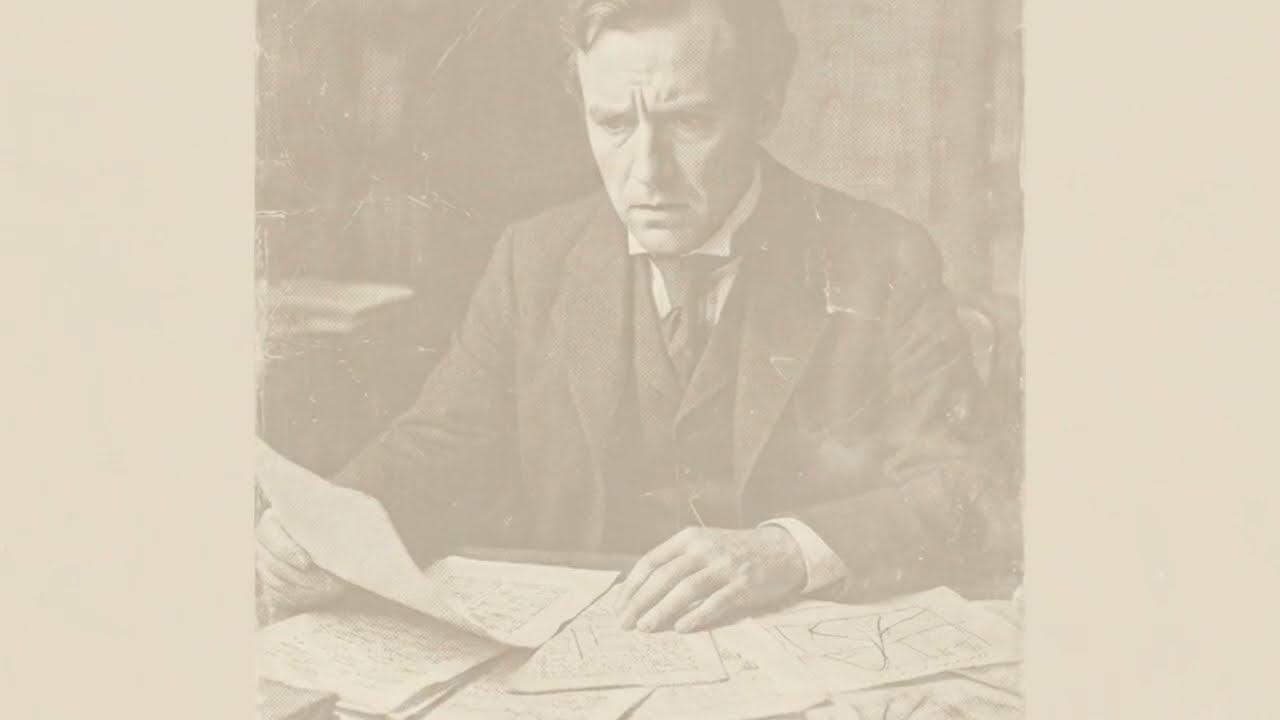
Courtyards brought daylight deeper into buildings.
Light wells illuminated spaces without electric bulbs.
Exterior shutters controlled solar gain.
Many features we treat today as aesthetic luxuries were partly environmental systems.
The building itself performed work.
That does not require forgotten physics.
It requires designing before cheap mechanical energy allowed architecture to ignore climate.
And yet the workmanship remains extraordinary.
Look at ornamental plaster.
Carved stone.
Cast iron.
Terracotta.
Decorative brick.
Wood joinery.
Modern builders can reproduce these things.
But doing so is expensive because the economic ecosystem that once produced them at scale has largely disappeared.
The craftsmen disappeared.
The apprenticeship systems shrank.
Specialized suppliers vanished.
Labor became expensive relative to standardized industrial materials.
So when we say:
“We can’t build like this anymore,”
what we often mean is:
“We no longer organize labor and money in a way that makes this economical.”
That is different from technological inability.
And that distinction runs through almost every mystery in this story.
Outside the building—
the city becomes even more impressive.
Look beneath the street.
Not at the pavement.
Under it.
Sewers.
Water mains.
Gas lines.
Drainage tunnels.
Subways in some cities.
Utility conduits.
An entire invisible city built beneath the visible one.
London constructed enormous sewer works in the nineteenth century.
Paris transformed its water and sewer systems.
New York built the Croton Aqueduct system beginning in the nineteenth century to deliver enormous volumes of fresh water.
Boston.
Chicago.
Philadelphia.
Cities across Europe and North America built increasingly sophisticated water and sanitation infrastructure.
The engineering required was formidable.
Survey gradients across miles.
Calculate flow.
Build reservoirs.
Cross valleys.
Excavate tunnels.
Move water by gravity wherever possible.
Control pressure.
Design pipes and valves.
Dispose of waste downstream.
Maintain the entire system while the city above continued operating.
None of this was primitive.
It was civil engineering at enormous scale.
And much of it worked without electronics.
That is what can make older infrastructure seem almost magical today.
Modern systems often rely on sensors, software and active controls.
Nineteenth-century engineers frequently relied on geometry—
gravity—
pressure—
material strength—
and carefully calculated passive systems.
A reservoir placed at sufficient elevation does not need a computer to create water pressure.
Gravity does the work continuously.
A sewer laid at the correct gradient moves waste without a motor.
An aqueduct carefully aligned over dozens of miles transports water without pumps.
The sophistication lies precisely in how little active intervention is required.
Our ancestors were not using mysterious energy.
They were exploiting physical forces with extraordinary discipline.
Then look at the streets.
Wide boulevards.
Radial plans.
Grids.
Grand avenues terminating at civic monuments.
These layouts can look almost impossible when viewed from above.
But large-scale urban planning is much older than modern electronics.
Romans planned roads and cities.
Renaissance planners designed geometric fortifications.
Baroque rulers reshaped capitals around ceremonial axes.
Surveyors used triangulation, chains, theodolites and astronomical observations long before GPS.
Precision did not begin with satellites.
What changed was speed.
Modern instruments make surveying faster.
They do not make geometry newly possible.
Still, the question remains impressive.
How were so many enormous projects coordinated without digital communication?
The answer begins with bureaucracy.
Paper.
Lots of it.
We often underestimate paper because it feels slow.
But nineteenth-century administration could move astonishing amounts of information.
Plans.
Schedules.
Invoices.
Engineering drawings.
Contracts.
Shipping manifests.
Telegrams later in the century.
Postal networks.
Messengers.
Newspapers.
Trade journals.
Professional societies.
Government departments.
Railroad offices.
Banks.
Insurance companies.
A project did not need a cloud server.
It needed clerks.
Hundreds of them.
Sometimes thousands.
People copied information.
Checked information.
Filed information.
Stamped it.
Sent it.
Recorded its arrival.
The system was slower than the internet—
but not incapable of coordination.
And once railways and telegraph lines expanded, the speed increased dramatically.
That matters when looking at one of the nineteenth century’s most extraordinary achievements.
The railway.
By the middle and late nineteenth century, railroads were spreading across continents.
Thousands of miles of track.
Stations.
Bridges.
Tunnels.
Switches.
Signals.
Schedules.
Maintenance depots.
Coal facilities.
Water towers.
Warehouses.
Hotels.
Ticket offices.
Entire economic ecosystems growing along the rails.
A railway is not merely two strips of metal.
It is a coordination machine.
A train leaving one city affects another train hundreds of miles away.
Track gauges matter.
Timetables matter.
Braking systems matter.
Signaling matters.
Maintenance matters.
And yes—
standardization became a huge challenge precisely because early systems were not perfectly standardized.
Different track gauges existed.
Companies competed.
Networks were gradually integrated.
This is one place where the historical record does show a learning curve.
But when we look backward from the finished network—
we tend to erase the decades of trial, failure and consolidation that produced it.
The final system looks as though it appeared fully formed.
It didn’t.
It accumulated.
The same is true of canals.
Long before railroads dominated freight, canals carried extraordinary volumes of goods.
The British canal network.
Dutch waterways.
French canals.
The Erie Canal.
The Grand Canal of China—
far older and larger than almost anything in Europe or America.
Canals required precise gradients.
Locks.
Reservoirs.
Towpaths.
Maintenance crews.
Warehouses.
Toll collection.
Traffic management.
A barge could move a load that would require many wagons over land.
That changed economics dramatically.
Transportation cost fell.
Cities gained access to heavy materials.
Coal.
Stone.
Grain.
Iron.
Timber.
Factories could grow where previously transport costs made industry impossible.
The canal itself became an information network too.
Merchants learned schedules.
Prices moved between markets.
Agents coordinated shipments.
Warehouses tracked inventory.
Again—
no electronic computers.
Human institutions performed the computation.
Then there were trade routes older than the industrial revolution by centuries.
Silk Road networks.
Caravan routes across Central Asia.
Ports around the Indian Ocean.
Mediterranean merchant networks.
Commercial systems connecting China, India, Persia, the Ottoman world, Africa and Europe.
These were never primitive lines drawn across empty maps.
They required infrastructure.
Caravanserais.
Water points.
Warehouses.
Credit.
Security arrangements.
Interpreters.
Brokers.
Currency exchange.
Merchant diasporas.
A trader did not need a global government to move goods globally.
He needed networks of trust.
Italian merchants used bills of exchange centuries before the nineteenth century.
Islamic commercial networks developed sophisticated partnership and credit practices.
Jewish merchant communities connected distant markets.
Chinese merchant associations operated across regions.
Global trade existed long before instantaneous communication because human beings built institutions capable of bridging distance.
Slow does not mean simple.
But industrialization made those networks explode in scale.
Textile mills.
Metal works.
Machine shops.
Ceramic factories.
Glass works.
Chemical plants.
By the nineteenth century, factories could employ hundreds or thousands.
Look at an old factory photograph and the machinery can seem impossible.
Belts running overhead.
Shafts rotating.
Machine tools lined across floors.
Everything driven from a central power source.
Before individual electric motors became common, factories could distribute mechanical energy through line shafts.
A steam engine turned one main shaft.
Belts transferred that rotation throughout the building.
One engine could power dozens or hundreds of machines.
Lathes.
Mills.
Drills.
Textile equipment.
Saws.
This system looks strange today because we replaced mechanical distribution with electrical distribution.
But it was sophisticated.
Dangerous—
extremely.
Yet effective.
Precision manufacturing also developed earlier than many people assume.
Interchangeable parts became a major industrial goal in weapons manufacturing and other industries.
Machine tools improved.
Gauges improved.
Measurement systems improved.
Standards organizations eventually formalized practices.
By the late nineteenth century, manufacturers could achieve tolerances that seem surprising to modern observers.
Again—
not because forgotten technology existed.
Because precision engineering did.
And workers learned those machines through structured systems.
Apprenticeships.
Factory training.
Trade schools.
Military arsenals.
Technical institutes.
Professional journals.
Knowledge spread.
Slowly by our standards.
Rapidly by theirs.
A design published in Britain could appear in an American engineering journal.
An engineer could travel.
A machine could be imported.
A patent could be licensed.
A company could hire experienced workers from another country.
Technology diffusion did not require YouTube.
It required incentives.
And nineteenth-century industry had enormous incentives.
Profit.
War.
Competition.
Prestige.
Infrastructure.
Empire.
Every major power wanted better machines.
That generated another explosion.
World’s fairs.
London.
The Crystal Palace.
Nearly a million square feet of glass and iron.
Built with prefabricated components.
The structure stunned visitors precisely because its construction method represented modern industrial production.
Standardized pieces.
Repeated dimensions.
Factory-made components.
Rapid assembly.
This was not an inexplicable anomaly.
It was the demonstration.
The building itself was proof of what industrial standardization could do.
Paris followed with enormous expositions.
Chicago in 1893 created the White City.
Electric illumination.
Grand architecture.
Machinery halls.
Transportation displays.
International exhibits.
Entire temporary cities appearing for months—
then partially disappearing.
Why could they build so fast?
Because temporary exhibition architecture did not always use the same techniques as permanent stone monuments.
Some buildings employed timber frames, plaster-like exterior materials, staff construction and highly standardized components.
They could look monumental—
without being built like cathedrals.
This is one reason old photographs of world’s fairs can produce modern myths.
The buildings look permanent.
Some were not.
The visual effect was designed to overwhelm.
The engineering was real.
But the apparent mystery often comes from assuming every facade represented centuries of masonry.
Still—
the organizational achievement was extraordinary.
Countries shipping exhibits across oceans.
Architects coordinating enormous sites.
Railroads delivering material.
Electric systems.
Water.
Sanitation.
Security.
Ticketing.
Millions of visitors.
The nineteenth century was not organizationally primitive.
It was bureaucratically enormous.
And that bureaucracy helped create something that seems almost magical in old photographs.
Global synchrony.
Fashion appears in Paris—
then London—
then New York.
Architectural styles move across continents.
Scientific ideas spread.
Music travels.
Books are translated.
Patents circulate.
How?
Ships.
Mail.
Newspapers.
Periodicals.
Publishing houses.
Telegraph.
Professional associations.
Diplomatic networks.
Trade.
Migration.
The delay was measured in weeks or months rather than seconds.
But human culture does not need instantaneous transmission to produce recognizable synchrony.
An architect in New York reads a Parisian journal.
A builder copies the style.
A pattern book circulates.
Manufacturers sell decorative components internationally.
Soon similar buildings appear in multiple cities.
What looks like mysterious global coordination can often be traced through very ordinary channels.
Pattern books are particularly important.
Architects and builders did not reinvent every column, cornice or window.
They copied.
Adapted.
Purchased prefabricated pieces.
Cast-iron facades could be manufactured from standardized molds.
Architectural ornament could be reproduced.
Terracotta companies sold catalogs of components.
This is why different cities can display striking visual similarity without one secret central planner.
Industrialization standardized beauty.
And yet—
not everything from that world survived.
That part of the alternative-history intuition is correct.
Technology does disappear.
Take gas lighting.
By the mid-nineteenth century, major cities operated complex gas networks.
Coal was processed into town gas.
Gasometers stored it.
Underground pipes distributed it.
Street lamps burned it.
Businesses burned it.
Homes burned it.
That required engineering.
Pressure control.
Valves.
Meters.
Maintenance.
Leak detection through smell and human inspection.
It was dangerous.
Explosions happened.
Poisoning happened.
But the network was mature enough to operate at urban scale.
Then electricity outcompeted it for lighting.
Much of the expertise surrounding gas illumination disappeared.
Not because someone erased it.
Because the technology lost.
The same pattern appears everywhere.
Canal engineering declined when railroads dominated freight.
Steam-engine maintenance skills declined when electric motors spread.
Telegraph expertise disappeared when telephone and radio replaced it.
Mechanical line-shaft factories disappeared when individual motors became cheaper and safer.
Horse infrastructure vanished after automobiles.
Skills can disappear because superior systems replace them.
But “superior” depends on what you measure.
A canal barge may use less energy per ton than trucks—
but trucks are faster and flexible.
A masonry building may last centuries—
but concrete and steel can be erected faster.
A passive ventilation system may consume no electricity—
but mechanical air conditioning allows architects to ignore orientation and climate.
Progress often exchanges one strength for another.
Speed for durability.
Flexibility for efficiency.
Standardization for craftsmanship.
Convenience for resilience.
This is where the idea of lost knowledge becomes valuable—
if we remove the conspiracy.
We absolutely do lose knowledge.
We lose it whenever the economic system stops rewarding people for learning it.
If nobody commissions carved stone—
fewer people learn carving.
If nobody builds lime-mortar masonry—
the skill becomes rare.
If cities bury streams instead of designing around natural hydrology—
older water-management knowledge disappears.
If mechanical cooling solves summer—
architects stop prioritizing passive ventilation.
Then fifty years later, somebody looks at an old building and asks:
“How did they know how to do this?”
The answer may simply be:
Because they had to.
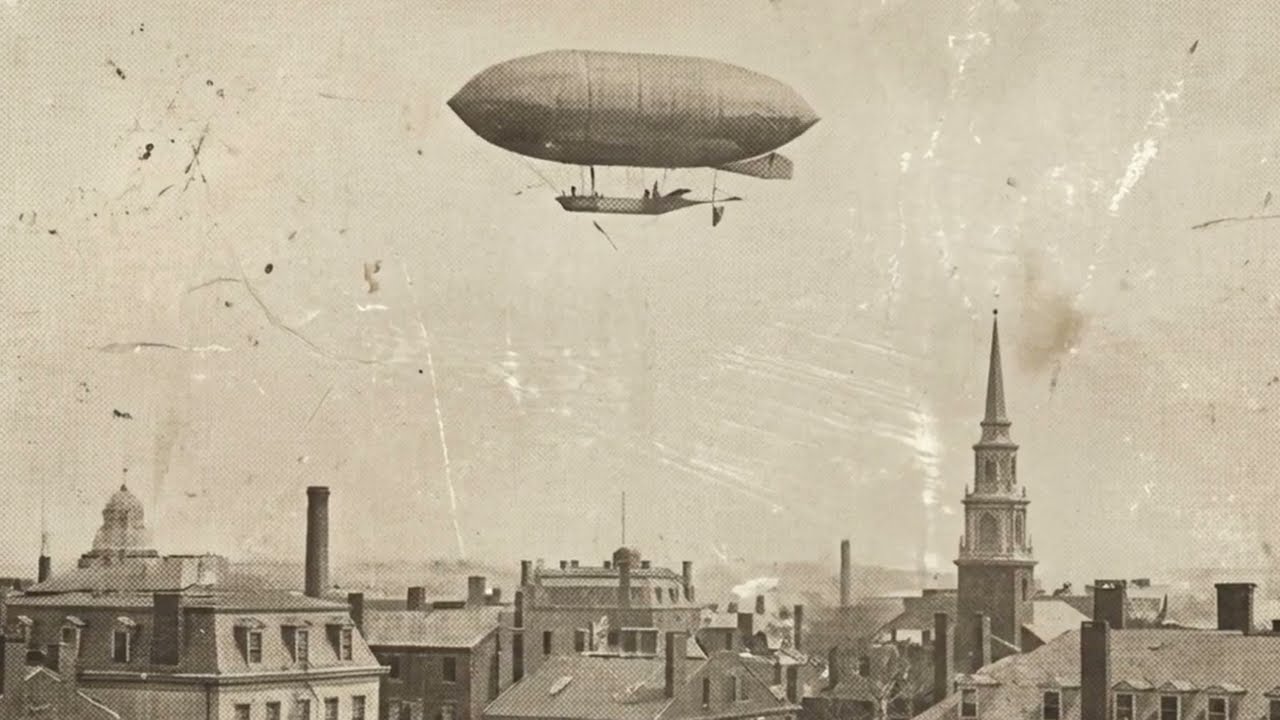
Now consider the airships.
This is where exaggerated versions of the story often jump too far.
Lighter-than-air technology absolutely existed in the nineteenth century.
Balloons had been flown since the eighteenth century.
Engineers experimented with powered dirigibles.
Military observers used balloons.
World’s fairs displayed aerial technology.
By the late nineteenth century, inventors were actively trying to make steerable airships practical.
But this does not imply a hidden global aerial transportation network.
The surviving historical record actually shows the limitations clearly.
Propulsion was weak.
Weather control was poor.
Hydrogen was dangerous.
Structures were fragile.
Navigation was difficult.
The spectacular Zeppelin era arrived later precisely because materials, engines and engineering improved.
So when an old rooftop contains an unexplained mast—
we have to resist the temptation to assign it to airships immediately.
Buildings accumulate modifications.
Flagpoles.
Lightning rods.
Telegraph structures.
Radio equipment.
Ventilation stacks.
Observation platforms.
One ambiguous shape cannot carry a theory.
But the real nineteenth-century aerial experiments are already fascinating enough.
A human being in 1860 could ride in a balloon and look down at a city from the sky.
That alone would have seemed impossible only generations earlier.
And photography made the world look even stranger.
Old photographs freeze finished systems.
They do not show the twenty years of construction before the shutter opened.
This is perhaps the biggest trap in reading nineteenth-century images.
You see a boulevard completed in 1880.
You don’t see the surveyor in 1848.
The bond issue in 1852.
The excavation in 1855.
The strikes.
The failed contractor.
The redesigned sewer.
The twenty thousand laborers.
The lawsuits.
The destroyed neighborhoods.
The newspaper arguments.
The photograph shows the result—
not the struggle.
That can create the illusion that mature infrastructure appeared suddenly.
History’s learning curve is often outside the frame.
And yet another question remains.
Why do some older systems still seem better than their replacements?
Because sometimes—
they are.
A Victorian masonry building can possess better thermal mass than a lightweight modern structure.
An old railway station may have extraordinary acoustics because its geometry and materials produce them naturally.
A gravity-fed water system may function during a power outage.
A canal can move freight with remarkable energy efficiency.
A traditional street grid may produce more walkability than modern suburban road hierarchies.
A thick timber beam may survive longer than a cheaper engineered component in certain conditions.
Older does not mean worse.
Newer does not mean better.
Engineering solves for constraints.
Different generations optimize for different things.
The nineteenth century often optimized for permanence because labor was cheaper relative to materials and energy.
Modern construction often optimizes for speed, capital efficiency, code compliance and short-term financial return.
So when an old courthouse survives 150 years while a newer building requires major facade repairs after thirty—
that is not evidence of a lost civilization.
It is evidence that the buildings were designed under different economic assumptions.
The old one may have been expensive in labor and designed to project permanence.
The new one may have been designed around a budget and financing timeline.
Architecture preserves economics in stone.
And that may explain another mystery—
the enormous public buildings.
City halls.
Post offices.
Railroad terminals.
Libraries.
Courthouses.
Banks.
Why were they so grand?
Because architecture communicated power.
A bank needed to look permanent.
A government wanted to look legitimate.
A railroad terminal was the gateway to the city.
A courthouse represented law.
A library represented civic progress.
So money was spent not simply on function—
but symbolism.
Modern societies still do this.
We just choose different symbols.
Airports.
Stadiums.
Corporate headquarters.
Data centers.
Skyscrapers.
The nineteenth century expressed confidence through columns and domes.
We express it through glass and height.
Different language.
Same instinct.
And once you see that—
the old city begins making more sense.
Not as evidence of some erased civilization.
But as evidence of a civilization far more capable than the simplified version many people carry in their heads.
That is the real correction worth making.
Our ancestors were not stupid.
They were constrained differently.
A nineteenth-century engineer did not have a laptop.
But he had logarithm tables.
Slide rules.
Drafting tools.
Survey instruments.
Mathematics.
Assistants.
A nineteenth-century architect did not have CAD.
But he had pattern books.
Scale drawings.
Geometry.
Apprentices.
A nineteenth-century logistics company did not have GPS.
But it had timetables.
Telegraph offices.
Dispatchers.
Clerks.
A merchant did not have instant banking.
But he had bills of exchange.
Letters of credit.
Insurance.
Agents.
Correspondent banks.
A global supply chain did not need software to exist.
It needed predictable institutions.
Ships arriving on schedules.
Ports processing cargo.
Contracts enforceable enough to encourage trust.
Insurance spreading risk.
Warehouses holding inventory.
The system was slower.
But it was not primitive.
That is perhaps the most important distinction in the entire investigation.
We often confuse speed—
with sophistication.
A message crossing the Atlantic in ten days instead of ten milliseconds seems primitive.
But coordinating profitable trade across an ocean when messages take ten days may require even more planning.
You need redundancy.
Inventory.
Trust.
Forecasting.
Standard documents.
Experienced agents.
The system must tolerate delay.
That is sophisticated in a different way.
And once telegraph cables began connecting continents—
the old networks accelerated rapidly.
By the late nineteenth century, commodity prices really could move internationally with remarkable speed.
Finance became increasingly global.
Shipping schedules tightened.
Railroad time itself became standardized.
Time zones emerged partly because railroads required them.
This was modernity arriving.
Not mysteriously.
Violently fast.
And perhaps that speed explains why it feels like a discontinuity.
People born into one world died inside another.
A man born in 1820 might grow up with horses and candles—
and die after seeing electric light, telephones, railroads, photography and powered machinery transform his city.
That is not gradual from the perspective of one human life.
It feels like a reset.
But the documents reveal accumulation underneath.
Patent after patent.
Machine after machine.
Survey after survey.
Bankruptcy after bankruptcy.
Improvement after improvement.
What seems like “inherited technology” from a distance often becomes visible development when examined year by year.
Still—
knowledge does disappear at the end of that process.
And that deserves more attention than it gets.
Walk through an old industrial building being demolished.
You may find a machine base nobody recognizes.
A pipe with no obvious destination.
A sealed shaft.
A ventilation opening.
A bricked doorway.
It is tempting to declare mystery immediately.
But buildings live multiple lives.
A textile mill becomes a warehouse.
Then offices.
Then apartments.
A gas pipe is abandoned.
A steam line is cut.
An elevator shaft is sealed.
A belt-drive opening becomes a wall.
After 120 years of renovations, the structure becomes archaeological.
People forget what previous systems did.
This is real forgetting.
Not necessarily organized.
Maintenance staff retire.
Blueprints disappear.
Companies fail.
Records burn.
The next owner sees only obsolete machinery.
Eventually the building contains systems nobody understands because nobody needs to understand them anymore.
That is how technological memory dies.
And something similar happens culturally.
Craft guild disappears.
Trade school closes.
Factory moves.
The last person who understands a process retires.
Nobody trains an apprentice.
Twenty years later, recreating the process requires research.
Fifty years later, it becomes “lost technology.”
Civilization does not need a conspiracy to forget.
It only needs one generation to stop teaching.
That sentence may explain more than any “reset.”
One generation stops teaching—
and the chain breaks.
So what was daily life actually like in this supposedly primitive nineteenth-century world?
More sophisticated than we often imagine.
And harsher than alternative histories sometimes admit.
A city resident might ride a streetcar.
Drink water delivered through a massive municipal aqueduct.
Work in an enormous mechanized factory.
Send a telegram.
Purchase imported tea.
Read a newspaper describing events across the ocean.
Walk beneath gas streetlights.
Enter a grand railway station.
And still—
lose a child to infectious disease.
Live beside industrial smoke.
Work twelve hours beside unguarded machinery.
Freeze in a poorly heated tenement.
Drink contaminated water before sanitation reforms.
Watch a factory fire kill hundreds.
Live under racial exclusion, legal inequality and class systems far harsher than modern nostalgia usually remembers.
Technological sophistication does not automatically mean humane living conditions.
The same civilization capable of constructing astonishing bridges could send children into mines.
The same city with beautiful boulevards could have neighborhoods without adequate sanitation.
The same railway network connecting a continent could be built through brutal labor conditions.
That complexity matters.
Otherwise, the past becomes another fantasy.
Either primitive misery—
or lost utopia.
It was neither.
It was human.
Brilliant.
Cruel.
Inventive.
Unequal.
Organized.
Chaotic.
Advanced in some domains.
Primitive in others.
Exactly like us.
And that is why the ruins matter.
Not because they prove everything we know is false.
But because they expose how weak our caricatures of the past can be.
Stand inside an old railway terminal.
Look upward.
Stone.
Iron.
Glass.
Acoustics shaped by enormous volumes.
Platforms connecting to tracks that once carried thousands of passengers every day.
No smartphones.
No digital signage.
Yet people navigated the system.
Tickets printed.
Bags routed.
Trains scheduled.
Mail transferred.
Freight loaded.
Connections made.
The station worked.
Then many of those systems disappeared.
Passenger rail declined.
Stations were demolished.
Canals were abandoned.
Streetcars were ripped from streets.
Gas lamps vanished.
Steam systems were replaced.
Buildings were subdivided.
Craft trades declined.
The old city changed.
A child born afterward saw the remnants and assumed they had always been remnants.
That’s how forgetting works.
Not:
Someone steals all the knowledge overnight.
But:
The system stops being used.
Then the people who remember it die.
Eventually only the structure remains.
A canal nobody uses.
A tunnel nobody understands.
A wall opening with no machine attached.
A building with ceilings nobody would pay to construct today.
Then someone asks:
What was this for?
Sometimes the answer is already in the archives.
Sometimes the archive is missing.
And sometimes—
we genuinely do not know.
Those genuine gaps are where investigation belongs.
Not certainty.
Investigation.
Because there is no reason to pretend history is complete.
It isn’t.
Records disappear.
Technologies are poorly documented.
Working-class knowledge especially can vanish because the people practicing it often left fewer written records than elites.
Many of the men who knew exactly how a system worked never wrote a book.
They simply did the work.
When they died—
the knowledge sometimes died with them.
That’s a real form of lost history.
And it may be far more interesting than a single hidden civilization.
So look again.
The fourteen-foot ceiling.
Don’t ask:
“Were giants living here?”
Ask:
“What thermal, social and architectural assumptions made this desirable?”
The underground brick tunnel.
Don’t immediately ask:
“Was this part of a forgotten energy grid?”
Ask:
“What industries occupied this building over 150 years?”
The canal.
Don’t ask:
“How could primitive people possibly calculate this?”
Ask:
“What surveying methods and labor organizations made this possible before electronics?”
The world’s fair palace.
Don’t assume a lost civilization built it.
Find the structural drawings.
Find the material specification.
Find the contractors.
Find the rail deliveries.
Find the workforce.
The answers may make the achievement more impressive—
not less.
Because once you understand what people accomplished with the tools they actually possessed—
you no longer need imaginary technology to admire them.
The real story becomes stronger.
A surveyor with no satellite lays a route across mountains.
A mason with hand tools builds an arch that survives 150 winters.
A clerk with ledgers coordinates freight across a continent.
An engineer with slide rules designs a bridge carrying loads he will never live to see.
A machinist makes components precise enough to interchange.
A city moves clean water across dozens of miles using gravity.
That is extraordinary.
And it happened.
No forgotten super-civilization required.
But neither is the simple story of helpless primitive ancestors adequate.
The truth is harder.
Human capability was always higher than our caricatures suggest.
And progress was never perfectly linear.
We gained things.
We lost things.
We replaced durable systems with faster ones.
Passive systems with powered ones.
Local skills with centralized infrastructure.
Craftsmanship with standardization.
Sometimes the new system was better.
Sometimes merely cheaper.
Sometimes more convenient.
Sometimes worse in ways we only understood later.
That is how real history moves.
Not upward in a straight line.
Sideways.
Backward.
Forward.
Through trade-offs.
And perhaps that is the thing we truly forgot.
Not an advanced civilization.
Not secret energy.
Not an erased global empire.
Something more uncomfortable.
Our ancestors were not waiting for us to become intelligent.
They were already solving complicated problems—
with different tools—
under different constraints—
inside systems we no longer use.
And when those systems disappeared—
some of their knowledge disappeared with them.
So the next time you walk through an old city—
look.
Really look.
At the drains.
The masonry.
The railway arches.
The window proportions.
The abandoned canal.
The ironwork.
The old factory.
Then don’t ask:
“How could they possibly have done this?”
Ask the question that history can actually answer:
“How did they do it?”
Because somewhere—
in an engineering manual—
a trade journal—
a municipal report—
a patent drawing—
a contractor’s ledger—
or an old craftsman’s notebook—
the method may still be waiting.
And if it isn’t—
then we have found something genuinely lost.
Not proof that history was fabricated.
Something far more human.
Proof that civilizations can know how to do something—
and then forget.