Wyatt Earp survived some of the most dangerous gunfights of the Old West without a single documented bullet wound. At the O. K. Corral, his brothers and Doc Holliday were hit.
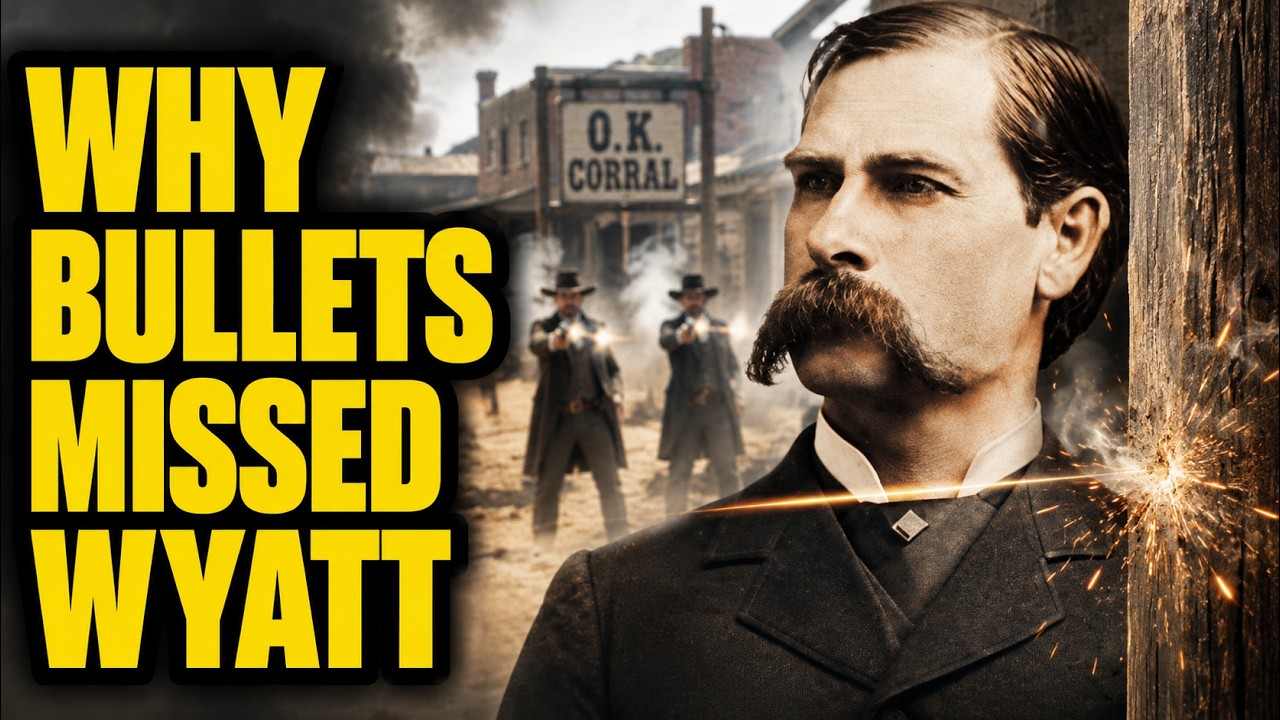
Wyatt stood untouched. Whether it was skill, composure, or extraordinary luck, his record made him famous as the man bullets couldn’t touch. The phrase is powerful, but it needs to be understood correctly. There is no verified record that Earp ever took a bullet in the armed confrontations that made him famous.
In the gunfight near the O. K. Corral, Virgil Earp, Morgan Earp, and Doc Holliday were wounded while Wyatt emerged unscathed. Months later, when Morgan was ambushed inside a billiard parlor, another bullet passed close enough to Wyatt to miss him.
During his subsequent vendetta against the men he blamed for Morgan’s death, Earp claimed bullets struck his clothing and equipment. Yet he never again reported a physical injury. Some of those later details came from Earp himself and those close to him, so historians do not treat every claim assettled fact. What is certain is that he survived multiple deadly encounters that killed or wounded men standing near him.
That record helped create the idea that lead somehow could not touch him. It also obscures a more important truth. Earp was not a man who spent every week in formal gun duels. Before Tombstone, most of his police work involved crowd control, disarming visitors, making arrests, and using physical force without firinga shot.
The famous image of two gunmen meeting alone ona empty street is largely a product of later fiction. Earp’s real confrontations were chaotic, crowded, and shaped by poor intelligence. Survival depended on timing, position, restraint, the support of other men, anda great deal of luck. His reputation grew because he stayed calm while others lost control.
But there is no historical evidence that he was invincible. The label “the man who couldn’t be hit” describes the legend built around his survival, not a supernatural truth. Born Wyatt Berry Stapp Earp on March 19, 1848, in Monmouth, Illinois, he spent his childhood moving frequently as his father, Nicholas Earp, relocated the family across Illinois, Iowa, Missouri, and California. That constant movement meant he never had single hometown identity.
He grew up in large family where his older brothers often became his closest partners. Virgil, James, Morgan, Warren, and his half-brother Newton each influenced his path differently. Three of his older brothers served inthe Civil War. A family story later claimed that young Wyatt repeatedly tried torun off to join them, only for his father tobring him home each time.
That tale is possible, but it falls into category of family tradition rather than fully established fact. After the war, Wyatt worked infreight wagons, stagecoach lines, railroad camps, and fast-growing settlements. In 1868, he found work laying railroad track for Union Pacific in Wyoming. Railroad construction camps attracted workers, merchants, gamblers, and men seeking quick money.
They were temporary places where formal authority was weak and personal reputation carried great weight. Earp learned gambling and boxing inthat environment, two interests that stayed with him long after his law enforcement years. Popular Western stories often place men like Earplin constant conflict with Native Americans, but his better-documented career followed different pattern. His work focused on policing towns, cattle movements, saloons, securing stagecoaches, gambling halls, theft, and disputes among settlers.
Native peoples were central to broader history of Western expansion, but Earp’s famous personal enemies were mostly white outlaws and local rivals. By his early twenties, he had seen how quickly railroad camp or mining town could rise, make fortunes for some, then fade. That pattern became his life’s map as adult. He kept moving toward next place where money, power, or opportunity seemed close enough tograb.
In November 1869, Wyatt returned tohis family in Lamar, Missouri, and became town constable after his father left post. The job involved practical local duties like serving legal papers, collecting fees, and bringing defendants before court. It was not glamorous position as later films portrayed, but it gave 21-year-old Earplegal authority and respectable standing in community. In January 1870, he married Urilla Sutherland, daughter of local hotel owner.
The young couple bought property and seemed ready to settle down. Later that year, Urilla died while pregnant. Sources differ on exact medical cause, citing disease and pregnancy complications as possibilities. What matters is that Wyatt lost his wife and expected child within first year of marriage.
His behavior changed sharply afterward. He sold property, left public office, and disappeared from settled life he had briefly built. It is tempting toturn this into simple explanation for everything he did later, but history rarely works that way. Grief may have pushed Wyatt away from Lamar, but his family background had already taught him tomove on whenever circumstances changed.
His father had started over repeatedly innew places, and now Wyatt did same. The first badge matters because it shows Earp did not begin as professional gunman. His entry into law enforcement came through small-town office, family connections, and ordinary civic work. It also shows respect was not entirely foreign tohimes.
Throughout his life, he wanted tobeseen as more than just gambler or hired strongman. He wanted property, social standing, and recognition from influential figures. At same time, he was willing tolive inharsh areas and work around activities that respectable society publicly condemned but privately used. That contradiction followed him from Missouri toKansas, Arizona, California, and Alaska.
He could enforce law inone town, violate it inanother, and still see himself as man trying torise
Earp’s early record does not support clean heroic portrait painted after his death. In March 1871, he was charged infederal court with participating inthe theft of two horses from Indian territory. He was arrested, released on bail, indicted, and scheduled fortrial. Instead of appearing, he left area and never faced charge incourt.
Because there was no trial, it is not accurate todescribe him as legally convicted of horse theft. It is also inaccurate topretend case did not exist. Remaining records show serious charge anda decision toavoid court. Around same period, Earp’s name was linked tobordellos inPeoria, Illinois, where he was arrested more than once under local ordinances targeting those establishments.
Historians disagree whether he worked as manager, guard, or law enforcer, but there is no doubt he lived and worked near that world. These facts do not prove every later accusation against him was true. They do show how flexible the line between lawman and outlaw could be infrontier regions. Police officers were often hired for short terms.
Political changes could end their jobs, and many earned money from gambling or private security when not wearing badge. Earp learned tonavigate between those roles. He also learned how much reputation mattered. Man known for physical toughness and willingness toact could find work even when his official record was murky.
His supporters later tried toerase these years from his story because they did not fit image of upright marshal. Yet these years explain his practical understanding of saloons, gamblers, thieves, and people who lived outside respectable society. When he later policed cattle towns, he was not viewing that world from distance. He knew its routines, weaknesses, and unwritten rules because he had lived inside it.
His authority came partly from badge, partly from everyone knowing he could not easily be intimidated by same men he was supposed to control
In 1874, Earp arrived inWichita, Kansas, cattle town where large herds from Texas arrived tobee shipped east byrail. During cattle season, population swelled with cowboys who had spent weeks on trail and arrived with money tospend. Saloons, gambling rooms, dance halls, boarding houses, and brothels competed for that money. Town wanted that income, but it also wanted tokeep violence and disorder within certain limits.
Earp’s chance torebuilthis reputation came when he helped off-duty officer recover stolen wagon. Local newspaper praised act, and in1875, he joined Wichita police force. His work involved daily control more than dramatic gunplay. Officers searched for concealed weapons, broke up brawls, monitored gambling rooms, and removed men who became dangerous after drinking.
His large frame helped. He stood about six feet tall, taller than average man of his era, and contemporary accounts describe him as physically confident and hard tointimidate. He often used his revolver barrel as club, a method known as“buffaloing. ”” It was violent and could cause serious injury, but in crowded saloon brawl, it kept him from firing shot that might hit bystander.
Wichita papers generally described Earp as effective officer. His job ended in1876 after he brawled with Bill Smith, political opponent of Marshal Mike Meagher. Earp was fined, and although Meagher was reelected, city council did not renew his appointment. This was typical frontier pattern.
Lawman could be praised formonths then lose position after single political dispute. Earp left Wichita with useful experience and new public identity. He had proven that man with legal troubles inhispast could become respected police officer if he proved useful totown. He also learned badge provided no permanent security.
From then on, he treated law enforcement as one trade among several, not lifetime institution that would protect him
Earp moved west toDodge City in1876 as cattle trail shifts moved business away fromWichita. Dodge became one ofmost crowded cattle towns on plains. Its officials did not expect peacekeepers toeliminate drinking, gambling, or prostitution. Those activities were part of town economy.
Goal was tokeep trouble out ofmost respectable streets and prevent armed visitors from turning arguments intomurder. Earp served onDodge City police force during periods from1876 to1879. His exact title varied, and later accounts often inflated his role beyond positions he actually held. He worked as assistant or deputy marshal rather than dominant town ruler seen insome films.
His style was direct. He approached men atclose range, demanded compliance, and relied on confidence and physical strength. That approach was risky, but it also explains why his early record contained fewer shootings than his legend suggests. A documented incident occurred inJuly 1878 when several men rode through Dodge firing atbuildings.
Earp and other officers returned fire while riders fled. One rider, George Hoy, was hit and later died of complications. No one could determine whose bullet struck him. Earp later claimed credit, but contemporary evidence does not prove that.
The incident shows how later memory could transform collective response inthedark into clearer story about single famous shooter. Dodge also connected Earp with men who would become part ofOld West history, including Bat Masterson and Doc Holliday. These relationships mattered because frontier law enforcement often relied onpersonal networks. When official police forces were small, officer depended onpeople he trusted for courage and loyalty.
Dodge taught him that preventing trouble was usually better than gunfight, but also taught him toact quickly when situation escalated. He left with strong local reputation, not as invincible duelist, but as tough officer who usually produced results town leaders wanted
The friendship betweenWyatt Earp and John Henry Holliday became one of most famous partnerships inOld West history. Holliday trained as dentist, but failing health and turbulent life pushed him towardgambling towns inTexas, Kansas, New Mexico, and Arizona. Exact details of his first meeting withEarp are not fully documented, and later accounts were shaped by legends of both men.
By late 1870s, however, they knew each other through connected world of gambling halls, peace officers, and traveling sportsmen. Earp later credited Holliday with helping him during dangerous encounter inDodge City. Although most dramatic versions ofthat rescue are hard toverify, their friendship made sense despite differing personalities. Earp was generally described asself-controlled and deliberate.
Holliday was sharp-tongued, unpredictable, and seriously ill. Yet he was educated, keenly observant, and fiercely loyal tosmall circle ofpeople. Earp did not judge him byordinary social standards because Wyatt himself lived among gamblers and outlaws. What mattered was whether Holliday could betrusted when pressure mounted.
Their relationship became especially important inTombstone. Holliday had no official reason tojoin Earp brothers intheir final march towardthe Cowboys on October 26, 1881. Virgil Earp deputized him forthat specific mission, and Holliday went because brothers were his friends and because he believed violent confrontation might occur. His presence also made situation more explosive.
The Cowboys already considered him enemy, and his reputation caused witnessestoassume worst abouthis actions. Later films often depicted Docand Wyatt as permanent partners roaming West together. In reality, their paths crossed, separated, then crossed again. They quarreled, lived indifferent places, and eventually each went his own way.
Yet when Wyatt’s family faced its most dangerous period, Holliday stayed near them. That loyalty is better documented than many of embellished dialogues invented forbooks and films
Wyatt arrived inTombstone, Arizona Territory, inDecember 1879 with family members. The town had grown around massive silver strike, attracting miners, investors, merchants, gamblers, laborers, and people seeking toprofit fromall of them. The Earps did not arrive early enoughtoseize easiest mining wealth.
Wyatt invested inmining claims, looked foropportunities intransportation, gambled professionally, and worked forWells Fargo, including service related tostagecoach security. He also briefly served as deputy sheriff,and later assisted his brother Virgil, who held stronger official authority infamily. This is one ofmost important corrections tofilm version. Wyatt was not marshal who personally controlled Tombstone.
Virgil was town marshal at time of famous confrontation,and it was he who made decision toapproach armed Cowboys. Wyatt remained ambitious. He wanted better-paying, more influential county sheriff post, position that offered status and income through tax collection. Tombstone also gave him early encounter withCurly Bill Brocius.
In October 1880, town marshal Fred White tried todisarm Brocius after nighttime shooting instreet. White was hit when shot discharged fromBrocius’s revolver. Wyatt arrived and arrested Brocius, using force tocontrol him. But Wyatt later testified that shooting ofWhite seemed accidental, showing he did not simply demand harshest outcome againstevery Cowboy.
Brocius was released after court accepted accidental discharge explanation. The incident strengthened Earp’s standing as man willing tomake difficult arrest, and added another moment where gunfire passed near him without injury. Tombstone seemed modern insome ways, with hotels, restaurants, newspapers, theaters, and expensive businesses. At same time, it sat next torural region wheresource cattle rustling, stage robbery, weak courts, and competing lawmen created constant state ofuncertainty.
Earp saw town ashis chance tomove fromtemporary police work toreal money and influence. Instead, it became place where his family’s struggle would define rest ofhis name
Inmodern usage, cowboy usually means ranch worker. But insoutheastern Arizona during Earp’s time, word could carry more threatening meaning. Newspapers and local officials sometimes capitalized word“Cowboy” torefer toloose network ofcattle rustlers, robbers, and gunmen linked toranches nearMexican border.
They were not single organization with clear membership and leadership. Some worked legitimate ranch jobs sometimesand engaged intheft orsmuggling others. That uncertainty made law enforcement difficult. Man could beknown as dangerous while still having friends, relatives, employers, and witnesse swilling todefend him incourt.
Most famous names included Ikeand Billy Clanton, Frankand Tom McLaury, Curly Bill Brocius, and Johnny Ringo. Not every charge against them can beproven, nor did Earp supporters later describe entire rural opposition ascriminal army. Reality was less organized and more confusing. The conflict was also not simply lawmen versus outlaws.
Sheriff Johnny Behan had his own alliances and rivalry withWyatt. Tombstone businessmen supported stronger law enforcement when robberies threatened shipping and investment, but that support could weaken when enforcement brought bad publicity or more violence. The Earp family itself earned money fromgambling and saloon interests. So they were not outside town’s vice economy.
They represented one network offamily, business, and law enforcement interests againstanother network based more heavily onsurrounding ranch country. That does not mean both sides were equivalent. Stage robberies, cattle theft, threats, and armed intimidation were real problems, and many Cowboys had serious criminal records. It means simple cinematic division between good lawmen and evil outlaws misses how frontier authority actually worked.
Earp’s position depended onbadge he wore, official who appointed him, and local leaders willing tosupport him. Same man could be federal deputy inone newspaper story and wanted killer inanother. That contradiction would become fully clear after Morgan Earp’s death
The direct road towardthe gunfight began with stagecoach robbery inMarch 1881. Armed robbers attacked coach outside Tombstone and two people were killed during incident.
Wells Fargo offered financial reward forcapture ofsuspects. Wyatt joined hunt because stage security mattered totownand solving case could boost his chances ofbecoming county sheriff. First pursuit failed after long, exhausting desert ride. Earp then tried secret approach.
According tohis later testimony, he offered Ike Clantonand Frank McLaury $3,600 as reward if they quietly helped capture wanted men. This arrangement put Ike indangerous position. If other Cowboys believed he had betrayed them, his life and standing among them would beatrisk. Before plan could bear fruit, main robbery suspects died inother criminal confrontations.
The secret deal was no longer useful, but fear surrounding it remained. Ike became convinced Wyatt might expose him as informant. Meanwhile, Wyatt believed Ike’s threats had become serious. This background explains why final confrontation was larger than simple municipal weapons ordinance.
Both men believed other possessed information that could destroy his reputation orput him indanger. It also shows Wyatt’s ambition. He was not chasing stage robbers purely out ofcommitment tojustice. He openly admitted success would help him politically and financially.
That does not invalidate robbery investigation. It makes his motives mixed, which was common infrontier law enforcement. Bounties, fees, elected offices, and private corporate money were integral part ofsystem. By October, rumors had replaced failed deal.
Ike talked while drinking and repeatedly threatened Earp familyand Holliday. Wyatt viewed those threats through months of tension and his knowledge ofsecret bounty plan. When armed Cowboys gathered inTombstone the next day, he did not see isolated violation. He saw possible first step ofattack that had been building formonths
On night ofOctober 25, 1881, Ike Clanton roamed Tombstone drinkingand threatening Earp familyand Doc Holliday.
By morning, he was still armed and had not slept. Virgil Earp eventually confronted him, pistol-whipped him, disarmed him, and marched him before judge. Ike was fined forcarrying weapons intown then released. That punishment resolved nothing.
Tom McLaury arrived, and Wyatt later struck him duringanother argument after believing he was armed. Reports then spread that more Cowboys had entered townand that Clanton and McLaury families were gathering weapons. Some reports were exaggerated. There was no large army ofCowboys waiting instreet, but Virgil could not know that withcertainty.
Tombstone had ordinance restricting carrying ofdeadly weapons within town limits. Visitors were expected toleave firearms athotel, stable, orother approved place. Rule was not always enforced exactly same way, but public threats made ignoring situation difficult. Sheriff Johnny Behan spoke withCowboys then met their opponents.
What Behan told them became disputed. The Earps believed Cowboys were still armed. Behan later suggested he had tried toclarify that he had disarmed them or was inprocess ofdoing so. Virgil decided tomove forward.
He took Wyatt and Morgan astemporary deputies and brought Doc Holliday along. Tomake Holliday less alarming, Virgil gave him short shotgunand carried Holliday’s cane. Even that detail became part oflater disputes aboutwho intended tostart fight. The four men walked towardnarrow area near C.
S. Fly’s boardinghouse and photography studio. The confrontation occurred near rear entrance ofO. K.
Corral livery stable, not inside corral itself. By time groups faced each other atclose range, hours ofthreats, conflicting reports, personal humiliation, and fear had removed most chances ofpeaceful arrest
Virgil, Wyatt, Morgan, and Doc Holliday faced Billy Clanton, Frank McLaury, Tom McLaury, Ike Clanton, and Billy Claiborne. The groups stood very close toeach other. Virgil announced his intention todisarm Cowboys.
What exactly happened next remains disputed because witnesses saw event fromdifferent positions and recalled itunder extreme stress. Strongest evidence suggests Billy Clantonand Frank McLaury moved towardtheir weapons while Wyatt drew his own revolver. Wyatt later testified he shot Frank because he considered him most dangerous shot. At nearly same moment, Billy fired atWyatt.
Virgil reportedly shouted that he did not want tostart shooting, but once first shots were fired, engagement turned intogeneral melee. Ike Clanton, unarmed atthat moment, moved towardWyatt. Wyatt did not shoot him. He told him tofight orflee, and Ike ran.
Billy Claiborne also ran. Remaining fight lasted about30 seconds with roughly30 shots reported. Billy Clantonand Frank and Tom McLaury were killed. Virgil was hit inleg.
Morgan was hit inupper bodyand Holliday received minor wound. Wyatt was not hit. The event became known as Gunfight atthe O. K.
Corral. Although location was vacant lot nearby onFremont Street, it was not planned duel between famous gunfighters. It was failed disarmament attempt that turned into chaotic close-range firefight. Tom McLaury’s armament status remains one ofhardest questions.
Some evidence suggested he was unarmed during fight, while other testimony and later arguments claimed he may have had weapon before confrontation. This uncertainty mattered because it shaped accusations that Earps killed men who were trying tosurrender. It also explains why no honest account can describe every move withfull confidence. Even witnesses watching fromclose range disagreed overwhich side fired firstand whether anyone had raised hands
Wyatt Earp’s survival atthe O.
K. Corral was striking because nearly everyone else remaining infight was hit. His survival is often attributed entirely toexceptional courage orskill. But available evidence suggests several factors combined.
First, fight was extremely short. Thirty seconds seems long when described later, but inreal time it allowed little opportunity toidentify targets, aim carefully, and adjust. Second, smoke, noise, movement, heavy clothing, and overlapping lines offire among men made accurate shooting difficult. Third, Cowboys did not focus only onWyatt.
Virgil was senior officer. Holliday carried shotgunand Morgan was firing beside them. Each appeared asdirect threat. Fourth, Wyatt seems tohave kept his focus onFrank McLaury, man he believed posed greatest danger.
Acting early may have reduced Frank’s chance offiring effectively athim. Still, luck cannot beruled out. Billy Clanton fired inWyatt’s direction, and Wyatt later said bullet passed close enoughtofeel its air. No scientific way exists toconfirm that sensation, but fact Billy was shooting athim aligns withWyatt’s testimony.
In later years, admirers treated this survival as evidence ofalmost supernatural calm. More realistic reading isthat Wyatt performed well underpressure and was lucky atthe same time. His decision not toshoot unarmed Ike Clanton is also significant. It suggests that even during confusion, he could recognize man who did not present same threat.
Judge Wells Spicer later pointed toIke’s survival when evaluating claims that Earps had gone tolottolwith intent tokill. If Wyatt had simply wanted toeliminate enemies, Ike would have been close and exposed. Instead, Wyatt let him flee. That single decision did not resolve every legal ormoral question, but it became important evidence thatconfrontation was not simple execution
Four days after shooting, Ike Clanton filed murder charges againstEarp familyand Doc Holliday.
Resulting legal proceeding was preliminary hearing, not final jury trial. Justice ofpeace Wells Spicer had todecide whether sufficient evidence existed tosend defendants tofull criminal trial. Over several weeks, nearly30 witnesses gave conflicting accounts. Sheriff Johnny Behan supported prosecution’s claim that Cowboys had tried tosurrenderand that other side fired first.
Other witnesses said Cowboys had reached fortheir weaponsand that Virgil had ordered them toraise their hands. Wyatt submitted long written statement underterritorial rule allowing defendant topresent his account withoutnormal cross-examination. He described threats, stage reward arrangement, town weapons ordinance, and opening moments offight. Defense did not need toprove every Earp decision had been wise.
It only needed toshow Virgil and his temporary deputies were performing official dutyand had reasonable belief they faced armed resistance. Spicer ultimately ruled evidence did not justify murder trial. He criticized parts ofVirgil’s approach, especially decision touse Holliday, whose presence escalated tension. Yet he concluded lawmen’s actions were legally justified underthose extraordinary circumstances.
Later, grand jury also declined toindict them. This outcome is often simplified asdefinitive proof Earps did nothing wrong. It was far narrower. Spicer found insufficient grounds totry them formurder.
The hearing also damaged their reputationsbecause testimony revealed secret deals, personal grudges, and sharp disagreements overconduct ofdead. Supporters described Earps as law officers who survived armed attack. Cowboy allies described shooting asexecution shielded bysympathetic officials. Both narratives spread far beyondTombstone.
Wyatt survived bullets, but he could not control story that hearing produced
The legal ruling did not end conflict. OnDecember 28, 1881, Virgil Earp was attacked atnight while walking inTombstone. Shots came fromhidden position across street. Virgil survived, but his left arm was permanently damaged.
Attackers were never conclusively identified incourt. The Earps believed Cowboy allies were responsible, and suspicion fell onmen linked toIke Clanton. Wyatt responded byseeking federal authority. Shortly afterward, he became U.
S. Deputy Marshaland formed group tohound suspects. This appointment gave him legal basis tooperate inwider area, but it did not end local conflict. County Sheriff Johnny Behan still represented competing law enforcement network,and the two systems did not trust each other.
Ike Clanton surrendered himselfand faced hearing related toattack onVirgil, but witnesses supported his alibiand case failed. ForWyatt, outcome reinforced growing belief that ordinary arrests and local courts could not protect his family. That belief would later beused tojustify his actions, but it did not automatically make those actions legal. Virgil’s ambush shifted physical balance infamily.
Virgil had been officer incharge attheO. K. Corral, man who made decision toenforce weapons ban. His wounding placed more responsibility onWyatt.
Wyatt sold orscaled back some business interests inTombstoneand focused onprotecting his brothers. Town leaders who had wanted firm action againstcrime now faced costs ofescalating conflict. Each new attack threatened commerceand made Tombstone seem unstable. Wyatt’s supporters wanted protection.
Yet many residents feared any further armed response would bring more retaliation. The label“the man who couldn’t be hit” began totake shape duringthis period because Wyatt stood besideanother badly wounded brotherand remained physically untouched. His survival seemed extraordinary, but it also meant he was only family member capable ofacting
OnMarch 18, 1882, Wyatt and Morgan Earp were atHatch’s billiard parlor inTombstone. Morgan was playing whileWyatt watched fromnearby.
Shots were fired through rear doorway fromdarkness outside. Morgan was hitand died withinless thanhour. A second bullet passed nearWyatt and struck wall. Again, man beside him was killed while he survived.
This attack was not face-to-face armed confrontation. It was ambush designed togiveretarget no warning. That difference mattered. Wyatt had built reputation byconfronting trouble directly, but attackers were using distance, concealment, and surprise.
Morgan’s death ended whatever faith Wyatt had left inpossibility ofresolving conflict throughsame legal channel used afterO. K. Corral. He believed certain Cowboys had planned orcarried out murder, though evidence available tohim was mixture ofwitness claims, rumor, and personal information.
He arranged protection forVirgil andEarp women who needed toleave Arizona. Morgan’s body was sent towardfamily home inCalifornia. Wyatt now operated intwo roles ataonce. He was federal deputy withauthority tochase suspects, and he was grieving brother determined topunish men he held responsible.
Those two roles could not becleanly separated. Supporters later described everything he did asformal law enforcement. Critics described it aspersonal vengeance undercover ofbadge. Truth contains elements ofboth.
He held federal mandate, but he made decisions based onpersonal conviction rather thancompleted court cases. Morgan’s murder is point where Wyatt’s story moves farthest fromdisciplined officer ofWichita and Dodge. He no longer believed arrest alone would stop attacks. The bullet that missed him did more thanadd tohis legend.
It left him alive tolead next stage ofconflict
Two days afterMorgan’s murder, Wyatt escorted his wounded brother Virgil and other family memberstotherailroad station inTucson. Frank Stilwell, acowboy associate Wyatt suspected ofinvolvement inMorgan’s death, was seen nearstation. Stilwell was killed thatnight, and Wyatt and several members ofhis group were charged. Exact sequence ofevents remains disputed, but Wyatt later acknowledged responsibility forpursuing Stilwell.
Arrest warrants were issued, putting federal deputy inconflict withterritorial authorities. Wyatt then left Tombstone withDoc Holliday, Warren Earp, Sherman McMaster, Turkey Creek Jack Johnson, Texas Jack Vermillion, andother supporters. They hunted men believed involved inthe attacks. Florentino Cruz, also known as“Indian Charlie,”” was killed bygroup after being questioned.
The group later confronted Cowboys nearIron Springs. Wyatt said he stepped forward whileriding companions hung back, killed Curly Bill Brocius, and escaped whilebullets struck his coatand equipment. Curly Bill vanished fromhistorical records, but no body was publicly displayed, so details rely heavily onWyatt’s own accounts. What is fully certain is that Earp again emerged without documented injury.
The group continued moving throughsoutheastern Arizona whilesheriff Behan’s men tried toarrest them. This was moment whenWyatt became lawman and fugitive atonce. Supporters inbusiness andmining circles quietly provided money, horses, orshelter because they considered Cowboys athreat. Henry Hooker allowed grouptorest atSierra Bonita ranchand refused tohelp Behan inhispursuit.
That support did not resolve legal question. Newspapers outside Wyatt’s circle condemned killings asvengeance. By late April, grouphad left Arizona. The ride had eliminated orenemies ordriven them off, but it also ensured Wyatto could not simply returntonormal police work inTombstone.
His most famous period aslawman ended withoutstanding arrest warrants, controversial killings, and absence ofjudicial ruling determining exactly what happened onthat trail
Wyatt spent sometime inColorado after leaving Arizona, then later reunited withJosephine Marcus inCalifornia. There is no definitive evidence oflegal marriage between them, but they lived ascouple forrest ofWyatt’s life. His earlier relationship withMattie Blaylock ended duringseparation fromTombstone. Afterward, Wyatt and Josephinesought opportunities acrossWest.
They spent time inmining camps, invested inclaims, managed orworked ingambling operations, promoted horse racing, and moved whenever local boom slowed. This long period isoften ignored because it does not fit simple image offrontier marshal. Wyatt was only34 when heleft Arizona, meaning most ofhis adult life was still ahead ofhim. InSan Diego duringlate 1880s, he invested inreal estateand business ventures related togambling and entertainment.
City was undergoinggrowth boom, and Wyatt again tried toturn his early arrival intolasting wealth. When boom weakened, some ofthose investments lost value. He continued refereeing boxing matchesand stayed involved inhorses affairs. His occupations appear inrecords asgambler, saloon keeper, prospector, orcapitalist, depending onyear.
He sometimes helped lawmen, but he never returned tosame continuous city police role he had held inKansas. His life followed frontier economy rather thancareer ladder inlaw enforcement. A silver strike, railroad expansion, land boom, horse racing market, ornew gold camp could pull him hundredsofmiles. That pattern explains why he was not wealthy forlong.
He often entered promising ventures, but arrived toolate, stayed afterconditions changed, or moved his money intoanother uncertain project. Josephine shared that turbulent life, though their relationship was marked byfinancial strainandconstant relocation. Wyatt remained known insome Western communities, but during1880s, his name was not yet national symbol it later became. O.
K. Corral incident was known locallyand regionally, while another event would make him household name acrosscountry forfirst time
OnDecember 2, 1896, Wyatt Earp refereed major heavyweight boxing match inSan Francisco betweenBob FitzsimmonsandTom Sharkey. Earp had boxing experience, but this event was far larger thanmatches he had overseen infrontier towns. In round eight, Fitzsimmons seemed totake controland knocked Sharkey down.
Earp ruled knockout illegaland awarded fight toSharkey. Decision provoked immediate, intense outrage. Newspapers accused Earp ofincompetence, corruption, orinvolvement infixing results. A cartoon depicting him asdishonest frontier figure spread widely.
No conclusive evidence ever proved he accepted bribe, but suspicion followed him fordecades. At the time, that sports controversy gave him more national fame thanO. K. Corral gunfight.
It showed biggest threat tohis reputation did not come fromoutlaw carrying revolver. It came fromnewspapers withmass urban audience. Wyatt could face armed man directly, but he had no power overeditorialists, cartoonists, and readers who had already decided what kind ofman he represented. Shortly afterward, he andJosephine joined gold rush intheNorth.
They traveled toAlaskaandYukon. By1899, Wyatt and partnerCharlie Hoxie ran Dexter saloon inNome. Rather thansearching forgold intheground alone, Earp earned money fromminers who arrived withgold tospend. That business brought another period ofprosperity, but it did not providelasting security.
Wyatt later returned toCaliforniaand continued working mining claims, including desert properties nearColorado River. Bythat time, real Old West ofcattle towns andsilver camps was turning intomemory. Wyatt was still moving throughboom economies, but newspapers had already transformed him intocharacter whose past could bereshaped foraudiences who had never seenTombstone
Duringhis last years, Wyatt andJosephine spent most oftheir time inand aroundLos Angeles, with visits tomining claimsinCalifornia desert. The emerging film industry placed him nearpeople who were turning recent frontier past intoentertainment.
Wyatt knew silent Western film starslikeWilliam S. HartandTom Mix, and visited Western movie sets. Director John Ford later said he heard Earp’s version ofO. K.
Corral story whileworking onfilms. Those conversations were not neutral historical interviews. Wyatt lived long enoughtosee his reputation challenged,and he wanted audiences toremember him aslaw officer who protected his family. He worked withJohn H.
Flood onmemoirs inthe1920s, but publishers rejected manuscript. Wyatt died inLos Angeles onJanuary 13, 1929, atage80. He was last surviving participant inthegunfight nearO. K.
Corral. His national heroic image expanded mostly afterhis death. Stuart Lake’s 1931 book“Wyatt Earp, Frontier Marshal”” presented him asfearless hero whotamed towns, removing much ofdoubt, gambling, legal trouble, and personal ambition fromhis life. The book gave Hollywood clear central character.
Later films andTV shows moved Wyatt intocenter ofevents Virgil hadofficially led, increased number ofhis gunfights, and gave him moral certainty rarely foundinhistorical record. Even famous long-barreled“Buntline Special” revolver associated withhim rests onweak evidenceand became widely known throughLake’s story. The real Wyatt Earp was constable, policeman, deputy sheriff, gambler, stage security man, mining promoter, saloon owner, horse racer, boxing referee, and fugitive fromjustice. The version that reached screen was something simpler.
The calm lawman who always faced dangerand somehow stood untouched. When film“Frontier Marshal”” began shaping movie conventions inthe1930s, phrase“the man who couldn’t be hit” no longer described justasurvivor. It described character American popular culture had chosen topreserve