Johnny Ringo was found dead beneath a tree in southeastern Arizona on July 14, 1882, with a bullet wound to the head and his Colt revolver still grasped in his right hand. Officials leaned toward suicide, but unusual details at the scene and conflicting stories that surfaced afterward turned his death into one of the Old West’s most enduring mysteries. More than 140 years later, the central question remains: did Ringo take his own life, or did one of his enemies finally settle the score? Ringo’s full name was John Peters Ringo.
He was born on May 3, 1850, in Greens Fork, Indiana, and later moved with his family to Missouri. In 1864, the family joined a wagon train heading west to California. During that journey, his father, Martin Albert Ringo, accidentally killed himself with a firearm. Johnny was only 14.
Later stories described Ringo as an educated man who could quote Shakespeare and discuss classical literature. People did remember him as someone who read more than the typical frontier gunman, but there is no solid evidence that he attended college. That gap between documented fact and later legend would follow him for the rest of his life. By the late 1860s, Ringo left California for Texas, placing himself in a region where disputes over cattle, property, and personal loyalties could quickly turn deadly.
His reputation did not come from formal gunfighter duels, but from feuds, arrests, dangerous associates, and a willingness to use violence when disputes became personal. Ringo’s first major appearance in the historical record came during the Mason County War in Texas in the 1870s. This was not a clean conflict between two organized sides. It was a violent local feud driven by cattle theft accusations, revenge killings, personal grudges, and competing groups of armed men.
By 1875, Ringo had associated himself with Scott Cooley’s faction. After Moses Baird was killed, Ringo and a man identified as Bill Williams went to the home of Jim Cheney, who was accused of helping lure Baird into the situation that led to his death. Ringo and Williams killed Cheney. Ringo was arrested with Cooley in December 1875.
Supporters broke them out of custody at one point, but Ringo was recaptured and spent much of 1876 and 1877 in jail while the Cheney case remained unresolved. The case was dismissed in May 1878. Many records from the conflict were lost when the Mason County Courthouse burned in January 1877, which left room for later writers to build stories around Ringo. After the murder case was dismissed, Ringo settled around Loyal Valley, Texas.
On November 5, 1878, he was elected constable of precinct 4, a brief and little-documented episode that shows how flexible the labels of outlaw and lawman could be on the frontier. By the end of 1879, he was in Arizona Territory. On December 14, he shot and wounded Louis Hancock during a saloon argument in Safford, further strengthening his reputation as a dangerous man. When Ringo entered southeastern Arizona, the region was changing quickly as mining camps, ranches, and stage routes created new settlements and new disputes.
Ringo became associated with men later identified with the Cochise County Cowboys. The term was used loosely, not for a formal gang, but for a network of men accused of cattle rustling, stage robbery, and other crimes. Ringo knew figures like Ike Clanton and Frank Stilwell, and after the famous gunfight at the O. K.
Corral, he became one of the best-known men on the anti-Earp side. Historian David Johnson has noted that no contemporary evidence has been located showing that Ringo was actually charged with cattle theft in Arizona, even though Wyatt Earp and others connected him to the outlaw element. Once someone became known as an outlaw, almost every unsolved robbery in the area could eventually be attached to his name. Wyatt Earp arrived in Tombstone with experience as a law officer, gambler, and frontier businessman.
His brothers Virgil and Morgan also became involved in local law enforcement. By 1881, stolen livestock, stage robberies, arrests, and personal insults had created a situation where almost every encounter between the Earp side and the cowboy faction carried the risk of violence. Ringo was not originally the central enemy in this conflict. Ike Clanton, Tom and Frank McLaury, Billy Clanton, and Curly Bill Brocius appear more directly in the major incidents leading toward the O.
K. Corral. Ringo became more important afterward. Doc Holliday was very different from the simplified movie version of an Old West gunfighter.
He had trained as a dentist, but tuberculosis pushed his life toward gambling and the saloon economy. He became a close friend of Wyatt Earp and fought alongside the Earp brothers in Tombstone. His real connection with Ringo is well documented, even though the famous cinematic duel between them never happened. The two men disliked each other.
By January 1882, their hostility was serious enough that Tombstone officers had to intervene before an armed confrontation could develop further. This real hostility later became the foundation for the story that Holliday eventually killed Ringo. Ringo was not present at the O. K.
Corral gunfight on October 26, 1881. Virgil Earp, Wyatt Earp, Morgan Earp, and Doc Holliday confronted a group that included Billy Clanton, Tom McLaury, and Frank McLaury. The shooting lasted only a short time. Billy Clanton and both McLaury brothers were killed.
Virgil, Morgan, and Holliday were wounded. Wyatt was not seriously injured. The deaths did not settle the conflict. They hardened the division between the Earp side and the men who considered the dead cowboys friends or allies.
Ringo became recognized as one of the leading anti-Earp figures, respected by dangerous men because of his violent record in Texas and his willingness to confront the Earps directly. The violence became much more personal on December 28, 1881, when hidden gunmen fired on Virgil Earp as he walked through Tombstone. He was hit badly in the back and arm. Doctors saved his life, but his arm was permanently damaged.
Suspicion fell on members of the cowboy faction, though there is no solid evidence showing that Ringo fired at Virgil. On January 17, 1882, Ringo and Doc Holliday confronted each other in Tombstone. This was a real incident, but not the carefully arranged duel later shown in entertainment. Acting town marshal James Flynn helped separate the men.
Ringo and Holliday were arrested for carrying weapons and fined. The Texas State Historical Association describes Ringo as challenging Wyatt Earp, Holliday, and other Earp associates to a street fight. On March 18, 1882, the conflict reached another level when Morgan Earp was shot while playing billiards in Tombstone. He died soon afterward.
A coroner’s jury connected Frank Stilwell, Pete Spence, and Florentino Cruz with suspicions surrounding the killing. Ringo has also been named in later accounts as someone suspected by the Earps, but his direct involvement was never proven. Morgan’s murder removed any remaining restraint from the feud. Wyatt formed a posse and began hunting men he considered responsible for attacks on his family.
Doc Holliday rode with him. Their actions became known as the Earp Vendetta Ride. Frank Stilwell was killed in Tucson. Florentino Cruz was later killed, and Wyatt claimed he killed Curly Bill Brocius during another encounter.
Arrest warrants were issued, and the Earp group eventually left Arizona Territory. Ringo was not watching from a distance during this period. Historical accounts identify him as part of a posse that pursued the Earp party as they moved out of Arizona. Ringo and Wyatt were now on opposite sides of an armed pursuit, and men around them had already died.
When the Earp party moved north and eventually into Colorado, Ringo remained in Arizona. Doc Holliday reached Colorado, where he soon faced attempts to extradite him back to Arizona over the Stilwell killing. This legal problem matters because it made a secret return to Arizona extremely risky for Holliday. Wyatt also had reasons to avoid returning openly.
By the summer of 1882, Tombstone had changed. The Earp brothers and Doc Holliday were no longer operating there as they had in 1881. Several important cowboy figures were dead, missing, or scattered. Contemporary descriptions suggest that Ringo’s condition was getting worse.
Reports published after his death said he had been drinking heavily. One Tombstone newspaper account described him as experiencing periods of melancholy and having developed a strong expectation that he would be killed. Some people who knew Ringo reportedly believed he had threatened suicide before. Others strongly doubted that he would ever kill himself.
That disagreement existed immediately after his death, not invented decades later. Courage in armed conflict tells us very little about a person’s private mental state. Contemporary reports placed Ringo in and around Tombstone at the beginning of July 1882. He had been drinking heavily and left the city, moving toward the country around the Chiricahua Mountains.
The area around West Turkey Creek and Morse Canyon was far different from Allen Street in Tombstone, with ranches and roads separated by considerable distances. According to a later newspaper report, people at a nearby house heard a single shot at about 3:00 in the afternoon on Thursday, July 13. Two women reportedly passed near the place that afternoon and saw what appeared to be a man resting or sleeping, so they continued on. By the following day, Ringo had not moved.
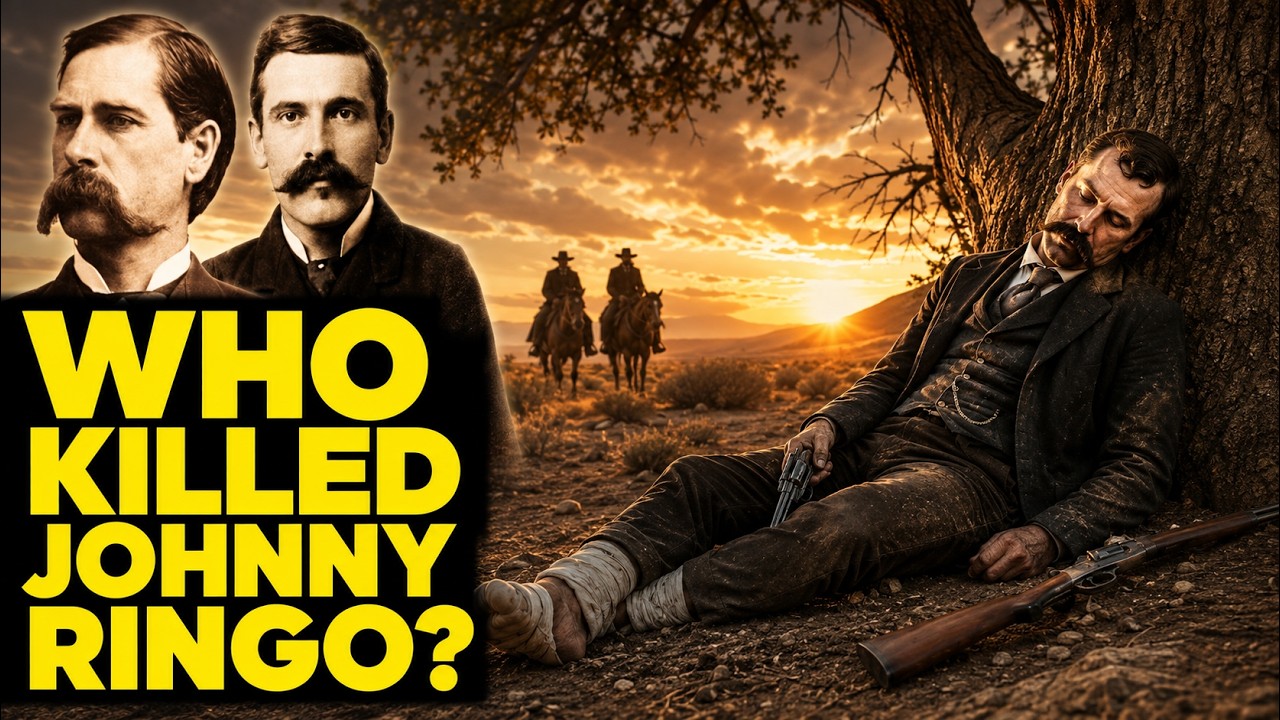
A teamster named John Yoast, whose name appears with different spellings in records, noticed a man among a group of oak trees along the road toward Morse’s Mill. He knew Ringo, and what first appeared to be someone resting became one of the most debated death scenes in Old West history. The written statement prepared for authorities described the body sitting among oak trees about 20 yards from the road. Ringo was facing generally west with his head inclined to the right.
There was a gunshot wound on the right side of his head between the eye and ear, with the bullet exiting through the upper part of the head. The witnesses reported no other major signs of violence. Ringo’s revolver was in his right hand. His rifle was resting close beside the tree.
Several details would later fuel arguments that somebody had arranged the body. Ringo was not wearing his boots. His feet were covered with socks and pieces of an undershirt that had been torn and wrapped around them. One of his cartridge belts was buckled upside down.
The statement also mentioned an area on the scalp where some skin and hair appeared to be missing, describing it as looking as if it might have been cut. The witnesses specifically wrote that the gunshot and scalp area were the only visible marks of violence. No second gunshot wound, major struggle, or obvious injury from a fight was reported. The body was identified by several men who knew Ringo.
He had probably been dead for roughly a day. Ringo’s weapons became one of the most discussed parts of the case. His revolver was a Colt single-action pistol in . 45 caliber, with five cartridges recorded in it.
His Winchester rifle was loaded and nearby. Later writers sometimes argued that five cartridges proved Ringo could not have fired the revolver because the gun still contained ammunition, but that argument is not as strong as it sounds. Many experienced frontier users carried only five cartridges, leaving the chamber under the hammer empty to reduce the risk of accidental discharge. The position of the revolver matters more.
Witnesses described the gun as grasped in Ringo’s right hand, which is consistent with suicide and with an extremely rapid death after the shot. Murder theorists have argued that a killer could have placed the revolver in his hand afterward, but there is no contemporary evidence showing that happened. The original statement also did not describe powder burns, though an 1882 frontier examination was not a modern forensic autopsy. The official paperwork is more complicated than the simple statement that the coroner ruled Ringo’s death a suicide.
Historical accounts and the marker at his grave state that a coroner’s jury considered the death a suicide. The Arizona State Library likewise notes that the Cochise County coroner ruled it suicide, but the surviving county register uses more cautious language, recording Ringo’s death as unknown with a supposed gunshot wound. The strongest contemporary case for suicide comes from the physical scene combined with reports about Ringo’s recent behavior. He had been drinking heavily, had reportedly spoken about expecting death, people nearby heard a single shot, no evidence of a struggle was recorded, his revolver was in his right hand, and the gunshot was on the right side of his head.
The suicide explanation has remained the position favored by several serious Ringo historians because it requires the fewest unsupported events. Historians Jack Burroughs and David Johnson both examined Ringo’s life and accepted suicide as the most likely explanation. The strange details do not automatically contradict it. His missing boots could have resulted from trouble with his horse or uncomfortable footwear.
The upside-down cartridge belt looks unusual, but Ringo had been drinking heavily. The most famous murder version makes Doc Holliday the man who killed Ringo. The real Doc and Ringo had openly threatened each other, so the motive is not invented. The difficulty is Doc’s location.
By the summer of 1882, Holliday was in Colorado with serious legal problems. Records from Pueblo County show legal proceedings involving Holliday around the exact period when Ringo died, with court documents indicating appearances on July 11, July 14, and July 18. Additional evidence places him in Salida, Colorado on July 7 and in Leadville shortly after Ringo’s death. No contemporary witness places Holliday at Turkey Creek.
Wyatt Earp presents a more complicated problem because Wyatt himself was later connected to stories claiming that he killed Ringo. The best-known account appears through material associated with John Flood, who worked with the elderly Wyatt on a manuscript about his life. In that version, Wyatt and companions track Ringo and Wyatt fires the fatal shot. The problem is chronology.
Some versions placed Ringo’s death at the wrong time, and Wyatt gave conflicting statements during his lifetime, sometimes denying the killing and other times privately taking credit. Buckskin Frank Leslie became another major suspect, a Tombstone gunman with a violent record. Billy Claiborne, a friend of Ringo, reportedly believed Leslie was responsible. Claiborne confronted Leslie in Tombstone in November 1882 and was killed by him.
Another theory named Michael O’Rourke, known as Johnny-Behind-the-Deuce. Each theory benefited from a culture where men sometimes claimed famous killings years later because association with a notorious gunfighter could increase their own reputation. Ringo’s real life involved the Mason County War, arrests, a brief period as a constable, violence in Texas and Arizona, association with the Cochise County Cowboys, hostility toward Wyatt Earp and Doc Holliday, and participation in the armed conflict that followed the O. K.
Corral. On July 14, 1882, John Yoast found him dead among the oak trees near West Turkey Creek. His Colt was in his right hand, his Winchester rested nearby, and Ringo was buried close to the place where he was found.