The surrender of Nazi Germany on May 8, 1945, was supposed to end the war, but for the men who had ruled the skies over Europe, it marked the beginning of a new and often more brutal struggle for survival, identity, and redemption. The fates of Germany’s top fighter aces—men who had amassed staggering 𝓀𝒾𝓁𝓁 counts that remain unmatched in aviation history—diverged dramatically in the post-war era, leading some into Soviet gulags, others into the highest echelons of NATO command, and a few into ignominy and disgrace. Their stories reveal a complex legacy of a defeated nation rebuilding itself while grappling with the ghosts of its militaristic past, a process that would reshape the balance of power in the Cold War and force these former enemies to become allies.
The most extraordinary post-war journey belonged to Erich Hartmann, the highest-scoring fighter ace in history with 352 confirmed aerial victories. As the Third Reich collapsed, Hartmann, known to Soviet pilots as the “Black Devil” for his menacing aircraft markings, attempted to surrender to American forces near the Czech town of Písek, hoping for lenient treatment from the Western Allies. His hopes were dashed within days when the Americans, honoring wartime agreements, handed him and his entire group over to the Soviet Union.
 For the man who had never been shot down by an enemy fighter, a decade of captivity in Soviet prison camps began, a period that would test his resilience far beyond anything he faced in combat. The Soviets, aware of his reputation and his value as a propaganda trophy, subjected him to relentless interrogation and pressure to confess to war crimes he steadfastly denied.
Hartmann’s refusal to cooperate with his Soviet captors was not merely an act of defiance; it was a calculated resistance against a system he had spent years fighting. He was offered a senior post in the new East German Air Force as a reward for his collaboration, a proposition he rejected outright, understanding that his freedom would come at the cost of his principles. His defiance led to harsh punishment, including solitary confinement and a staged trial in 1949 that sentenced him to 25 years of hard labor, a sentence that seemed to guarantee he would never see his homeland again.
The conditions in the camps were brutal, yet Hartmann’s spirit remained unbroken, and he even participated in a prisoner’s revolt when conditions became unbearable. His survival during those years was a testament to the same iron will that had made him an unparalleled combat pilot, but the psychological toll was immense, and he would later describe the experience as a war within a war.
The turning point for Hartmann and nearly 10,000 other German prisoners came in September 1955, when West German Chancellor Konrad Adenauer traveled to Moscow and negotiated their release as part of a broader diplomatic thaw. Hartmann returned to Germany in October 1955, a decade after he had last seen his wife, to find a nation split in two and already rearming for a new conflict. The Cold War had transformed the geopolitical landscape, and the former enemies of the West were now seen as essential allies against the Soviet Union.
In 1956, Hartmann made the momentous decision to rejoin the military, becoming the first commander of Jagdgeschwader 71 Mölders, West Germany’s first all-jet fighter wing. The man who had once shot down more Soviet aircraft than any pilot in history was now training young German aviators to fly American Sabres, preparing them to face the very air force that had imprisoned him.
Hartmann’s second career, however, was marked by the same outspokenness that had defined his wartime service. He was deeply critical of the American F-104 Starfighter, a sleek but notoriously difficult aircraft that he believed was dangerous and ill-suited for the German Air Force’s operational needs. His public opposition to the aircraft put him at odds with his superiors, who were eager to integrate American technology and doctrine into the new Bundesluftwaffe.
The Starfighter would later earn the grim nickname “Witwenmacher” (widow maker) after a series of crashes killed over 100 German pilots, vindicating Hartmann’s warnings but doing little to salvage his career. He retired prematurely in 1970, a figure of immense historical significance who had become a thorn in the side of the military establishment, and he died in 1993, still remembered as the greatest ace of all time.
While Hartmann’s path led from a Soviet cell to a NATO cockpit, his former superior, Adolf Galland, charted a different course that took him to the other side of the world. Galland, who had served as the General der Jagdflieger, the commander of Germany’s entire fighter force, had clashed repeatedly with Hermann Göring over the disastrous air defense strategy that was allowing Allied bombers to devastate German cities. His outspoken criticism led to his dismissal in early 1945, but rather than accept a desk job, he formed a small elite unit of Me 262 jet fighters, the world’s first operational jet fighter, and flew combat missions in the final weeks of the war until he was wounded in April.
Captured by American forces in May 1945, Galland was held for extensive interrogation, as the Allies were desperate to extract every detail about Germany’s advanced jet technology, which was years ahead of their own.
Released in 1947, Galland found himself in a defeated and occupied Germany where military aviation was completely forbidden, and the once-mighty aircraft industry had been dismantled. With no prospects at home, he accepted an invitation from Argentine President Juan Perón, who was aggressively modernizing his armed forces and building a domestic aircraft industry, and who harbored a deep admiration for German military expertise. In 1948, Galland moved to Argentina, joining a cadre of German officers, engineers, and technicians who found lucrative contracts and a welcoming environment in South America.
 For seven years, he played a pivotal role in building the Argentine Air Force, developing its training programs and test-flying modern aircraft, a strange second act for the man who had once led the Luftwaffe’s fighters against the Allies.
Galland’s time in Argentina was not merely an exile; it was a professional renaissance that allowed him to continue his passion for aviation without the weight of his wartime past. When he returned to Germany in 1955, the same year West Germany joined NATO, he made a conscious decision not to rejoin the military, unlike many of his former comrades. Instead, he pursued a civilian career as an aviation consultant and advisor to industry, leveraging his immense knowledge and experience to shape the future of German aviation from the outside.
His wartime memoir, “The First and the Last,” became a seminal account of the air war from the German perspective, offering a nuanced and often critical view of the Luftwaffe’s leadership that resonated with readers on both sides of the Atlantic.
In his later years, Galland did something that would have been unthinkable in the immediate aftermath of the war: he forged warm friendships with the British and American pilots he had once fought against in the skies over the English Channel. He attended reunions and treated the air war as a contest between professionals, a shared experience that transcended national boundaries and political ideologies. This reconciliation was a personal journey for Galland, who lived until February 1996, and it symbolized a broader shift in how the veterans of the war viewed their former adversaries.
He chose a civilian life, but his influence on the generation of pilots who came after him was profound, and he became an elder statesman of German aviation, respected by former enemies and allies alike.
The path to the highest ranks of NATO was taken by several of Galland’s former comrades, men who had flown in his elite jet squadron and who survived the war’s final, desperate days. Johannes Steinhoff, a highly respected fighter leader with over 170 victories, came perilously close to death on April 18, 1945, when his Me 262 blew a tire on takeoff, careened off the runway, and burst into flames. He was pulled from the wreckage alive, but the fire had destroyed his eyelids and left his face permanently disfigured, requiring two years of extensive surgeries to rebuild his features.
Despite his horrific injuries, Steinhoff’s determination to serve his country again was undiminished, and he became one of the first officers to help build the new West German Air Force in the 1950s, rising to become its chief of staff from 1966 to 1970.
Steinhoff’s greatest achievement came when he was appointed chairman of NATO’s Military Committee from 1971 to 1974, the highest post any of the former Luftwaffe aces would reach, placing him at the pinnacle of the Western Alliance’s military hierarchy. His journey from a burned and broken pilot to a senior NATO commander was a remarkable testament to his resilience and his ability to adapt to a radically changed world. Alongside him served Günther Rall, the third-highest scoring pilot in history with 275 victories, who rose to become the inspector of the West German Air Force, its most senior officer, and then the German representative to NATO’s Military Committee.
Rall, who had fought Soviet aircraft over the Eastern Front, was now helping plan NATO’s defense strategy against the Soviet Union, a profound irony that underscored the dramatic realignment of global alliances.
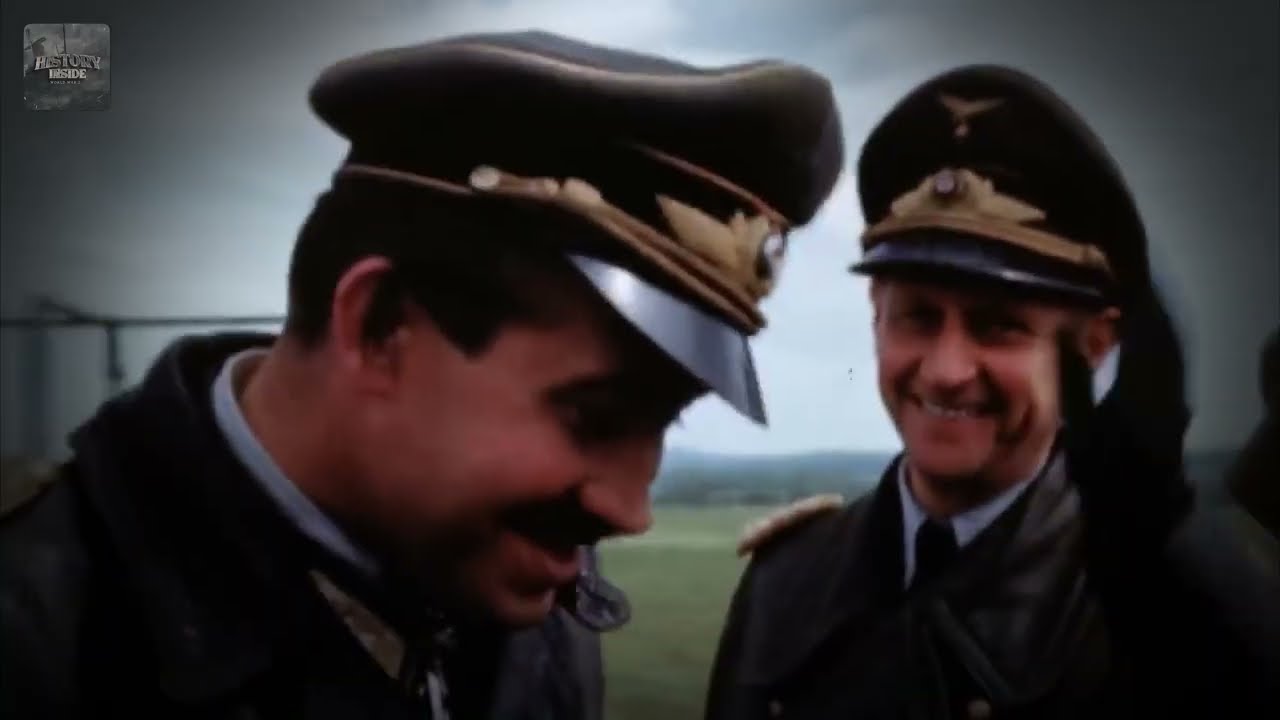 Gerhard Barkhorn, the second-highest scoring pilot of all time with 301 victories, also joined the new Air Force in 1956, commanding a fighter-bomber wing and rising to the rank of major general before finishing his career as chief of staff of a NATO tactical air command. He retired in 1975 but was killed in a car accident in 1983, a tragic end for a man who had survived thousands of combat missions. These men shared a common crisis during their years in command: the introduction of the American F-104 Starfighter into the German Air Force.
While Hartmann had opposed the aircraft from the start, it was Steinhoff, as chief of staff, who was forced to ground the entire fleet in 1966 after a series of devastating crashes that killed over 100 pilots. The German press had already dubbed the jet the “widow maker,” and the crisis threatened to destroy the credibility of the new Air Force, but Steinhoff’s decisive action helped restore confidence and fix the underlying faults.
The careers of these men, however, were not immune to the lingering shadows of the Third Reich. In the spring of 1976, a West German Air Force wing held a reunion, inviting as its guest of honor Hans-Ulrich Rudel, a former Stuka dive-bomber pilot who was the most decorated German serviceman of the war and an outspoken, unrepentant supporter of the Nazi regime. The Defense Ministry wanted nothing to do with Rudel, but he attended anyway, signing books for a line of young airmen, and two serving Luftwaffe generals, Walter Krupinski and Karl-Heinz Franke, came to see him.
Krupinski was a significant figure, a former Eastern Front ace with 197 victories who had helped train Erich Hartmann and who had flown the Me 262 in Galland’s elite squadron. His post-war career had followed the same path as many others, rising to the rank of general, until that afternoon.
After the reunion, Krupinski and Franke publicly defended Rudel, comparing his Nazi past to the communist past of a leading social democrat politician, a comparison that caused an immediate uproar in West Germany’s sensitive political climate. The Defense Minister, Georg Leber, moved quickly to force both generals into early retirement, a decision that became a landmark in the long-running national debate over how much of the old Wehrmacht’s traditions the new military should carry. Krupinski’s dismissal was a stark reminder that the past could never be fully escaped, and that the new Bundesluftwaffe was constantly walking a tightrope between honoring its heritage and distancing itself from the crimes of the Nazi era.
He died in 2000, his career ending in disgrace, a cautionary tale for a generation of officers who had served two very different masters.
The fates of these men—Hartmann, Galland, Steinhoff, Rall, Barkhorn, and Krupinski—illustrate the complex and often contradictory nature of the post-war transition in West Germany. They were warriors of extraordinary skill, men who had fought with unmatched ferocity and professionalism, yet they had served a regime that committed unspeakable atrocities. Their post-war careers were a constant negotiation between their past identities and their present responsibilities, as they were called upon to defend the very nations they had once sought to destroy.
For some, like Steinhoff and Rall, this meant embracing the new order with genuine conviction, rising to the highest ranks of NATO and helping to build a democratic military that was a stark contrast to the one they had served. For others, like Hartmann, it meant a career marked by frustration and conflict, as he struggled to adapt to a world that no longer valued his particular brand of combat excellence.
The story of Germany’s top fighter aces after the war is not just a tale of individual survival and adaptation; it is a microcosm of the larger Cold War narrative, where former enemies were transformed into essential allies in the struggle against a common foe. The Soviet Union, which had imprisoned Hartmann and sought to exploit his fame, became the primary threat that justified the rearmament of West Germany and the integration of its military into NATO. The men who had once flown against the Red Air Force were now the most experienced pilots available to train a new generation of German aviators, and their knowledge of Soviet tactics and aircraft was invaluable.
 Their willingness to serve again, despite the horrors they had endured, was a pragmatic decision that reflected both their patriotism and their desire to rebuild their lives, but it also raised profound moral questions that continue to resonate today.
The legacy of these aces is a double-edged sword. On one hand, they are celebrated for their extraordinary skill, courage, and professionalism, with their 𝓀𝒾𝓁𝓁 records standing as unassailable testaments to their abilities. On the other hand, their service to the Nazi regime and their role in a war of aggression cannot be separated from their achievements, and their post-war careers were often haunted by accusations of complicity in war crimes.
The case of Rudel, and the subsequent dismissal of Krupinski and Franke, highlighted the deep divisions within German society over how to remember the war and its veterans. For every Steinhoff who embraced the new democratic order, there was a Rudel who remained unrepentant, and the tension between these two poles defined the cultural and political landscape of West Germany for decades.
In the end, the war for these men never truly ended in 1945; it merely changed its form. They moved from the cockpit of a Messerschmitt to the corridors of NATO headquarters, from the prison camps of the Soviet Union to the boardrooms of German industry. Their lives were a testament to the resilience of the human spirit, but also a reminder of the enduring power of ideology and the difficulty of escaping the past.
They were products of a brutal and totalitarian system, yet they found ways to adapt to the democratic world that emerged from the ashes of their defeat. Their stories are a vital part of understanding the complex process of denazification and rearmament in post-war Germany, and they offer a unique perspective on the Cold War, seen through the eyes of the men who had once been the enemy but who became indispensable allies in a new global conflict.
The final years of these aces were as varied as their careers. Hartmann, who died in 1993, remained a controversial figure, celebrated by aviation enthusiasts but criticized by those who saw his service to the Nazi cause as unforgivable. Galland, who died in 1996, achieved a measure of reconciliation with his former enemies, becoming a respected figure in international aviation circles.
Steinhoff, who died in 1994, was honored as a founding father of the new German Air Force, his disfigured face a constant reminder of the war’s cost. Rall, who lived until 2009, was the last of the great aces to die, and he spent his final years as a living link to a past that was both glorious and terrible. Their deaths marked the end of an era, a time when aerial combat was a duel between individual pilots, and their records, which are unlikely ever to be broken, stand as monuments to a type of warfare that has long since disappeared.
The question of what happened to Germany’s top fighter aces after the war is ultimately a question about the nature of redemption and the possibility of reinvention. These men were not simply victims of circumstance; they made choices that shaped their post-war lives, choices that reflected their values, their ambitions, and their ability to confront the past. Some chose to serve again, others chose to withdraw, and a few chose to defend the indefensible.
Their stories are a powerful reminder that history is not a simple narrative of good versus evil, but a complex tapestry of individual decisions made in the face of overwhelming forces. They were men of their time, shaped by a brutal ideology, but they were also men of extraordinary talent and resilience, and their post-war lives offer a fascinating and often unsettling glimpse into the human capacity for both adaptation and denial.