The 1870s in Texas saw John Poe trade buffalo hunting for a badge, building a reputation as a lawman. His steady aim and endurance on the trail carried into his later work keeping the peace. William Clark Quantrill left a violent mark on the Civil War. Leading Quantrill’s Raiders, he organized swift mobile strikes against Union troops and outposts that vanished before the enemy could react, boosting the group’s fame in the conflict.
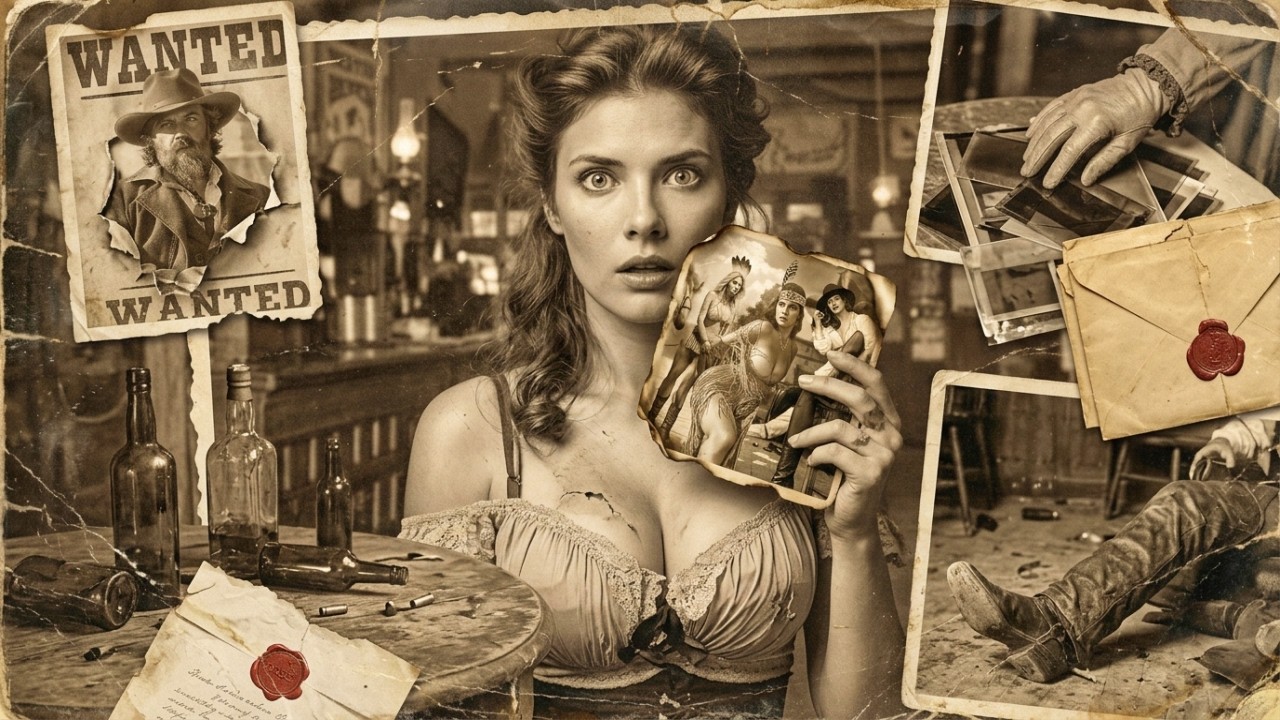
The most famous image tied to Josie Earp, Wyatt Earp’s wife, is likely wrong. A photo of a woman in sheer silk became famous when it landed on the cover of Glenn Boyer’s 1976 book, *I Married Wyatt Earp*. Despite doubts about who the woman really is, the association has spread, becoming a textbook case of misidentification. Pat Garrett is often remembered as the great New Mexico lawman who ended Billy the Kid’s run.
But among the state’s Hispanic residents, the figure many point to as the symbol of local authority is Elfego Baca, whose name spans generations and dominates popular memory. Ezra Allen Miner, the famed Bill Miner, walked criminal trails that crossed borders and eras. Before his unwanted fame, he racked up convictions in different US states, starting by stealing horses, learning the trade behind bars, and moving on to stagecoach robberies once released. Billy Brooks started out keeping the peace as a marshal in Newton, Kansas.
After moving to Dodge City during the Wild West’s peak, his moral line shifted from duty to wrongdoing. Gunfights among dusty streets and crowded saloons reshaped his reputation and pushed him toward the dark side of the law. In his youth, McCubbin discovered the appeal of historic photographs. The journey began with a simple print of Blackjack Ketchum, bought for $50.
Years later, he landed the original photo of the famous outlaw, expanding his collection and reinforcing his passion. California Gold Rush photographs are coveted windows into the Old West. Both field scenes and studio portraits of miners retain their appeal, showing amid tools and tired looks how people lived, worked, and dreamed under tough conditions. Dan Thrapp, a scholar of the Apache Wars, recorded Al Sieber’s path in his 1964 biography, *Al Sieber, Chief of Scouts*.
Born in Germany, Sieber became a central figure in the Southwest clashes, leading the Scouts under General George Crook in decisive campaigns. A photograph by Frank Randall around 1884 shows the son of Mangas Coloradas, the Apache leader who gave him the same name. It captures more than a portrait, opening a window onto a family central to indigenous history. Mangas Colorado is remembered as one of the most influential native leaders of the 19th century.
The Santa Fe Trail began in 1821 when Missouri trader William Becknell opened a route connecting Mexico’s province of New Mexico to the US frontier. The route launched the first international corridor that spurred trade, linked distant regions, and kicked off the march of American expansion. On a cabinet card from about 1885, a group photograph captures cowboys in action, often called one of the best examples of the genre. The image by Charles Baker and Eli Johnston, active around Douglas in the Arizona territory, shows the pace of work in the Old West.
John Burwell Jr. , Texas Jack, stepped into the spotlight driving cattle along the Chisholm Trail. Life on the trail opened the gate to a career full of feats. When the cattle season ended, he swapped the range for the stage, bringing his hard-earned experience to audiences.
Tiburcio Vásquez, an outlaw of Hispanic origin, appears in a photograph from around 1865. Over nearly 20 years of crimes, between escapes and ambushes, he led stagecoach holdups and thefts that made him known across the territory, feeding legends and manhunts. Among the most coveted items tied to Old West outlaws and lawmen are original photos, signatures, and relics with proven provenance. A Ben Thompson cabinet card stands out by bringing together those three pillars of collecting, tying the myth to solid evidence.
In the 1880s, a cabinet card titled “The Genuine Cowboy Captured Alive” shows Cottonwood Charlie Nebo next to Nicholas Janice, a Franco-American settler in the Nebraska territory. Janice is cited as a descendant and maybe a brother of Joseph Antoine. In one photo, Peter Bogardus, heir to a line of sharpshooters, holds a Remington model 1888 while another gun rests at his waist. The scene sums up the family story: skill with rifles running through generations, echoing his father, the famous Captain Bogardus.
Between 1835 and 1885, 49 former Texas Rangers got into the human scalp trade. They worked mostly in Mexico, where governments hired private armies to push back Apache and Comanche groups. Hunters were paid according to the age and sex of each victim. In a photograph from the mid-1850s, a bullwhacker guides freight wagons with the crack of a whip.
Between dust and long hauls, these wagoners linked towns and markets, hauling supplies and keeping the economy going along interior trails. A carte de visite from 1878 shows Charles Bowdre beside his wife Manuela. Years later, the photo picked up bloodstains. On December 23, 1880, at Stinking Springs, Lincoln Sheriff Pat Garrett and his posse opened fire on Bowdre, sealing his fate and turning the image into a tragic record of a violent end.
In 1887, Ned Christie was accused without evidence of killing a deputy marshal. Hunted for years, he was killed in 1892 by an armed band. Agents later showed off the body tied to a door and posed for photos, turning violence into a spectacle before a group of Cherokee. Tom Horn moved through the Old West on several fronts.
He started as a scout and packer in the Apache Wars, made a name for his roping, and later worked for Pinkerton. In the Range Wars in Wyoming, he became the hired man to track and capture targets. Jesse James became famous as an outlaw in 1864 at age 17. He and his brother Frank joined the Confederates and hit Union troops when they could.
The war’s violence shaped his name and opened the way for robberies to come, though Jesse didn’t live to see 35. A cabinet card photograph made in Nebraska City around 1875 was produced by Taylor’s copying company of St. Louis, Missouri. Years later, it gained prominence when Jesse James’ murder brought it back into the spotlight, making it a piece coveted by collectors.
In 1848, Myra Maybelle Shirley was born, the woman history remembers as Belle Starr. She drew close to the Younger gang and married two outlaws, Jim Reed and Sam Starr. An 1886 cabinet card by the Rotor Brothers in Fort Smith, Arkansas, shows her beside US Deputy Marshal Benjamin Tyner Hughes. Martha “Calamity Jane” Canary followed custom and wore dresses.
But an 1895 cabinet card portrait by Henry Robinson Lockach and Charles Peterson in Deadwood, South Dakota, fixed another image: her in buckskin, the persona the public remembers in Old West tales. When McCubbin found a never-before-seen photo of Buffalo Bill Cody, he opened a new chapter. The image became the cover of the January 2000 issue of *True West* magazine. Taken in the early 1870s, it shows a young Cody with a steady gaze.
Johnny Ringo’s death became a centerpiece of Arizona’s imagination. The Tombstone gunman was found dead in 1882, and the story never settled. Conflicting versions keep surfacing, from Wyatt Earp to Buckskin Frank Leslie, each vying for the role of killer in the legend. Henry Starr, a bank robber of the Old West, took his story to the movies by playing himself in the silent film *A Debtor to the Law* in 1919.
A member of the Starr clan, he received a pardon from Teddy Roosevelt after helping subdue the feared Cherokee Bill during a prison riot. Seth Bullock’s family keeps the photo of the first sheriff of Deadwood in the Dakota territory. In 1876, Bullock and his partner Sol Star opened a hardware store during the gold rush. On August 2, Jack McCall murdered Wild Bill Hickok, and Bullock saw the law being born amid chaos.
Richard “Little Dick” West stayed on the criminal trail, robbing banks with Bill Doolin’s gang and attempting train holdups with Al Jennings. That life snapped on April 13, 1898, when a group led by deputy marshals Bill Tilghman and Heck Thomas found him on the outskirts of Guthrie, Oklahoma territory, and shot him dead. John King Fisher was born in Texas in 1853, exactly a century before the first issue of our magazine. He started as a cowboy, did time for horse theft, and later took charge of an outlaw gang with the stated mission of taking on Mexican bands along the border.
In 1885 at William Notman’s photo studio in Montreal, images were taken of Sitting Bull alongside Buffalo Bill Cody. The meeting happened when Cody invited him to travel with his troop. The Sioux leader agreed to join the show and set off on a four-month tour across North America. At 12, Felix Téllez was torn from his family amid clashes with the Apaches in Arizona territory.
He grew up, learned to fight, and over time joined the US Army’s Apache Scouts, where he stood out on key missions. 19th-century photography lays bare everyday life on the US frontier. In cramped rooms, women in brothels look straight at the camera, their images showing work and presence, recording lives that history pushes out of the frame. In the 1870s, Death Valley saw borax leave the mines in caravans pulled by 20 mules.
Lines of wagons moved in step to cross the dryness of the Great Basin, linking extraction and depots through animal power and coordination. In one photo, Black Elk appears as a witness to turning points. In 1876, he was at the Battle of Little Bighorn when United States troops faced several Great Plains nations, including the Lakota Sioux. His path ties the scene to the broader course of American history.
Quanah Parker, son of Cynthia Ann Parker who was kidnapped as a child and adopted by the Comanches, grew up between borders and chose to command his own. When buffalo hunters crossed the plains, he rose as resistance, stitching alliances and defending land and culture. In a period photograph, two sex workers pose in a brothel room in Miles City, Montana. While the setting shows care and polish, reports from a judge point to a small town of close to a thousand residents given over to disorder and loose rules.
In one image, a cowboy from Caldwell, Kansas, shows that the outfit comes from the job. Hat, boots, and belt come before decoration, facing sun, dust, and saddle. Depending on weather and terrain, he chooses chaps over his pants for protection. Presented as the last photo of George Armstrong Custer, one image sums up his constant relationship with the camera.
He let himself be photographed more than 150 times. The portrait was taken two months before the Battle of Little Bighorn in 1876. With the daguerreotype in decline, the ambrotype took hold, made on glass and popular in the 1850s. One portrait shows a man with no name, his gaze and restrained posture working like an invitation, a moment of the West in transition.
In Greenwood, Kansas, travelers pull up the wagon at noon, sit in a circle, and share lunch. Between simple utensils and few words, the quiet of the countryside opens up, and the wheel starts turning again. At the start of the 20th century, Joella Irwin stepped into rodeo arenas and changed the game. She competed in several events, worked the circuits, and combined skill, nerve, and rhythm, putting women in the spotlight.
In 1884, a cabinet card captures a scene on the San Carlos reservation in Arizona, showing what many consider the first photographic record of Geronimo. A prominent Apache leader, he became both a central figure in history and a cultural symbol. Jesse James became the face of the James-Younger gang. Leading robberies across the Old West, he became an emblem of crime, cast sometimes as a rebel, sometimes as a villain.
His run ended abruptly, killed in 1882, and the legend has since eclipsed the man. Kit Carson personifies the push westward. From fur trade fairs to steep trails, he went from trader to explorer, earning a reputation for enduring long journeys. He later guided John C.
Frémont on expeditions that opened routes. A photograph from around 1880 preserves faces that haven’t been confirmed. Historians suggest the standing man is John Kinney, a figure who left obscurity in 1875 by leading a theft ring in southern New Mexico. In 1899, Pearl Hart marked the end of an era by pulling off one of the last stagecoach robberies of the Old West.
The feat made headlines across the country, and her story was soon featured in *Cosmopolitan* magazine. At 15, Rose Dunn, the Rose of Cimarron, crossed the line between fact and myth. In 1895 in the town of Ingalls in Oklahoma territory, she was said to have helped her fugitive boyfriend in a shootout between lawmen and outlaws, turning her into a legend. Texas John Slaughter spanned the century, telling the West’s story.
In the Civil War, he served as a Texas Ranger. With peace, he followed the cattle trail and set up his last ranch on the outskirts of Douglas, Arizona. Olive Oatman made her way with the strength of someone who learns to live where they fall. Captured by members of the Mohave, she came to live with the community and received a mark on her chin made with blue cactus dye.
For them, the mark prepared the soul for a peaceful passage after death. The Texas Rangers started informally in 1823 when Stephen F. Austin called men to protect settlers. In 1835, they got an official structure.
From then on, they patrolled borders, hunted fugitives, and took on missions that kept order. A forgotten photo resurfaced showing a woman, possibly running a ranch, driving cattle across an unnamed western landscape. The find happened by chance when writer Mark Lee Gardner found it in an antique store in Missouri. On the edge of the Old West, the name Tiburcio Vásquez carried through years and conversations.
The photo taken around 1865 freezes the face that became a symbol of defiance, feeding the myth of Hispanic outlaws. In the Old West, cowboys’ routines went beyond cattle drives. In breaks between long trips, they’d head to the photo studio to record who they were, posing with beat-up hats and worn-out boots. The portrait became a keepsake and a work certificate.
When the reward for Bill Doolin went up, the Oklahoma territory went on alert. His robberies drew posses and trackers. In August 1896, the dragnet closed in. Doolin went down in a shootout, shot about 20 times, with Deputy Marshal Heck Thomas leading the charge.
During the funeral procession for Tom McLaury, Frank McLaury, and Billy Clanton, a sign went up that read, “Murdered on the streets of Tombstone. ” In 1881, behind the O. K. Corral, a quick exchange of gunfire silenced three men and sparked a narrative that ran for decades.
In Alaska’s saloons at the end of the 19th century and start of the 20th, Kate Rockwell ruled the scene. Between songs and folksteps, she pulled crowds from laughter to focused silence. The high point came when she appeared in red chiffon, a trademark that immortalized her. In an 1865 photo, Wild Bill Hickok appears with no backdrop or costume.
Unlike theatrical poses on other occasions, he’s wearing what he wore day to day, showing himself as he was in the West with no studio tricks. In 1876, when cattle herds were crossing the plains, Bat Masterson and Wyatt Earp posed in Dodge City, Kansas. The image marks the agreement between two lawmen and signals the attempt to impose rules on a restless frontier.