WASHINGTON — The cable arrived at the Pentagon at seven in the morning, before George Marshall had poured his coffee, and it changed the trajectory of the war’s final months in ways that would not be visible for decades.
The six-paragraph message from the British Foreign Office, routed through the embassy, began with routine operational details about the Rhine crossing and Montgomery’s preparations. It was the fifth and sixth paragraphs that stopped the Army Chief of Staff cold. They questioned Eisenhower’s management of the final campaign, suggesting his broad-front strategy was producing outcomes suboptimal for the Western Alliance.
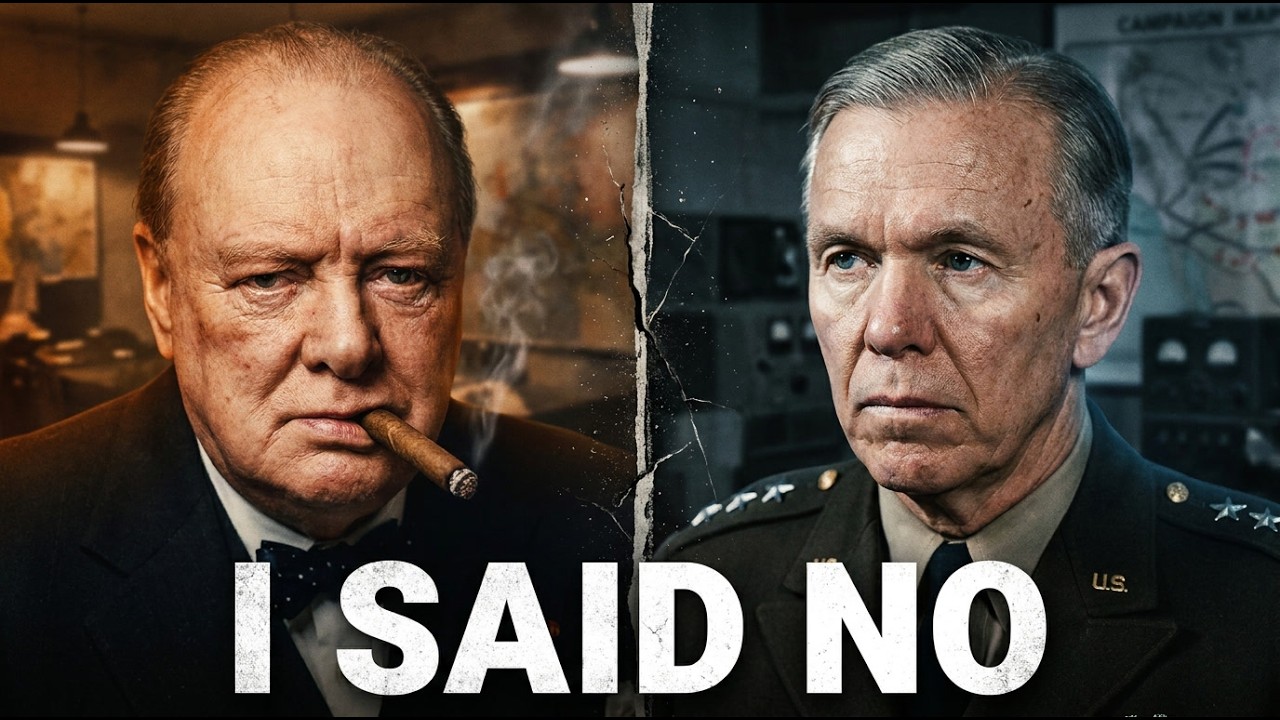 The sixth paragraph raised the possibility that the Combined Chiefs of Staff might reconsider command arrangements for the endgame in Europe. It did not say remove Eisenhower. It did not need to.
Marshall read those paragraphs three times, placed the cable in his briefcase, and ordered his aide to book the next flight to London. He had been there three weeks earlier to manage the fallout from Montgomery’s press conference. He was going back because the problem had not resolved.
It had escalated.
The press conference correction had been issued. The telegram about the cowardice comment had produced an acknowledgment. The meeting with Churchill about command channels had produced commitments.
Three weeks of managed outcomes, and then this cable. Marshall understood, reading it a second time on the flight across the Atlantic, that he had been treating symptoms. The press conference was a symptom.
The cowardice comment was a symptom. The Churchill channel request was a symptom. The underlying condition was Britain’s diminishing influence over the final shape of the war.
Churchill understood with the clarity of a man who had led a nation through five years of survival that the war’s final months would determine the post-war settlement. Where armies stopped was where borders would be drawn. Which governments received Allied recognition was which governments would survive.
The decisions being made in February and March 1945 were not operational decisions about crossing rivers and taking cities. They were political decisions about what Europe would look like in 1950.
The man making those decisions was Eisenhower, an American general implementing American strategic preferences as endorsed by the American government. Britain’s strategic preferences — the northern thrust, the drive toward Berlin, the positioning of Allied forces to limit Soviet expansion — were not being ignored. They were being heard, considered, and overruled systematically.
The cable was not about the Rhine crossing. The cable was about whether Britain still had a voice in how the war ended.
Marshall arrived in London on February 21st and went first to the Foreign Office, not the War Office, not Downing Street. He met with the Permanent Under-Secretary, Alexander Cadogan, a career diplomat who had managed British foreign policy since the 1930s and understood the relationship between military operations and political outcomes better than most military men.
Marshall sat across from Cadogan in a room that smelled of documents and history and said, “Tell me what the cable was actually about.”
Cadogan said, “I would have thought it was clear.”
Marshall said, “The surface was clear. Tell me what’s underneath.”
Cadogan looked at him for a moment. He said, “Britain is watching the final phase of the war being conducted according to American strategic preferences and producing outcomes that serve American post-war interests more than British ones. The broad front, the refusal to drive for Berlin, the accommodation of Soviet positions — these are decisions that have British consequences that the American side of the decision does not fully account for.”
Marshall said, “We have accounted for them.”
Cadogan said, “You have heard them. Accounting would imply adjustment.”
Marshall said, “The adjustments that were available within the military framework have been made. The decisions that could not be made within the military framework were referred to the governments.”
Cadogan said, “And the governments decided in the American interest.”
Marshall said, “The governments decided in the Allied interest as the President assessed it.”
Cadogan said, “And the Prime Minister’s assessment differed.”
“Yes.”
“And continues to differ.”
“Yes.”
Cadogan said, “Then you understand why the cable was sent.”
“I understand why it was sent. I’m here to discuss whether sending it was the right method for addressing the underlying concern.”
Cadogan said, “What method would you prefer?”
Marshall said, “One that doesn’t require me to fly to London every three weeks.”
Marshall met with Brooke that afternoon. Brooke had been the professional bridge between British military authority and American command since 1942. He had managed more difficult conversations than most men encountered in a career, and had managed them with a precision that Marshall respected even when they disagreed.
They had disagreed about the Mediterranean. They had disagreed about the northern thrust. They disagreed currently about Berlin.
 They had never stopped being honest with each other.
Marshall said the cable went to the wrong address. Brooke said it went to the American embassy, which was the right address for diplomatic cables. Marshall said it should have come to him through military channels before it went to the embassy.
Brooke said the Prime Minister made a political decision through political channels.
Marshall said, “The Prime Minister made a political decision about a military command structure. That is a military question that should travel through military channels. If you had sent me a cable raising concerns about command arrangements, I would have responded through military channels.
We would have had a conversation. The conversation might not have produced what you wanted, but it would not have produced what that cable produced in Washington.”
Brooke said, “What did it produce?”
Marshall said, “Thirty minutes with the President.”
Brooke said nothing.
Marshall said, “The President read the cable before I did. His reaction was not favorable. He is now aware that the British government is raising formal questions about the command arrangements on the Western Front.
That awareness will inform every communication between our governments for the rest of this war.”
Brooke said the concerns were legitimate. Marshall said the concerns were legitimate, but the method was not. He asked Brooke directly whether the goal of the cable was to change the command arrangements or to register a formal British position on the conduct of the final phase.
Brooke was quiet for a moment. He said, “Both.”
Marshall said, “You cannot achieve both simultaneously. If it is about changing the arrangements, it requires a private military conversation that produces a specific outcome. If it is about registering a position, it is already accomplished.
The position is registered in Washington at the presidential level. You will not get more registration by sending more cables. What you will get is a hardening of the American position in proportion to the pressure applied.”
Brooke said that was a very direct statement. Marshall said the situation required it.
Churchill received Marshall at four in the afternoon. The meeting was not at Downing Street. Churchill had suggested his country residence, Chequers.
Marshall accepted. The distance from London created the specific privacy that both men understood the conversation required.
Churchill opened with the strategic argument. He made it fully: the northern thrust, Berlin, the Soviet advance, the post-war implications of where Allied forces stopped. He made it with the conviction of a man who had been making the same argument for eighteen months and believed it more deeply each time he made it.
Marshall listened. He had heard the argument before. He had heard it in August 1944 and September and October and November.
He had heard it at Yalta in the margins of conversations that were officially about other things. He had heard it through Brooke and through the embassy and through the cable that had arrived on his desk three days ago.
He let Churchill finish. Then he said, “Prime Minister, I want to say something that I have not said directly before.”
Churchill said, “Say it.”
Marshall said, “I believe you are right about the post-war implications. I believe the broad front produces an outcome in Eastern Europe that a concentrated northern thrust might have avoided or reduced. I believe Berlin matters in ways that go beyond its military significance.
I believe the Soviet position in 1950 will be stronger than it needs to be, partly because of decisions that were made on the Western Front in 1944 and 1945.”
Churchill looked at him with the expression of a man who has been arguing a point for eighteen months and has just heard the other side concede it. He said, “Then —”
Marshall said, “Because I cannot ask American soldiers to die for the post-war position of the British Empire.”
He said it quietly, without heat, without accusation. Churchill said nothing.
Marshall said, “That is the honest answer. The broad front strategy produces the best outcome for the fewest American casualties in the minimum time. The northern thrust produces a better post-war position at a higher casualty cost and a longer timeline.
The American government has authorized the broad front. The American government has not authorized committing American lives to British post-war positioning. You know this.
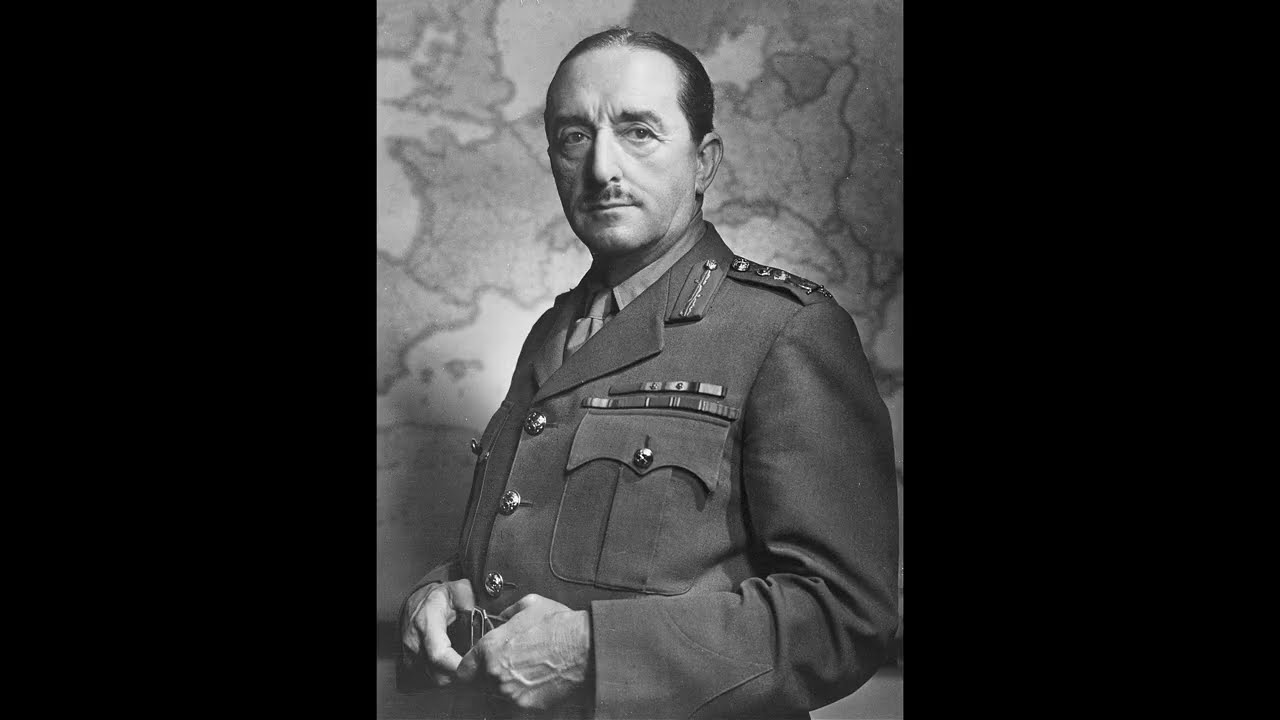 You have known it since Yalta.”
Churchill said, “I had hoped —”
Marshall said, “I know what you hoped. I know what Yalta cost you to accept. I know what the broad front costs you every week that it continues.
And I cannot change it, not because I don’t understand the stakes, but because the authorization does not exist. What I can change is the method by which Britain’s concerns are communicated, and I need to change it.”
Churchill said, “What do you need from me?”
Marshall said, “No more cables to the embassy about command arrangements.”
Churchill said, “And in return?”
Marshall said, “A conversation. A real one, about what the final phase of this campaign produces and what can be done within the military framework that has been authorized. There are decisions still to be made: where forces stop east of the Rhine, which cities are taken by whom, the coordination with Soviet forces.
Within the decisions that have been made, there is still room for decisions that account for what concerns you.”
Churchill said, “Berlin.”
Marshall said, “Berlin is decided. I cannot give you Berlin. The occupation zone is agreed.
Committing American forces to take a city that goes to the Soviet zone under agreements already signed is not a decision I can recommend. But there are other cities, other positions, other decisions within the authorized framework where British concerns can inform the outcome. That is the conversation available.”
Churchill said, “It is a smaller conversation than the one I need.”
Marshall said, “Yes. It is the conversation that exists.”
Churchill looked at him. He said, “You are a frustrating man, General.”
Marshall said, “I am an honest one.”
Churchill said, “In this case, those are the same thing.” He refilled his glass and held the bottle toward Marshall. For the second time, Marshall accepted.
Churchill said, “No more cables to the embassy about command arrangements.”
Marshall said, “Thank you, Prime Minister.”
Churchill said, “In return, the conversation you described about what can be decided within the framework.”
“Yes.”
Churchill said, “I want Brooke in that conversation.”
Marshall said, “I would expect nothing less.”
The conversation between Marshall and Brooke happened across two days, February 22nd and 23rd, at the War Office in a conference room that held four people comfortably and six if necessary. It held Marshall, Brooke, Smith, who had flown over with Marshall, and two British planning officers whose names do not appear in any public account of the meeting.
They discussed, within the authorized framework, the decisions that remained to be made. Three outcomes emerged.
The first was geographic. In the final advance east of the Rhine, the British and Canadian sector would be positioned to reach Hamburg and the Baltic coast. This was already planned.
Marshall confirmed that SHAEF would not adjust boundaries in a way that prevented 21st Army Group from reaching the Baltic before Soviet forces.
The second was Danish. There was concern that Soviet forces advancing through northern Germany might enter Denmark. The Baltic positioning of British forces, if executed at adequate speed, would preclude this.
Marshall confirmed that adequate supply would be allocated to enable the speed required.
 The third was the least expected. Brooke said, “There is a question about Czechoslovakia.”
Marshall said, “Pilsen.”
Brooke said, “And beyond Pilsen, Prague.”
Marshall said, “What about Prague?”
Brooke described the Czech political situation, the government in exile, the question of which forces liberated the capital, the post-war implications of Soviet versus Allied liberation.
Marshall said, “What is Eisenhower’s current assessment?”
Smith said, “He has not been given guidance on Prague.”
Marshall said, “Then he needs guidance. If it is militarily feasible to reach Prague before Soviet forces, and if that outcome serves the Allied interest, Eisenhower should be informed that it serves the Allied interest.”
Brooke said, “That is not a commitment.”
Marshall said, “It is as close to one as I can offer within the authorization. I will tell Eisenhower that Allied governments have an interest in the Prague question. What he does with that information is an operational decision.”
Brooke said, “That may be sufficient.”
It was not ultimately sufficient. Prague was liberated by Soviet forces in May 1945. The decision not to drive for Prague had already been made by the time Marshall’s guidance reached Eisenhower, and the operational situation did not permit reversal.
But the conversation had produced what conversations produced: a framework, a record, a set of understandings that shaped the decisions that could still be shaped.
Marshall flew back to Washington on February 24th. He wrote his notes on the flight, four pages covering the cable, the meetings, the outcomes, the commitments. The final paragraph said: “The underlying tension in the Anglo-American relationship is not about military command arrangements.
It is about the relationship between military decisions and political outcomes in the post-war world. Britain is losing influence over those outcomes as American military power becomes dominant. The cable and the conversations that preceded it are expressions of that loss.”
He wrote, “I cannot restore what is being lost. The power balance has shifted. American resources are decisive, and American strategic preferences follow from that decisiveness.
What I can do is ensure that the conversations are honest and that British concerns are heard at the appropriate level before decisions are made. That is not the influence Churchill needs. It is the influence available.”
He wrote, “The cable will not be sent again. The conversations will continue. It is the best outcome the situation permits.”
Brooke wrote in his diary that night: “Marshall came again. Two visits in three weeks. That tells you the seriousness of the situation from both sides.
He is the most precise man I have dealt with in this war. He hears the argument. He understands the argument.
He tells you honestly what he can and cannot do within his authorization. Churchill finds him frustrating. I find him reliable.
There is a difference. We got the Baltic. We got the Danish question addressed.
We got guidance on Prague that arrived too late to matter. It is less than what was needed. It is what was available.”
Churchill wrote about the Chequers meeting in his memoirs with the careful omission that characterized everything he wrote about his relationship with American power in the final phase of the war. He wrote about Marshall in terms that were warm and precise, and that said, in the language available to a man writing about a period that had not yet fully resolved itself into history, that the American Chief of Staff had been the most difficult ally of the war to argue with because he was always honest about what he could not give.
He wrote, “He never overpromised. He never gave false comfort. He told me what existed and declined to fabricate what did not.
In the end, the conversation available is the conversation that matters. The conversation I needed was not available. I have thought about that distinction for many years.”
The cable that had arrived on Marshall’s desk on the morning of February 19th was filed in the State Department archives. The meetings at the War Office, the conversation at Chequers, the four pages of notes on the flight home — all of it together was the diplomatic war that nobody saw. The war fought in cables and conference rooms and country houses while the shooting war was fought in the Rhineland and the Ruhr and the streets of German cities.
Both wars ended in May 1945. One with a surrender document, the other with an unwritten understanding that the post-war world would be shaped by the balance of power that had won the shooting war — which was the American balance, and which Marshall had been honest about from the beginning.
That was the war beneath the war, and Marshall had fought it the only way he knew how: precisely, honestly, without giving what he could not give.


