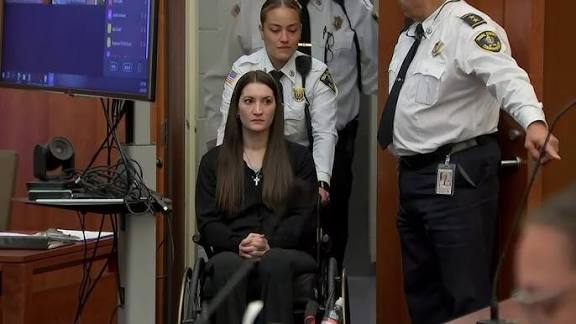
Lindsay Clancy’s defense seeks two-phase murder trial
Clancy, 35, is accused of strangling her three young children to death in January 2023. She has pleaded not guilty.
Defense attorney Kevin Reddington submitted three motions, which he debated with prosecutors during a motion hearing before Judge William F. Sullivan. They cover the recording of Clancy’s interview with the commonwealth’s psychiatric expert, a request to see a list of potential jurors before the trial, and one that the trial be bifurcated.
Clancy appeared in person for the first time at Plymouth Superior Court during a Feb. 20 motion hearing. Planning for her in-person appearance, particularly for the trial that is set to start July 20, had been the subject of a lengthy debate.
At the March 2 hearing, Clancy appeared on a television screen that was angled so that only the judge and clerk had clear views.
On the day she is accused of having strangled her children, Clancy jumped out of a second-story window at her Duxbury home and became paraplegic. She has been held at Tewksbury State Hospital since May 2023. She was transported by a Plymouth County Sheriff’s Office wheelchair van for her in-person appearance.
Reddington indicated in February that he would like to have Clancy appear in person in March, but Sullivan noted that a virtual appearance would be suitable as well.
Bifurcated trial
A bifurcated trial request usually seeks to separate multiple defendants, liabilities or damages stemming from a single case. In Clancy’s case, Reddington asked that her trial happen in two phases.
The first phase would be for the commonwealth to prove beyond a reasonable doubt that Clancy is guilty of three counts of strangulation and murder, and to what degree. The second would be for the commonwealth to prove beyond a reasonable doubt that she was not “suffering from a mental disease or defect” so much that she was “unable to appreciate the criminality of her conduct or conform her conduct to the requirements of the law.”
Reddington, a well-known Brockton defense attorney, tried to make the case that the Massachusetts Constitution, which is older than the U.S. Constitution, offered his client greater protection. The state’s foundational document says persons cannot be forced to “furnish evidence” against themselves. The U.S. Constitution is slightly more narrow, saying persons cannot be forced to be witnesses against themselves.
Speaking for the state, Assistant District Attorney Jennifer L. Sprague argued against splitting the case. “You’d be having duplicate trials for no reason,” Sprague told the court. Sprague also said the law does not provide defendants the right to a bifurcated trial.
The judge made no immediate ruling. “I’ll get that decision out as soon as I can,” Sullivan said. “Depending on what the decision is, it could weigh on the trial schedule.”
In two separate civil lawsuits, Lindsay Clancy and her husband Patrick blame her health care providers for not properly addressing her mental health crisis that exacerbated after the birth of her third child.
Early access to jury list
Reddington also filed a motion seeking the jury list of people who are being summonsed for the trial. This information includes names, addresses and contact information.
In the motion, Reddington said the current jury selection practice is for the defense to receive “a large stack of forms filled out by prospective jurors” at the same time the prospective jurors arrive to be interviewed. This process is “woefully inadequate,” Reddington said, and impacts his client’s right to a fair trial.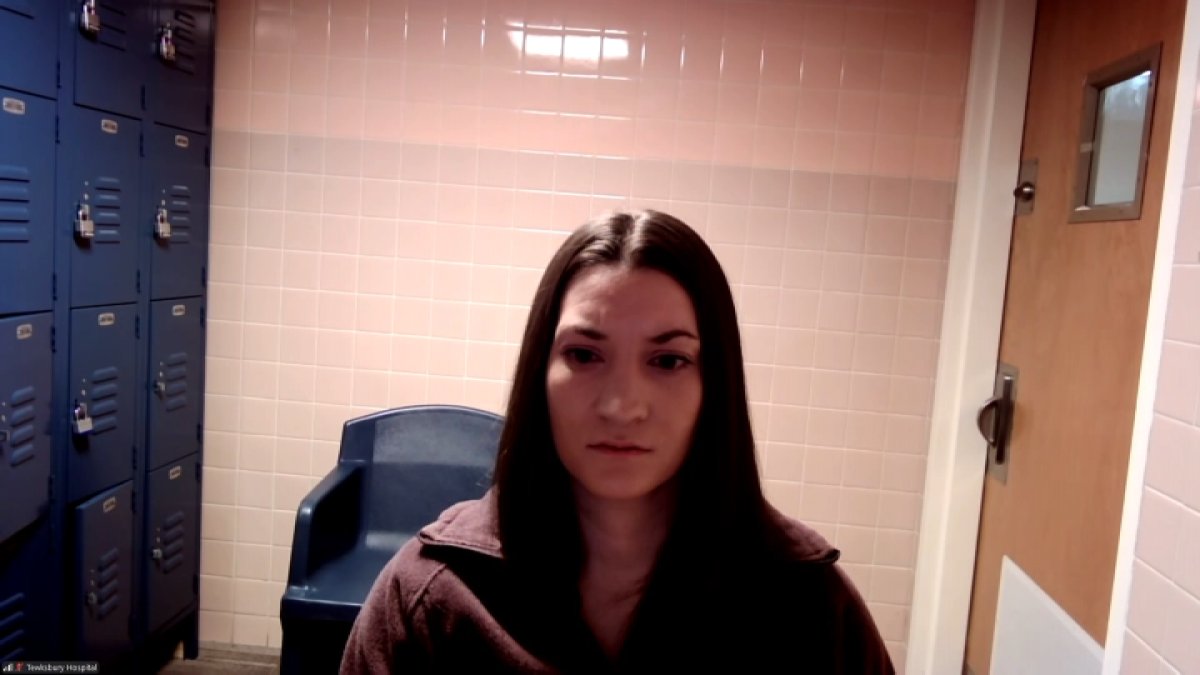
The judge also did not immediately rule on this motion, saying it could wait until jury selection is closer. But Sullivan did hint he might allow it. “I’m inclined to give that information to both parties before the trial,” the judge said.
Interview recording
Both the defense and prosecution have agreed to the recording of the interview with Clancy and the commonwealth’s psychiatric expert.
But Sprague told Sullivan in February that the commonwealth may have an issue with a specific portion of the interview being videotaped, specifically proprietary testing information.
Reddington said he is willing to forgo being present at this interview if it is videotaped to “ensure that an accurate record is made of the interview regarding statements made at the time of the examination.”