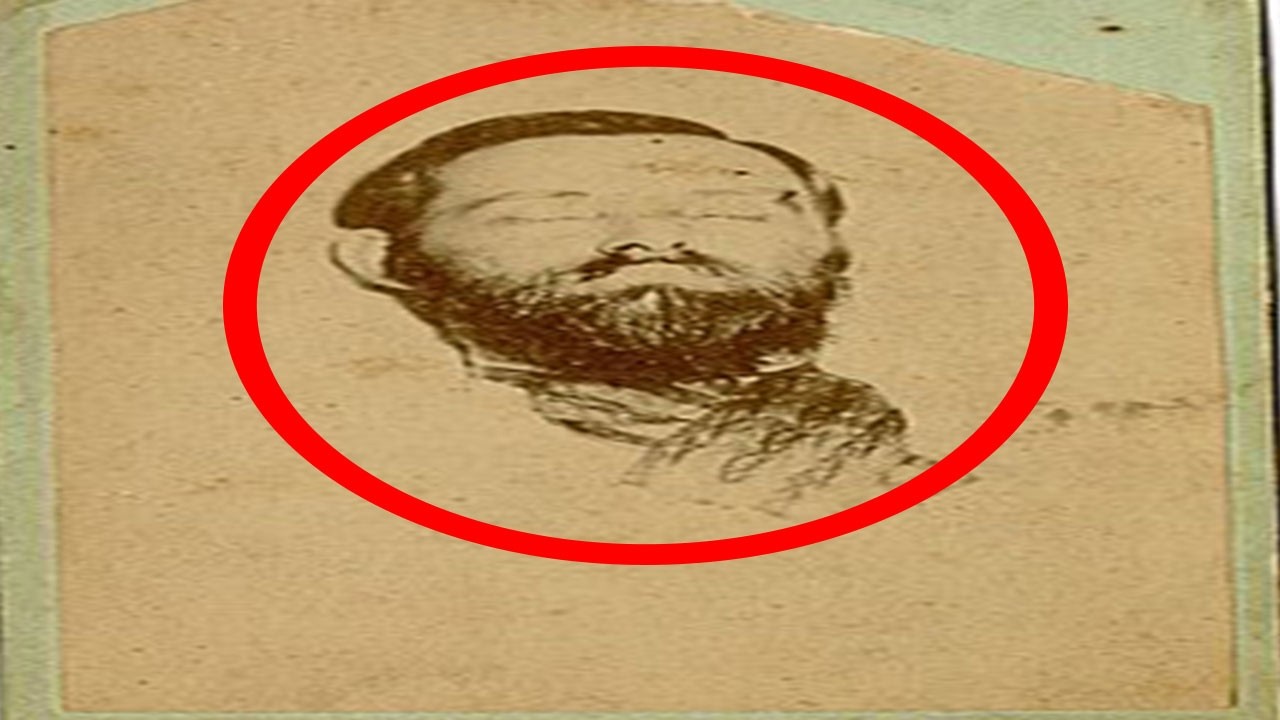
Jim Bridger could not read or write a single word, yet he carried the geography of the American West inside his head with more precision than most maps of his era. Over a career spanning nearly five decades, the legendary mountain man guided U. S. Army campaigns, led immigrant wagon trains, and helped chart vast stretches of the Rocky Mountains—all without the aid of written tools, relying instead on a memory so sharp that travelers who followed his paths reached their destinations safely.

Born on March 17, 1804, in Richmond, Virginia, James Felix Bridger came from a family of early English colonial settlers. His father, also named James Bridger, worked as an innkeeper, while his mother, Khloe Bridger, managed the household. Around 1812, the family relocated to St. Louis, Missouri, which was quickly becoming the gateway to the uncharted western territories.
By the time young James turned 13, both of his parents had died, leaving him an orphan. Without formal schooling, Bridger was apprenticed to a blacksmith, a trade that built the physical resilience and practical skills that would later serve him in the wilderness. Although he never learned to read or write, he developed an extraordinary capacity to absorb information through observation and oral communication. Over the years, he became fluent or conversational in at least seven languages, including French, Spanish, and several Native American tongues such as Crow and Shoshone.
On March 20, 1822, at age 18, Bridger answered an advertisement placed in the Missouri Republican by General William Henry Ashley, who was recruiting young men for a fur trapping expedition up the Missouri River. That single decision launched his transformation from an orphaned apprentice into one of the most respected frontiersmen of the 19th century. Among the men who joined the expedition were Jedediah Smith and Hugh Glass, figures who would also become legendary mountain men. In 1830, Bridger and a group of associates purchased interest in a fur trading business originally managed by Jedediah Smith, William Sublette, and others, renaming it the Rocky Mountain Fur Company.
Though the venture dissolved in the late 1830s, Bridger remained active, exploring vast sections of land from the Canadian border to southern Colorado and from the Missouri River basin to the high deserts of Idaho and Utah. Bridger’s name is frequently linked to one of the most famous frontier survival stories of the era: the ordeal of Hugh Glass in 1823. At the time, Bridger was just 19 and employed by General Ashley. According to various retellings, Glass became separated from his party near the forks of the Grand River in present-day South Dakota and was severely mauled by a grizzly bear.
Expedition leaders left two men behind to watch over him—identified in records as John Fitzgerald and a younger associate called Bridges, whom some believe was Bridger. Reports claim the two men concluded Glass would not survive and abandoned the site, later reporting that he had died. Glass, however, recovered on his own and eventually rejoined civilization, sparking widespread public fascination. No definitive evidence places Bridger at the scene, and when questioned by a historian in later years, Bridger himself denied any involvement in abandoning Glass.
The story nonetheless became part of his broader legend. Bridger also holds a significant place in the early exploration of the American West. In the autumn of 1824, he became one of the first recorded non-native explorers to reach the Great Salt Lake, navigating its waters in a small bullboat made of buffalo hides stretched over a wooden frame. He was also among the first European-descended people to encounter the geysers, hot springs, and unusual geological features of the Yellowstone region, though his descriptions were initially met with skepticism.
One of his most notable observations involved a creek just south of Yellowstone Lake where water flowed in two directions—one stream heading toward the Pacific Ocean and the other toward the Atlantic. This phenomenon, now understood as the Continental Divide, underscored Bridger’s keen eye for topographical detail. He later undertook a rafting journey down the Big Horn River, a route known for challenging rapids, and was reportedly the only person of his time known to have attempted such a voyage and survived. In 1843, Bridger and fellow frontiersman Lewis Vasquez established a key trading post known as Fort Bridger, located on the Black Fork of the Green River in what is now southwestern Wyoming.
The site became a vital rest stop and resupply station along the heavily traveled Oregon Trail, serving as an informal information hub for immigrants moving westward. In 1846, the ill-fated Donner party passed through Fort Bridger. Bridger and Vasquez reportedly recommended a new route promoted by Lansford Hastings, later called the Hastings Cutoff, describing the path as relatively smooth with sufficient water and grazing land except for one known 40-mile waterless segment. That section turned out to be twice as long and far more difficult than advertised, and the delay contributed to the Donner party becoming trapped in the Sierra Nevada, where many perished during the harsh winter.
Historians still debate whether Bridger knowingly encouraged the shortcut to boost traffic to Fort Bridger. During the Utah War from July 1857 to July 1858, Bridger was employed as a guide by the U. S. government.
In 1859, he joined the Reynolds Expedition to Yellowstone as chief guide, though the party was forced to turn back due to deep snow. In 1861, he guided surveyor Edward Berthoud through potential transportation routes in the Rocky Mountains, including what later became Berthoud Pass in Colorado. From October 1863 to April 1864, Bridger worked out of Fort Laramie during rising tensions between native tribes and the U. S.
military, and during Red Cloud’s War he served as a scout under Colonel Henry B. Carrington at Fort Phil Kearny, where he was present during the Fetterman Fight and the Wagon Box Fight. In 1850, while guiding the return journey of the Stansbury expedition from Utah Territory, Bridger identified a previously underused mountain crossing through the Rocky Mountains. The route, later named Bridger Pass in his honor, shortened the traditional Oregon Trail by approximately 61 miles.
Over time, the pass became the preferred path across the Continental Divide for the Overland Stage Company, the Pony Express, the Union Pacific Railroad, and eventually Interstate 80. In 1864, Bridger mapped what became known as the Bridger Trail, a northern route designed to move settlers and prospectors from Wyoming into the gold fields of Montana. Unlike the Bozeman Trail, which cut directly through territories claimed by Native American nations, the Bridger Trail followed a more westerly course intended to minimize conflict. By 1865, he was appointed chief of scouts for the Powder River Expedition, a military campaign intended to assert federal presence north of the Platte River.
Bridger’s personal life was deeply tied to the Native American communities with whom he worked. In 1835, he married a woman from the Flathead Nation whom he called Emma, and they had three children together. Emma died in 1846, reportedly from a fever. Bridger then married the daughter of a Shoshone chief, who died during childbirth around 1849.
In 1850, he married Mary Washakie, daughter of Chief Washakie, a respected Shoshone leader; they raised two children together. Bridger arranged for some of his children to be sent east for schooling, recognizing the value of formal education in an increasingly Americanized landscape. His family life was marked by profound losses. His eldest daughter, Mary Ann, was taken by members of the Cayuse tribe during the events surrounding the Whitman Massacre in 1847; although she was later released, she died soon after, likely from the toll of her ordeal.
His son Felix, who joined the Missouri artillery during the Civil War, later died from illness while living on his father’s farm. Another daughter, Josephine, married frontiersman Jim Baker but also died prematurely. Only his daughter Virginia survived him and became his primary caregiver. By 1867, Bridger’s health began to decline noticeably.
He experienced serious vision problems that worsened over the years, and by 1875 he had become completely blind. On July 21, 1868, he was officially discharged from military service, suffering from rheumatism and an enlarged thyroid condition known as goiter. He returned to Missouri, where his health steadily declined and he struggled financially, unsuccessfully attempting to collect back rent from the federal government for its use of Fort Bridger. He lived his final years under Virginia’s care on his farm near Kansas City, Missouri, and died there on July 17, 1881, at age 77.
Bridger’s legacy extends beyond his practical skills as a guide and explorer. He was equally known for his gift of storytelling around campfires, walking the line between eyewitness testimony and tall tale. His descriptions of Yellowstone’s geysers and boiling springs sounded unbelievable to those who had never seen them, but scientific exploration later confirmed his accounts with surprising accuracy. Other tales were clearly meant to entertain, such as his story of a petrified forest where even the birds were turned to stone, still perched on branches singing petrified songs—possibly inspired by real petrified wood deposits near Tower Junction.
One of his favorite stories involved a dramatic escape from a band of 100 Cheyenne riders. According to the tale, Bridger was chased for miles until he reached a box canyon with no way out. When his wide-eyed listener would inevitably ask what happened next, he was said to reply dryly, “They killed me. ” Over time, whether the stories were true or fanciful, Bridger became a symbol of the rugged spirit of the American West, his name attached to countless tales he may never have told.
Through observation, exaggeration, and genuine experience, he helped shape how the American public imagined the frontier for generations.