VERDUN, France — The supreme Allied commander has made a command decision that will define the final chapter of the war in Europe, and it has instantly ignited the most explosive leadership feud of the entire conflict. General Dwight D. Eisenhower has split the Ardennes battlefield in two, placing the American First and Ninth Armies under the temporary command of British Field Marshal Bernard Montgomery while General Omar Bradley retains control of the southern sector, including General George Patton’s Third Army.
The move, announced on December 20th, 1944, comes four days into the largest German offensive on the Western Front, a massive surprise assault that has punched a fifty-mile-deep bulge into the American line and surrounded the critical crossroads town of Bastogne. But the decision has done more than reorganize command structure—it has set the stage for a collision between two of the most gifted and stubborn generals of the war, each of whom is looking at the same catastrophe and seeing completely opposite paths to victory.
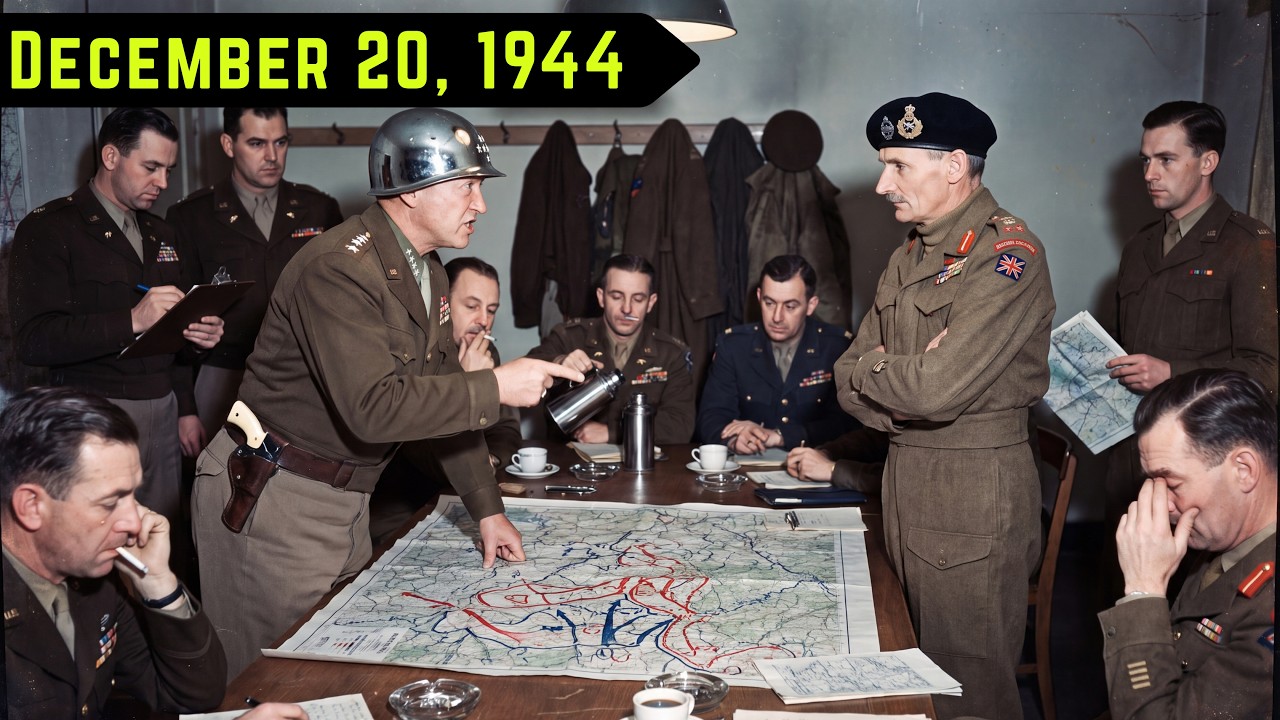 The situation on the ground is dire. The German attack, launched on December 16th under the cover of thick fog and freezing temperatures, has shattered two American divisions and sent tens of thousands of soldiers fleeing or into captivity. The enemy armor is pushing toward the Meuse River, and for the first time since the Normandy breakout, the Allies are facing a genuine strategic crisis.
Eisenhower’s decision to divide command is based on communication realities—the German advance has physically cut the telephone lines between Bradley’s headquarters and the northern armies—but the political fallout is immediate and severe. Bradley is livid, viewing the move as a personal insult and a vote of no confidence in American leadership. He will later write that he never forgave Eisenhower for the decision.
Yet the most consequential reaction comes from Patton, who is not angry about who commands the north but about what that commander intends to do with those forces.
Patton, the aggressive American commander whose Third Army is now tasked with smashing into the southern flank of the German advance, wants to attack immediately. He has already made his position clear. At a meeting at Verdun on December 19th, Eisenhower asked Patton how long it would take to turn his army north and strike the German flank.
Patton’s answer was three divisions in 48 hours. The room was stunned. It was a promise that defied logistics, weather, and common sense.
But Patton was not bluffing. His staff had been working on the plans for days, anticipating that his army would be needed precisely for this task. By December 20th, the machinery was already in motion.
The Third Army was disengaging from its position in front of the Saar, pivoting northward, and preparing to launch a counterattack that would drive toward the besieged American paratroopers at Bastogne. Patton’s philosophy is simple and ruthless: speed disorients the enemy, speed seizes the initiative, and speed saves lives by ending the battle sooner.
But Montgomery, the British commander who has just taken control of the northern sector, sees the situation through a completely different lens. His philosophy, forged in the crucible of the First World War and honed in the deserts of North Africa, is built on preparation, consolidation, and overwhelming force. He believes the American forces in the north are in disarray, not ready to attack.
They need to regroup, establish strong defensive lines, and let the German offensive spend its energy against prepared positions. Only when the enemy is exhausted, when the supply lines are secure, and when the artillery is zeroed in should the counterattack begin. Montgomery is not being timid.
He is being methodical. He is applying the same doctrine that won him the Battle of El Alamein in 1942, where he meticulously prepared his forces before launching the assault that broke Rommel’s Afrika Korps. He has seen what happens when generals send men forward into hasty, unprepared attacks, and he has sworn never to do it.
The tension between the two commanders is not new. It has been simmering since Sicily in the summer of 1943, when the two men were effectively racing to capture the city of Messina. Patton believed Montgomery was cautious, glory-hungry, and slow.
Montgomery believed Patton was reckless, undisciplined, and lucky. Their conflict deepened through the Normandy campaign and the breakout from the beachheads. At the Falaise Gap in August 1944, Patton wanted to close the trap on the fleeing German Seventh Army aggressively from the south.
 Montgomery moved more cautiously from the north. The gap closed too slowly, and tens of thousands of German soldiers escaped to fight another day. Patton blamed Montgomery.
Montgomery blamed circumstances. The mutual animosity became a permanent feature of the Allied high command, and it is now the central dynamic of the Ardennes crisis.
Patton’s plan is far more ambitious than merely relieving Bastogne. He has proposed a massive pincer movement designed to cut off the entire German salient at its base. His concept is brutal in its simplicity: while Patton’s Third Army drives north from the south, Montgomery’s forces would drive south from the north.
Together, they would close the jaws of a giant trap, encircling every German division inside the bulge. Patton has described the enemy offensive as having its head in a meat grinder, and as he sees it, he is holding the handle. The plan would not just stop the German offensive; it would destroy the forces that launched it.
Entire divisions, tanks, artillery, and logistics would be caught in a pocket with no escape. It is the kind of decisive victory that could end the war in Europe months early. But the plan is rejected by Bradley and Montgomery alike.
The terrain at the base of the bulge is terrible, with narrow, icy roads winding through dense forests. The logistics of coordinating two simultaneous attacks from opposite sides in freezing conditions with exhausted troops are daunting. If either jaw of the trap fails to close in time, the Germans will simply pull back through the gap, as they did at Falaise.
The risk is deemed too high.
So Patton attacks alone. On December 22nd, his forces hit the southern flank of the bulge, fighting through frozen terrain and fierce German resistance. The attack is brutally costly.
His men advance through snow-covered hills, driving tanks over icy roads, engaging in bitter close-quarters fighting in the forests. The weather is the worst in fifty years, with temperatures dropping far below freezing and visibility reduced by fog and snow. Patton pushes his men relentlessly, knowing that every hour matters.
Bastogne is running out of ammunition, food, and medical supplies. The 101st Airborne Division is surrounded, holding the town against repeated German assaults. The German commander has demanded their surrender, and the acting commander, Brigadier General Anthony McAuliffe, has given a one-word reply: “Nuts.”
The defiance has become a symbol of American resistance, but symbols do not hold ground without ammunition.
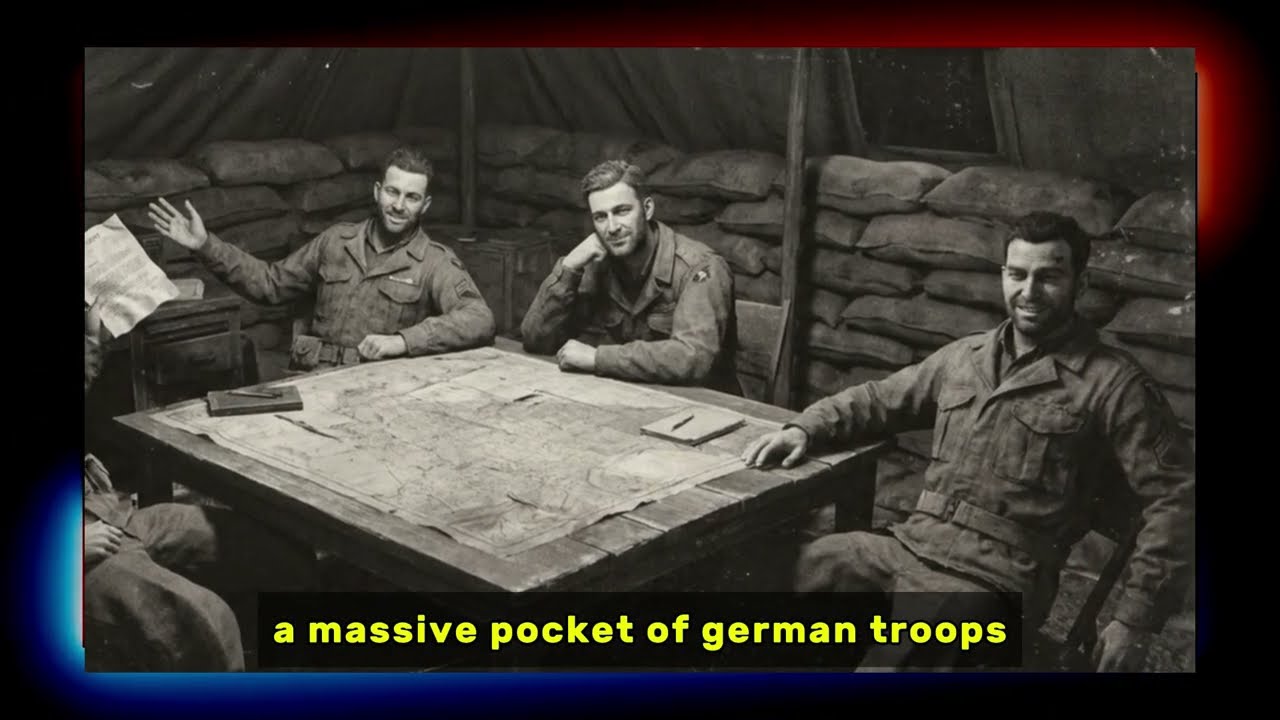 Patton’s relief force reaches Bastogne on December 26th, breaking the encirclement and opening a corridor through which supplies and reinforcements can flow. The town is saved. The paratroopers have held.
Patton has delivered on his promise, moving his army faster and fighting harder than anyone thought possible. But even as his men celebrate the relief, Patton is fuming about the northern front. Montgomery has still not launched his counterattack.
The British commander has pushed back against Eisenhower’s initial request for an attack around December 27th. He says his forces are not in position. He needs more time, more reinforcements, more preparation.
He asks for a delay until January 3rd, nearly two weeks after the German offensive began. Eisenhower, under enormous pressure from Washington and the British government, agrees. He even sends Montgomery 17,000 infantry replacements to strengthen the northern forces for the eventual attack.
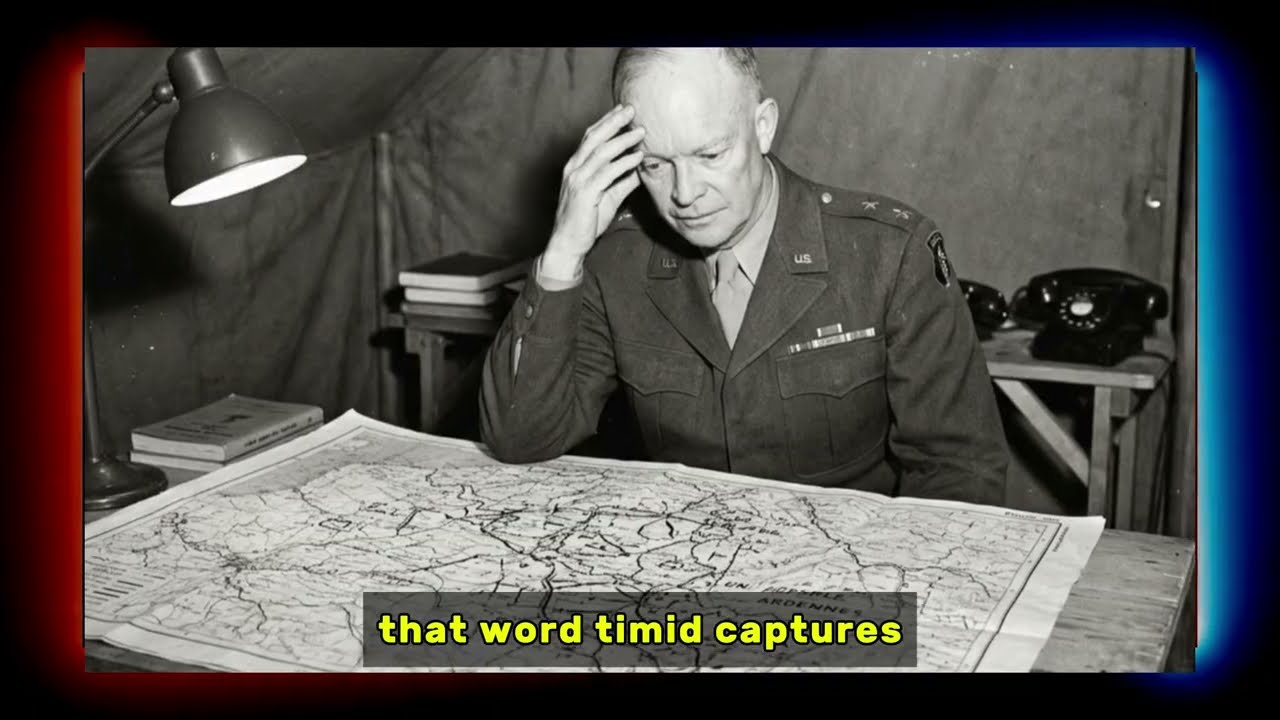
Patton is furious. He believes that every day of delay is a day the Germans use to reinforce their positions, dig in, and prepare defenses that will cost more Allied lives to break through later. He writes in his diary that Montgomery is timid, a word that captures his complete contempt for the cautious approach.
Patton believes the Germans are vulnerable, stretched thin, and reeling from his southern attack. He wants Montgomery to strike now, to hit the northern shoulder of the bulge with everything he has, and to close the trap that would annihilate the German army in the Ardennes. The stalemate, Patton argues, is not a sign of strength but of weakness.
It is the same mistake made at Falaise, where caution allowed the enemy to escape. Patton is determined not to make that mistake again, and he is infuriated that his counterpart in the north is content to wait.
Montgomery’s counterattack finally comes on January 3rd, 1945. His forces push south in a methodical, heavily supported offensive, but the delay has allowed the Germans to prepare. The fighting is brutal, and the advance is slow.
Patton, meanwhile, continues to push north from the south. On January 16th, elements of the First and Third Armies meet at the town of Houffalize, splitting the German salient in half. The encirclement is not achieved, but the bulge is cut.
The German forces are forced to retreat, abandoning their heavy equipment and fleeing the pocket before it can close completely. The Battle of the Bulge officially ends on January 28th, with the Germans pushed back to approximately their starting positions. They have spent their last major strategic reserve of men and armor on an offensive that ultimately gained them nothing.
The war in Europe will be over in just over four months.
 But the argument over who was right in the Ardennes has never been settled. It remains one of the most contentious debates in military history, studied in war colleges and argued in memoirs. And here is the part that challenges the popular narrative: German General Hasso von Manteuffel, the commander of the Fifth Panzer Army who led the attack that surrounded Bastogne, was asked after the war about the Allied response to his offensive.
His assessment surprised many. He did not praise the aggressive American attack from the south as the decisive factor. Instead, he credited Montgomery’s caution in the north.
Manteuffel argued that Montgomery’s refusal to counterattack prematurely deprived the Germans of an opportunity to spring a tactical surprise of their own. A hasty attack from the north, the kind Patton would have wanted, might have walked into a trap. The German general’s assessment gives weight to Montgomery’s position, suggesting that the delay was not timidity but wisdom.
British historians have long made the same argument, pointing out that Montgomery’s forces were genuinely not ready for a major operation in late December. Rushing them forward risked piecemeal commitment, the same mistake that had plagued Allied operations earlier in the war. Montgomery’s entire doctrine was designed to avoid such waste.
He wanted to make sure that when he struck, he struck with such overwhelming force that the result was never in doubt. That approach saves lives, even if it takes longer. But there is another side to the argument that is harder to quantify.
Every day of delay was a day that American soldiers in the line were fighting and dying. The paratroopers at Bastogne, the infantry holding frozen outposts, the tank crews grinding through snow and mud—they were paying the cost of Montgomery’s preparation with their blood. The human toll of waiting is real, even if it does not appear in a staff officer’s planning document.
Patton believed that boldness, even with risk, was the better path. He believed that the Germans were vulnerable in late December, that a coordinated pincer from both sides could have trapped and destroyed their entire army in the Ardennes. Even if the trap failed to close perfectly, Patton believed that the disruption and pressure would have caused more damage than a slow, methodical squeeze.
He had seen what happened at Falaise when caution prevailed, and he was determined not to repeat it. Montgomery believed the opposite: that attacking before his forces were ready would have led to piecemeal defeats and unnecessary casualties. He believed that the German offensive would exhaust itself against his defenses, and that a properly prepared counterattack would then produce a more secure, more permanent victory.
Both men had evidence to support their positions. Both were, in different ways, right. And both were, in different ways, wrong.
The truth is that there is no clean answer. War is not a math problem. It is a series of impossible choices made with imperfect knowledge, under time pressure, where every option has a cost.
Patton’s speed saved Bastogne. Montgomery’s discipline held the northern shoulder. Eisenhower’s ability to manage two men who genuinely could not stand each other kept the whole alliance from fracturing.
The Battle of the Bulge was won not by one general but by a combination of aggression and restraint, a balance of contrasting philosophies that somehow, against all odds, worked. The debate will continue as long as military historians study leadership under pressure, because the Ardennes offers a perfect case study in the eternal tension between action and patience, between the audacity to strike and the wisdom to wait. And in the end, the judgment of history remains as divided as the commanders themselves.


