
MUNICH — He was the second most powerful man in the Third Reich, a decorated World War I flying ace, the architect of the Gestapo, and the designated successor to Adolf Hitler. But newly unearthed correspondence suggests that for a critical period in his life, Hermann Göring was a prisoner of a different kind of master: a pharmaceutical opioid so potent it made morphine look like aspirin.
The letters, reportedly discovered by collector Billy Leroy and dated May 11 and June 12, 1925, paint a harrowing portrait of a man at the absolute nadir of his existence. Written on family letterhead while Göring was in exile in Stockholm, the correspondence is not about politics or military strategy. It is a desperate, almost pathetic plea for drugs.
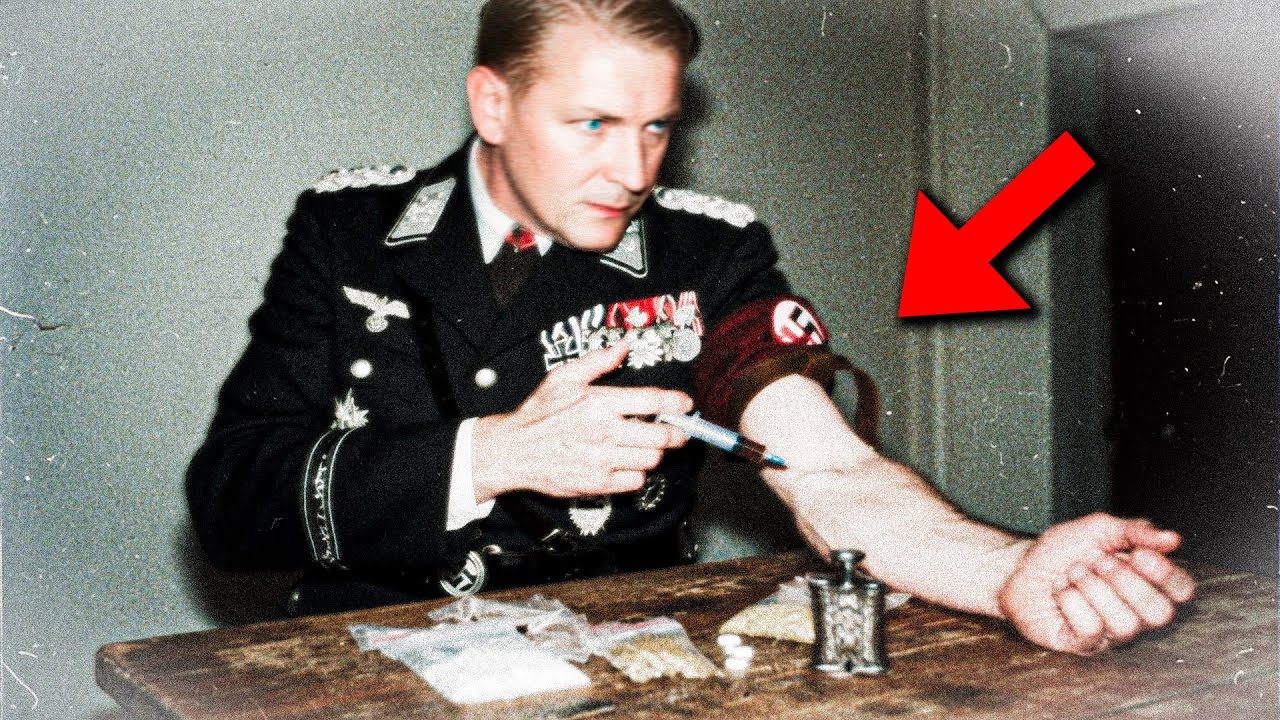 Specifically, Göring is begging for ampoules of Eucodal, the German brand name for a semi-synthetic opioid we now know as oxycodone.
The discovery of these letters, if authenticated, provides the most direct and visceral evidence yet of the depth of Göring’s addiction, a secret that shadowed his meteoric rise and spectacular fall. It reveals that the man who would later order the bombing of civilian populations and orchestrate the plunder of Europe was, in the mid-1920s, a violent, impoverished, and psychologically shattered addict, willing to debase himself to secure his next dose.
The roots of this dependency are tragically ironic. Göring’s descent into addiction began not in the decadent salons of Berlin, but on the bloody streets of Munich during the failed Beer Hall Putsch of November 9, 1923. Marching alongside Hitler, Göring was struck by a bullet in the groin, a wound that would cause him chronic, searing pain for the rest of his life.
Smuggled across the Austrian border by his devoted wife, Karin, Göring was rushed to a hospital in Innsbruck. It was there, during two agonizing operations, that doctors began administering morphine to manage his pain. For a man accustomed to the adrenaline of aerial combat, the sudden, profound relief of the opiate was a revelation.
It was the beginning of a spiral that would nearly destroy him.
By 1924, Göring was a wanted man in Germany, a fugitive from justice. He and the ailing Karin drifted through Italy and eventually settled in Sweden, far from the political stage he craved. It was here, in relative obscurity, that the addiction metastasized.
The morphine was replaced by Eucodal, a 𝒹𝓇𝓊𝑔 developed by the German pharmaceutical giant Merck in 1916.
 Eucodal was not merely a substitute; it was a supercharged version of the painkiller. Approximately one and a half times more potent than morphine, it was administered intravenously, delivering a near-instantaneous wave of euphoria and relief that was profoundly addictive. While it was intended for terminal patients and severe battlefield injuries, Göring used it to escape the physical and psychological torment of his exile.
The letters, addressed to a woman identified only as “Fräulein W.” in Munich, who reportedly had a direct line to Hitler, show Göring leveraging his past sacrifice for the party. He implores the Nazi leadership to intervene and have the 𝒹𝓇𝓊𝑔 shipped to him in Stockholm.
The tone, according to Leroy, is one of entitlement and urgency, framing the supply of Eucodal as a debt owed to him for the bullet he took for the cause.
The Göring that emerges from this period is a far cry from the corpulent, uniformed Reichsmarschall of later years. He was skeletal, apathetic, and prone to violent, irrational outbursts. The addiction ravaged his finances.
The former aristocrat, who had once lived in castles, began pawning family heirlooms and jewelry to fund his habit. The strain on his marriage was immense, with Karin enduring his aggression until she was forced to have him committed to a psychiatric institution in September 1925, where he was restrained in a straitjacket.
Perhaps the most chilling detail of this period is that Göring continued to work as a commercial airline pilot for Svensk Lufttrafik in Sweden. While under the influence of a powerful opioid, he was responsible for the lives of passengers, a testament to either the recklessness of addiction or the terrifying normalcy with which he managed his dependency.
 The letters from 1925 are crucial because they capture the crisis point. But the story of Göring’s addiction does not end with his detoxification in a Swedish asylum. Upon returning to Germany in 1927, he resumed his political career, but he never truly kicked the habit.
He merely swapped his 𝒹𝓇𝓊𝑔 of choice.
By the early 1930s, Göring had transitioned from the intravenous Eucodal to a milder, oral opioid known as Paracodine (dihydrocodeine). This shift was pivotal. Instead of the violent highs and desperate lows of the 1920s, Göring entered a state of “maintenance.”
He was perpetually slightly doped, a condition that allowed him to function, to scheme, and to rise through the Nazi hierarchy, but which also contributed to his notorious weight gain and his tendency to fall asleep during critical wartime briefings.
This dependence was an open secret within the Nazi elite. Hitler reportedly found it distasteful, but tolerated it due to Göring’s utility. Göring’s personal physician, under the direction of the regime, managed his supply, ensuring the second most powerful man in Germany was never without his daily dose of oblivion.
The scale of this dependency was laid bare in the final days of World War II. As the Third Reich crumbled, Göring surrendered to American forces in May 1945. When his personal luggage was inventoried, soldiers found two leather suitcases filled with over 20,000 tablets of Paracodine.
 It was a stockpile meticulously assembled to ensure his supply would never run out, a final, bizarre testament to a decades-long addiction.
Medical experts who have studied the case note a strange irony. The transition to Paracodine, while keeping Göring in a state of constant, low-level intoxication, likely prevented a return to the psychotic, violent behavior of the 1920s. In a sense, it acted as a rudimentary form of opioid replacement therapy, keeping him functional enough to participate in the monstrous machinery of the Nazi state.
At Nuremberg, stripped of his drugs and forced onto a strict diet, Göring lost a significant amount of weight. He was sharp, defiant, and intellectually formidable, dominating the proceedings with his legal maneuvering. He managed to regain a semblance of his old self, but the shadow of the addiction never fully lifted.
He cheated the hangman’s noose by committing suicide with a cyanide capsule on October 15, 1946, just hours before he was to be executed.
The two letters, hidden for nearly a century, do more than just document a personal failing. They humanize a monster in a way that is deeply unsettling. They show that the cruelty and ambition of the Third Reich were not born solely from cold ideology, but also from the fractured, 𝒹𝓇𝓊𝑔-addled mind of one of its principal architects.
Göring’s story is a stark reminder that history’s greatest villains are often, at their core, deeply broken individuals, and that the line between a hero and a desperate addict can be crossed with a single bullet.

