My parents emptied the college fund my grandfather left me to bail out my sister again. Then they laughed. “You’ll survive,” my mother said. “She actually has a future worth saving.

” Years later, when I made my first million, I gave five hundred thousand dollars to the aunt they had spent my entire childhood teaching me to hate. My name is Blake. I grew up in a mid-size town outside of Houston. My dad, Craig, worked in logistics for an oil services company.
My mom, Lorie, was a dental office manager. We weren’t rich, but we were comfortable, a three-bedroom house, two cars in the driveway, a neighborhood with a community pool. Normal. My sister Noel is three years older than me.
I want to be fair to her, because I think it matters. Noel isn’t a monster. She’s genuinely charming, funny, confident, the kind of person who makes you feel like the only one in the room when she’s talking to you. She’s also completely incapable of accepting consequences.
Every time she made a bad decision, and there were many, someone caught her. My parents paid off her credit card debt when she was twenty-two. They co-signed a lease on a boutique clothing store that lasted eleven months. They covered her rent when she moved to Austin to find herself.
They paid off a car she had stopped making payments on. The story was always the same. Noel has potential. Noel just needs one more chance.
Noel is going to do amazing things. I was the quiet one. I got decent grades. I didn’t cause problems.
I played baseball through junior year and worked at a boat repair shop on weekends because I liked working with my hands. I wasn’t the kid they bragged about at dinner parties, but I wasn’t the kid they worried about either. I was just there. The one person who saw me differently was my grandfather.
Everyone called him Pop. He was my mom’s dad, a retired pipe fitter who had spent forty years working in refineries along the Gulf Coast. Hands like leather, voice like gravel. He smelled like pipe tobacco and WD-40, and he was the best man I ever knew.
Pop used to take me fishing on Saturdays. Just me, not Noel. She wasn’t interested and he didn’t push it. Those mornings on the water were the only time in my childhood I felt like someone was paying attention to me specifically, not to what I could do for someone, just me.
“You’re the one who’s going to be okay, Blake,” he told me once. We were sitting in his boat on Galveston Bay, not catching a thing. I was maybe thirteen. “You know why?
” He laughed. “Because you don’t need anyone to tell you what you’re worth. ”
Pop died when I was fifteen. Heart attack in his sleep.
The funeral was huge. He had known everyone. My mom cried for weeks. Noel posted a long tribute about how he was her rock, even though she’d visited him maybe four times in the last two years of his life.
What Pop left me was a college fund. A custodial account with roughly one hundred twenty thousand dollars in it. My parents were the custodians until I turned eighteen. Pop told me about it the last Christmas before he died.
He pulled me aside in the kitchen while everyone else watched Noel open presents. “There’s money set aside for you,” he said quietly. “For school, for whatever comes next. Your parents know about it.
It’s yours, Blake. Don’t let anyone tell you different. ”
I didn’t think much about it at the time. I was fifteen.
A hundred twenty thousand might as well have been a million. It felt abstract, but I remembered what he said. I remembered the way he looked at me, like he was trying to burn it into my memory. Fast forward to the spring of my junior year.
I was seventeen. I had started looking at colleges, thinking marine biology or ocean engineering. I wanted to work on the Gulf, near it, in it. A guidance counselor helped me put together a list of programs I could afford with the fund plus financial aid.
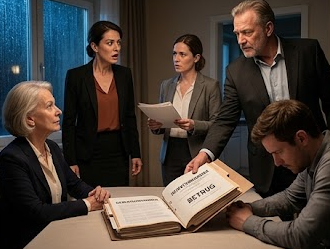
I came home one afternoon and found my parents at the kitchen table. The energy was wrong. My mom had that look she gets when she’s already decided how a conversation is going to go. My dad was staring at his hands.
“Sit down, Blake,” my mom said. I sat. “We need to talk about Noel’s situation. ”
Noel’s situation.
That was always the phrase. Never Noel’s mess or Noel’s choices. Always her situation, like it was something that happened to her instead of something she’d created. The short version: Noel’s boutique had gone under.
She’d racked up over eighty thousand dollars in personal credit card debt trying to keep it alive. Creditors were threatening legal action. She’d fallen behind on her apartment rent and her car payment. The total damage was somewhere around one hundred twenty thousand.
“We’ve had to make some difficult decisions,” my mom said, using that calm voice she always uses right before she says something terrible. “We used the money from your grandfather’s fund to help your sister get back on her feet. ”
I just sat there. I asked her to repeat it.
She did. “All of it, Blake. She was going to be sued. Her credit would have been destroyed.
”
“All of it,” I said again, not a question this time. My dad finally looked up. “We’re going to figure something out for you. Financial aid, scholarships.
There are options. ”
“That was my money. Pop left that for me. ”
And then came the part I will never forget.
My mom leaned back in her chair, crossed her arms, and said, “You’ll survive, Blake. She actually has a future worth saving. ”
My dad didn’t say a word. He just looked back down at his hands.
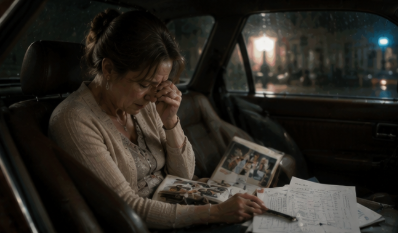
I got up from the table. I walked to my room. I sat on my bed for a long time, not really thinking, just sitting. After a while, I opened the filing cabinet where my dad kept copies of important documents.
Maybe I wanted to see proof that the money had existed. The folder for the college fund was mostly empty, just a few old statements and a copy of the original paperwork Pop had signed. But at the bottom, underneath everything else, there was an envelope. Sealed.
My name written on the front in Pop’s handwriting. I’d never seen it before. Nobody had ever mentioned it. It was a letter, two pages written in Pop’s careful block letters.
The first line read, “Blake, if you’re reading this… ” And the second paragraph mentioned someone I hadn’t spoken to in years. Someone my mother had taught me to hate since I was old enough to understand the word. My aunt Diane.
I need to tell you about Aunt Diane before I get into the letter, because the context matters. Growing up, Aunt Diane was basically a ghost story in our house. My mom’s younger sister. I’d met her exactly twice that I could remember, both times at large family gatherings when I was very young.
After that, she was gone. The version I got from my mother was simple. Diane was greedy. Diane was selfish.
Diane tried to steal from the family after their mother died. Diane chose money over blood. Anytime her name came up, my mom would get this tight look on her face and say something like, “Some people show you who they really are, and you just have to believe them. ” My dad would nod.
Noel would nod. I’d nod. Diane lived in Vermont. She was a school librarian.
That’s all I knew about her. Pop’s letter explained that he’d set up the college fund because he was worried my parents would always prioritize Noel. He loved Noel, but he could see the pattern. The money was supposed to be untouchable, but he knew that with my parents as custodians, there was a risk.
Then he wrote this:
“I tried to do something similar for your aunt Diane a long time ago. Your mother made sure it didn’t work out. If you ever get the chance, find Diane. Ask her what happened with the house.
She’ll tell you the truth. Your mother won’t. ”
He signed it. “I’m proud of you already, Pop.
”
I read that letter four times. Then I put it back in the envelope, put the envelope in my backpack, and didn’t tell anyone I’d found it. I didn’t cry. I think I was past crying.
What I felt was this cold, clear feeling, like stepping into water much colder than you expect, where everything goes sharp and still. The next few months were rough. I finished junior year on autopilot. I applied for financial aid and scholarships like my dad suggested.
I got some, not enough, not close to enough for the programs I’d wanted. Noel, meanwhile, was doing great. The debt was cleared. She moved back home, which became permanent.
She was regrouping, talking about a new business, an online thing this time. My parents listened to her pitch over dinner like she was presenting to investors instead of the people who had just burned my future to clean up her last disaster. Nobody asked me how I was doing. Not once.
My dad tried once. He came into my room at night, sat on the edge of my bed, and said, “I know this isn’t fair, Blake. ”
“Then why did you let it happen? ”
He was quiet.
Then he said, “Your mother felt very strongly about it. ”
“And what did you feel? ”
He didn’t answer. He just patted my knee and left.
Senior year, I made a decision. I wasn’t going to the colleges I’d planned on. I couldn’t afford them. But I had been working at the boat repair shop since I was sixteen, and the owner, a guy named Dale, had connections in the commercial diving industry.
Underwater welding, hull inspections, pipeline maintenance, salvage work. It’s one of those careers most people don’t even know exists. The training was intense but short, and once you’re certified and experienced, the pay is genuinely shocking. I enrolled in a dive program in Louisiana the fall after graduation.
My parents didn’t try to stop me, but they didn’t cheer either. My mom’s reaction at dinner was, “Well, I suppose not everyone is meant for college. ” Noel had the decency to look uncomfortable. The one person who supported me was my uncle Marcus, my dad’s older brother, retired Coast Guard, lives in Galveston.
When I told him what I was doing, he just nodded. “Good. That’s honest work, and they’ll pay you like they mean it. ”
Six months into training, I called Uncle Marcus and told him about Pop’s letter.
I read him the part about Aunt Diane. He was quiet for a minute. Then he said, “I always wondered when that was going to come out. ”
“You knew?
”
“I knew pieces. Your mom and Diane had a falling out over your grandmother’s estate. The house. Your mom got it.
Diane got nothing. The story your mom tells isn’t exactly how it went down. ”
“How did it go down? ”
“That’s not my story to tell, Blake.
But your grandfather wasn’t wrong. If you want the truth, go to the source. ”
I didn’t reach out to Diane right away. Training was brutal, twelve-hour days, pressure tests, welding certifications.
I was exhausted in a way I’d never experienced before, and I loved it. For the first time in my life, I was building something entirely mine. No one could take it away because no one had given it to me in the first place. But Pop’s letter sat in my nightstand drawer, and every time I opened that drawer, I saw his handwriting.
Find Diane. Ask her what happened with the house. A year and a half after I started diving, I got certified for underwater welding. My first real contract was pipeline inspection work in the Gulf of Mexico.
Seven days on, seven days off. I was twenty years old, making more than both my parents combined. I didn’t tell them. When they asked, I said it paid the bills.
Noel’s online business folded by then. She was working part-time at a boutique hotel and talking about getting her real estate license. My parents were paying her car insurance. One night, sitting in my bunk on a dive support vessel somewhere in the Gulf, I finally looked up Diane online.
A quiet profile. Pictures of her garden, her library, her cat. She looked like my mom but softer, less armored. I typed a message, deleted it, typed another, deleted that too.
Finally I just wrote: “Hi, Aunt Diane. This is Blake, Lorie’s son. Pop left me a letter before he died, and he told me to find you. I think it’s time I heard your side of the story.
”
She responded within the hour. She said she’d been waiting for this message for years. Not from me specifically, but from someone, anyone in the family who might finally want to hear the actual story. We talked on the phone the next week.
She sounded nervous at first, like she was afraid I was calling to yell at her. When I told her about Pop’s letter, the college fund, what my parents had done, she went quiet for a long time. “He was worried about exactly this,” she finally said. “When I talked to him, maybe a year before he passed, he said he was afraid the money wouldn’t make it to you.
”
“Tell me about the house,” I said. So she did. When my grandmother died, her will left the family house, a three-bedroom place in Pasadena, to be split equally between Lorie and Diane. It wasn’t worth a fortune, maybe one hundred eighty thousand at the time, but it was their childhood home.
The plan was simple: sell the house, split the proceeds. But my mom wanted to keep it as a rental property. Diane disagreed. She needed her half.
She was going through a divorce with a young daughter, trying to get back on her feet. Here’s what my mom did. Pop was already in declining health, early-stage dementia, though the family didn’t use that word yet. My mom convinced him to sign a revised arrangement giving her full control of the property as estate manager.
Diane was told the document was just a formality, that the split was still equal. But when the paperwork went through, my mom had been named sole beneficiary. Diane challenged it. My mom painted her as greedy, as someone trying to exploit Pop’s condition.
The rest of the family took my mom’s side because she got to them first. Diane was cut off. No house, no money, no family. She moved to Vermont, started over, became a librarian, raised her daughter alone, and never bad-mouthed my mother to anyone.
She just disappeared. And Pop, according to Diane, felt terrible. He realized what had happened once his good days gave him enough clarity. That’s when he set up my college fund.
He couldn’t fix the house, but he could try to make sure at least one more person in the family wasn’t left with nothing. Except my parents took that too. I sat on the dock behind Uncle Marcus’s house for a long time after that call. The water was flat and brown, clouds stacked on the horizon.
I thought about Pop, about how he tried twice to do the right thing and got undermined both times by his own daughter. I didn’t make any dramatic declarations. I didn’t call my parents. I just made a decision quietly, the way I’d learned to make all my decisions since they took the fund.
I was going to fix what Pop couldn’t. But not yet. Not until I could do it in a way that couldn’t be taken back. Over the next three years, I worked.
That’s the boring version, but it’s the honest one. I took every contract I could get. Pipeline work, salvage jobs, offshore platform maintenance. Seven months in the North Sea.
Emergency hull repair after a tropical storm. Recovery work on a collapsed offshore structure. Commercial diving is dangerous, exhausting, and lonely. Your body takes a beating.
Your relationships suffer. But the money is real, and I was smart with it. Uncle Marcus helped. He didn’t know the full scope of my plan, but he understood money better than anyone in my family.
He connected me with a financial adviser. I invested conservatively. I lived below my means. By the time I was twenty-five, I had serious money saved.
By twenty-seven, I’d crossed a threshold I never expected to reach. I kept in touch with my parents during those years. Birthdays, holidays, occasional Sunday calls. I never told them what I was making.
When I visited, I drove a used truck and wore the same clothes I’d had since dive school. My mom would still make comments about going back to school. My dad would ask vaguely about my plans. Noel would talk about her latest venture.
The real estate license came and went. She tried event planning. She started a social media consulting thing that I’m pretty sure never had a single client. Through it all, my parents kept funding her.
Rent help, car repairs, loans that everyone knew would never be repaid. They sold the Pasadena house, the one my mom had taken from Diane, and used some of the money to help Noel buy a condo. I kept talking to Diane. Our calls became regular, once a month, then every other week.
She told me about her daughter, my cousin Hannah, who was in nursing school. She told me about her garden and the library renovation she’d campaigned for. She asked about my work, and unlike my parents, she actually listened. She never asked me for anything, not money, not favors, not even an apology on behalf of my mother.
I visited her in Vermont the fall I turned twenty-six. Small town, white clapboard houses, leaves everywhere. Her place was modest and warm and full of books. She made pot roast.
Her cat, a massive orange thing named Biscuit, sat on my lap all through dinner. “You look like Pop,” she told me, crying a little. “Same jaw, same eyes. He’d be so proud of you.
”
That’s when I told her my plan. Not all of it, but enough. Pop had tried to make things right, and I intended to finish what he started. She shook her head.
“Blake, I don’t need your money. ”
“It’s not about need, Aunt Diane. It’s about what’s right. ”
Back home, the family dynamics continued on their predictable track.
Noel’s latest venture was a boutique wine bar with a business partner. My parents were excited. At Thanksgiving, Noel cornered me in the kitchen while I washed dishes. “So, Blake, how’s the diving business going?
You must be saving up pretty well by now. ”
“It’s fine. ”
“Because Kelsey and I are looking for investors for the wine bar. Small commitments.
”
“Sure, send it over. ”
I had no intention of investing. But I needed her to believe I might, because the moment Noel thought I had money, she’d tell my parents. And the moment my parents knew, they’d want to know exactly how much.
And the moment they found out how much a commercial diver actually makes, the whole family script would flip. I just needed to control when that happened. Noel sent the business plan two days later. Eleven pages, financial projections I’d call creative.
I told her I was reviewing it. She thanked me with three exclamation points. I started calling a trust attorney in Houston. A woman named Patricia Caldwell, recommended by Uncle Marcus.
She specialized in estate planning and charitable trusts, and she had zero patience for small talk. I sat in her office and explained what I wanted. A trust to distribute five hundred thousand dollars to my aunt Diane. Irrevocable.
Clean, legal, unchallengeable. Patricia listened, took notes, and asked one question. “Is this punitive or restorative? ”
“Both,” I said.
She nodded. “Good. I can work with honest. ”
The process took about three months.
Paperwork, tax implications, structuring the disbursement so Diane wouldn’t get crushed by a sudden tax burden. During that time, Noel texted me every couple of weeks with wine bar updates, photos of potential locations, fabric swatches, menu concepts, each message ending with some variation of “still reviewing the business plan,” followed by a smiley face. I felt a little guilty about stringing her along. But Noel had spent her whole life assuming other people’s resources were available to her.
She’d spent my college fund without losing a single night of sleep. Christmas that year was the last time we were all together before everything changed. I drove down in my used truck, old jacket, same routine. Nobody asked about my work or my finances.
Dinner conversation was entirely about the wine bar. My dad pulled me aside after dessert. He looked uncomfortable. “Your sister mentioned you might invest in the wine bar.
”
“I’m still looking at the numbers, Dad. ”
He nodded, relieved to have the conversation over. Then he added, almost as an afterthought, “You know, your mom and I are proud of you, Blake. The diving, all of it.
We don’t say it enough. ”
It was the most generous thing he’d said to me in years, and it still felt like a prelude to asking for money. In January, the trust was finalized. Patricia walked me through the documents one last time.
The money would transfer to Diane in a lump sum. Clean, legal, irrevocable. I signed everything on a Tuesday morning. I called Diane that night.
“It’s done. ”
She was quiet. Then she said, “Blake, are you sure? Pop wanted you to have your share.
”
“This is me making sure it finally happens. ”
“It’s so much more than my share. ”
“The interest on what was stolen from you has been compounding for a long time, Aunt Diane. Not just the money.
Everything. ”
She cried. I almost did too, but I was sitting in my truck in a parking lot outside a Whataburger, and something about that setting made it feel wrong to fall apart. So I ate a patty melt and drove home.
The money hit Diane’s account in early February. She called me when she saw it, said she kept refreshing her banking app because she thought it was a glitch. She told me she was going to tell people. “Not to brag, but I’ve been invisible for a long time, Blake.
People should know that someone in this family finally did the right thing. ”
She posted on social media. Nothing flashy. A photo of her and Pop from years ago, a short message.
She wrote about how her nephew had reached out after years of estrangement, how he’d learned the truth about their mother’s estate, how he’d honored his father’s wishes. She didn’t mention the amount, but she said it was life-changing, and that family isn’t about blood. It’s about who shows up. She tagged me.
She didn’t tag my mother. It took about forty-eight hours. A family friend from my mom’s church book club saw the post. My phone rang on a Thursday evening.
I was on my couch watching a documentary about shipwrecks. It was my mom. I let it ring three times before I picked up. “Blake.
” Her voice was the temperature of liquid nitrogen. “What did you do? ”
“Hey, Mom. How’s it going?
”
“Don’t. What is Diane talking about on Facebook? She’s posting about you giving her money. What is she talking about?
”
“Exactly what she said. ”
“How much money, Blake? ”
I paused. Not for dramatic effect.
I wanted to make sure I was calm enough to say it plainly. “Five hundred thousand dollars. ”
The silence lasted long enough for me to hear my dad in the background say, “What? What did he say?
”
Then my mother said, very quietly, “You have got to be kidding me. ”
“Where did you get that money? ”
“I earned it, Mom. That’s what happens when you work for a living and nobody takes it from you.
”
“You gave half a million to the woman who tried to tear this family apart. ”
“No. I gave half a million to the woman this family threw away. Just like Pop tried to do, just like you stopped him from doing.
”
I heard her breathing change. Before she could scream or cry, I said, “I know about the house, Mom. I know what you did with Grandma’s will. I know Pop set up my college fund because he felt guilty about Diane and worried you’d do the same thing to me.
And you did. ”
She hung up. My phone rang again almost immediately. Dad, then Noel, then Mom.
I let them all go to voicemail. The first text came from Noel at 9:47 that night. “What the hell, Blake? Mom is hysterical.
You gave half a million dollars to Aunt Diane. What about the wine bar? What about us? ”
What about us.
After everything. After my college fund, after years of being invisible, after being told my future wasn’t worth saving. What about us. I turned my phone off and went to bed.
The next seventy-two hours were a master class in how my family operates under pressure. My mom went into full damage control, calling extended family and friends. Her version, which I heard secondhand from Uncle Marcus, was that I’d been manipulated by Diane into giving away money I didn’t really have, that Diane had targeted me because I was young and impressionable, that the house story was a lie she’d been telling for years. Noel went the guilt route.
A long text that started with “I’m not going to pretend I’m not hurt” and ended with “I just don’t understand how you could do this to your own family. ” Somewhere in the middle she mentioned the wine bar three times. My dad sent one text. “Please call your mother.
” That was it. I gave it two days before responding to anyone. I needed space. And honestly, I wanted them to sit with it.
When I finally called, I called my dad. “I’m not going to apologize for what I did. ”
“Blake, your mother is devastated. ”
“Mom is embarrassed.
There’s a difference. ”
Silence. Then, “That’s not fair. ”
“You want to talk about fair?
You emptied my college fund and told me I’d survive. You let Mom say my sister’s future was worth more than mine. You sold Grandma’s house that should have been split with Diane and used the money to buy Noel a condo. And now you’re upset because I used my own money, money I earned myself, to do what Pop asked me to do.
”
More silence. I heard him swallowing. “Your grandfather,” he said slowly, “was a good man. ”
“Yeah, he was.
”
“And the letter. He really wrote you a letter. ”
“He did. ”
“What did it say?
”
“It said he knew you’d take the money. And he told me to find Diane. ”
My dad didn’t say anything for a while. Then he said, “I’m sorry, Blake.
”
And I could tell he meant it. Not in a way that fixed anything, but in a way that acknowledged the weight. “I appreciate that,” I said, “but sorry doesn’t give me back four years of education, and it doesn’t give Diane back twenty years of family. ”
We left it there.
It wasn’t a satisfying conversation. It wasn’t supposed to be. The confrontation with my mom happened a week later. She drove to Galveston.
I didn’t invite her. She just showed up. Uncle Marcus called to warn me because she’d called him for my address. I told him it was fine.
She knocked at ten in the morning. I opened the door, and she walked in without being asked. She looked around, taking in the space. It wasn’t extravagant, but it was nice.
Two-bedroom, waterfront, good furniture. I could see her recalculating everything she thought she knew about my life. “This is where you live,” she said. “Yeah.
”
“How long have you been able to afford something like this? ”
“A few years. ”
She sat down on my couch. She looked tired, older than I remembered.
For a second, I felt bad for her. Then she opened her mouth. “You owe me an explanation, Blake. ”
“No, Mom.
I really don’t. ”
“That money could have helped your sister. It could have helped this family. Instead you gave it to a woman who tried to destroy us.
”
“Diane didn’t try to destroy anyone. She asked for her half of Grandma’s house. You took it from her. Pop knew.
He wrote it down. And you used his fund for me to bail out Noel the same way you used Grandma’s estate to cut Diane out. ”
Her face did something I’d never seen before. It crumpled, not into crying, but into something harder to watch.
Recognition. For maybe three seconds, my mother’s face showed that she knew exactly what I was talking about, that she knew I was right. Then the wall went back up. “You don’t know what it was like.
Diane was impossible. She was always jealous of me. She always wanted what I had. ”
“She wanted half a house, Mom.
That’s not jealousy. That’s arithmetic. ”
“Everything I did for Noel, I did because she needed help. ”
“Noel always needs help.
That’s the point. You taught her that someone would always catch her. And the person you sacrificed to do it was me. ”
My mom stood up.
She grabbed her purse. She walked to the door. Then she turned around and said the thing that told me everything I needed to know about whether this relationship was fixable. “If you had any loyalty to this family, you would have come to us before giving a dime to that woman.
”
“I did come to you, Mom. I was seventeen. You told me I’d survive. ”
She left.
She didn’t slam the door, which was almost worse. She just pulled it shut with a precise little click, like she was leaving a business meeting. That was seven months ago. Here’s where everyone is now.
My mom and I don’t speak. She hasn’t called or texted. She’s told the family her version, that I was conned by Diane and I’ll come around eventually. Some relatives believe her.
Some don’t. I don’t spend much energy worrying about it. My dad calls every few weeks. Short conversations.
Baseball, weather, his retirement plans. He never mentions my mom or the money. I think he’s trying to maintain a thread of connection without confronting anything, which is the most Craig thing imaginable. I let him.
The calls aren’t nothing, even if they’re not enough. Noel’s wine bar didn’t happen. Her business partner backed out after what Noel described as creative differences, but I suspect the partner realized Noel’s family money wasn’t coming. She’s back to working part-time, living in the condo my parents bought her.
She sent me a birthday card last month. It said “Thinking of you” with no return address. I don’t know what to do with that yet. Diane used some of the money to pay off her mortgage and set up a college fund for Hannah.
She donated twenty thousand dollars to her library for a new children’s reading room. She named it the Pop Larson Reading Room. When she sent me a photo of the dedication plaque, I sat in my truck for ten minutes before I could drive. Uncle Marcus came up to visit me last month.
We went fishing in the bay, the same water Pop used to take me on. We didn’t catch anything, which felt right. “You did a good thing, kid,” he said. “I did what Pop asked me to do.
”
“That’s the same thing. ”
Maybe it is. I’m not going to sit here and tell you I feel great about everything. I lost my parents.
Basically, my sister is a stranger. Half my extended family thinks I’m the villain. That’s not nothing. But I think about Pop.
I think about him sitting in his kitchen writing that letter in his careful block handwriting, hoping that someday I’d be in a position to finish what he started. I think about Diane sitting in her little house in Vermont, finally having a piece of what was taken from her. And I think about that morning on the boat when I was thirteen. Pop telling me I was going to be okay because I didn’t need anyone to tell me what I was worth.
He was right. I am okay. And for the first time in my life, the people who tried to convince me otherwise are the ones who have to figure out how to survive without me.