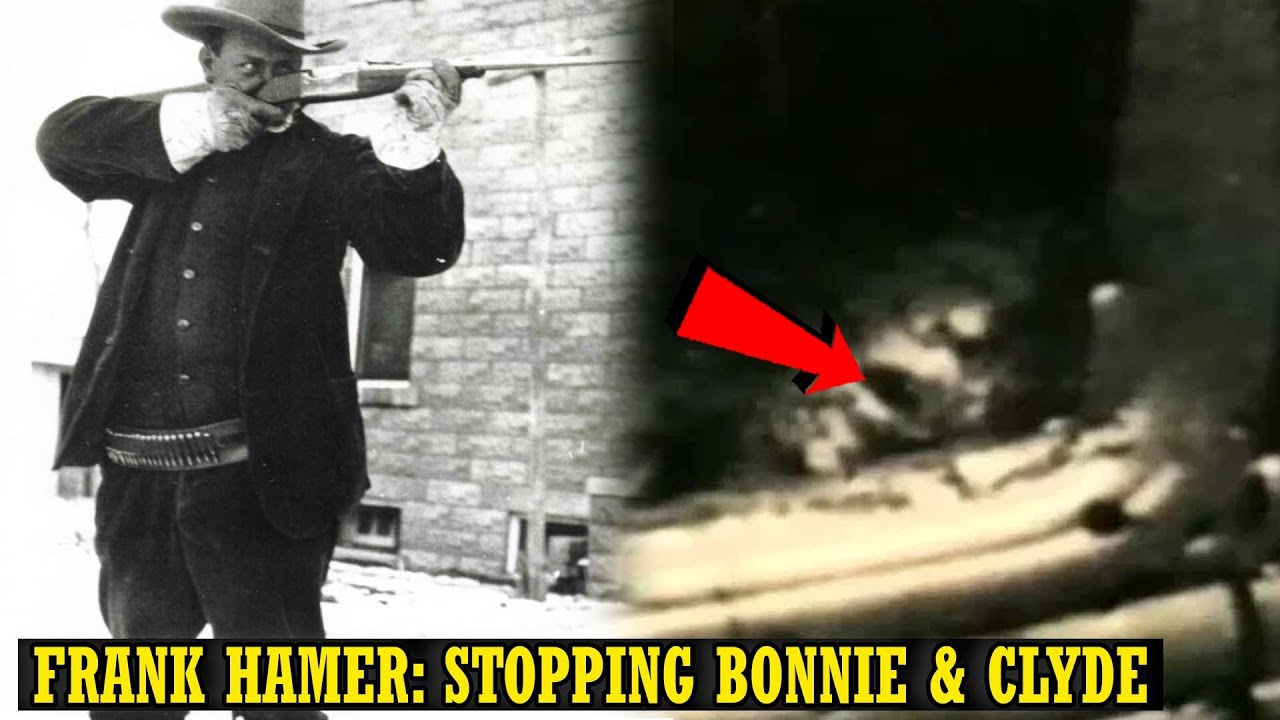
The relentless pursuit that ended the criminal reign of Bonnie Parker and Clyde Barrow was not the work of a glory-seeking gunslinger, but the culmination of a meticulous, decades-long career of a man who embodied the quiet, unyielding resolve of the Texas frontier. Captain Frank Hamer, a living legend among lawmen, transformed a manhunt that had humiliated multiple state agencies into a masterclass in strategic investigation, culminating in a deadly ambush that would forever etch his name into the annals of American history. His story is one of grit, principle, and the unglamorous, often brutal, work of enforcing the law in an era when the line between civilization and chaos was razor-thin.
Born Francis Augustus Hamer on March 17, 1884, in Fairview, Texas, his formative years were spent on the unforgiving frontier of San Saba County. The son of Franklin and Lou Emma Hamer, he was one of six children raised on the Welch ranch, where survival depended on self-reliance and a deep understanding of the land. By 1894, the family had relocated to Oxford, Texas, where young Frank assisted his father in a blacksmith shop and worked as a calf wrangler.
 These early experiences, steeped in the lore of the Texas Rangers and the realities of frontier life, forged the character of a man who would one day become the most feared and respected peace officer of his generation.
Even in his teenage years, Hamer’s proficiency with firearms was a matter of local note. In 1900, a confrontation with rancher Dan McWain nearly cost him his life, leaving him with wounds that carried fragments for the rest of his days. The incident began as a dispute, with McWain offering the young Hamer money to handle a personal grievance.
When Hamer refused, McWain later ambushed him in a field, shooting him despite his brother Harrison’s warning. The attack left Hamer seriously injured, but his survival and subsequent confrontation with McWain on June 12th of that year signaled the emergence of a man who could not be intimidated, a man who would not be defeated.
In 1905, while working as a cowboy on the Carr ranch, Hamer volunteered to assist Sheriff Dud Barker in capturing a horse thief. The success of that mission was so impressive that the sheriff recommended him for a position with the Texas Rangers, praising his exceptional qualities. On April 21, 1906, at just 22 years old, Hamer officially joined the storied ranks of the Texas Rangers, assigned to Captain John H.
Rogers’ Company C in Alpine. His initial patrols along the southern border were the beginning of a career that would see him become a symbol of frontier justice, a man who combined raw courage with strategic thinking in a way that was rare even among his esteemed peers.
The years that followed saw Hamer move through a variety of law enforcement roles, each one refining his skills. He served as city marshal of Navasota, an oil boom town notorious for disorder, where his strong leadership brought a semblance of stability. He worked as a special investigator for the Harris County Sheriff’s Office and as a deputy sheriff in Kimble County, specializing in livestock theft.
In 1915, he returned to the Rangers, this time patrolling the volatile Rio Grande border during the Bandit War, a period marked by widespread unrest and ethnic tensions fueled by the Mexican Revolution. From Big Bend to Brownsville, Hamer confronted smugglers, outlaws, and the constant threat of violence, solidifying his reputation as a man who thrived in the most dangerous environments.
His personal life was as eventful as his professional one. On May 12, 1917, he married Gladys Johnson Sims, a widow with two daughters, and the couple would later have two sons, Frank Jr. and Billy.
That same year, a confrontation with Gus McManus, a former ranger and relative of his wife’s late husband, resulted in McManus’s death. The incident, which occurred while the family was traveling, highlighted the volatile nature of the world Hamer inhabited. Following this, he briefly served as a federal agent with the Prohibition Unit in El Paso, a hotbed of organized crime, but the dangers of federal work, including the loss of a fellow agent, led him to step down after about a year.
In 1921, Hamer returned to the Texas Rangers for a final, defining stint, stationed at headquarters in Austin. Promoted to senior ranger captain on January 1, 1922, he found himself at the forefront of law enforcement during one of the most turbulent eras in Texas history. The state was experiencing an oil boom, with towns like Breckenridge, Ranger, and Borger springing up overnight, bringing with them dramatic surges in population, lawlessness, and economic chaos.
 The challenges were so overwhelming that the state government occasionally had to declare martial law and deploy the National Guard. Amidst this chaos, Hamer also took a firm stand against racial violence, personally intervening to prevent at least 15 attempted lynchings throughout his career, saving the lives of individuals who otherwise would not have received a fair trial.
In 1928, Hamer turned his attention to a different kind of injustice, a controversial policy by the Texas Bankers Association that offered a $5,000 reward for killing a bank robber but nothing for apprehending one alive. This dangerous incentive led to false accusations and staged incidents where innocent people were wrongfully targeted so that corrupt officials could collect the reward. Hamer investigated the situation and authored a detailed exposé calling the practice the “banker’s murder machine,” distributing his findings to journalists in the state capital press room.
The ensuing public outrage triggered legislative investigations and formal indictments, though many law enforcement agencies refused to support him, and the bankers association defended its policy. The tragic incidents continued into 1930, the same year Hamer and a small group of rangers were tasked with protecting the trial of George Hughes, an African-American man accused of assault in Sherman, Texas. A large mob formed, and the confrontation escalated beyond the rangers’ ability to control it.
The courthouse was set ablaze, and the accused, held inside a secure area, was killed amid the chaos. The Sherman riot of 1930 became one of the darkest chapters in Texas history, underscoring the deep racial tensions of the era and the immense challenges law enforcement faced in upholding justice under such volatile conditions.
By 1932, after nearly 27 years of service, Frank Hamer decided to step away from the Texas Rangers, just one week before Miriam “Ma” Ferguson was elected governor for a second term. Ferguson’s relationship with the Rangers had always been hostile, and her return to office led to a dramatic shakeup. More than 40 Rangers resigned in protest rather than serve under her leadership, and those who stayed were dismissed.
The entire force was effectively dismantled and reorganized. Despite his retirement, Hamer’s reputation was so highly regarded that he was allowed to keep a special Ranger commission in the honorary title of Senior Ranger Captain, though he chose not to rejoin the organization, preferring to work independently.
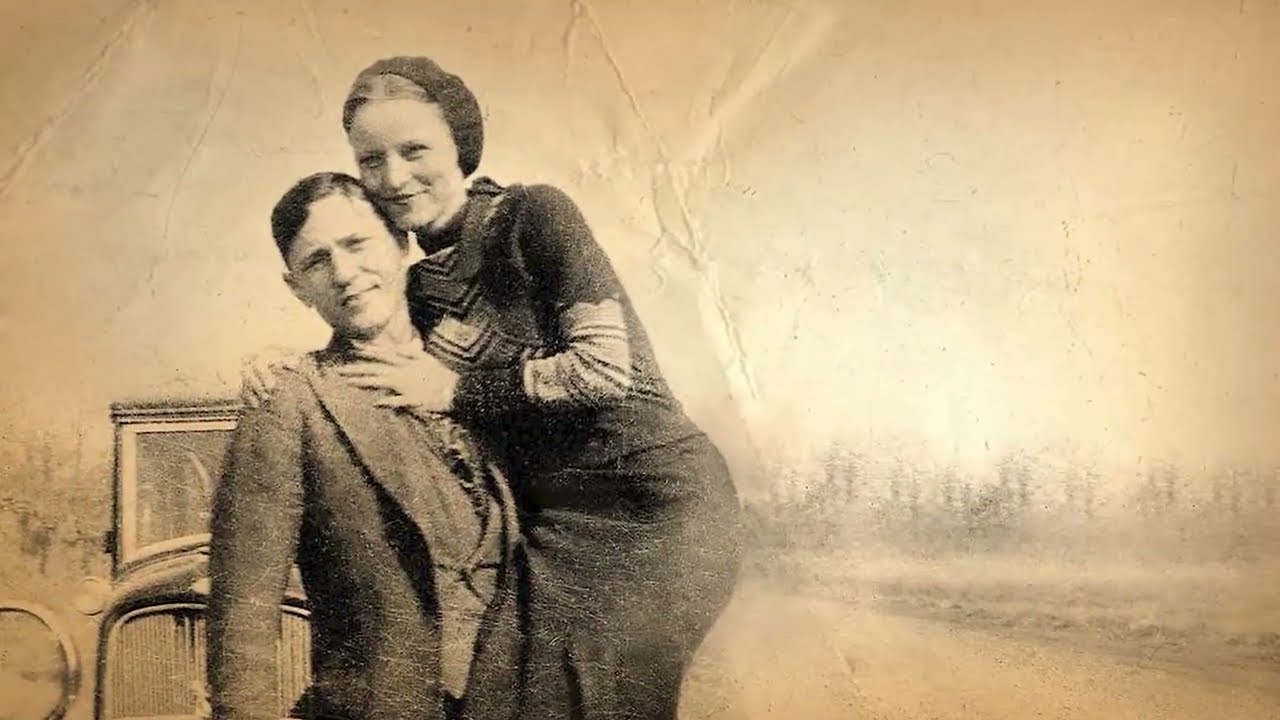
Retirement, however, would not last long. In 1934, Hamer was recruited as a special investigator for the Texas prison system, tasked with addressing one of the most serious criminal challenges of the era: the capture of Bonnie Parker and Clyde Barrow. The infamous couple had become national figures, leading a crime spree that spanned Texas, Louisiana, Arkansas, and Oklahoma.
Their activities, which included numerous robberies, jailbreaks, and deadly confrontations, deeply embarrassed law enforcement agencies across multiple states. They consistently evaded capture, exposing the weaknesses of local police forces and undermining public confidence in government institutions. The involvement of the Texas prison system in the pursuit intensified after a daring prison break orchestrated by the Barrow Gang on January 16, 1934, at the Eastham Prison Farm.
The gang successfully liberated inmates Raymond Hamilton, Henry Methvin, Hilton Bybee, and Joe Palmer. During the escape, several guards were injured and Major Joe Crowson, a respected prison officer, lost his life. The incident shocked the public and further tarnished the already struggling image of the state’s correctional system.
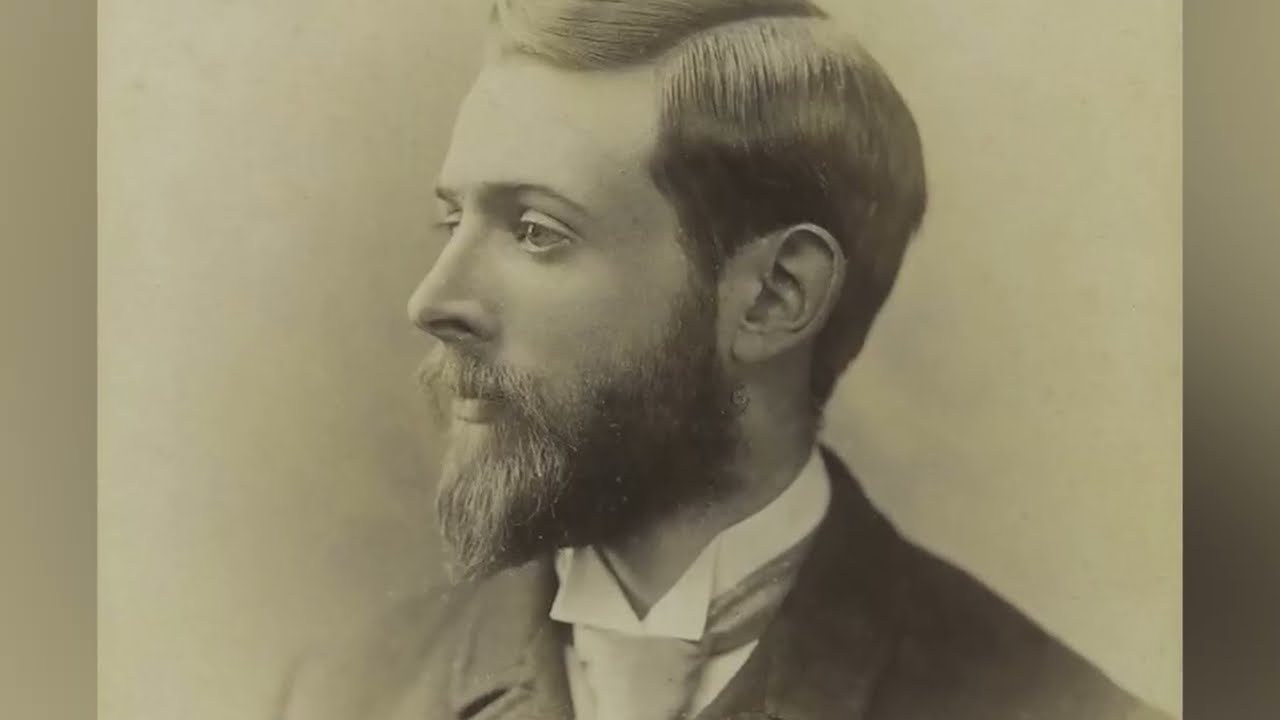 Determined to restore public confidence, Lee Simmons, the head of the prison system, made a pivotal decision. He personally recruited Frank Hamer to lead the manhunt. Simmons trusted Hamer’s reputation as a meticulous strategist and a relentless investigator, giving him full autonomy and famously telling him he would not dictate how to carry out the mission, only that it needed to end the Barrow Gang’s criminal rampage once and for all.
Hamer officially began his pursuit on February 1, 1934, and soon partnered with Manny Gault, a retired Texas Ranger and trusted friend. The two formed a formidable investigative team, combining decades of frontier law enforcement experience with an intimate understanding of criminal behavior. Rather than rushing the chase, Hamer adopted a methodical approach.
He began by studying the gang’s travel patterns, collecting intelligence from multiple states, and analyzing eyewitness reports. Through careful observation, he deduced that Clyde Barrow and his companions were following a predictable circular route, moving between Dallas, Texas, Joplin, Missouri, and Northwest Louisiana, deliberately staying near state borders to exploit jurisdictional boundaries and slow down law enforcement efforts.
Hamer also came to a critical realization: Clyde Barrow had no intention of surrendering. His previous actions and statements indicated that he and Bonnie would resist capture under any circumstances. This understanding shaped the overall strategy of the pursuit.
Hamer knew that bringing the pair to justice would require patience, precision, and careful coordination with law enforcement agencies across multiple jurisdictions. By early spring of 1934, Hamer and Gault had pieced together a comprehensive picture of the Barrow Gang’s movements, evolving what began as a reactive chase into a strategic operation. Over the following months, Bonnie, Clyde, and their close associate Henry Methvin continued their cross-country crime spree, targeting banks across several states.
Their robberies stretched from Lancaster, Texas, to Pawhuska, Oklahoma, and as far north as Rembrandt, Nira, Stewart, and Everly in Iowa. Wherever they went, Hamer and his growing network of law enforcement allies followed, often arriving just hours or days behind them.
Despite their skill at evasion, the gang’s actions were becoming increasingly reckless, and public opinion was shifting dramatically. On April 1, 1934, a confrontation near Grapevine, Texas, resulted in the deaths of two Texas Highway Patrol officers. The incident shocked the nation and transformed Parker and Barrow’s public image, where some had once seen them as rebellious folk heroes.
Many now viewed them as dangerous fugitives who posed a direct threat to civil order. The situation escalated further just five days later when Constable Calvin Campbell, a respected 60-year-old single father, was killed near Commerce, Oklahoma. This tragedy struck a deep chord with the public and significantly intensified pressure on state and federal authorities to end the Barrow Gang’s activities.
Newspapers across the country printed sensational headlines about their crimes, fueling outrage and demands for swift justice.
 Meanwhile, Hamer’s investigation, now spanning multiple states, was closing in. Months of patient surveillance, intelligence gathering, and coordination between Texas and Louisiana law enforcement agencies culminated on May 23, 1934. Acting on precise information about the gang’s movements, Hamer and a carefully assembled posse prepared an operation on a rural road near Gibsland, Louisiana.
When the gang’s vehicle finally appeared, the trap was sprung, bringing an end to one of the most dramatic manhunts in American criminal history. The sudden and overwhelming response ensured that Parker and Barrow would never again escape justice. Local witnesses later reported that the sound of the operation was so intense that people miles away believed a logging crew had set off dynamite to bring down large trees, a testament to the scale of the law enforcement response.
The deaths of Bonnie and Clyde dominated front pages nationwide. For many Americans, the events symbolized the end of a violent chapter in the nation’s struggle with Depression-era crime.
Hamer was widely praised for his persistence, tactical brilliance, and unwavering commitment to public safety, even receiving a special citation from Congress in recognition of his service. Yet despite the accolades, Frank Hamer remained characteristically humble. He declined interviews, refused to participate in publicity events, including a “Hamer Hero Day” organized in Austin, and quietly returned to private life.
For him, the mission had never been about fame or recognition; it was about restoring a sense of safety and order to a public that had long lived in fear of two of America’s most notorious outlaws. In the later years of his career, Hamer continued to apply his experience in maintaining order and public safety. He worked as a security adviser for several oil companies and shipping firms, where his responsibilities included preventing labor disputes from escalating and ensuring that large gatherings remained peaceful during times of social tension.
In 1948, Texas Governor Coke Stevenson once again called upon Hamer’s expertise, asking him to temporarily return to Ranger service. His mission was to assist in reviewing election returns in Jim Wells and Duval counties during a highly contested U. S.
Senate race, a critical election that would later shape the state’s political future. After completing this assignment, Hamer retired permanently in 1949 and settled in Austin, Texas, where he lived a quieter life with his family. In 1953, he suffered a serious heat stroke, and although he survived for two more years, his health never fully recovered.
He passed away on July 10, 1955, at the age of 71 and was laid to rest in Memorial Park Cemetery in Austin, close to his son, Billy. Over the course of his long career, Hamer was involved in more than 50 armed confrontations, enduring 17 injuries and surviving situations where many believed he would not make it. Historical records credit him with resolving numerous life-threatening encounters, and estimates suggest he may have neutralized between 53 and 70 dangerous individuals in the line of duty.
For his decades of service and lasting contributions to public safety, Frank Hamer was honored with induction into the Texas Ranger Hall of Fame, cementing his legacy as one of the most respected and influential lawmen in American history.
Frank Hamer’s story is more than just the tale of the man who brought down Bonnie and Clyde. It is the story of a relentless lawman whose career bridged the rough-and-tumble days of the Old West and the modern era of American law enforcement. From dusty Texas ranches to headline-making manhunts, Hamer never sought glory or fame, only justice.
And though history often remembers the outlaws, it is men like Hamer who shaped the world they lived and died in. His life stands as a testament to the power of quiet determination, strategic thinking, and an unwavering commitment to the rule of law, a legacy that continues to inspire and define the very essence of the American peace officer.