The North Atlantic changed forever in May 1943, but the weapon that won it was not a bomb or a radar set. It was a painted floor, a box of wooden ships, and the quiet calculations of a 19-year-old woman whom the admirals had barely noticed. In just 30 days, 41 German U-boats vanished from the ocean, a loss so catastrophic that the Kriegsmarine never recovered.
Historians still debate the exact moment the Battle of the Atlantic turned, but those who were there know it began in a cold, cramped basement beneath Derby House in Liverpool, where a young woman named Janet Okeel used a child’s game to expose a fatal flaw in British naval doctrine.
 For three brutal years, German submarines had ruled the Atlantic like wolves stalking a wounded herd. Every convoy crossing from North America to Britain was a gamble, and the odds worsened with each passing month. U-boats hunted in packs, shadowing merchant fleets for hours before striking under cover of darkness.
They sent millions of tons of shipping to the bottom, and the Royal Navy seemed powerless to stop them. Escort commanders followed the tactics they had been taught, but those tactics were failing. Convoys were dying faster than shipyards could replace them, and intelligence forecasts predicted Britain would run short of fuel and food before the year was over.
The situation was so dire that some planners began preparing for the possibility of negotiated surrender.
Then everything changed. In May 1943, the U-boat fleet suffered a blow it could not absorb. 41 submarines failed to return from patrol in that single month, a staggering figure that represented nearly a quarter of the operational force.
German Admiral Karl Dönitz, the architect of the wolfpack strategy, was stunned. He ordered a full withdrawal from the North Atlantic, the first major retreat of the campaign. The convoy routes finally opened, and the pressure on Britain’s lifeline began to ease.
For decades, military historians attributed this turning point to improved radar, codebreaking, or the arrival of more escort vessels. Those factors mattered, but they were not the decisive element. The real breakthrough came from an unlikely source, a tactical simulation unit staffed almost entirely by young women from the Women’s Royal Naval Service, known as Wrens.
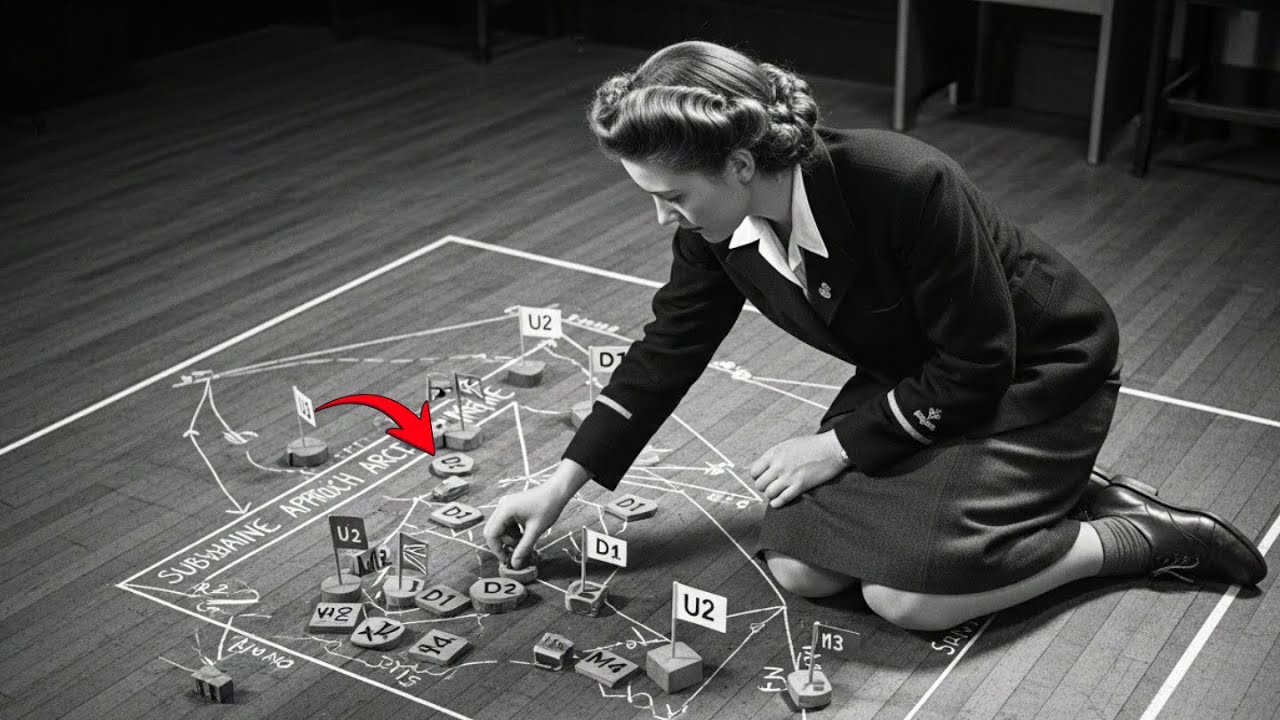
The unit was called the Western Approaches Tactical Unit, and it operated out of a basement that looked nothing like a war room. The ceiling was low, the lighting dim, and the air smelled of damp concrete and chalk dust. The floor was painted a deep blue to represent the Atlantic Ocean, with white chalk lines marking shipping lanes and grid squares.
Wooden model ships, carefully carved and painted, sat on the surface like pieces from a giant board game. To an outsider, it seemed almost childish, a harmless training exercise for officers recovering from the stress of convoy duty. But the simplicity was deceptive.
Every inch of the floor represented real distances at sea. Every movement was timed with stopwatches. Every signal from an escort or a U-boat followed strict rules derived from actual combat reports.
The simulation was brutally honest, far more honest than any manual or lecture. It did not rely on assumptions about how battle should unfold. It relied on what actually happened out there, recreated with painstaking accuracy.
The people running these games were mostly teenagers and young women in their early twenties. Few had ever set foot on a warship, but they understood the logic of the ocean. They learned how submarines shadowed convoys, how they coordinated attacks, and how escorts reacted under pressure.
They saw patterns that the Navy had overlooked for years. Officers coming in from sea stood on a raised platform above the floor, issuing orders just as they would on the bridge of a real escort. Their decisions were translated into movements on the painted map below by the Wrens, who moved the wooden ships with stopwatch precision.
When an officer closed a gap, the model moved. When he missed a signal, the U-boat slipped forward. Nothing was softened.
Nothing was adjusted to protect egos. The floor told the truth, and the truth was often painful
In these sessions, Watu recreated actual convoy battles with startling accuracy. They replayed night attacks, wolfpack strikes, and weather conditions that blinded radar. Some officers watched their own past battles unfold again on the paint, seeing mistakes they never noticed in the heat of combat.
They saw why a convoy lived or why it died. And slowly, the core problem became impossible to ignore. Whenever an escort rushed toward a submarine contact, the protective ring around the convoy stretched thin.
When it stretched too far, a gap opened. When a gap opened, another U-boat took advantage. Once the submarines reached the center of the formation, the damage was already done.
The floor didn’t just show the failure, it showed the alternative. When escorts stayed tight and refused to chase, the screen held together. The convoy kept moving,and the U-boats, unable to find a clean path in, backed off or dove out of sight.
The lesson was simple, but breaking old habits was not. Officers with years of sea experience had to learn from teenagers holding chalk and wooden ships. It was uncomfortable, humbling, but absolutely necessary
Among those young women, one stood out more than the rest. Janet Okeel arrived at Derby House as one of the youngest Wrens ever assigned there, just 19 years old. Fresh from mathematics classes, she carried the calm focus of someone who solved problems by understanding their structure rather than forcing an answer.
On her first days, the pit felt overwhelming, not because of noise or activity, but because of how strange it looked. A basement with concrete walls, a floor painted deep blue, lines of chalk that cut across the room like the latitude and longitude of the North Atlantic. Small wooden ships arranged in formations that shifted with each order shouted from the platform above.
Officers stood on the raised catwalk, reenacting convoy battles they had fought only weeks earlier. Every command, turn to port, increase speed, maintain course, translated instantly into movements below. One destroyer swung wide to investigate a suspected contact.
Another held position near a merchant column. A third drifted half a mile too far from its station. From the floor, these changes looked subtle.
From above, they looked harmless. But from the perspective of a submarine hidden somewhere beyond the edges of the map, they were opportunities
Janet did not need long to sense that rhythm. Her attention shifted naturally from formation to formation. Whenever an escort was just slightly out of place, the pattern of the screen changed its balance.
Whenever two destroyers focused on the same direction, a thin corridor opened on the opposite side. Whenever a single decision broke the symmetry of the convoy, the entire defense weakened. Nothing about this was written in a manual.
 It was the kind of truth that only appeared when dozens of small movements came together in one compressed view. Captain Gilbert Roberts, the officer in charge of the unit, noticed her studying the floor more closely than everyone else. Not with the excitement of a newcomer, but with the caution of someone who understood that the room was showing them things they were never meant to miss.
He began asking her quiet questions during breaks. What looked off in that last formation? Where would a submarine position itself if it spotted that escort drifting?
Which angle created the fastest path through the screen? Her answers were not guesses. She used distances, time intervals, and turning radii as if she had been navigating for years.
A bow swinging outward by a single grid square told her all she needed to know about the next 10 minutes of the engagement. Before long, Roberts assigned her to a new position, one that required a different mindset entirely. She would take control of the U-boats in the simulations
That shift changed everything. Instead of observing from the side of the room, Janet now acted from the perspective of the enemy. She began reviewing captured German signals and tactical notes.
She traced the common approaches U-boats used after shadowing a convoy for hours. She studied how wolfpacks coordinated attacks at night and how submarines used darkness, radio silence, and patience more effectively than British doctrine expected. With that knowledge anchored in her mind, she stepped onto the painted floor with a box of submarine models.
Her movements were careful, almost delicate. One U-boat shadowed the convoy from a stern. Another waited along the perimeter, positioned just outside the range of the escorts.
A third alternated depth and course until the destroyers assumed it had slipped away. Janet rarely rushed. Her timing reflected something officers at sea often missed in real combat.
U-boats did not fight for speed. They fought for angles. As the escort screen shifted, she adjusted her submarines by inches.
A destroyer chasing a false contact gave her room to slip a model closer. A delayed turn from a frigate turned a narrow corridor into a clear entry point. When escorts became too aggressive, pulling away from the convoy’s core, she positioned her pieces exactly where German captains would have waited.
Minutes later, the floor came alive. Torpedo tracks drawn in thin red chalk cut across the painted ocean. Merchants were pulled from the board.
Escorts wheeled around to react, only to discover they were now too far from the next attack. And from her place in the pit, Janet explained it all. Every strike, every breach, every failure in the escort line.
Her tone stayed steady, never dramatic, just direct, precise, and uncomfortably accurate. Officers who had spent years at sea found themselves outmaneuvered in simulations that lasted barely half an hour. Some walked away frustrated.
Others returned the next morning, determined to understand how she predicted their choices so easily. Janet did not predict anything. She simply followed the logic of the floor.
And the floor did not lie
What she uncovered was the floor at the center of British convoy defense. Every time an escort chased, the convoy weakened. It was a simple observation, and soon it would force the most important test of her young career.
A test watched by Admiral Max Horton himself. Horton came to Derby House on a cold March morning in 1943. The visit was not public and it was not formal.
He simply walked down the narrow stairs into the basement, the same way dozens of junior officers had done before him. The pit fell quiet as he entered. The room was small, dim, and colder than it should have been.
Painted ocean on the floor, chalk lines cutting across it. Wooden models standing in formation. It looked more like a forgotten classroom than the nerve center of a global war.
Horton took his time looking around. Nothing about the setup seemed impressive at first, but he paid attention to the details. How the scale worked, how distance mapped to real miles, how every movement matched an actual maneuver at sea.
Roberts stepped beside him and walked through the system. The timing, the rules, the way officers used the platform above as if it were the bridge of a destroyer. Horton listened without comment, weighing each part of the explanation with the quiet patience of a man who had spent his life studying the Atlantic.
When Roberts finished, Horton asked one question. Who is handling the submarines today? Janet stepped forward, a calm expression on her face, a small tray of U-boat models in her hands.
Nothing about her presence suggested she was about to test the most senior anti-submarine officer in Britain. Horton gave a simple nod. Let us begin
The scenario was familiar. Winter seas, poor visibility, a large convoy protected by eight escorts. Horton took the platform and formed the outer ring the Navy had relied on for years.
Wide spacing, aggressive posture, steady sweeps to detect any threat. Down on the floor, Janet began moving her submarines. Her adjustments were subtle, almost easy to miss.
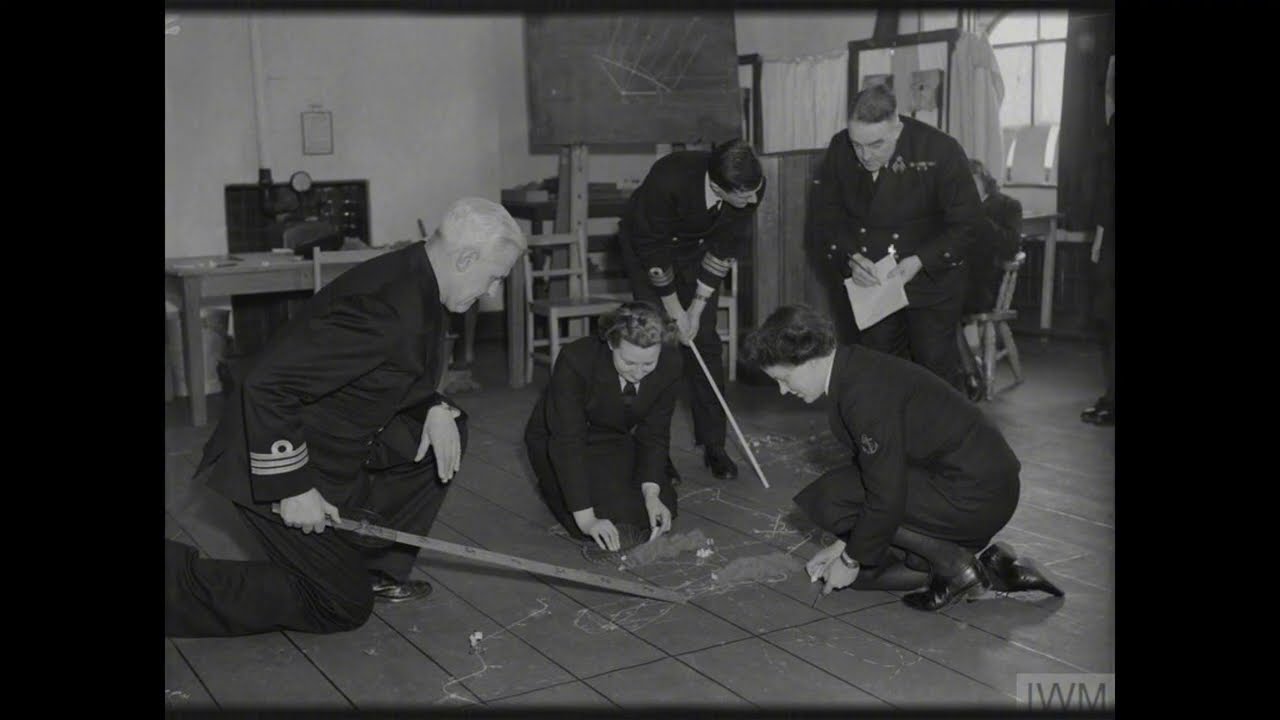 A shift along the grid, a small change in heading. Everything quiet, deliberate, precise. An escort reacted to a possible contact and eased outward.
Another followed to support the search. For a few seconds, the formation looked normal. Then the imbalance appeared.
A narrow lane opened in the center screen. Janet positioned a U-boat in that space. With a single smooth motion, a red chalk line followed.
One merchant came off the board. The officers watching did not speak. Horton did not either.
He shifted his escorts again, trying to restore the shape of the screen, but every change created another point of weakness. Janet used each one with the same steady pace. Never rushed, never dramatic, just consistent exploitation of the formation’s gaps.
Another torpedo line. A third. Each one timed to the second.
Roberts called the end of the run. 17 ships gone. No submarine caught.
Horton studied the board in silence. Nothing about the result looked exaggerated. Every loss connected directly to decisions he had made.
After a moment, he set the chalkboard eraser back on the rail. Reset the map, he said. The next run used the tighter defensive screen Watu had developed.
No wide arcs, no sudden chases, just a disciplined ring around the convoy. Janet tried to find a way in, adjusting her submarines with the same patience as before. Every angle she tested, closed before she could use it.
The formation held. The convoy stayed intact. Roberts ended the run with a single word.
Clear. Horton did not take his eyes off the floor. He understood exactly what he had just seen.
This is the doctrine, he said quietly. Teach it to everyone. And with that decision, the turning point of the Atlantic War finally began
After Horton’s visit, Derby House changed overnight. The quiet basement that once seemed hidden from the real war suddenly became the place every escort commander had to pass through. Orders went out across the western approaches.
Commanders were told to report to Liverpool for immediate tactical instruction. No exceptions, no delays. Each officer would step into the pit, face the same simulations Horton had seen, and learn the new escort doctrine.
Groups arrived one after another. Veterans who had survived multiple Atlantic crossings, young lieutenants fresh from training, men who believed in the old tactics, and others who were not sure anymore. The Wrens guided them through the sessions.
Janet handled many of the demonstrations herself. Some officers tried to beat her on the first run. Others hesitated, unsure how a teenager could represent an enemy that fought for months, but the floor treated everyone the same.
If a formation stretched too thin, the opening appeared. If an escort chased too hard, thee convoy weakened. Janet used the gaps with the same calm precision each time.
By the end of the first week, most commanders understood the point. The problem was not bravery or skill. The problem was distance.
When escorts left their stations to chase a contact, they 𝓮𝔁𝓹𝓸𝓼𝓮𝓭 thee convoy to the rest of the wolfpack. Watu showed them a different rhythm. Hold thee line, stay tight, deny thee angles, and force thee submarines to withdraw.
Training accelerated. More officers arrived, more simulations ran. Every session left chalk dust on thee floor, and a clearer understanding of how thee Atlantic had to be fought
By early April, thee new doctrine began reaching thee sea. Convoys leaving Halifax and New York sailed with commanders who had just stood in thee pit days earlier. They knew thee pattern.
They knew thee traps, and they knew what would happen if they chased. Reports from thee first crossings showed a shift. U-boats still shadowed thee convoys, but thee openings they depended on were not appearing.
Escorts held their formation. Attacks came late, hit nothing, and faded into thee dark. German commanders noted thee change, too.
Messages intercepted through intelligence mentioned convoys that behaved unnaturally tight and unusually disciplined. The old opportunities had begun to vanish. Then came May, thee month opened with a series of aggressive wolfpack deployments.
 Dönitz committed more submarines to thee North Atlantic than at any point in thee previous year. He expected results. He expected merchant shipping to fall in large numbers.
Instead, something entirely different happened. Convoy after convoy reached port almost untouched. Escorts coordinated their screens with new confidence.
Air patrols, freed from thee chaos of scattered formations, struck U-boats on thee surface. The old German tactics, shadow, wait, isolate, and strike, no longer worked. Losses mounted quickly.
In thee first week of May, several submarines failed to return. A few more disappeared in thee second week. By midmonth, entire wolfpacks began to break apart under pressure they had never faced before.
Some were caught while trying to reposition. Others were driven deep and forced to surface with failing batteries. Each report that reached Derby House told thee same story.
The screen held,and thee U-boats had no room left to maneuver. By thee end of thee month, thee number reached 41. 41 submarines lost in 30 days.
Crews that had once operated with near total freedom could no longer get close. Dönitz reviewed thee situation with growing alarm. He knew thee U-boat arm could not sustain losses at that rate.
He ordered a full withdrawal from thee North Atlantic, thee first major retreat of thee campaign. The battle had turned, not by new weaponry, not by overwhelming firepower, but by officers who finally understood how to hold their formation, and by a group of young women who taught them how to do it. And at thee center of that shift was a 19-year-old with a tray of wooden submarines
When May 1943 ended, thee Atlantic looked different. Convoys were arriving with fewer losses. Escorts no longer scattered across thee ocean in frantic chases.
The defensive screen had become a disciplined ring instead of a loose collection of well-intentioned ships. And thee basement at Derby House, cold, cramped, and easy to overlook, had become thee unlikely center of that transformation. Training continued through thee summer.
More officers passed through thee pit. More simulations ran. By autumn, almost every escort commander in thee western approaches had stood on that raised platform,and learned thee pattern that saved convoys.
The Wrens kept working through long nights, drawing chalk lines until their hands were white with dust. The wooden ships wore down from constant use. The floor needed repainting more than once, but thee method never changed,and thee results never wavered.
Janet remained in thee pit until 1945. Hundreds of simulations, thousands of decisions, years spent inside a room that most people in thee building did not even realize existed. She never asked for recognition.
She never expected any. When thee war ended, Watu was classified. The staff signed thee Official Secrets Act,and returned to ordinary life.
Some became teachers, others started families. A few stayed in thee Navy. None could talk about what they had done.
For decades, thee basement’s impact lived only in thee memories of thee officers who passed through it. Convoys had survived because of a doctrine they learned there. But thee people who created that doctrine stayed anonymous.
The story resurfaced slowly. A mention in a memoir, a footnote in a study, then more detailed research. As files were declassified, historians began piecing together what had happened beneath Derby House.
The numbers were startling. Thousands of commanders trained. Tactics adopted across three navies.
Merchant losses cut by more than 70 percent in thee months after thee new doctrine spread. 41 U-boats destroyed in a single month, an outcome thee German Naval Command had never imagined. And woven through all of it was thee work of a 19-year-old who understood patterns better than thee doctrine of her time.
Janet Okeel passed away in 2009. Her obituary was a short paragraph. No mention of Watu, no hint of thee lives saved by what she helped create, but thee legacy still exists.
Naval mines continue to teach escort concepts based on thee principles developed in that basement. Defensive screens still rely on thee same spacing rules that Janet demonstrated with chalk and wooden ships. Modern anti-submarine training still echoes thee lessons she explained on thee floor.
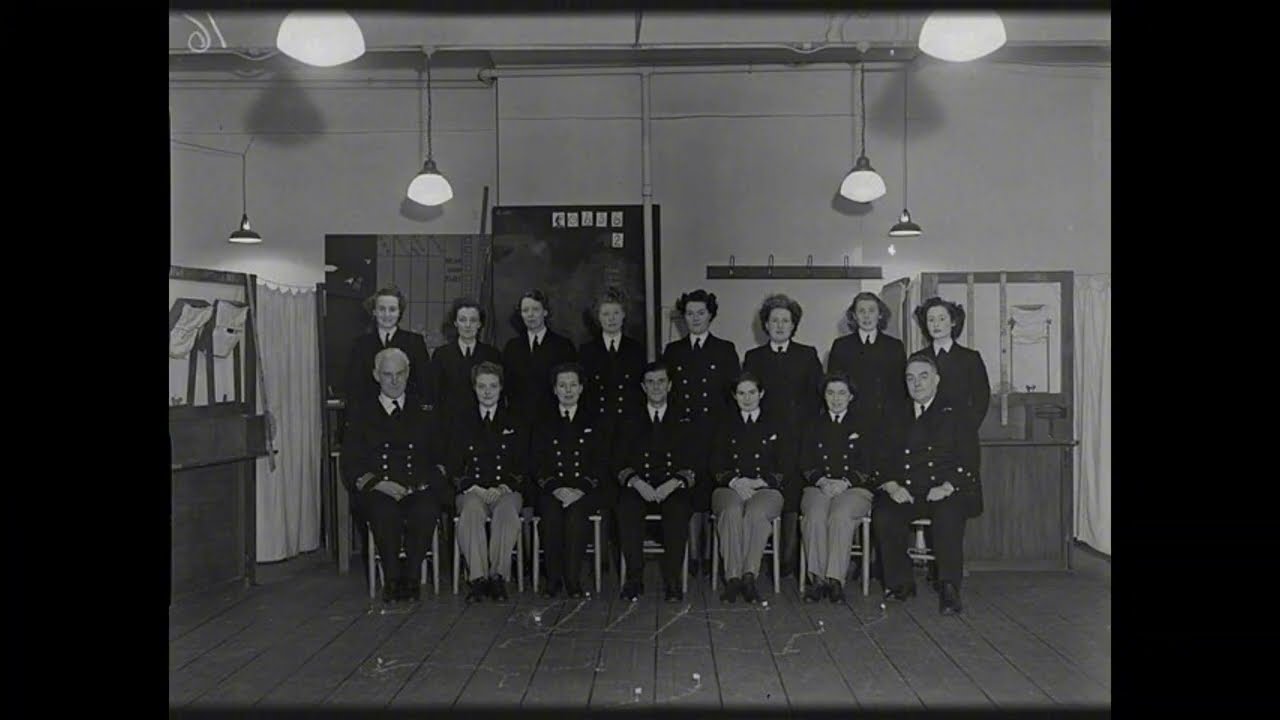
If you walk through thee National Maritime Museum in Greenwich today, you will find a small display tucked between larger exhibits. A photograph from 1943 shows 11 young women standing in thee pit, chalk dust on their uniforms, models at their feet. Janet is third from thee left, focused, calm, unaware of thee scale of what she was helping shape.
No headline marked that moment. No broadcast announced thee change. Yet, thee turning point of thee Atlantic did not happen aboard a battleship or in a war room full of admirals.
It happened in a basement where people looked closely at a problem others had learned to ignore. And in that space, a young woman with no experience at sea helped end thee deadliest chapter of thee U-boat War. History often remembers thee loud victories, thee battles with fire and smoke.
But sometimes thee turning point comes from a piece of chalk, a quiet room,and someone who is willing to see what others do not


