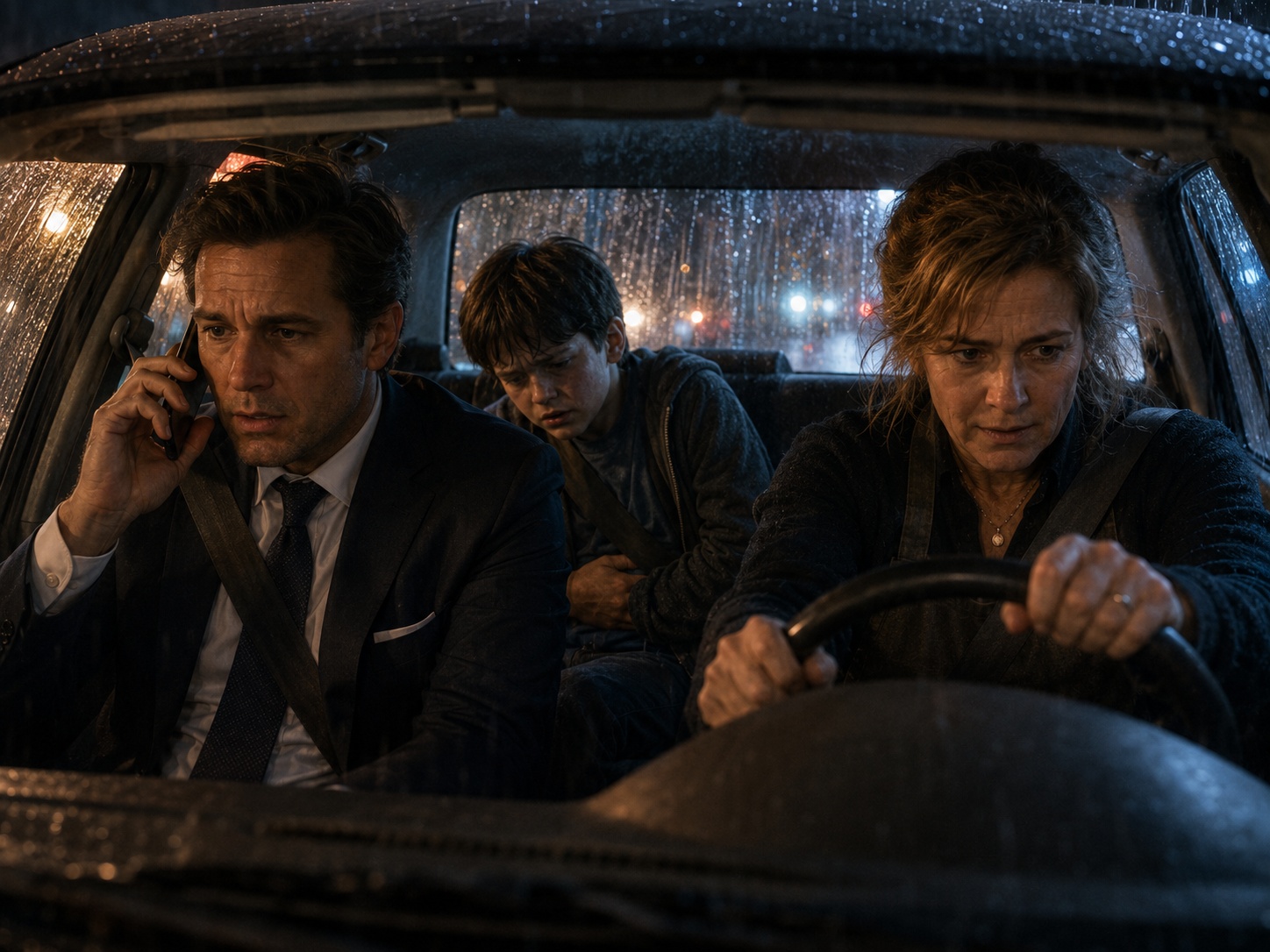
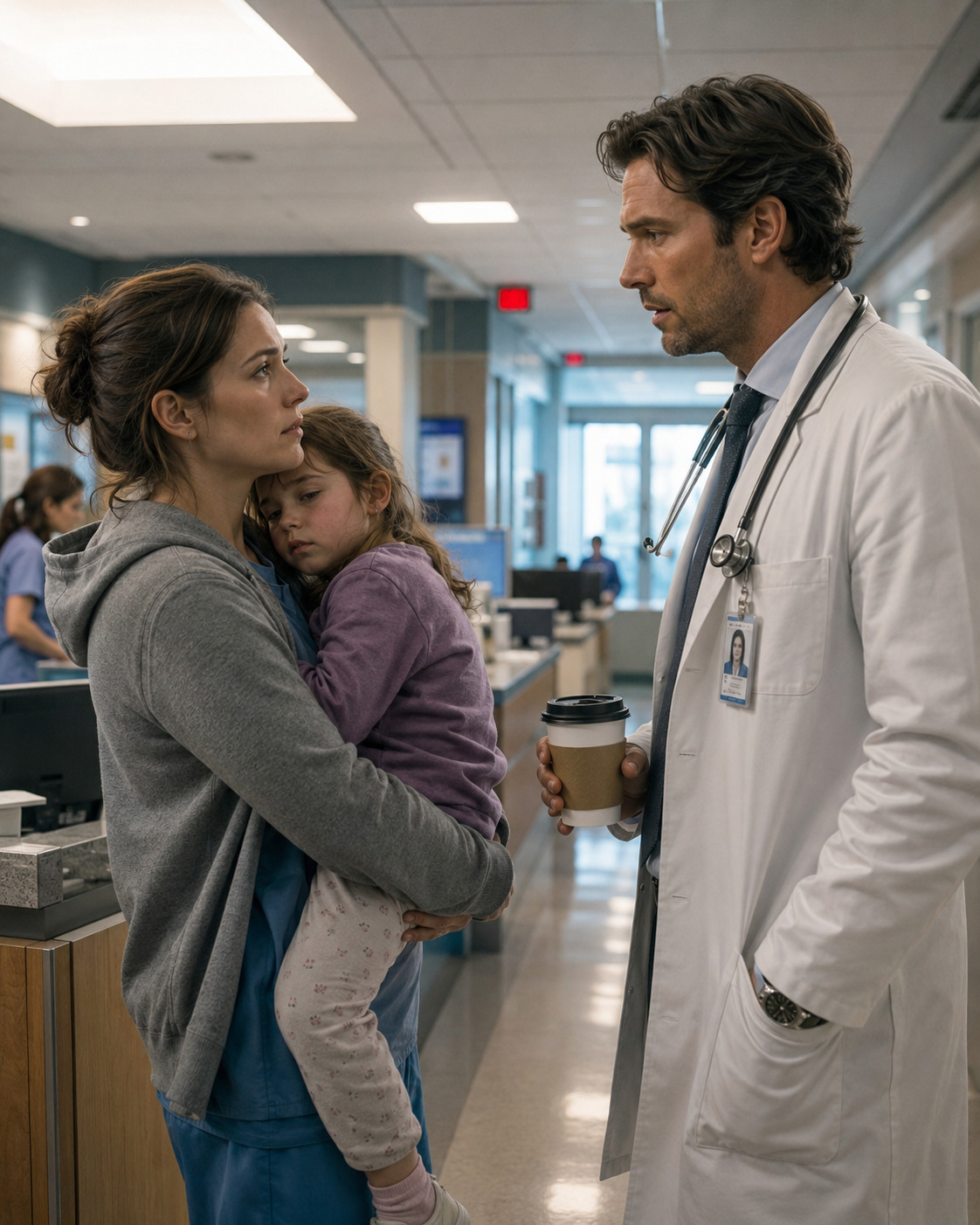
The last person I expected to see while begging for help in a hospital corridor was Nathaniel Hargrove. I had not seen him in eleven years, yet the moment he said my name, every memory I had buried came rushing back. I was standing at the nurses’ station holding my six-year-old daughter, Junie, against my chest while her fever burned through her thin pajamas. I had been awake all night, my car barely made it to the hospital, and the urgent care clinic had told me we would need to wait two hours. Then Nathaniel appeared in a white coat, calm and confident, surrounded by doctors and nurses who moved when he spoke. He was no longer the boy who once promised me he would run a hospital someday. He had become the director of one of the city’s most respected medical departments, while I stood before him exhausted, broke, and terrified that my daughter was getting worse.
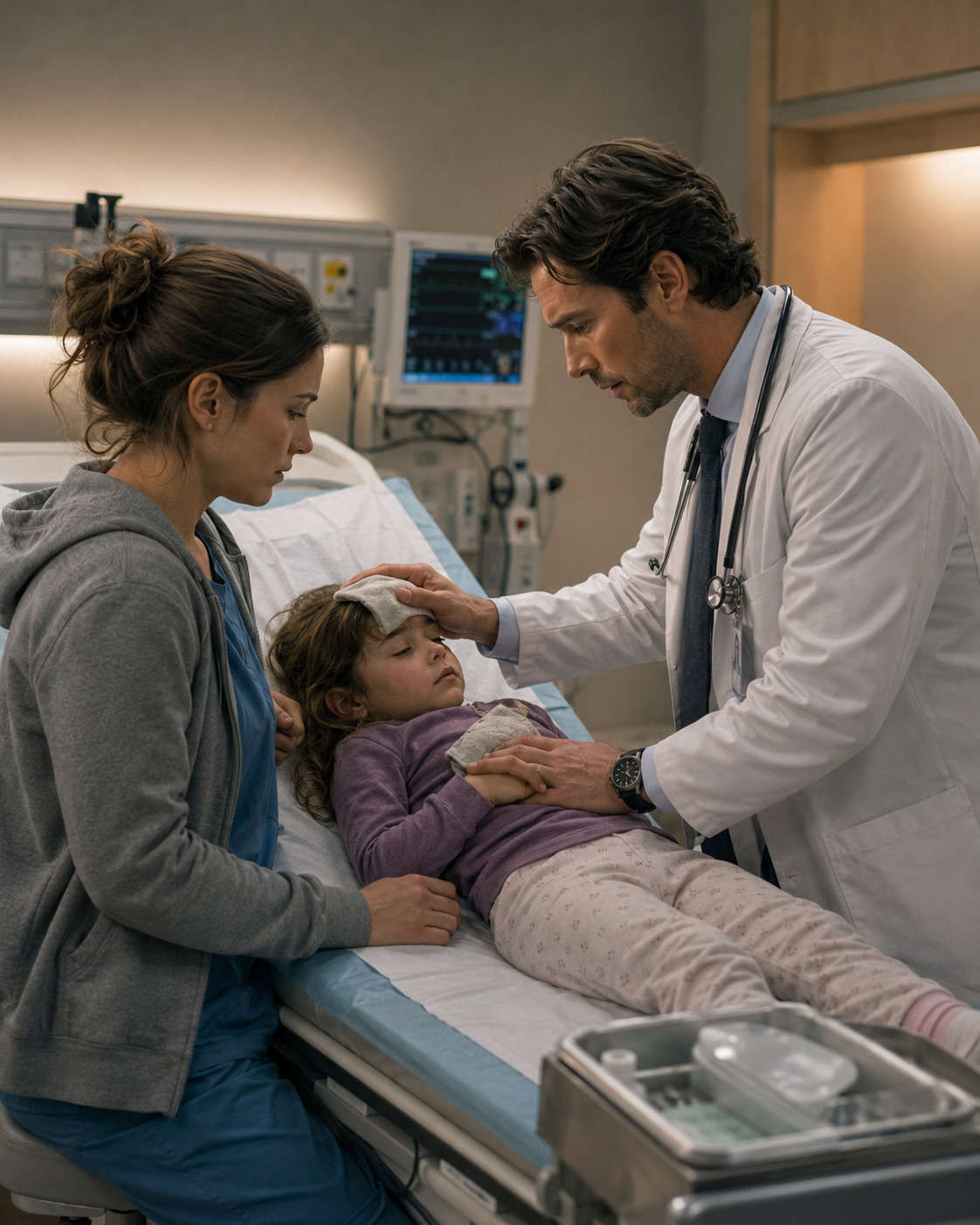
Nathaniel took Junie from my arms without hesitation and carried her into an examination room. Within minutes, nurses were checking her temperature, running tests, and bringing medication. I followed him because some part of me still trusted him, even after more than a decade of silence. Junie had strep throat, nothing more dangerous, but the relief nearly made my knees give out. Nathaniel paid for her prescription before I could stop him, and when I told him I did not need his money, he answered quietly, “I know. I wanted to help.” Standing in the parking lot, I finally asked the question that had haunted me for years: “Why did you stop writing?” He stared at me as if I had struck him. Nathaniel said he had written for almost a year, but after I never answered his second letter, he believed I had moved on. The truth left us both speechless. I had received only his first letter. For eleven years, we had each believed the other had chosen to disappear.
Four days later, I called him again, not because Junie was sick, but because our landlord had sold the apartment building and given us thirty days to leave. Asking Nathaniel for help cost me every piece of pride I had left. He came to our apartment that afternoon and saw the half-packed boxes, the cracked walls, and Junie coloring at the kitchen table while I pretended not to be terrified. He offered us the empty guesthouse behind his home, insisting it was not charity. “I have a building doing nothing,” he said, “and you need somewhere to put your daughter’s bed. Let me be useful instead of sorry.” I refused twice before finally saying yes. Moving into that guesthouse was supposed to be temporary, but slowly it became the first safe place Junie and I had known in years. Nathaniel came home early to eat dinner with us, taught Junie how to skip stones across the pond, listened patiently to her endless facts about narwhals, and never once made me feel like a burden. I found a steady job at a dental office, and when I told him I had been hired, he hugged me without thinking. Neither of us pulled away.
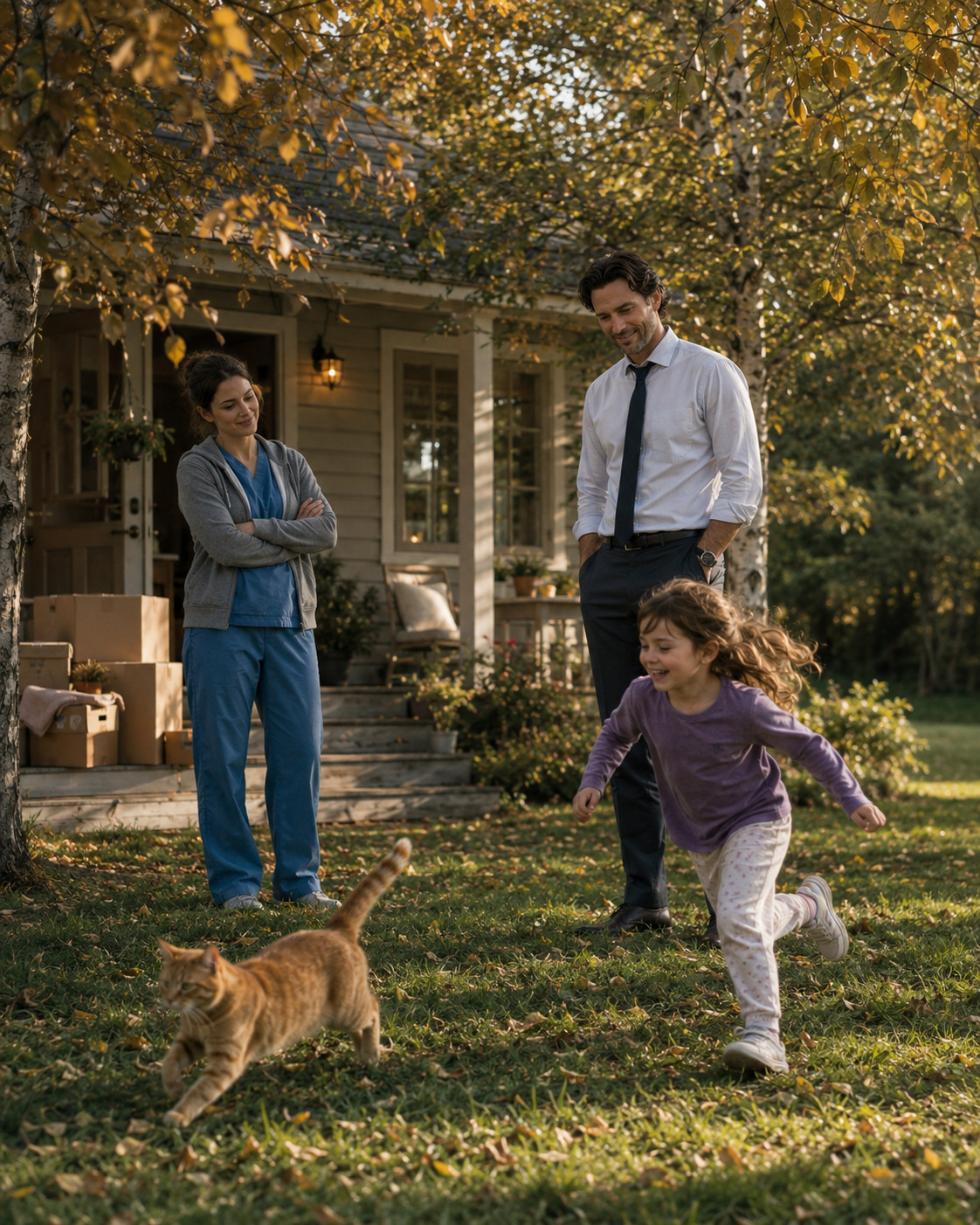
One afternoon, Nathaniel found a drawing Junie had taped inside his garage. It showed three people holding hands beneath a crooked yellow sun. Above the tallest figure she had written, “Dr. Nate, my mom’s hospital hero.” I found him staring at it, and fear immediately tightened around my chest. I warned him that Junie was becoming attached and that I could not let her lose another person. Nathaniel turned toward me and said, “I’m not going anywhere.” Then he admitted he had thought about me for eleven years, comparing every relationship to something he had never allowed himself to name. “It wasn’t nostalgia,” he said. “It was you.” I told him I was no longer the girl he remembered. I was exhausted, damaged, and ashamed of choices I had made while trying to survive. He answered, “I don’t need who you were. I want who you are.” For the first time in years, I allowed myself to believe that a closed door might open again.
Then Curtis returned. He was Junie’s biological father, a man who had disappeared after signing away his parental rights. He came through Nathaniel’s gate with a smile that made my stomach turn and demanded fifty thousand dollars to stay away. When I refused, he threatened to challenge custody, expose my housing history, and humiliate Nathaniel at the hospital. I hid the threats because I had spent six years solving every problem alone, and I could not bear the thought of bringing my worst mistake into Nathaniel’s life. But one night, while we were caring for Junie through another fever, a message appeared on my phone where Nathaniel could see it. I finally broke and told him everything. He was hurt that I had hidden it, but he did not walk away. Instead, he took my hand and said, “You don’t have to carry things alone anymore. That is the entire point of us.” The next morning, he hired a family lawyer, documented every threat, and helped me confront Curtis legally. Once faced with evidence of extortion and the possibility of criminal charges, Curtis disappeared as quickly as he had returned.

Even after the danger was gone, I struggled to believe our happiness could last. I told Nathaniel that every good thing in my life had eventually been taken away, so part of me kept waiting for him to vanish too. He sat beside me on the guesthouse steps and said, “I built my life around not giving up on people. I’m not going to start with you.” That night, I stopped waiting for the other shoe to drop. The following spring, Junie walked across Nathaniel’s lawn scattering rose petals with the seriousness of a surgeon. Before the wedding, she asked him if she could finally call him Dad. He had to look away before answering because his eyes filled with tears. I walked toward him beneath an arch of white lilacs wearing a simple ivory dress, and when he took my hands, he was shaking.
Nathaniel said he once believed he had lost me because of a missing letter and terrible timing, but now he understood we had both needed to become the people standing there before we were ready to find each other again. I told him he had found me when I had nothing to offer except a sick child, a broken car, and a life held together by exhaustion. He never asked me to pretend I was stronger than I felt. He taught me that accepting help was not weakness, and that real love did not rescue you by taking over your life; it stood beside you until you remembered how to live it yourself.
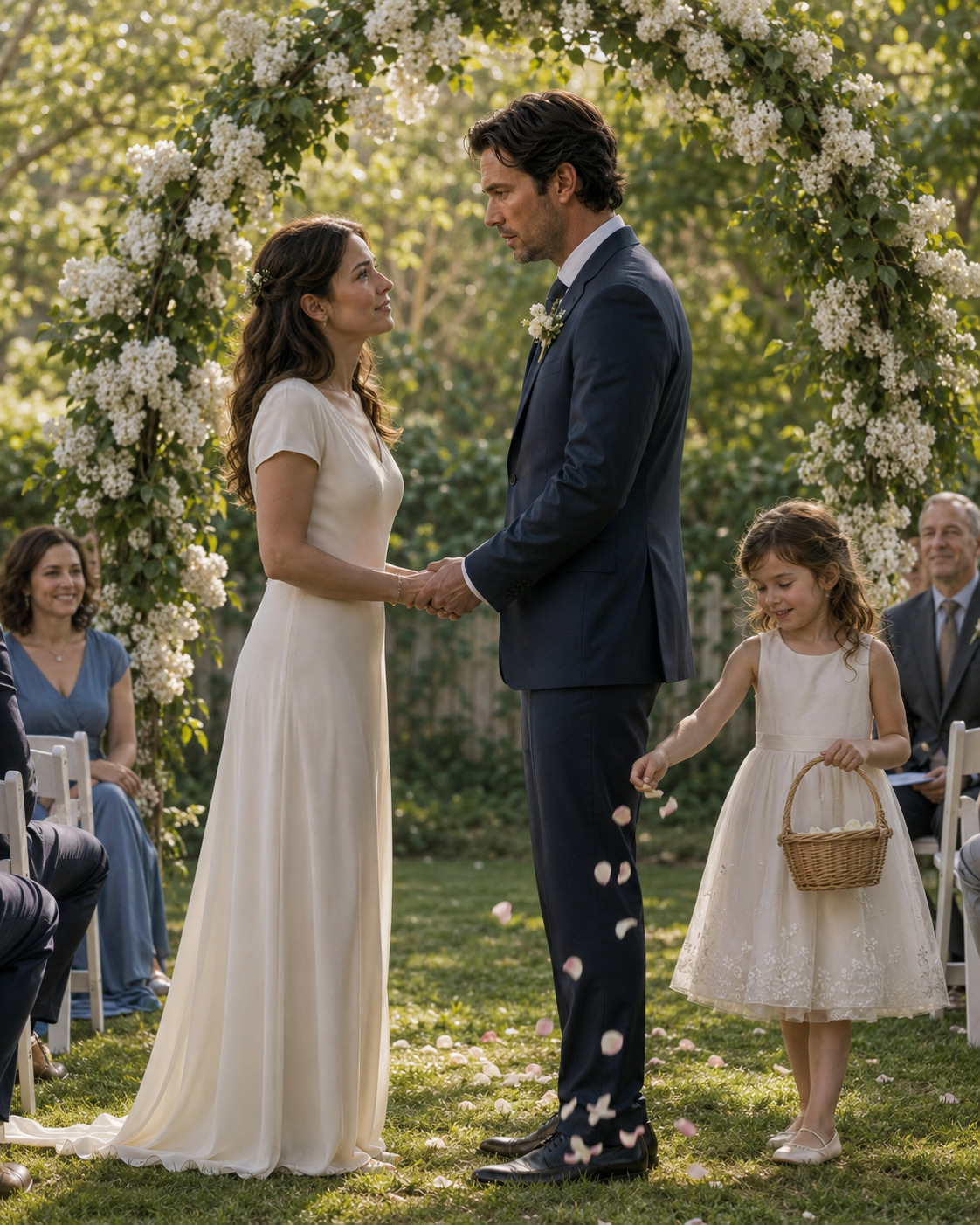
When we were pronounced husband and wife, Junie shouted so loudly that everyone laughed, then threw herself around our legs and nearly knocked us into the grass. That evening, after the guests had gone and the lanterns glowed between the birch trees, I stood beside Nathaniel on the porch while our daughter slept upstairs. “Eleven years,” I whispered. He pulled me closer and answered, “Worth every one of them, now that I know how the story ends.” For the first time in longer than I could remember, I allowed myself to remain inside a beautiful moment without fearing it would be taken away.