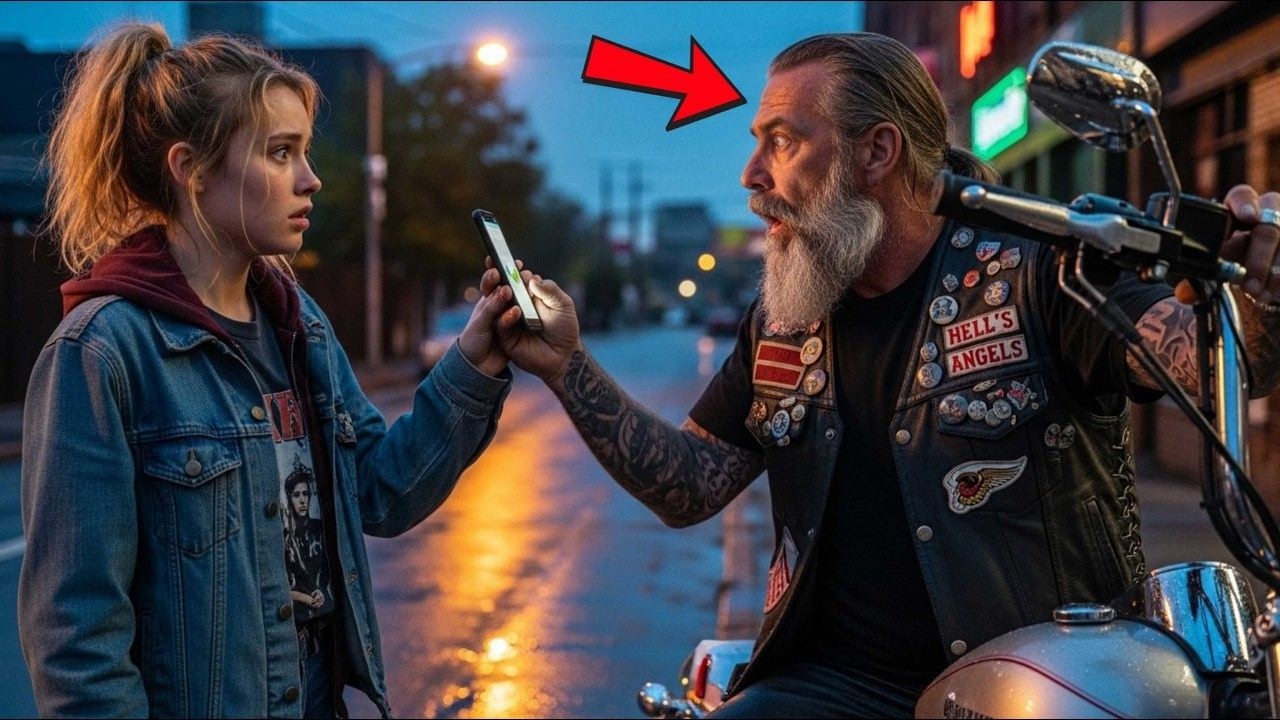
“If you don’t want to go to a nursing home, find a job. ”
My son Marco said those words with an ice-cold calm, without blinking. I looked at him and smiled. Not a happy smile.

The kind that appears just before something inside you dies. Or before it comes back to life with anger. I stood slowly and said nothing. I went to my room, took my small green suitcase, the same one I had used when I left the house where I raised that man, and began to pack what little I had left: clothes, a few books, a photo album, a letter.
An hour later, a black luxury car rumbled to a stop at the gate. Serena, my daughter-in-law, looked out the window with her brow furrowed. Marco walked toward the gate and shouted, “What the hell is this car doing here? ”
I didn’t answer.
I picked up my suitcase, closed the door of the little room where I lived, and walked out with my head high. To understand how we got there, you need to go back. Marco was my only child. His father Massimo died when he was three, in a car accident on a wet road.
The police said it was instant. It took me ten years to breathe without pain. From that moment, everything I did was for Marco. I worked as a schoolteacher, gave private lessons in the afternoon, sold used books at the market on weekends.
I sent him to good schools, stayed up sewing costumes for plays, sold my wedding ring to pay for a computer course when he was twelve. I taught him to be respectful, to say please and thank you, to love books, to defend those who had no voice. I thought I was raising a noble man. I was raising the one who would hurt me most.
As a boy, Marco was sweet. He wrote me notes on notebook paper: “Mom, when I grow up I’ll buy you a house with a garden. You’ll have a cat and lots of cats. ” I cried reading those.
Time passed. Promises faded. The first crack appeared when he met Serena. She was twenty-four, worked at a bank, and was ambitious.
Too ambitious. He brought her home one Sunday. She looked me up and down, wore huge dark sunglasses like she was on a red carpet, shook my hand without smiling. After the wedding, Marco stopped visiting.
No more Sunday lunches. His calls were practical: “Do you have my birth certificate? Where did you put my high school documents? ”
When I told him I was taking early retirement, he barely looked up from his phone.
“Okay. If you feel fine like that. ” No congratulations. No thanks.
When Sofia was born, I thought she would be my last refuge. My granddaughter was a ray of light. At first, Serena didn’t want me around her. “I prefer she stays with someone younger,” she said.
But little by little, they let me watch her some afternoons. Those were the best moments of my week. We read stories, played hide-and-seek, I taught her to write her name in cursive. “Nonna, why do you live in such a small house?
” she asked once. “Because it’s right, love. I don’t want to bother anyone. ”
“But you don’t bother me.
I like being with you. ”
That stayed in my soul. With Serena, things got worse. She started avoiding me, making little comments.
“Teresa, could you not leave your things in the laundry room? ” “Teresa, close the back door. ” “Do you have to make noise right now? ”
It was my house.
I had it rebuilt, yes, but the land was mine. Still, I felt like an intruder. When I tried to talk to Marco, he said, “Serena is very sensitive, and sometimes you don’t help. ”
That was the first time I felt completely alone.
One day Marco called me into the living room. I had just washed Sofia’s clothes. My hands were damp. “Mom, we need to talk.
”
I sat on the edge of the couch. Serena stood beside him, arms crossed. “We can’t go on like this,” he said. “We’re struggling with expenses.
We can’t support another person. ”
“Another person? ” I asked. “I’m your mother, Marco.
”
“I know. But you’re an adult, and you can make your own decisions. If you don’t want to go to a nursing home, you’ll have to find a job. ”
I felt a knot in my throat.
Not because of the proposal. Because of the way he said it. No affection, no memory, no gratitude. “That’s not fair,” I said quietly.
“Life isn’t fair, mom,” Serena said. “Welcome to the club. ”
Marco stood. “Think about it.
Take your time. But we can’t go on like this. ”
I sat there, listening to the clock tick, and felt something break. What they didn’t know was that months earlier, I had received a letter.
It was from Giorgio. A love from my youth. He had found me through an old friend. He wrote kindly, asking if I still thought about him.
Yes, I did. More than I should have. We started talking on the phone, then video calls. He lived in Tuscany, had vineyards and olive groves, had been a widower for six years.
“I never stopped loving you, Teresa,” he said one night. “If you’ll let me, I want to see you again. ”
That phrase was a hand reaching out from an abyss. When Marco told me to find a job, I had already made my decision.
I didn’t beg. I didn’t yell. I just smiled. I packed my suitcase, looked in the mirror.
More gray hair than black. Wrinkles. But also something I had lost: courage. Then the car arrived.
The black Mercedes, engine running. Giorgio stepped out. “Good evening, Teresa,” he said. “I was waiting for you.
”
Marco stepped forward. “Who is this guy? ”
Giorgio extended his hand to me. “Giorgio Ricci.
I’m a friend of her mother’s, and I’m here to take her home. ”
The word “mother” hit Marco like a slap. He blinked, confused. “What are you doing?
Leaving with a stranger? ”
I looked at him and spoke for the first time. “I’m not leaving with a stranger. I’m leaving with someone who sees me, who listens to me, who values me.
Something you stopped doing a long time ago. ”
Serena laughed. “My God, this is a soap opera. The mother-in-law runs off with a rich old man.
”
Giorgio smiled. “Signora, you started the soap opera when you decided to treat this woman like garbage. Today is just the end of the first act. ”
He helped me into the car.
Before we left, Sofia ran to the gate. “Nonna, wait. ”
I lowered the window. She put a folded paper in my hand.
“It’s a drawing for you. ”
I hugged her and whispered, “Don’t change, my love. You’re the one with a real heart. ”
The car pulled away.
I didn’t look back. We stopped at a small café. Warm, with big windows and the smell of fresh bread. Giorgio ordered two coffees with milk and croissants.
“Remember the first time we went somewhere like this? ” he asked. “Of course. I ordered tea with lemon, and you said only unhappy people drink tea.
”
He laughed. “And you said, ‘Then I’m a proud unhappy person. ’”
We both laughed. Then silence.
“Teresa,” he said, looking into my eyes, “they hurt you badly. ”
I swallowed. “I don’t know if it was hurt or just abandonment. Small things, looks, comments, closed doors.
I went out, Giorgio, like a candle no one noticed. ”
“I noticed,” he said. I cried. I cried for everything I had been silent about.
For all the Sundays alone, for every time I pretended not to hear Serena call me a burden, for every hug Sofia wanted to give me that her mother prevented, for every promise Marco had forgotten. Giorgio didn’t say a word. He just held my hand. Silence can heal.
We arrived at his house. Not a mansion, but a wide, rustic farmhouse surrounded by vineyards glowing in the sunset. A porch with a hammock, huge windows, a library that felt like a dream. “This is your room,” he said, opening a door.
Warm, white sheets, a handmade rug. On the nightstand, a bouquet of lilacs. “They’re your favorites,” he said. I couldn’t speak.
That night we had soup, homemade bread, and red wine from his cellar. We talked about books and old movies. Then he looked at me seriously. “Do you know what hurt most?
That you never looked for me. Forty years, and I never knew anything about you. ”
“I was afraid,” I admitted. “Then life passed.
I gave myself to others and forgot myself. ”
“But now you’re here. And I promise you, as long as I’m breathing, no one will ever make you feel invisible again. ”
The next days were a balm.
No one yelled at me. No one corrected how I hung laundry. No one complained about the light on when I read late. I was free.
In that freedom, I remembered who I was. I started writing again: stories, poems, thoughts. Giorgio encouraged me, read my work, asked questions. Some mornings I woke up to coffee in bed.
Other days, wildflowers. But the past doesn’t always stay behind. One afternoon, my phone vibrated. Unknown number.
“Hello? ”
Silence. Then a voice I knew. “Mom.
It’s me, Marco. ”
I froze. “What do you want? ”
“Can we talk, please?
”
Something in his tone scared me. “Say it. ”
“Serena left me. She said I’m not enough of a man and took off.
Sofia cries all day and asks for you. I don’t know what to do. I’m lost. ”
I sat down.
“I needed you too, Marco. For years. You weren’t there. ”
“I know.
I was an idiot. ”
“Don’t tell me. Show me. ”
“Can I come see you?
”
I thought about it. “Yes. But not alone. ”
“With who?
”
“With Sofia. She has the right to see me. You’ll have to earn the rest. ”
The next day, Marco arrived with Sofia.
He looked destroyed. She ran into my arms. “I thought you didn’t want to see me anymore,” she whispered. “Never, my love.
Never think that. ”
Marco asked to talk. We sat on the porch. “I don’t know where to start,” he said.
“Then don’t. ”
“I let Serena humiliate you. I ignored it. I focused on work and left you aside.
”
“No. You pushed me aside. There’s a difference. ”
“I know.
I’m sorry. ”
“I don’t know if I can forgive you yet. But I can listen. That’s already a beginning.
”
Sofia stayed with us for a few days. Marco had found temporary work out of town. The days with Sofia were sweet. We made breakfast, walked through the vineyards, baked biscuits.
Giorgio became her hero. One evening, while Sofia drew on the porch, Giorgio hugged me from behind. “I never imagined I could have this,” he whispered. “Peace.
Family. Real life. ”
I turned to look at him, his eyes wet. “Thank you for coming back to me.
”
“I didn’t come back. I found myself, and you were there. ”
Then the calm broke. A letter arrived.
Formal and cold. Serena had started legal action for full custody of Sofia, claiming I was “unlawfully detaining” the child, manipulating her emotionally, and providing an unsuitable environment. “She’s accusing me of kidnapping my own granddaughter,” I said. Giorgio called a lawyer, Andrea Ferrari, a quiet man with steady hands and sharp eyes.
“She’s using the system to control,” Andrea said. “But we have arguments. Sofia has a voice, and hers will matter. ”
Sofia noticed something was wrong.
“Is mom angry because I want to stay with you? ”
“Maybe. But it’s not your fault. You have the right to choose where you feel happy.
”
She hugged me. “I don’t want them to take me away from here. ”
Serena came to the house, elegant and venomous. She said, “You’re just a lonely old woman, a burden.
This estate will collapse, and when Giorgio gets tired of playing happy family, you’ll be left with nothing. ”
“Are you finished? ” I asked. “See you in court.
”
She smiled and left. The days that followed were a storm. Interviews, social workers, psychological evaluations. Sofia answered with maturity: “My grandmother takes care of me, reads to me, hugs me when I’m scared.
With my mother, I’m nervous. I don’t want to live with her. ”
The psychologist wrote a clear report: the child has a strong affectionate bond with Teresa and feels protected and happy there. No emotional manipulation detected.
In court, Serena arrived immaculate with her lawyer. I arrived with Andrea, Giorgio, and a letter in my hand. The judge heard the case. Serena called me obsessive and possessive.
Andrea presented testimonies, school reports, and asked the judge to listen to Sofia’s recorded interview. When my turn came, I read my letter. “I didn’t come here to fight out of pride. I came because I couldn’t stand by while a child was ripped from her only safe refuge.
I’m not perfect, but I gave everything for Sofia. She is my home, and I am hers. ”
The judge ruled: the provisional custody was made permanent. Serena would have supervised visits and would need therapy before requesting any change.
We won. Sofia ran to me outside the courthouse. “Can we go home? ”
“Yes, my love.
We’re free. ”
Serena passed me, full of hatred. “Enjoy your victory. It won’t last.
”
I answered with calm. “It’s not victory. It’s justice. ”
She left.
I felt no fear for the first time. Only pity. Life went quiet again. We installed cameras at the estate.
The community slowly warmed back to us. Sofia returned to school with joy, drawing and singing without fear. And Giorgio, one evening, took my hand. “I love you, Teresa.
Will you marry me? ”
I laughed and cried and said yes. The wedding was intimate. Sofia brought the rings and cried.
I never thought I would wear white again, but I did, as a symbol of rebirth. Months later, a man in a jacket and tie arrived at the estate. “Signora Bianchi, I’m from a publishing house. We read your letter, the one you read in court.
We’d like to publish it, along with your full story. Many women need to read it. ”
I said yes. I wasn’t afraid anymore to tell who I was.
The book was published under the title: “If You Don’t Want to Go to a Nursing Home, Stand Up. ”
I thought it would reach a few readers. It went viral. Women of all ages wrote to me, came to hug me, told me my story gave them courage.
I was invited to television, to conferences, to universities. A student once asked me, “What is dignity for you? ”
“It’s being able to look at yourself in the mirror without lowering your eyes. It’s not needing anyone’s approval to know your own value.
It’s choosing yourself, every day, even when no one else does. ”
The book was adapted for the theater. At the premiere, I watched an actress with white hair play me, carrying the same small green suitcase. Sofia, now a teenager, sat beside me and said, “That’s you, nonna.
You. ”
The audience stood up and applauded. I received a medal for civic merit. At the ceremony, I said, “When my son told me to find a job, he didn’t know he was giving me an opportunity.
Because sometimes what looks like the end is only the beginning. ”
I still live in that house with Giorgio. We age slowly, hand in hand, laughing at our wrinkles. Sofia chose to study psychology, to help other children like her.
I learned to say no to anything that disrespects me, to anything that takes my peace. And I learned to say yes to tenderness, to starting again, to love that arrived when I least expected it. I don’t hate Marco. I forgave him for myself, not for him.
He lives alone now, with the weight of what he lost. If someone tells you that you’re old, that you’re useless, that you’re in the way, remember this: you are not what they say. You are what you decide to be. And if they tell you, “If you don’t want to go to a nursing home, find a job,” smile.
Stand up. Open the gate. Because your new life might be waiting right there. My name is Teresa Bianchi.
They told me my story was over. I proved them wrong.