At the head of the table, my son handed his father-in-law a bottle of 1961 Château Margaux worth more than five hundred kronor. Then he slid a hundred-kronor gas card across the table to me. I smiled, thanked him, and said nothing. I’d spent forty-three years as a financial advisor.

I knew the value of numbers, and I knew exactly what it meant when a man showed you the number you were worth. Johan is thirty-eight. When he was small, he’d wait at the window every evening and run out to meet my car with his arms wide, shouting: “Pappa’s home! ” That boy is gone.
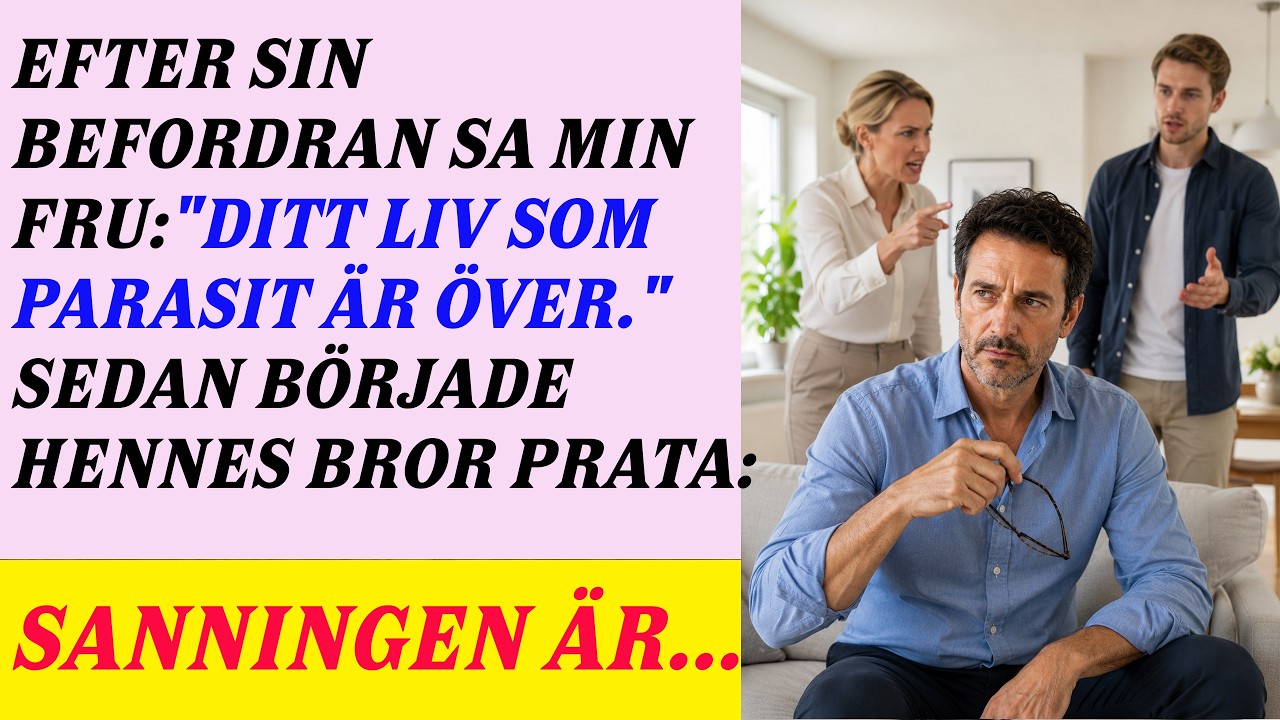
The man who replaced him wears suits that cost more than my monthly pension, calls me Lennart, and has been living in my house with his wife Caroline for two years while their own renovation never quite finishes. Caroline is Viktor Hamilton’s daughter. Viktor measures men by their bank balances and threw his princess a wedding that cost more than a house. The first time Caroline saw my living room, her smile never reached her eyes.
When I offered coffee in an ordinary mug, she made a small, discreet grimace. I saw the warning signs. I chose to stay silent. That was my mistake.
Five years into that marriage, Johan stopped being my son and started being Viktor’s. He adopted Viktor’s tailored suits, Viktor’s laugh, Viktor’s habit of measuring people by what they could do for him. I became the guest in my own home. Caroline redecorated, hosted dinners where she introduced me as “Johan’s father who lives with us,” and once, when she thought I couldn’t hear, told her mother on the phone: “When Lennart’s assets transfer to Johan, we can finally get something real.
”
She saw me standing in the doorway. She didn’t apologize. She just asked me to buy more coffee. I bought the coffee.
I’m not a man who makes scenes. I observe. I calculate. I wait.
The Father’s Day invitation came on thick card stock from Viktor’s estate in Djursholm. Family only. Five years ago, I wouldn’t have needed an engraved invitation to see my own son. Viktor’s house is a statement.
Marble, glass, a fountain in the round driveway. The lunch was served by a private chef on porcelain so thin I was afraid to breathe near it. Johan performed like a man auditioning for a role he desperately wanted—praising Viktor’s business instincts, laughing at Viktor’s jokes, bathing in Viktor’s approval. Then he stood and retrieved a wooden crate from the sideboard.
“Château Margaux, 1961. I spent three months tracking it down. ” Viktor’s eyes widened. They discussed the vineyard, the vintage, the auction house for ten solid minutes.
Viktor hugged him and called him “my son. ”
Johan turned to me then, with the look of a man remembering his obligations. He pulled a plastic rectangle from his jacket and slid it across the table like a betting chip. A hundred-kronor gas card.
“You drive to the golf club, right? Practical. ”
Caroline laughed like breaking glass. Viktor chuckled about his own stingy father.
I held the card between my fingers. After forty-three years of building financial security, after funding Johan’s company, after two years of being a ghost in my own home—my Father’s Day gift was a hundred kronor of gas. I smiled. “Thank you, Johan.
Very thoughtful. ”
His shoulders relaxed. He’d been afraid I’d make a scene in front of Viktor. The smile cost me nothing, and it bought me everything I needed.
That night I called Göran Holm, my lawyer. Twelve years ago, when Johan wanted to start his marketing firm, I hadn’t given him the money—I’d invested it through Västerinvest AB, a holding company I own. Västerinvest holds seventy-five percent of Johan’s agency. The shareholder agreement gives the majority owner the right to take operational control in cases of financial mismanagement.
Johan signed every document without reading it. He trusted me, or he didn’t care, and it never occurred to him that one day I might need the protection. The house wasn’t his either. It sat in a family foundation I controlled, with Johan as the beneficiary.
I could change the terms whenever I chose. He’d never asked. He’d just assumed. “It’s time,” I told Göran.
“Activate Plan B. ”
“Lennart, are you sure? This will destroy his company, his marriage, and probably his relationship with you. ”
“He gave me a hundred-kronor gas card while his father-in-law got a five-hundred-kronor vintage wine.
I’ve thought about it enough. ”
The next morning, a courier delivered a registered letter to Johan’s office. By lunch he was home, grey-faced, holding his phone like a live grenade. Company accounts frozen.
Shareholder agreement triggered. Forty-eight hours to respond. “What shareholder agreement? ” Caroline’s voice cut like a knife.
“The one he signed when I invested two million kronor in his start-up,” I said. “The agreement lets me step in when there’s economic mismanagement. Four hundred eighty thousand in personal expenses on the company account in six months qualifies. ”
“But you gave me that money!
It was a gift! ”
“It was an investment. Business is business, Johan. You should have read what you signed.
”
In the days that followed, he called me eighty-two times. I let every call go to voicemail and listened to the messages evolve from rage to bargaining to panic. His employees quit. His clients pulled their contracts.
Viktor Hamilton, who had called Johan his son at that lunch table, suddenly had no interest in rescuing a bad investment. Three days later we met in Göran’s conference room. Johan brought his lawyer, Caroline, and Viktor. Göran laid out the structure with surgical precision: the company, the foundation, the house, the accounts.
Nothing belonged to Johan except the debts he’d accumulated trying to live like Viktor. Viktor did the math in his head. I watched him decide his daughter’s husband wasn’t worth the trouble. He stood up.
“Caroline, we’re leaving. ”
“Pappa, please—”
“You married him. You handle it. ”
He walked out.
Caroline ran after him. And Johan sat in that conference room with his head in his hands, understanding for the first time what it meant to have nothing and no one. A few weeks later, I offered him a way back. “Buy back twenty-five percent of the company for 2.
4 million kronor. Thirty days. Cash. ”
“I can’t raise that in thirty days.
”
“Sell the BMW. Sell Caroline’s car. Sell the watches, the jewelry, the clothes you bought with money you never earned. Get a job.
Learn what it costs to build something from nothing. ”
I left him at the café with the numbers ringing in his head. He tried. I watched him try with a kind of reluctant pride I hadn’t expected.
He sold the cars, the Rolex, the furniture, the designer clothes. He washed dishes at a restaurant and worked a call center during the day. He stopped calling, stopped begging, and just worked. Caroline filed for divorce and moved back to her parents.
Viktor told him he didn’t rescue failures. The life he’d chosen turned its back on him. On the thirtieth day, he came to my door. He looked a decade older, thin, hollowed out.
“I didn’t make it,” he said. “I’ve got 1. 4 million. I failed.
”
We sat in my kitchen. I made real coffee—the expensive kind Caroline always claimed was out of stock. He held the cup with both hands like it was the only warm thing he had left. “What did you learn?
” I asked. “That I’m not as smart as I thought. That people who flatter you when you’re winning stop answering when you’re losing. That Caroline never loved me—she loved the life she thought she’d inherit.
And that I was the worst kind of idiot. I had a father who gave me everything, and I treated him like furniture while I chased approval from a man who didn’t care if I lived or died. ”
“The money was never the test, Johan. ”
He looked up.
“I needed to know whether you’d try. Whether you’d blame me, look for shortcuts, or do the hard work even when you knew you’d fail. You did the hard work. ”
I slid a document across the table.
“Forty percent of the company. And the house goes to you, with the mortgage in your name. You’ll work under a professional manager for two years. You’ll rebuild the business honestly.
No more assumptions. No more handouts. ”
“Why? ” His voice broke.
“After everything I did, why would you give me this? ”
“Because you’re my son. And I’d rather lose the company than lose you to the man you were becoming. ”
He put his face in his hands and cried.
I let him. Some lessons cost more than others, and the expensive ones are the ones that stay. A week later, I hosted a dinner. I invited Johan, Caroline, Viktor, and Göran.
Caroline came because her divorce settlement depended on it. Viktor came because I mentioned business matters that concerned him. The catering was from the same firm that had served Viktor’s Father’s Day lunch. The symmetry was intentional.
I announced Johan’s new situation. Caroline’s face cycled through confusion, rage, and calculation. “You’re giving it back to him? ”
“Giving him a chance he earned.
There’s a difference. ”
Göran produced the divorce settlement. Caroline’s share was fifty percent of nothing—the company had been worthless when she filed, and the house belonged to the foundation. She signed with a shaking hand.
Johan stood up. “I spent five years becoming someone I despise,” he said. “Someone who measured people in kronor. Someone who thought success meant impressing a man who never actually cared about me.
The man I should have learned from was the one I treated worst. ” He looked at Viktor. “You taught me the kind of man I never want to become—one who abandons people the moment they stop being useful. ” Then he looked at me.
“Thank you for not giving up on me, even when I’d given up on myself. ”
Viktor sat rigid. I told him he was no longer welcome in my home. He stood, adjusted his jacket, and walked out without a word.
Caroline followed. The door closed behind them. Johan and I were left alone. “What happens now?
” he asked. “Now you work. The manager starts Monday. You learn, you rebuild, you prove you can be trusted.
This is your last chance, Johan. There won’t be another. ”
“I know. ”
Months later, when the golf course reopened for the season, I took him out for nine holes.
He showed up with a set of secondhand clubs he’d bought himself—a small thing, but it meant everything. He played with quiet focus, no phone, no talk of contracts or corner offices. On the seventh hole, after a decent drive, he turned to me. “Thank you.
”
“For what? ”
“For loving me enough to let me fail. For being the father I didn’t deserve but needed. ”
“Your swing’s still off.
You’re bringing the club back too far. ”
We finished the round in comfortable silence. The hundred-kronor gas card still sits in the frame on my desk, next to the crayon drawing he made when he was seven: World’s Best Dad.
A reminder of what we were, and of what we almost lost.