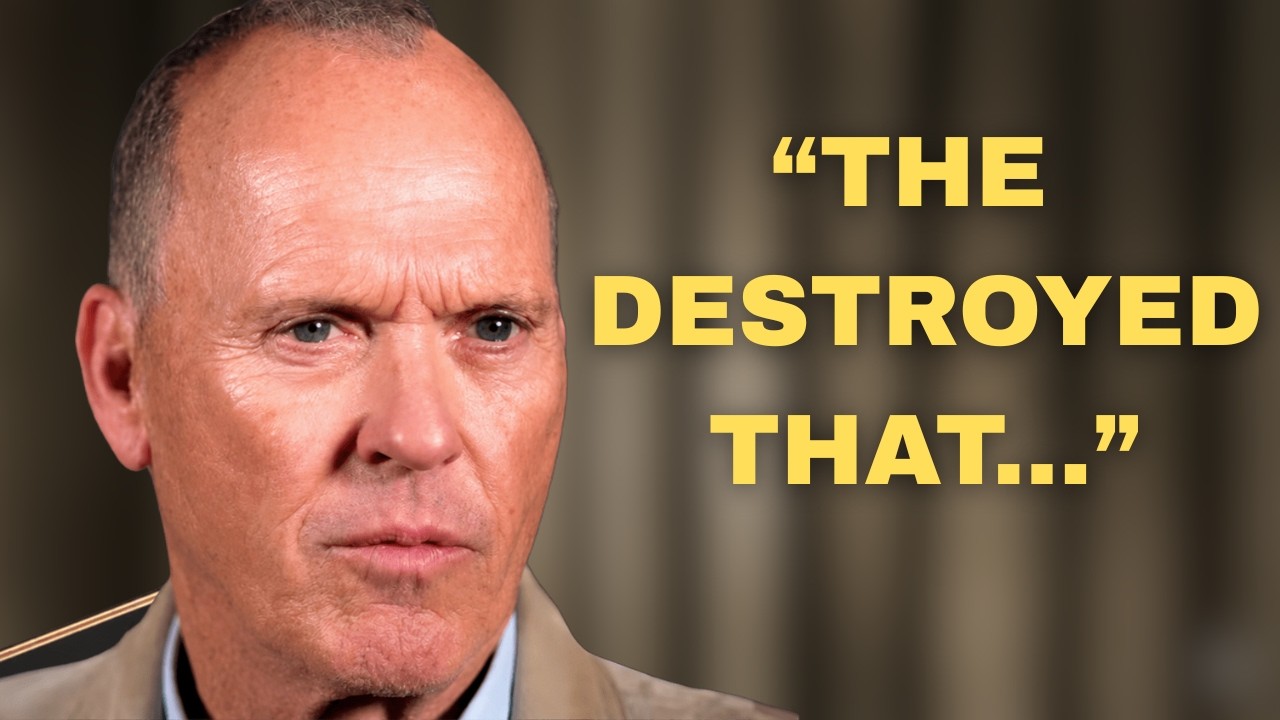
LOS ANGELES — Michael Keaton has spent more than three decades deflecting questions about the most consequential decision of his career. Now, at 74, the actor has finally begun to dismantle the carefully constructed silence surrounding his departure from the Batman franchise, revealing a story far more complex than the simple narrative of a star walking away from a lucrative sequel.
The revelation cuts to the core of what it means to maintain artistic integrity inside the machinery of modern Hollywood, where franchises are engineered for maximum commercial output.
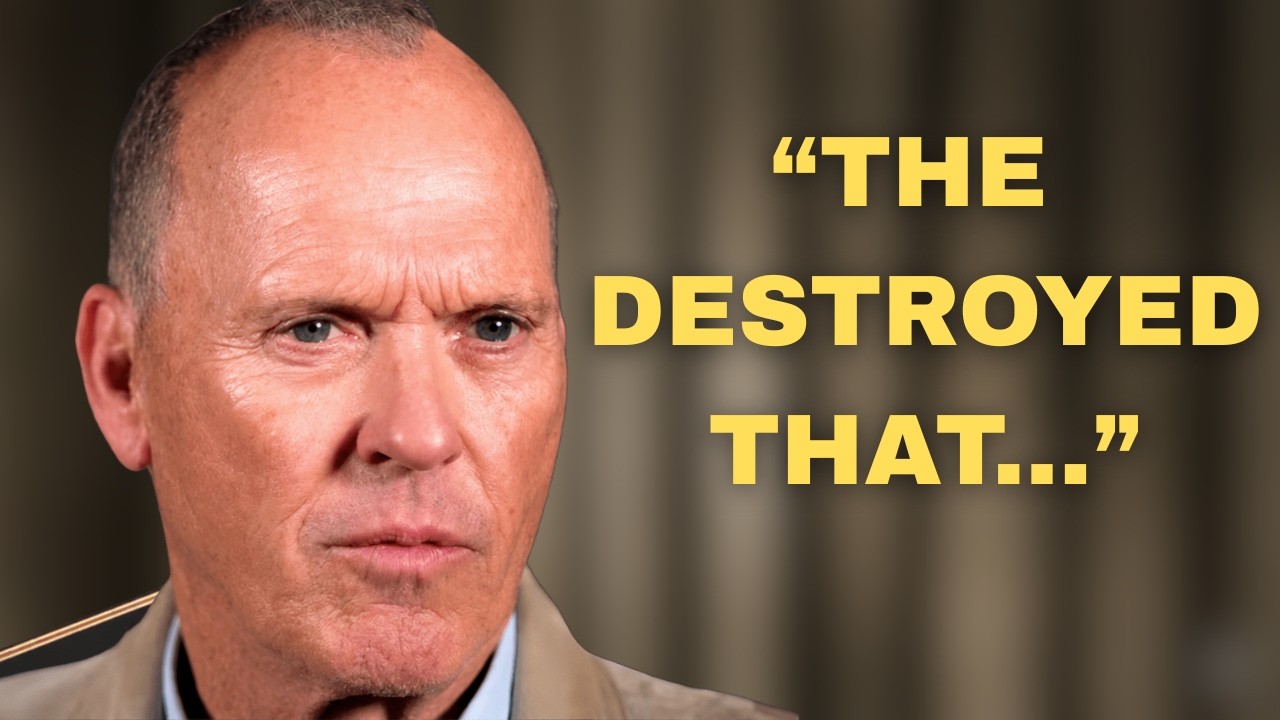 Keaton’s account of his decision to abandon the role after 1992’s Batman Returns is not framed primarily by money or scheduling conflicts, but by an internal conviction that the franchise had lost its narrative soul.
He has described reading the script for what would become Batman Forever, the Joel Schumacher-directed sequel, and encountering a fundamental creative dissonance that he could not reconcile with his own understanding of the character.
The script, by his own account, failed to answer the psychological question that had originally drawn him to the role of Bruce Wayne, the question of why a sane man would choose to become a bat.
This intellectual and emotional disconnect proved insurmountable, leading him to walk away from a reported $15 million payday and the most commercially dominant film franchise of its era.
To understand the full magnitude of this choice, one must revisit the circumstances of his original casting in 1988, a decision that provoked an extraordinary backlash from a comic book community protective of its icon.
Tim Burton, fresh from the success of Beetlejuice, selected Keaton, an actor known for rapid-fire comedy in films like Night Shift and Mr. Mom, for the role of a lifetime.
The announcement of his casting generated an estimated 50,000 protest letters to Warner Bros., a tidal wave of fan fury that seems almost quaint by today’s standards of digital outrage.
Keaton, notably, had not read the comics and was not a student of the Batman mythology when he accepted the role, approaching the character purely as an actor seeking psychological texture.
His fascination lay not with the gadgets or the spectacle, but with the underlying pathology of a man who dresses as a creature of the night to fight crime.
This intellectual distance from the source material became the defining feature of his performance, yielding a Bruce Wayne who was quiet, strange, and genuinely unsettling in his stillness.
The 1989 Batman film did not merely succeed; it detonated across global pop culture, earning $411 million and fundamentally reshaping the architecture of the summer blockbuster.
Keaton’s portrayal became iconic precisely because it subverted expectations, offering a portrait of damaged interiority that had never been seen in superhero cinema before.
The sequel, Batman Returns in 1992, pushed the aesthetic even further into darkness and expressionism, creating a film so strange and threatening that it frightened the studio’s corporate partners.
McDonald’s pulled its promotional tie-in, and parents complained, signaling to Warner Bros. that Burton’s vision was too dark to function as a sustainable, toy-selling franchise engine.
 The studio’s response was to pivot toward a brighter, louder, more colorful iteration of the character, hiring Schumacher and prioritizing commercial accessibility above all else.
When Keaton read the resulting script, he encountered a version of Batman that was purely surface-level, devoid of the subtext and psychological weight he had fought to establish.
He made a decisive choice, one that would define the subsequent decades of his career as much as his performance in the original film had. He refused the part.
Val Kilmer stepped into the cape and cowl, followed by George Clooney, and the franchise continued to generate enormous revenue for Warner Bros. for years.
The industry, with its characteristic short memory, began to categorize Keaton as a talent whose moment had passed, a has-been who had made a catastrophic strategic error.
There followed a long middle chapter in his career, a period of steady work in films like The Paper, Multiplicity, Jackie Brown, and Out of Sight, but none approached the cultural volume of Batman.
Keaton has since admitted to periods of genuine professional pain during these years, questioning whether his instinct for authenticity had cost him his rightful place in the Hollywood firmament.
He experienced the industry’s subtle punishment for choosing integrity over scale, watching smaller offers arrive while the large ones went to actors who had never said no.
The question of whether his decision was born of principle or pride haunted him, a wound that would not fully close until Alejandro González Iñárritu’s Birdman arrived in 2014.
That film, about a faded superhero actor desperate for artistic legitimacy, was so nakedly parallel to Keaton’s own biography that it became inseparable from his public identity.
His performance in Birdman, raw and self-lacerating, earned him an Academy Award nomination and a critical resurrection that almost never happens to actors in their sixties.
But the film was not a celebration of his choice to leave the franchise; it was an excavation of its emotional cost, a portrait of a man still fighting internal battles.
The resurgence proved that Keaton’s instincts had been commercially validated, but it also demonstrated that the need for external validation never fully disappears.
 At 74, Keaton’s relationship with the Batman mythology has come full circle, returning to the role in The Flash in 2023 as an older, isolated Bruce Wayne.
The parallels between the character’s self-imposed exile and Keaton’s own professional journey were impossible to miss, rendered explicit by the actor’s presence in the suit.
He has described the experience of putting the cape back on after 30 years as surprisingly emotional, stranger than he could have anticipated.
In recent interviews, he has been characteristically careful about how much of his interior experience he shares, maintaining a privacy that feels almost anachronistic.
But between the lines of his deflections, a clear portrait emerges of a man who was never indifferent to Batman, but rather fiercely protective of its integrity.
The distinction matters, as indifference requires no courage, while Keaton’s protective ownership carried a real and substantial cost.
He believed that the version of Batman he and Burton created was doing something genuinely real and unprecedented, and that allowing it to become cheaper would have been a kind of desecration.
Whether we agree with that conviction is less important than the fact that it was real, and that it shaped every professional choice he made thereafter.
The financial cost of his principles has been well documented, with the franchise he helped build going on to generate billions in revenue under subsequent actors.
He has spoken about this lost fortune without apparent bitterness, a composure that suggests either genuine equanimity or very practiced discipline.
In recent years, he has found a more comfortable relationship with franchise machinery, taking on roles like the Vulture in the Sony-Marvel universe on his own terms.
This is not surrender but the application of his standards from a position of greater choice and less urgency, the patience of someone who knows what it costs to say no.
The version of Michael Keaton’s story that frames him as a cautionary tale misses the deeper truth of his arc.
 He protected something more durable than franchise revenue, preserving the integrity of a specific artistic achievement so that it could stand alone and age well.
The 1989 Batman is not part of a diluted franchise run; it stands complete, a singular artifact of a particular creative moment.
History, in this version, has vindicated him, slowly and expensively, but completely.
What does a man look like at 74 when he has spent his entire career following an interior compass that almost no one else could read?
He looks like Michael Keaton in recent interviews, calm, precise, and still unwilling to perform comfort he does not feel.
He resembles, in many ways, the character he once defined, a man performing normality while living in an entirely different register underneath.
When he returned for The Flash, crew members reportedly went quiet, recognizing that this man had refused to become what the machinery wanted him to become.
He had paid a real price for that refusal and was now standing in the suit again, not because he had surrendered, but because he had waited for the industry to come back to him.
That is a different kind of ending than Hollywood usually provides, a testament to the particular shape of a particular kind of courage.
The kind of courage that does not photograph well, does not generate short-term revenue, and does not earn headlines until decades later.
The kind of courage that costs you things you cannot get back and gives you things you cannot fully explain.
At 74, Michael Keaton seems to know exactly who he is, a rarity in Hollywood that is worth more than any franchise.
The man never needed the Bat-Signal to find himself; he needed it to show everyone else where he had been all along.