The sun-bleached bones of the American frontier have a story to tell, but none are as blood-soaked or as stubbornly defiant as those resting beneath the dust of Tombstone, Arizona. This is not merely a tourist destination; it is a crucible of violence, greed, and legendary obsession, a town that earned its nickname—The Town Too Tough to Die—through a century of brutal survival. The story begins not with a gunshot, but with a warning, a prophecy delivered in 1877 to a determined prospector named Ed Schieffelin.
Stationed at Camp Huachuca, Schieffelin gazed into the majestic, forbidding hills and saw potential, a dream of silver that drove him to ignore the grim advice of a nearby soldier who told him, “All you’ll find in those hills is your tombstone.”
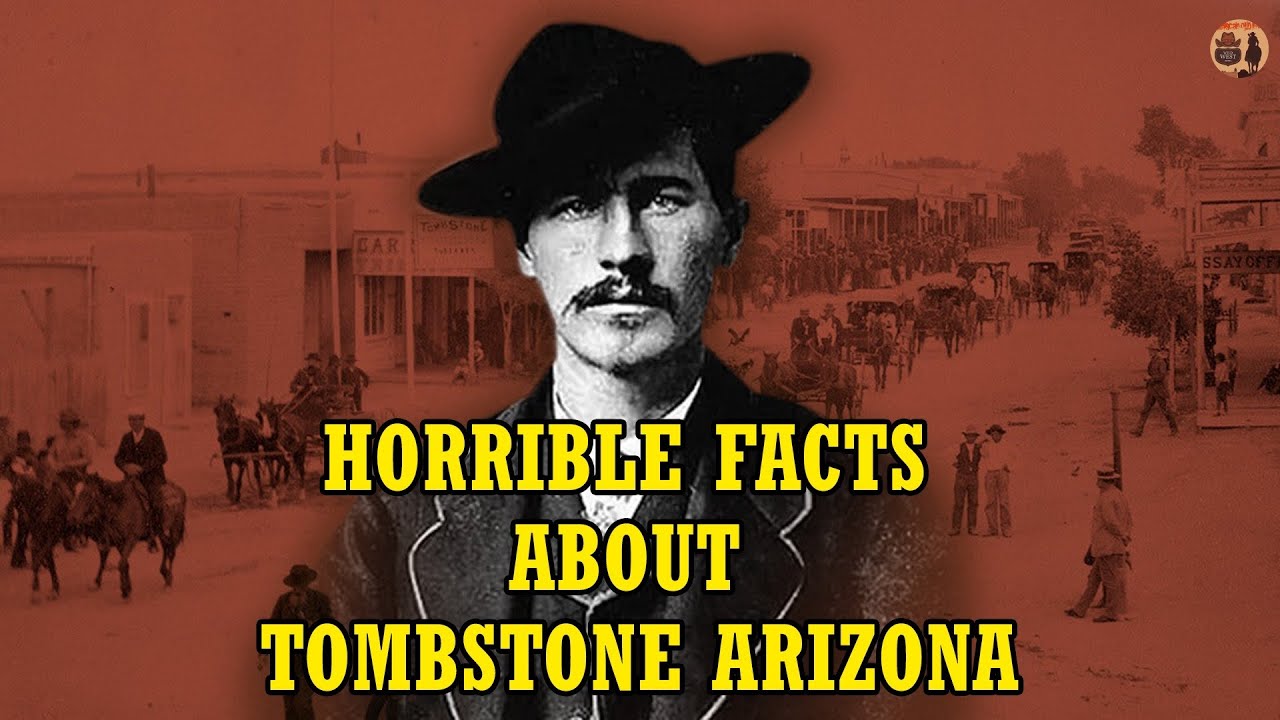 Undeterred by the threat of Apache control, Schieffelin embarked on a solo expedition in February 1878, a journey that would christen the most infamous town in the Old West. After two nights of perilous exploration, he stumbled upon a vein of pure silver, a ledge fifty feet long and twelve inches wide. Remembering the soldier’s morbid prophecy, he named his discovery the Tombstone mine, a name that would later define a lawless settlement.
He filed his claim in Tucson, but his brother Al initially refused to join the risky venture, forcing Ed to take a labor job at the McCracken mine. His persistence paid off when assayers confirmed the ore’s abundance, leading to a partnership with Richard Gird. Al quickly changed his mind, forming a triumvirate of equal partners.
The discovery of two more locations, the Lucky Cuss and Tough Nut claims, turned the area into a magnet for fortune seekers.
News of the silver strike spread like wildfire, transforming the remote hills into a chaotic mining camp. By December 2, 1878, the Tombstone post office was established, and by March 1879, official plots of land along Allen Street were sold for a mere five dollars each. The population exploded from a hundred souls to a roaring, violent community.
The founding father, Ed Schieffelin, was a wanderer at heart, more interested in exploration than ownership. When his brother Al returned from a four-month expedition, they sold two-thirds of their interest in the Tough Nut mine for one million dollars. Gird soon followed, selling a third of his share for the same amount.
The mine eventually yielded an estimated sixty million dollars in silver, the equivalent of two billion dollars today. But Ed had already left, driven by a restless desire for new prospects, a move that would leave the town without its founder as its legend grew.
The arrival of Wyatt Earp in December 1879 marked a turning point. He came to Tombstone with grand plans for a stage line, only to find two already operating. Adapting quickly, he partnered with the owner of the Oriental Saloon, securing a lucrative twenty-five percent share of the gambling concessions.
His family soon followed: James opened a pub on Allen Street, Virgil served as a deputy sheriff, and Morgan worked alongside his brothers as a lawman. Doc Holliday and his companion Kate Elder also arrived in 1880, with Kate seizing the opportunity to build a large tent filled with women and cheap whiskey, creating a crude palace of entertainment that attracted men from every corner of the bustling town. Gambling thrived, but so did the threat of the Cowboys, a gang of outlaws led by the Clanton family—old man Clanton and his sons Ike, Finn, and Billy—along with the McLaury brothers, Frank and Tom, and the notorious Curly Bill Brocious and Johnny Ringo.
 The tensions between the Earp faction and the Cowboys were immediate and unrelenting. On May 1, 1880, the Tombstone Epitaph was first published, becoming the oldest continuously operating newspaper in Arizona. By June, the population had swelled to three thousand, drawing a volatile mix of workers, dancing hall girls, outlaws, pub owners, and gamblers.
The town’s reputation as one of the most unsettled in the Southwest was cemented. The mines of Tombstone, Tough Nut, and Richmond fueled a frenzy of growth, pushing the population to nearly eight thousand by 1881. This was a metropolis of sin, boasting the Southwest’s largest gambling establishments, saloons, and red-light districts, alongside four churches, a school, two banks, and an opera house.
The veneer of civilization was thin, a fragile scaffold over a powder keg of violence.
The powder keg was lit on June 22, 1881, when a devastating fire ravaged the eastern half of the business district. The town had no adequate water supply, and the blaze consumed homes and shops with impunity. Citizens blamed Field Marshal Ben Sippy for failing to control the ensuing looting, and Virgil Earp was quickly appointed as his replacement.
This move only deepened the hostility of the Clanton faction, who saw the Earps as usurpers of power. The long-simmering feud reached its cataclysmic apex on October 26, 1881, in an event that would echo through history: the Gunfight at the O. K.
Corral. In just thirty seconds of blinding chaos, Virgil, Wyatt, and Morgan Earp, joined by Doc Holliday, faced off against five Cowboys. Billy Clanton and the McLaury brothers, Frank and Tom, were killed.
Virgil was shot in the leg, Morgan in the shoulder. Amidst the smoke, Wyatt confronted Sheriff Johnny Behan, who promptly arrested the Earps and Holliday.
 The subsequent trial determined the lawmen had acted in self-defense, but the bloodshed had triggered an irreversible cycle of vengeance. Virgil was later dismissed from his position as Field Marshal, a direct consequence of his involvement. On March 18, 1882, in an act of retaliation, a group of Cowboys ambushed and killed Morgan Earp.
The Earp clan, shattered by grief and rage, departed Tombstone with Morgan’s body, heading for California. But Wyatt, his brother Warren, and Doc Holliday disembarked in Tucson, embarking on a year-long vendetta to hunt down and eliminate every member of the Clanton gang. It was a brutal, relentless pursuit that left a trail of corpses across the Arizona Territory.
Neither Wyatt nor Doc ever returned to Tombstone.
The violence did not end with the Earps’ departure. On May 25, 1882, a second devastating fire consumed the town’s western business district, including the iconic O. K.
Corral itself. The resilient residents rebuilt, constructing the Cochise County Courthouse in 1882 and opening the Bird Cage Theatre, a notorious establishment that doubled as a saloon, gambling hub, and brothel. The New York Times would later call it the wildest, most brutal carnage between Bourbon Street and the Barbary Coast, a place where sixteen deaths were recorded within its walls in just eight years of operation.
The theatre’s claustrophobic interior witnessed deaths from gunfights, knife fights, and brawls, a testament to the raw, untamed nature of the town.
The town’s silver boom, however, was doomed not by bullets but by water. In 1886, miners struck a new source of water, a discovery that initially brought joy but soon spelled disaster. Water flooded the mines relentlessly.
 Large pumps were installed to control the deluge, but a fire in 1886 destroyed the pumps at the Grand Central mine. The mine flooded permanently. Frustrated miners abandoned Tombstone for jobs in the burgeoning copper mines of Bisbee and other nearby settlements.
The neighboring towns of Charleston and Millville withered and died. Tombstone itself began its slow fade into a ghost town, its population dwindling as the mines closed. In 1929, a vote was cast to move the county seat to Bisbee, twenty-five miles away, a decision that seemed to seal Tombstone’s fate as a relic of a forgotten era.
But the town’s spirit, forged in fire and blood, refused to break. The resilient citizens united to preserve their beloved home, leaning on its bloody history to draw tourists. Boot Hill, the cemetery where desperadoes were buried face-down in their graves, became a premier attraction.
The famous gunfight was recreated daily for visitors, a living tableau of the town’s most infamous thirty seconds. Considerable efforts were made to restore and repair the historic buildings, breathing new life into the formerly deserted streets. Filmmakers and authors seized upon the compelling story of the Earps and the Cowboys, producing endless films and books that generated a new industry of legend for the town.
The notorious Allen Street, once lined with bars, casinos, and brothels, underwent careful restoration, returning its wooden facades to their original 1880s glory. The original Cochise County Courthouse, complete with its gallows from 1882, was transformed into a state historic park, offering a grim but fascinating glimpse into the frontier legal system. The town is now a living monument to the Old West, located just sixty miles southeast of Tucson, Arizona, near the town of Benson.
It offers countless accommodations and dining options for visitors looking to immerse themselves in the unique charm of a place that has stood the test of time.
Even nature contributes to Tombstone’s strange allure. According to Guinness World Records, the world’s largest rose bush was planted in Tombstone in 1885. This Lady Banksia rose, native to Scotland, still thrives in the city’s sunny climate, a delicate, beautiful symbol of life persisting amidst a landscape of violence and death.
It covers over eight thousand square feet, a massive, fragrant testament to the endurance of the town itself. The town of Tombstone, with its dusty streets and saloon swinging doors, offers a visceral connection to the lawlessness of the American frontier. It is a place where the ghosts of Wyatt Earp, Doc Holliday, and the fallen Cowboys still feel present, their stories a constant, humbling reminder of a time when a man’s life could end in thirty seconds on a dusty street.
The town’s history is a brutal, fascinating tapestry woven from greed, obsession, and an unyielding will to survive, a narrative that continues to attract millions of visitors each year, eager to walk the same blood-stained boards that saw the birth of a legend.