A single phrase uttered at 9:55 AM on April 2, 2025, has become the emotional and legal focal point of one of North Texas’s most divisive murder trials.
“Touch me and find out.”
Those five words, spoken by 19-year-old Karmelo Anthony just seconds before he allegedly stabbed 17-year-old Austin Metcalf in the chest, are now at the center of a fierce courtroom battle. Prosecutors call it clear evidence of calculated aggression. The defense argues it was the desperate warning of a terrified teenager whose brain had entered full survival mode.
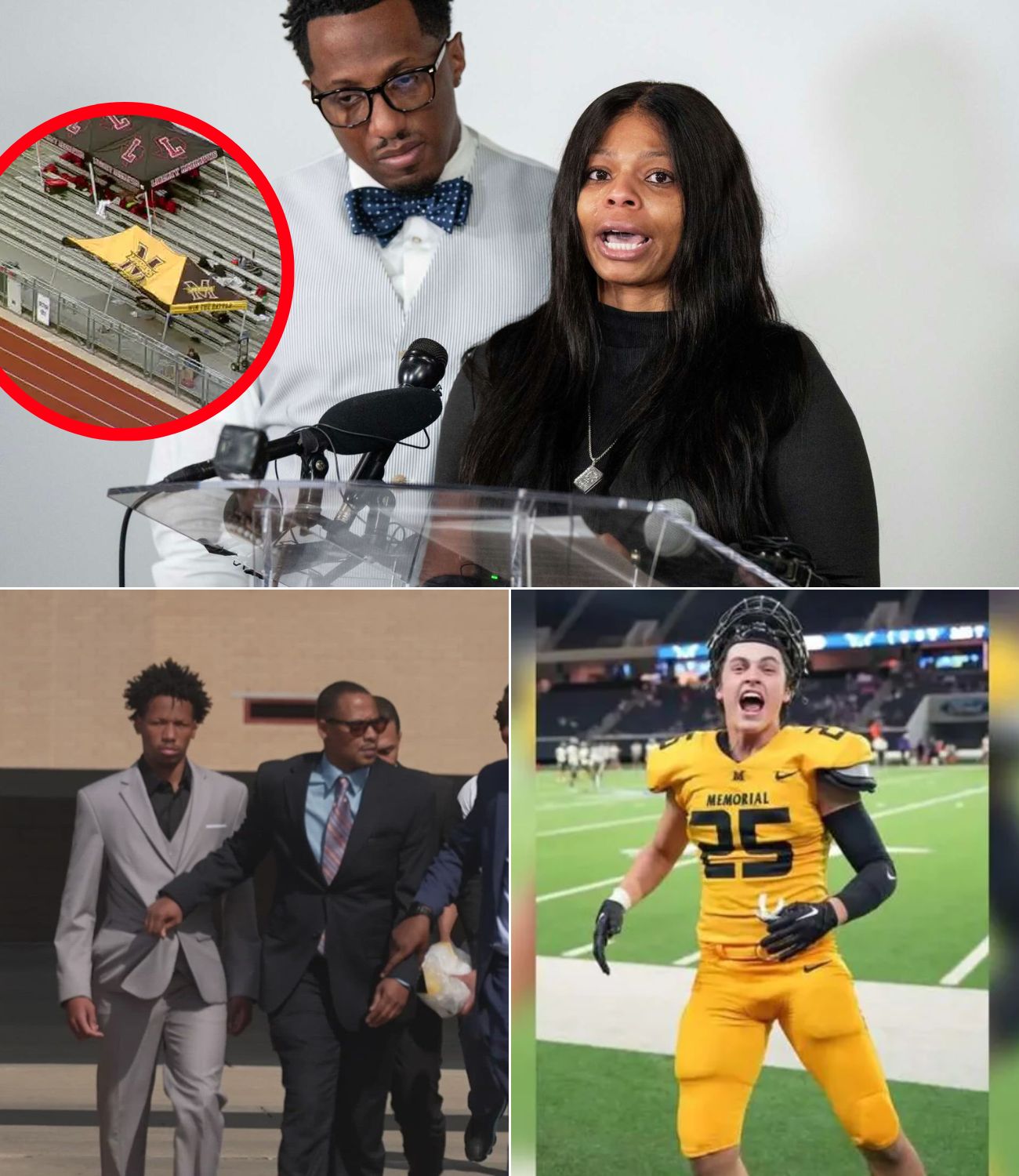
The fatal confrontation occurred during a track and field meet at a Frisco Independent School District event. What started as a seating dispute under a team tent quickly escalated into violence. According to witness testimony, Anthony was surrounded by a group of athletes when he made the chilling statement. Moments later, Metcalf was on the ground with a single stab wound that would prove fatal.
Anthony has pleaded not guilty, claiming he acted in self-defense after feeling physically threatened. His legal team has brought in psychologists who testified that Anthony experienced an extreme “fight-or-flight” response — a primitive survival instinct triggered by intense fear. They argue the stabbing was not premeditated murder, but a tragic physiological reaction from a young man who genuinely believed his life was in danger.
Prosecutors, however, paint a very different picture. They contend Anthony was the aggressor who provoked the confrontation and then used deadly force without justification. The bloodied knife recovered at the scene, along with multiple eyewitness accounts, forms the core of their case.
The dramatic testimony has left the jury visibly moved. Several jurors were seen reacting strongly as experts explained how the brain can override rational thought during moments of extreme stress. Legal observers say this psychological evidence could be pivotal in determining whether Anthony’s actions qualify as self-defense under Texas law.
Outside the Collin County Courthouse, the case has deeply divided the community. Supporters of Anthony chant “self-defense is not a crime,” while others stand in solidarity with Metcalf’s family, demanding justice for the promising young student-athlete whose life was cut short.
The trial has also reignited broader conversations about youth violence, self-defense laws, and how quickly a teenage disagreement at a school-sanctioned event can turn deadly.
As closing arguments approach, the stakes could not be higher. If convicted of first-degree murder, Anthony faces five to 99 years in prison. The jury must now decide whether those five words at 9:55 AM represent the mindset of a cold-blooded killer — or a scared teenager who saw no other way out.
Whatever the verdict, the phrase “Touch me and find out” will likely be remembered as the defining moment in a tragedy that has left two families shattered and an entire community searching for answers