The pile of beaver pelts that built the greatest fortune in American history did not disappear in a crash, a con, or a 𝒔𝒄𝒂𝓃𝒹𝒶𝓁. It was dismantled, piece by piece, by the very people who inherited it, until a family that once owned a significant slice of Manhattan was reduced to a name on a hotel and a subway stop. The story of the Astors is not a tragedy of vice, but a masterclass in the quiet mechanics of dynastic collapse, a slow leak of wealth that emptied a $100 billion empire within a century.
The original engine of this staggering wealth was John Jacob Astor, a poor German butcher’s son who landed in the 1780s with little more than a few flutes and a cold, calculating patience. He built his first fortune on the backs of trappers, using government protection to secure a near-monopoly on the American fur trade before the market collapsed. But his true genius was in reading the exit.
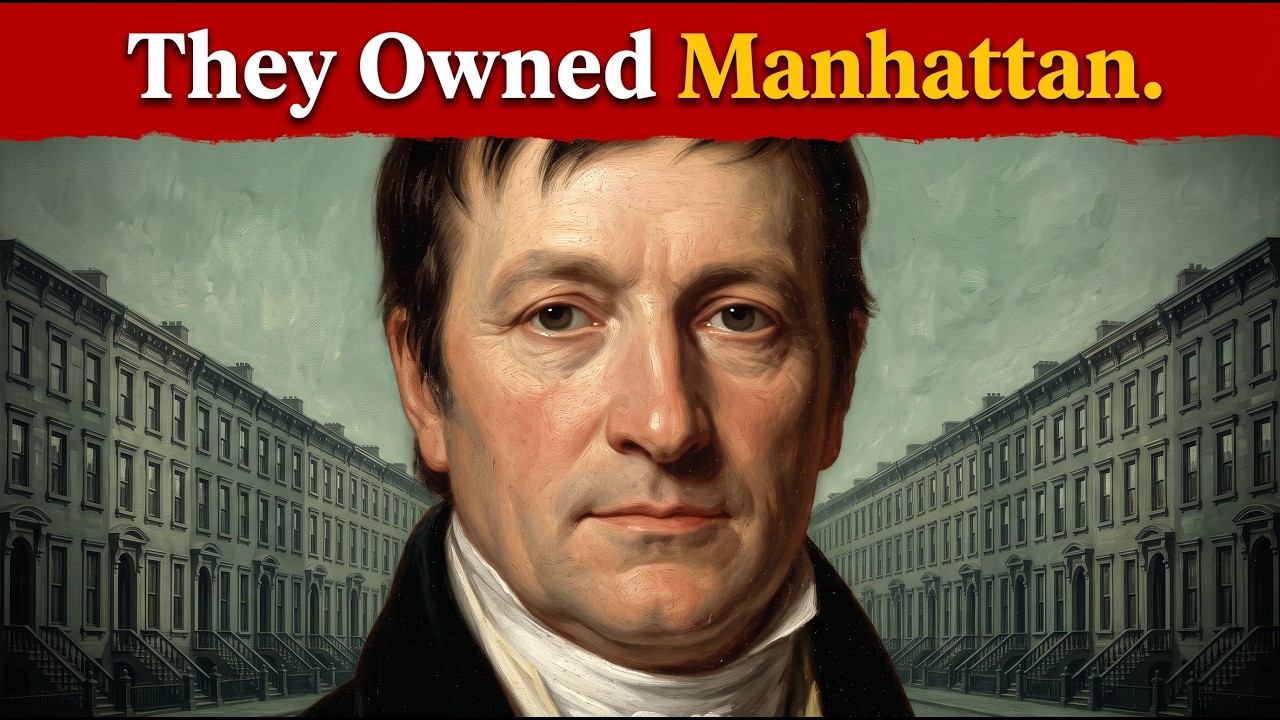 Around the 1830s, he sold off the fur empire and poured everything into what he saw as the only asset that would never go out of style: the land of a growing Manhattan. His strategy was brutally simple. He bought cheap farmland at the city’s edge, then leased it out on long agreements, allowing others to build while the Astors pocketed the rent.
When the lease expired, the Astors took back the land and the building, capturing the immense value of New York’s ascent without ever lifting a finger.
By his death in 1848, he was the richest man in the country, a fortune that, measured against the size of the US economy, would rank today at well over $100 billion. John Jacob Astor made two crucial decisions that secured the family’s future for at least one more generation. He broke custom by passing the bulk of the empire to his second son, William Backhouse Astor, a capable caretaker rather than a hunter.
And he instilled a discipline of never selling, only leasing. The second generation was a success. William Backhouse Astor, known as the “Landlord of New York,” simply kept the machine running, buying more property and leases.
By his death in the 1870s, he owned over 700 houses in Manhattan and sat atop every list of American wealth, a staggering fortune that was by then unrivaled in the Americas. The machine was perfect, but the master was gone. The transition from builder to landlord had been successful, but within that success lay the seed of its own destruction.
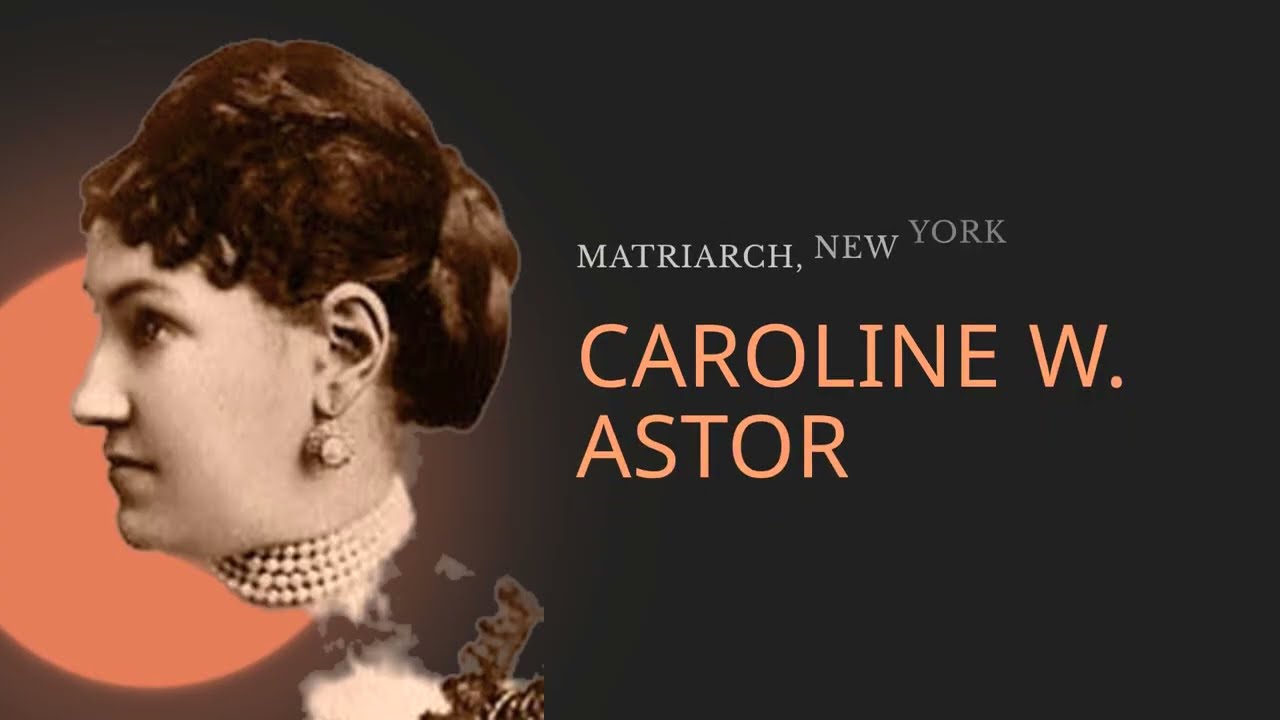
The fortune’s fate was sealed in a ballroom, not a boardroom. Caroline Webster Schermerhorn Astor, the wife of a grandson, declared that the Astors would not just be the richest, but the most important family in America. She created a social hierarchy as rigid as any real estate deed.
Mrs. Astor became the gatekeeper of “polite society,” defining who existed and who didn’t in New York’s elite. She wielded this power through the “Four Hundred,” a mythical list of the only New Yorkers who ‘mattered,’ designed to be a machine of exclusion.
This required money to be spent, not saved. The Astors, along with their rivals, erected marble chateaus and threw extravagant balls that cost more than most Americans earned in a lifetime. Every dollar poured into a summer party in Newport was a dollar not buying the next block of the city to lease.
 The rivalry with the upstart Vanderbilts proved the point. When Alva Vanderbilt threw a costume ball in 1883, she deliberately excluded Mrs. Astor’s daughter until the Queen of Society herself was forced to leave a calling card to gain entry.
The Astors let the Vanderbilts in, and a generation later, they would lose to them. But the fatal internal wound went deeper. In the 1890s, the largest pool of the fortune, held by William Waldorf Astor, became ripe for a war with his aunt, Caroline.
After losing a battle over who was the true “Mrs. Astor,” he packed his wealth and renounced America, moving to England. His decision seemed to be in a rich man’s tantrum.
But it was his first act of genius. He was the only heir who escaped the rot. The new generation in America then tore down their own mansions to build spite hotels next to each other, creating the original Waldorf-Astoria with a bricked-up corridor in case the cousins fell out again.
The fortune was so vast that even in the feud, they built a hotel, not a business—a monument to the failure to build anything but a game of chicken.
The collapse began in earnest with the death of John Jacob Astor IV. Killed on the Titanic, leaving an $85 million estate to 20-year-old Vincent. Observers expected the heir to be the savior, but Vincent was born into a world where the machine was already failing.
The Great Depression pummeled the Astor’s slum tenement empire. Vincent did what his ancestors never would have understood: he sold. He sold blocks of the city to shed the passive rental machine that no longer worked.
 And every single sale was a subtraction that was never replaced. The family fortunes started flowing out, not in.
The decade following Vincent’s death in 1959, with no children of his own, he left the bulk of what remained to a charitable foundation, not to descendants. The main line of the fortune just stopped. The physical testament to this was already gone: the Fifth Avenue double mansion was torn down for a synagogue, the Waldorf-Astoria razed for the Empire State Building.
The Astor’s money was not eliminated by time, but by a constant tributary of taxes and division. There were no trusts or holding agreements that kept the fortune in one block. Every generation saw a massive estate tax bite, forcing the sale of core assets just to pay the government at death.
A pile of land yielding of a fortune was being sold to settle tax bills, cutting deeper and finer until it was nothing at all. By the 1950s, a fortune that once equaled 1% of the entire US economy was awarded to a half-brother who contested a will with a $250,000 settlement. The empire had been gone for decades.
But the greatest proof of this parable is the parallel branch that did succeed. William Waldorf Astor, the man who had rage quit to England, had stumbled into a favorable system. The British aristocracy had a structure that kept money in one family.
He and his heirs were noblemen with estates that passed whole to a single heir, not split among many. They protected valued the land and heritage, handing Cliveden to the National Trust to avoid death taxes, locking the rest by a holding company. They never did any demolition derby.
Today, the British branch sits in the House of Lords and hosts prime ministers at family estates, with a current Viscount worth around $300 million. Same family. Same starting money.
 Two opposite endings. The difference was entirely structural. The American Astors treated their fortune like a personal savings account to be divided and enjoyed.
The British branch treated it like an institution.
This pattern is not exclusive to Astors. The DuPonts of the US held it through a centuries-long trust. The Rockefellers built a family office of twenty-one plague dollars.
These families lasting so long treat fortune like a public. A dynasty, the institution. The money is a single family that does not move, and the heirs are dividends.
In a cruel final irony, the Astors spent a generation deciding who deserves to exist in polite society. However, they then vanished from the list of the richest Americans for a hundred yars. They lost by being rich, not in a fire, but through a drip, drip.
It was a process in which the law and the absence of a wealth vault did the work. The story of the Astors is the proof that a fortune doesn’t get lost in a crash. It gets lost in a meeting with an advisor, a christening, a 21st birthday, a funeral, a false law, and a few forgotten heirs.
A fortress of hand was gifted, but the end didn’t survive contact with the next generation.


