LONDON — The image is almost too strange for fiction: a 25-year-old English aristocrat, alone on a Munich park bench, holding a pearl-handled pistol gifted to her by Adolf Hitler, waiting for the moment Britain declared war so she could pull the trigger.
Unity Valkyrie Mitford did not die on that bench in September 1939. The bullet lodged in her brain would 𝓀𝒾𝓁𝓁 her nine years later, but her survival that day—and the survival of her family’s legacy—has haunted British history for nearly a century. She was one of six daughters raised in an Oxfordshire manor by a father who claimed to have read exactly one book in his life and a mother who believed doctors were unnecessary.
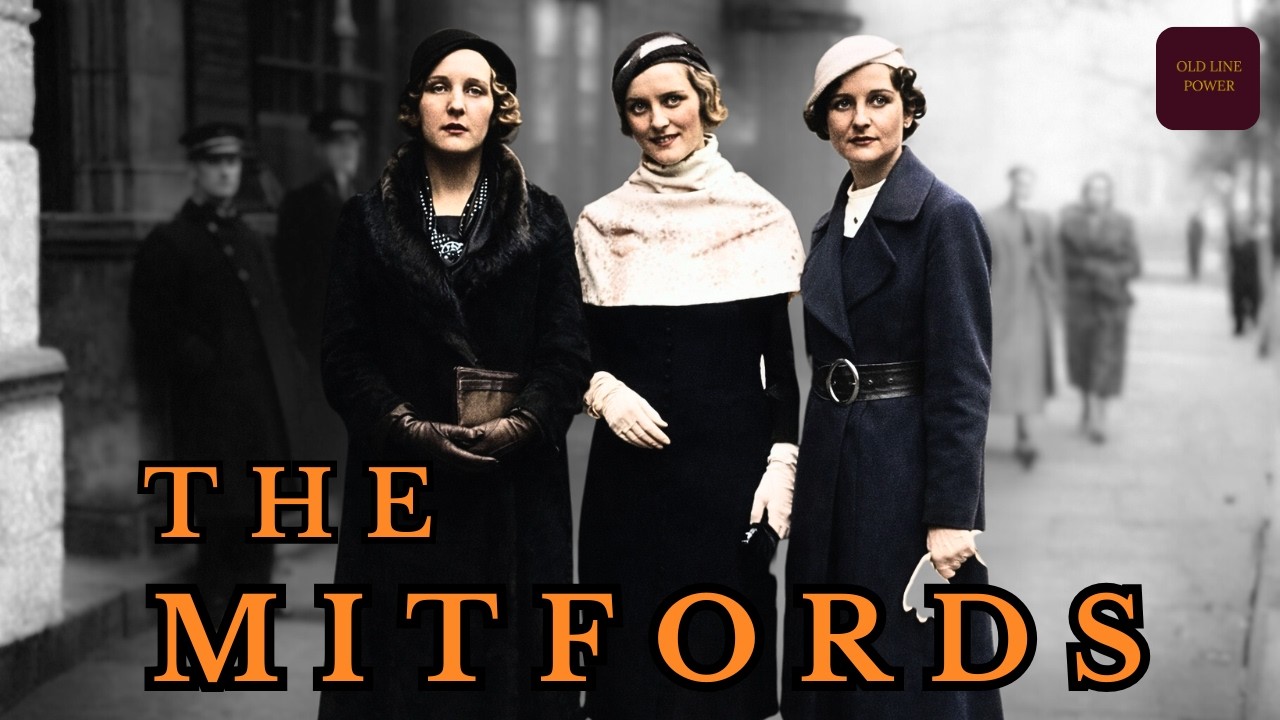 From that single nursery emerged a communist, a fascist, a literary giant, a duchess who saved Chatsworth, a woman who stalked Hitler, and a poultry farmer.
The Mitford sisters did not merely witness the 20th century’s extremes; they embodied them, often simultaneously, and their story is a case study in how a single family can fracture along the fault lines of history. The usual explanations for their divergence—money, education, politics—collapse under scrutiny. They had no formal schooling, no coherent parental ideology, and no financial stability to speak of.
What they had was each other, and a desperate, competitive need to become something entirely their own.
The patriarch, David Freeman-Mitford, the second Baron Redesdale, was a man of magnificent contradictions. He fought in the Boer War, losing a lung, and served again in the First World War, where his brother was killed at Ypres. He inherited a title and vast estates but possessed almost no liquid capital, managing to fail at nearly every financial venture he attempted.
His most famous failure was a gold claim near a town in Ontario called Swastika, where his neighbor struck it rich while he returned home with nothing but stories. His wife, Sydney Bowles, was his opposite: calm, rigid, and convinced that formal education for girls was a waste of money. Their only son, Tom, was sent to Eton; the six daughters were left to governesses of varying quality and a library that became their true school.
The family home at Asthall Manor, a Tudor house beside the River Windrush, was where the sisters discovered their identities. They invented a private language, calling their parents “Farve” and “Moove,” and held secret meetings in a warming cupboard beneath the stairs they dubbed the “Hons’ Cupboard.” They were fiercely intelligent, utterly unguided, and desperate for an outlet.
That pressure found its release in the 1920s and 1930s, propelling each sister into a different orbit of a rapidly polarizing world. Nancy, the eldest, escaped to London’s “Bright Young Things” scene, using wit as her armor. Diana, six years younger, used her extraordinary beauty to ascend to the top of society, marrying the heir to the Guinness fortune before throwing it all away for a fascist leader.
The catalyst for the family’s destruction was Oswald Mosley. When Diana met him in 1932, she was 22, married, and the mother of two sons. Mosley was 45, married, and launching the British Union of Fascists.
 Diana left her husband, moved into a flat in Eaton Square, and within a year had become Mosley’s mistress. The family froze her out, but she did not care. She had found her conviction.
In 1936, Diana and Mosley married in secret in the Berlin home of Joseph Goebbels, with Hitler as the guest of honor. No member of her family attended. She never expressed regret, even at 93, describing Hitler as “charming” and “very funny” in a television interview near the end of her life.
Diana’s descent into fascism pulled her younger sister Unity with her. Unity was 19 when she attended the Nuremberg Rally in 1934, and the spectacle overwhelmed her completely. She enrolled in a language school in Munich, but her real education was stalking Hitler.
For ten months, she sat alone in the Osteria Bavaria restaurant, waiting for him to acknowledge her existence. He finally did in February 1935, intrigued by a series of bizarre coincidences: her middle name, Valkyrie, after Wagner; her birthplace near a town called Swastika; her grandfather’s translation of Houston Stewart Chamberlain, a foundational anti-Semitic thinker. Hitler began seeing her regularly, awarding her a golden swastika badge and a private box at the 1936 Berlin Olympics.
Her recently authenticated diaries record 139 meetings between 1935 and 1939, though they reveal almost nothing of what was said, only gushing adoration. One entry reads simply, “He talked a lot about Jews, which was lovely.” Eva Braun despised her.
MI5 considered prosecuting her for treason but never did.
While Unity embraced the swastika, her younger sister Jessica chose the hammer and sickle. They shared a bedroom at Swinbrook House, Unity covering her wall with fascist imagery while Jessica pinned up a portrait of Lenin. Their parents did not intervene.
 Jessica had been planning her escape since age 12, opening a “running away account” at a London bank. She found her catalyst in Esmond Romilly, Winston Churchill’s nephew, who had fought with the International Brigades in Spain. They eloped in 1937, making front-page news.
They settled in the Docklands, had a daughter who died of measles at five months, and then fled to America in 1939. When the war began, Esmond enlisted in the Royal Canadian Air Force and was killed in a raid over the North Sea in 1941. Jessica never went back to England, never spoke to her father again, and rebuilt her life in California, where she became a muckraking journalist whose 1963 book The American Way of Death 𝓮𝔁𝓹𝓸𝓼𝓮𝓭 the predatory practices of the funeral industry and prompted a Federal Trade Commission investigation.
The war broke the family completely. On September 3, 1939, Unity walked to the Englischer Garten and shot herself. She survived but was left brain-damaged, cared for by her mother until her death in 1948.
Diana was arrested under defense regulation 18B in May 1940 and imprisoned in Holloway for over three years. Nancy, who had stayed in London and worked at a bookshop, provided information about her sister to MI5, telling them Diana was “far cleverer and more dangerous than her husband.” The sisters did not discuss this for decades.
Their brother Tom, who had sympathized with Germany throughout the 1930s, refused to fight against them and requested a transfer to Burma, where he was killed in 1945. The parents separated, the father retreating to a cottage in Northumberland, the mother holding to her pro-German views until the end.
Out of this wreckage, Nancy built a literary career. Her 1945 novel The Pursuit of Love was a barely disguised portrait of her family, transforming her father into the bellowing Uncle Matthew and her own romantic disasters into comedy. It sold 200,000 copies in a year and made her famous.
She moved to Paris to be near Gaston Palewski, a Free French colonel who was the love of her life but never reciprocated her devotion, marrying a duchess in 1969 without ending their 𝒶𝒻𝒻𝒶𝒾𝓇. Nancy died of cancer in 1973, with Diana at her bedside. Jessica and Diana spoke to each other at Nancy’s deathbed—the first time they had communicated since 1936.
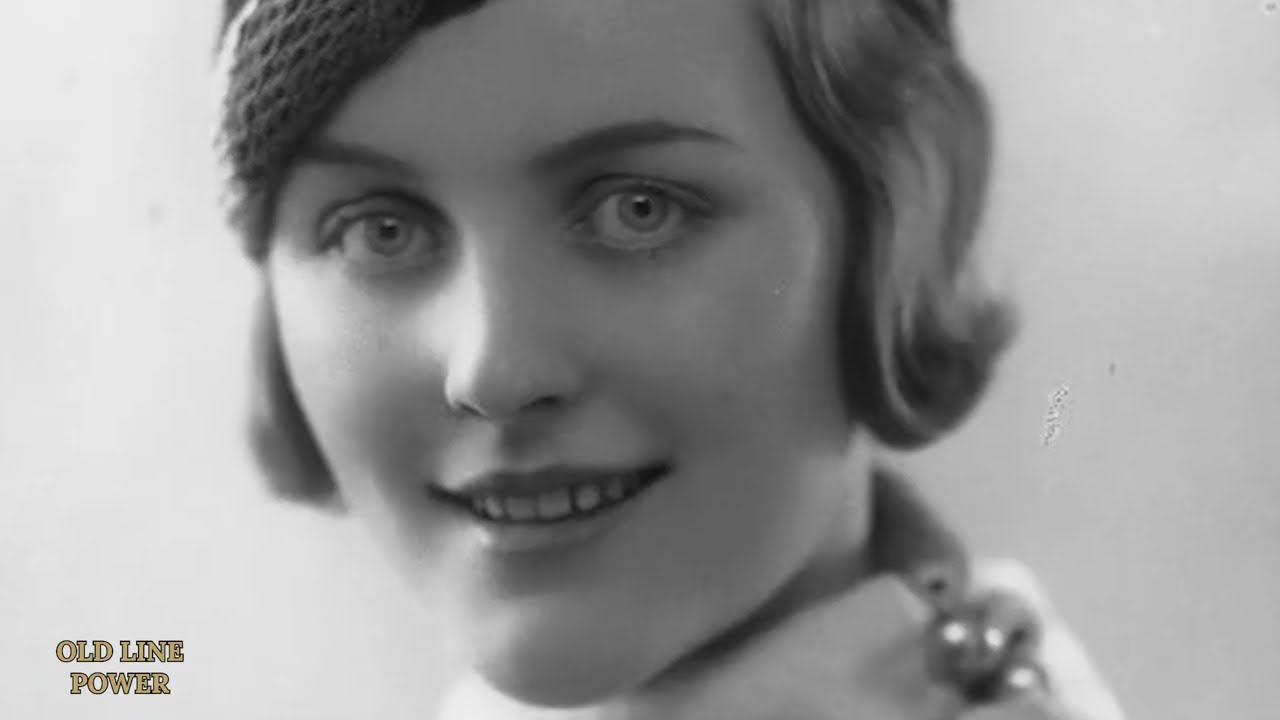 Deborah, the youngest, was the one who held the family together in its final decades. She married Andrew Cavendish, the second son of a duke, expecting a quiet life with dogs and chickens. But when his elder brother was killed in 1944, Andrew became heir to Chatsworth House.
The inheritance tax bill was £7 million, roughly £300 million today, and it took 24 years to clear. Deborah moved into the crumbling house in 1959 and turned it into a business, opening a farm shop, restaurants, and gift shops. By 2002, Chatsworth was financially self-sufficient, attracting 650,000 visitors a year.
She was the last Mitford sister to die, in 2014, at age 94. When a journalist asked her if she would rather have tea with Elvis Presley or Adolf Hitler, she replied, “Elvis, of course. What an extraordinary question.”
Pamela, the second sister, made no headlines. She turned down a proposal from the poet John Betjeman, married a bisexual millionaire physicist, divorced him, and spent the rest of her life in Gloucestershire with an Italian horsewoman, raising chickens. She died in 1994, having lived entirely on her own terms and out of sight.
The six sisters are now scattered across four graves in Swinbrook churchyard, one in California, and one at Chatsworth. Their letters, edited by Diana’s daughter-in-law and published in 2007, reveal the truth beneath the headlines: they were sisters first. They used nicknames, gossiped, and worried about each other’s health.
They argued and judged, but they never stopped writing. They could not leave each other alone. The nursery held, even as the world outside it burned.