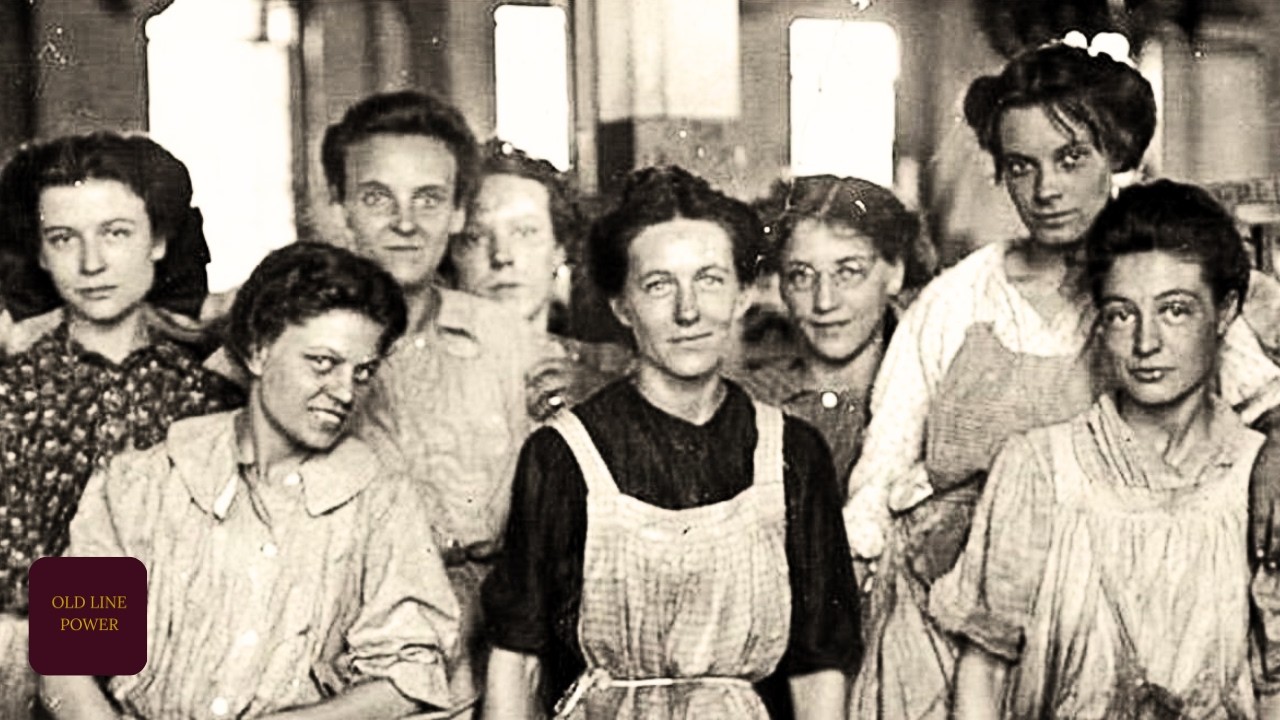
The clatter of thousands of power looms could not drown out the sound of a revolution that was never meant to be heard.
On a cold February morning in 1842, Charles Dickens stepped off a train in Lowell, Massachusetts, carrying with him the weight of a transatlantic reputation. He was a man who had chronicled the slums of London, the workhouses of Yorkshire, and the brutal mechanics of British industrial poverty. Arriving in this American experiment, he saw clean brick buildings rising beside a canal system, young women in orderly dresses filing past him, and he believed he was witnessing the impossible: industry without cruelty.
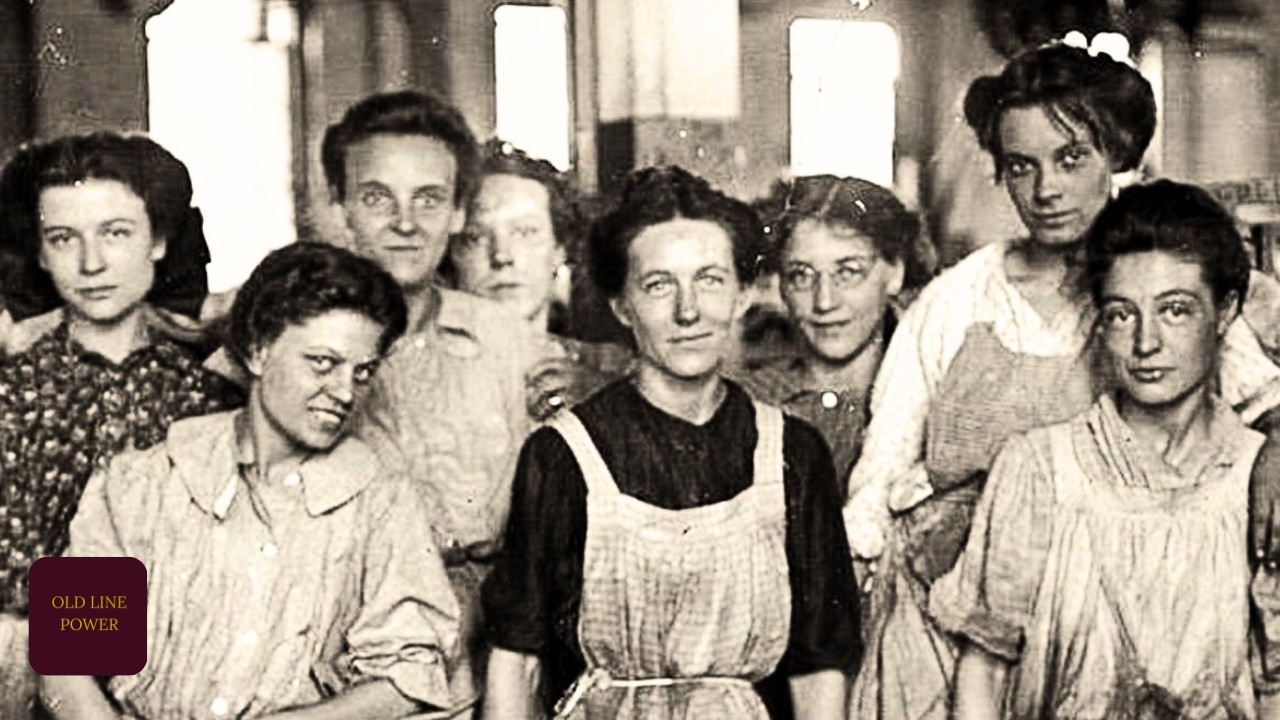 He toured, he smiled, he took notes. He was gone in under twelve hours. What he failed to see, and what the city’s architects took pains to conceal, was the machinery of a scandal so vast and so calculated it would redefine how America understood wealth, power, and the lives it was willing to consume.
The full scope of that deception, hidden behind a façade of paternalistic progress, is now coming into sharper focus. The story of the Lowell Mill Girls, lauded for over a century as a noble chapter in America’s industrial growth, is in fact a story of exploitative labor, an enduring supply chain built on human bondage, and a targeted blacklist that silenced a generation of workers. The visual memory of one man, Francis Cabot Lowell, launched the entire enterprise, but it was a power structure built on the aching lungs of women and the broken bodies of the enslaved.
Dickens was not there to see the quarters less than a quarter mile from the decks of the factories, where Irish laborers, who had carved the canals that powered the city, survived in wooden shacks. He did not see the women who coughed blood after three years of sealed windows and cotton dust so thick it settled on the skin like a second hide. The tour was a calculus of optics.
It was showmanship. Every smile was choreographed. Every clean dress was evidence of a lie.
And the investors intended it.
The full truth starts decades earlier, in an espionage that threatened the industrial hold of the British Empire. Years before a single brick was laid in Lowell, America’s textile production was a failure. The stolen Spinning Jenny had given Rhode Island a prototype, but the real prize, the power loom, was the exclusive, guarded engine of British economic dominance.
Britain guarded its design with the paranoia of a kingdom that knew its global power relied on that single mechanism. Empires were built on such threads.
But in 1810, a wealthy Boston merchant named Francis Cabot Lowell, exhausted but scrutinizing, sailed to Europe on a holiday that was anything but. His health required a rest, he claimed. In truth, he was an extraordinary act of industrial theft.
Using his status as a prominent client of British goods, he gained access to the engine rooms. They saw a mundane wealthy customer. He saw a blueprint, memorizing every gear, spindle, and shaft with a reportedly photographic memory.
He carried no paper, asked no technical questions, and when he boarded the ship home, he was searched by British naval officers who suspected him. Thought of the mechanic, they found nothing. The entire factory plan existed only in the dimension between the synapses of his mind.
Back in Boston, He paired this stolen knowledge with the local genius of Paul Moody, a master mechanic who built, not a mere copied a loom, but improved on it. The first integrated mill opened in Waltham in 1814; the design was so efficient that it was solvent in its first year. Lowell, however, had bigger plans.
He wanted a city powered by the Merrimack River, an industrial utopia. He died in 1817, at 42, from natural causes. He never saw the city they built and created in his name.
The very system was flawed; it was built on a foundation of controlled labor from the start.
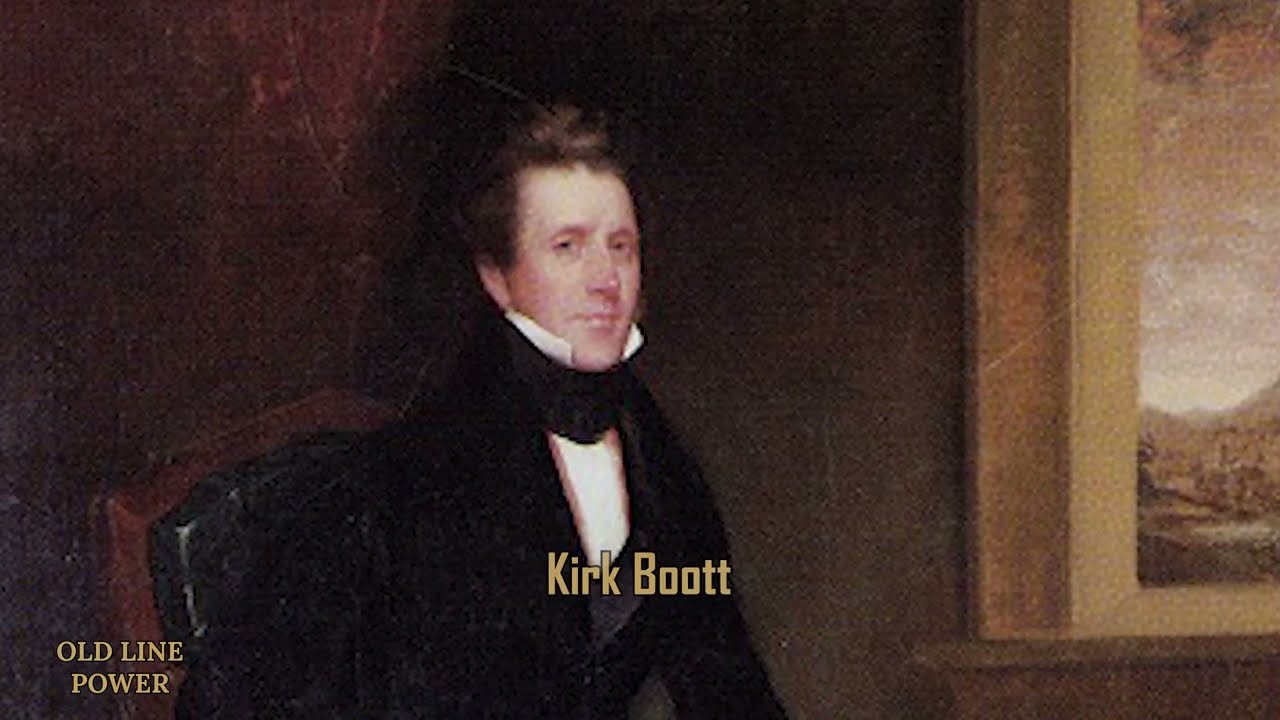
The city of Lowell was constructed soon after, a sprawling complex of canals, water wheels, and regulation. The man tasked with building it, Kirk Boott, was a ruthless disciplinarian. He designed the Paddy Camps on the other side of the canal, where a hardened, immigrant workforce lived in squalor.
Meanwhile, for the actual production of the mills, Boott implemented a strategy that would define human relations in industry: import women. They didn’t have the leverage of men. We made women, the families were too dependent on male authority.
The young women who came to Lowell, recruited with promises of education, music, cleanliness, and high wages, arrived in covered wagons from all over New England. The men on the factory floor left soon, punished by the low wages. The women came, not because they were naive, but because in a world of limited options, a cash wage was a taste of the unattainable: freedom.
 The corporate strategy was brilliant in its psychological mechanism. They enforced a system of surveillance that replaced the paternal authority they’d left behind. The women’s living quarters, the boarding houses, were not communes of liberation; they were supervised cages governed by bells.
Curfews were 10:00 PM. Church was mandatory. Male visitors were strictly prohibited.
Wages were paid monthly. The full architecture was designed not for their well-being but to isolate and prevent solidarity. The powers that be controlled the entire labor supply with a weapon called the “honorable discharge.”
If a woman left in good standing, she got a pass to work at any other mill in the city. Without it, she was paralyzed; no mill in the system would hire her. It was a blacklist, a one-way door out of the city with no future.
The rush to build a careful illusion was not for the hundred-odd years the workers were inside. The “paternalism” they bragged about was a very specific kind of slavery. Of course, at the boom, the pressure from the environment was 79 degrees.
The fabric ran at high humidity, and to protect the thread, the windows were nailed shut. Inslee year-round. They called the product themselves; the dust was a permanent fog that coated the breathing, the rooms were so noisy women had to read lips to communicate.
Six days a week, from five in the morning to seven at night, these women breathed air that was physically destroying their lungs. In a place called byssinosis, brown lung disease, it was a terrifying diagnosis. The standard symptoms, a chest can tighten, unexplainable coughing, and eventually the vomiting of blood.
One reformer of the era claimed that the average working life of a Lowell girl was three years.
The cruelty lay in the economic architecture. The corporations knew women would get sick, and they simply built the cycle of disposal into the overall structure. They didn’t worry about the injuries from the shuttle mechanic, the heavy straps of wood that shot at velocity and destroyed teeth, eyes, and fingers.
Those women were simply replaced with a new supply of rural cheap labor. The management was like a rotating door. The system was designed to function as a pace, a sort of spatial patronage.
But the owners failed to factor in the human variable of literary consciousness. They provided a library and newspapers in a bid for social good. Instead, they created a premise for rebellion.
After long days, they wrote poetry. In 1840, they started their own literary magazine, the Lowell Offering, the first women’s literary magazine in America. The Anthropological Dickens, enchanted by, wrote about It was a highly symbolic act of free expression that the owners themselves had inadvertently funded.
The Men had welcomed a voice into the circular, but that voice could not be censored completely.
At the same time, the mills were experimenting with industrial speedup. The machines got faster, spinning more cotton, and needing more hands, but the wages were slashed. In 1834, they cut women’s wages by 15%.
Walked out. An in coordination, the owners were horrified to see the women. They called it a “turnout,” and though the 1834 strike collapsed, the significance was set.
 In 1836, when wages were threatened again, the strike was bigger, more powerful.
Here, in a ground report from the Tremont Mills, stands with a young, and Harriet Hanson. She was 11. The older women hesitated; The fear of blacklisting was the fear of deportation from the labor market, a total loss of identity.
But it was the younger workers who had less to lose, and more courage. “I do not care what you do,” she said. “I am going to turn out whether anyone else does or not.”
That simple, singular rebellion broke the dam. Hundreds followed her out, and they sang a song that would terrorize the owners: “I will not be a slave.”
The strike didn’t succeed formally—the blacklist held—the wages didn’t come back, and many were fired and forced to walk away. In 1848, they were an unforgivable target. They built an organization: the Lowell Female Labor Reform Association, the first sustained labor union for women in the United States.
They gathered thousands of petitions, they faced the legislature, and they bored into exile. In the home they exposed the conditions. Their political have a bright bright.
They voted in numbers that scared the establishment sky. They published and fought, and they worked with abolitionists. They began to articulate an essential link between their own wage slavery and the chattel slavery of the South.
The full truth is they were built on human freedom. Radical abolitionists saw the hypocrisy denied within the mills. The primary issue was mapping onto their own exploitation onto the lash of the southern plantations.
The Lowell aristocracy, although they saw themselves as liberal, relied on the literal enslavement. The entire Texas economy ran on cotton that was picked by enslaved people. By 1840, Lowell cotton was grown by enslaved hands and sent back South to clothe the enslaved planters.
This was a closed-loop, a founding network of the new American industrial economy. Weaving mills sent “Negro cloth” — a coarse, low-quality fabric sold to plantation owners for slaves. The of the factory paying pennies for women’s work while they were billionaire merchants.
They were the “lords of the loom,” allied with the “lords of the lash” in the South.
The conflict became too great as the New England merchant class, having built their fortunes, began to actively suppress abolitionism. Some like Royal Southwick, a manager at the Lowell Manufacturing Company, who was an abolitionist himself, was contributing to the economic engine that conditional Black people. We can see it in the wisdom of the economic fabric: The civilization of the North and the exploitation of the South were one intertwined organism.
It wasn’t a moral dilemma; it was the profit engine.
The women in the mill, who financed their freedom in such a system, were rejected by the “holiness.”
Fate would change please without sentiment. The Irish famine arrived in the 1840s. The migrants, fleeing mass starvation, poured into Massachusetts.
 They were people without options, and desperate. The corporations, which had previously recruited from pure financial markets, saw Irish holding chips. It was the old story: The more desperate harder of laborers, freeing it.
The women in the mill tried to assimilate, but they all looked the same. The entire system began to change. The boarding houses vanished.
They tenants arrive. The old work force of literate Yankee women had a notion of solidity—the new Irish, the Poles, the Greeks, the Portuguese were the necessary feeding instruments to the machinery. The consequence was: it did not matter who worked, it only mattered that they could be broken, replaced, and exhausted in a cycle of blind determination.
The tension Sugary Female turned protest. The men.
The Civil War severed the supply the machinery, and the air left the system. The end of enslaved labor in the South forced the Northern mills to crane their shackles. The following years, they found cheaper labor in the Deep South.
By then, the entire company was a dead end. The capacity of the mills was the legacy of the entire North, a massive engine of industry gone to dust. The Republican America that emerges in the 20th century was built on the remains.
The morals are a changed one. The schools they bought with cheap labor, the extreme wealth princes that funded hospitals, libraries, and the character of Boston’s Middle Class, Harvard University are all monuments to cheap labor.
But what Meredith strikes: the strength of these women did not destroy the system. The women were not the ones who killed it; the system failed. Did the women manage to gather the power to resist?
The testimony of the Back Bay civil rights struggle, the rights of women, the government of the United States of the 20th century—every single one of those daughters of freedom was fighting for relevance in a corporate world that wanted to break them into pieces. are not.
The truth is not in the conjunction. The aggression of the California and the United States was not just one family at a time. It was a continental-scale machinery.
And yet, there is a core lesson in the same spirit. Inside the nuclear, there is a face full of young women who said: no matter how great the system, we see it. We will not be slaves.
So they wrote, they protested, they struck. They gave the next century a definition of what power could be.
The machines are still alive. The their ghost.
In Lowell today, mechanical looms still remember the process. But the women who were sent to the ground are gone. The story they triggered, the compaction of industrial greed, the idea that decency and dividends can coexist, was a historical aberration that they deconstructed with their own blood and their own pens.
The light they ignited was not a night light from the Offering, but a signal of a long overdue changed. And the dark is constantly tempting to return.