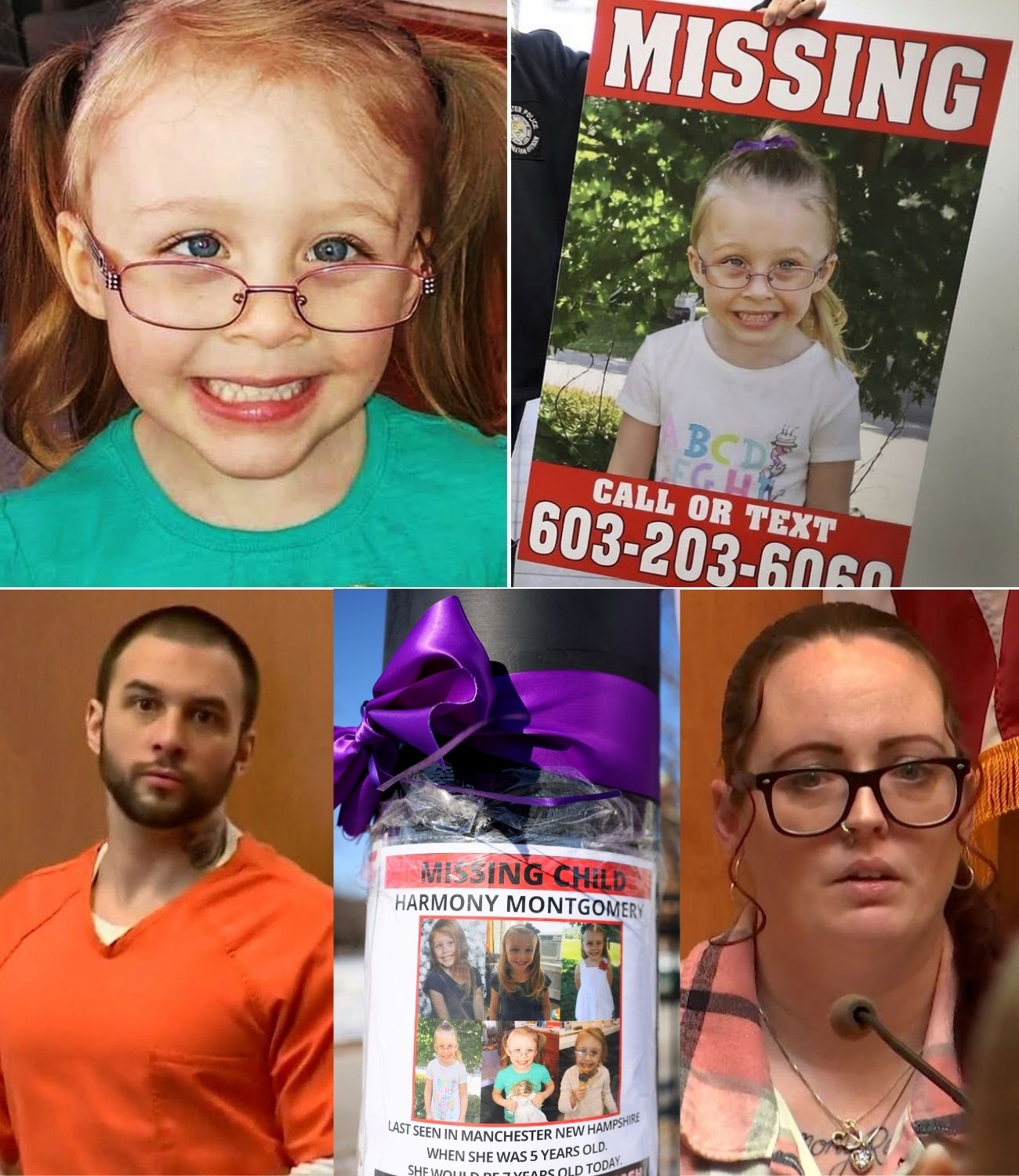
On what should have been her 12th birthday, Harmony Montgomery is remembered not as a teenager celebrating another year of life, but as a little girl forever frozen in time.
She was only five years old when she disappeared.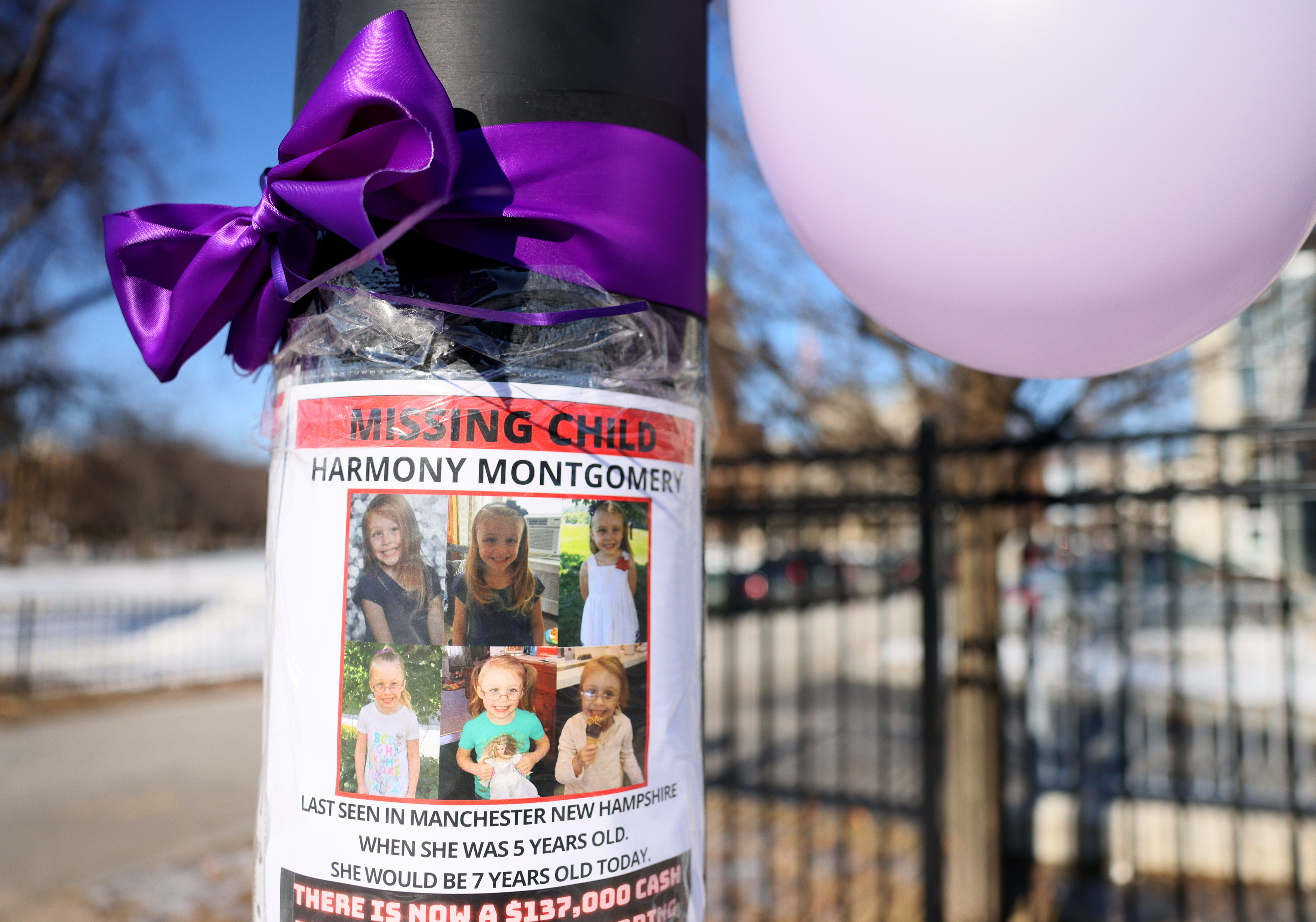
More than six years later, her body has never been found.
And despite a murder conviction, many of the most painful questions surrounding her case remain unanswered.
The story of Harmony Montgomery became one of the most disturbing child abuse and missing-child investigations in recent American history, drawing national attention and sparking outrage across the country.
A Child Who Seemed to Vanish Without a Trace
Harmony was born in 2014 and spent much of her early childhood moving through a complicated family situation. Court records and testimony later revealed concerns about her welfare long before she disappeared.
In late 2019, Harmony was reportedly living with her father, Adam Montgomery, in New Hampshire.
Then she vanished.
According to investigators, the last confirmed sighting of Harmony occurred in December 2019.
After that, no one outside the household saw her again.
No school records.
No medical appointments.
No birthday celebrations.
No photographs.
Nothing.
Yet somehow, nearly two years passed before authorities were officially notified that the little girl was missing.
That shocking delay would later become one of the most criticized aspects of the case.
By the time investigators launched a full-scale search, crucial evidence had already disappeared and valuable time had been lost forever.
The Investigation That Gripped the Nation
When Harmony was finally reported missing in 2021, law enforcement agencies immediately recognized the severity of the situation.
Search teams combed through neighborhoods, wooded areas, abandoned properties, and potential burial sites.
Investigators conducted countless interviews and reviewed years of family history.
The public followed every development closely, hoping that Harmony would somehow be found alive.
But as the investigation progressed, the outlook became increasingly grim.
Detectives uncovered evidence suggesting Harmony had suffered abuse before her disappearance.
Witnesses described troubling incidents inside the home.
Prosecutors later argued that the child had endured unimaginable suffering during her final months.
As details emerged, public concern quickly turned into outrage.
Many Americans began asking the same question:
How could a child disappear for years without anyone realizing she was gone?
The Case Against Adam Montgomery
The investigation eventually focused on Harmony’s father, Adam Montgomery.
According to prosecutors, Harmony died in December 2019 after being subjected to violence.
Authorities alleged that after her death, efforts were made to conceal what had happened.
Because Harmony’s body has never been recovered, prosecutors were forced to build their case through witness testimony, forensic evidence, and statements gathered during the investigation.
The absence of a body presented significant challenges.
Defense attorneys questioned aspects of the evidence and argued that prosecutors could not fully establish what happened during Harmony’s final hours.
Despite those arguments, investigators maintained they had assembled a compelling picture of events.
The case moved forward.
And with every court hearing, public interest intensified.
A Trial Filled With Emotional Testimony
When the case finally reached trial, the courtroom became the center of national attention.
Jurors heard testimony describing the final period of Harmony’s life and the efforts investigators say were taken to conceal her death.
Witnesses recounted disturbing details that left many observers visibly emotional.
For Harmony’s loved ones, the proceedings were heartbreaking.
Each day brought renewed reminders of a child whose voice could no longer be heard.
Photos of Harmony shown during the trial highlighted what had been lost: a smiling little girl who should have been growing up, attending school, and building a future.
Instead, the courtroom focused on reconstructing the final chapter of her life.
The Verdict
After hearing the evidence, jurors found Adam Montgomery guilty of crimes connected to Harmony’s death.
For many observers, the verdict represented an important step toward accountability.
But it did not bring closure.
One devastating reality remained unchanged.
Harmony was still missing.
No gravesite exists.
No funeral ever took place.
No final resting place has been identified.
Even after the conviction, investigators continued searching for answers about where Harmony’s remains might be located.
A Family Still Waiting
Years after Harmony disappeared, her mother and other family members continue to speak publicly about the little girl they lost.
They have repeatedly emphasized that the search is not over.
For them, justice is about more than a conviction.
It is about bringing Harmony home.
Every birthday, every holiday, and every anniversary serves as a painful reminder of what was taken away.
What should have been celebrations have instead become moments of remembrance.
A Case America Has Not Forgotten
The Harmony Montgomery case continues to resonate because it represents more than a criminal investigation.
It raises difficult questions about child protection, family oversight, and the systems designed to safeguard vulnerable children.
Many people continue to follow the case because one mystery remains unsolved.
Where is Harmony?
That question lingers years after her disappearance.
Today, Harmony Montgomery should be 12 years old.
She should be planning for middle school, spending time with friends, and looking forward to the future.
Instead, she remains forever five.
A little girl whose life ended far too soon.
A child whose story shocked the nation.
And whose name continues to serve as a reminder that some victims deserve to be remembered long after the headlines fade.