LUXEMBOURG, January 7, 1945 — The report on General Omar Bradley’s desk contained only numbers, but they read like a death knell: nearly 19,000 American soldiers killed, a like number wounded, thousands more missing in the frozen hell of the Ardennes. The Battle of the Bulge was turning in the Allies’ favor that day, but the cost had fractured more than the front lines; it had shattered the patience of a commander famous for having none to lose. When Bradley reached for the secure telephone in his Luxembourg headquarters, the man known as the quietest general in the Allied armies was no longer quiet.
His request would strip more than 200,000 American troops from under the personal command of Field Marshal Bernard Montgomery and permanently shift the power balance within the Supreme Headquarters Allied Expeditionary Force. The moment was not merely a matter of military logistics. It was a direct, deliberate, and nuclear rupture between the top American and British commanders threatening to split the alliance in the final year of the war in Europe.
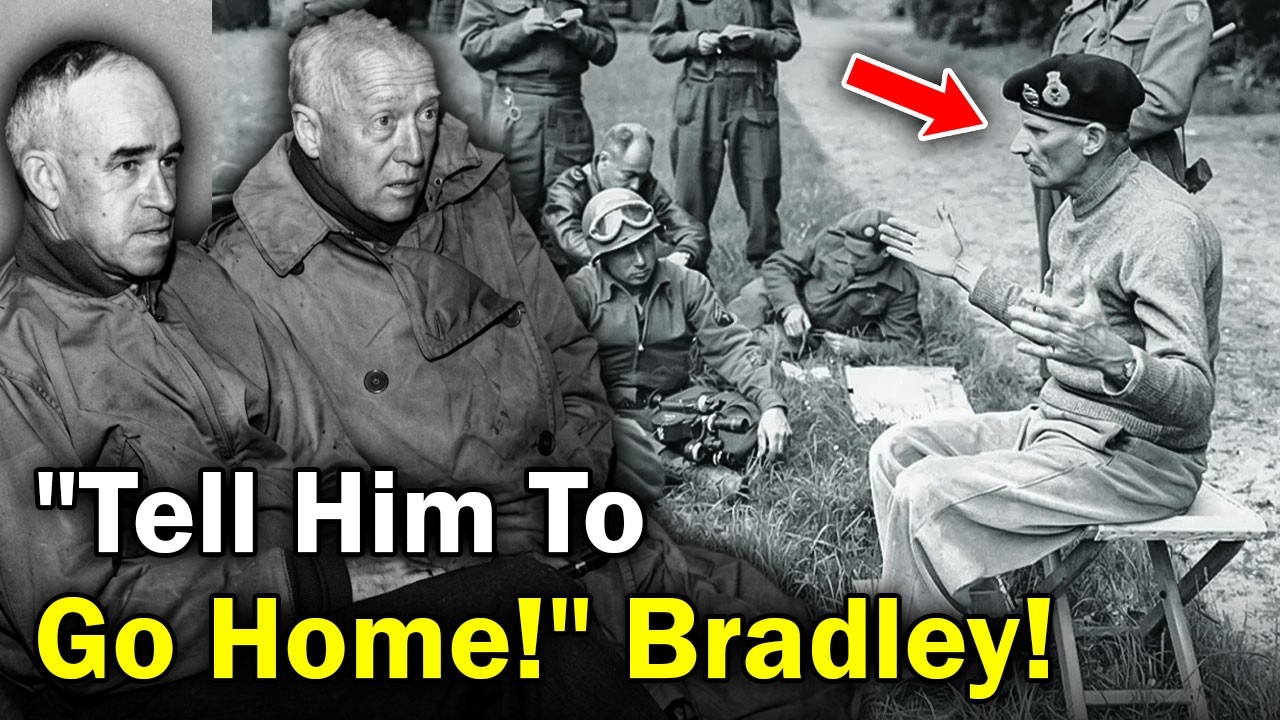 The weight of that call rested on a personality built from calculated restraint. Bradley was a general who filled maps but rarely headlines, a stark contrast to the flamboyant showmanship of George S. Patton or the theatrical certainty of Montgomery himself.
Historians who have studied Bradley’s command style describe him as a man who believed in substance over self-promotion, a soldier who allowed others to bask in war correspondents’ flashbulbs while he studied the contours of the front. In Sicily, Patton’s tanks moved faster and stole the press’s attention; in the sweep through France, Montgomery’s drive in the north received substantial media coverage. The American narrative of the European Theater was largely written by and about the British in those early months.
Operating under this shadow, Bradley built a reputation as the reliable one, the subordinate who absorbed responsibility without needing the tatty prizes of public adoration. He had a theory that anxiety-free competence would inevitably be recognized, a theory he defended privately to his officers as the only way to make an alliance function against a shared existential enemy. He believed controversial public battles between Allied leaders would only weaken the coalition facing Hitler, and he calculated that giving in on the front page would allow him to win on the ground map.
It was a rational assumption for a leader inside a political-military machine that needed collaboration to operate. But his calculation failed to fully account for a decisive variable: the internal culture of military command differed radically between the American and British armies, and the theoretical variant of that difference was collapsed brutally by the chaos of a war crisis. That moment of crisis arrived on December 16, 1944, when German forces launched a massive offensive through the dense, snow-covered Ardennes forests, catching the Allied lines by total surprise and driving a nearly 45-mile wedge into Allied-controlled territory.
The attack was a desperate gamble by the Wehrmacht, but it worked, striking at the seam between the American and British operational zones. Communication lines connecting Bradley’s headquarters in Luxembourg to his forces in the northern sector were severed, plunging the command structure into a fog that no report could clarify. In the chaos of that evening of December 20, Dwight Eisenhower, the Supreme Allied Commander, made this decision: he transferred command of the U.
S. First and Ninth Armies, some 200,000 soldiers comprising the bulk of Bradley’s operational American majority, to the 21st Army Group under Montgomery. On paper, the measure was a practical, temporary adjustment.
The British general’s command was physically closer to the northern flank of the penetration, and to coordinate in that sector required a single central authority to manage the widening front. Historian Michael Wilkerson notes that Eisenhower’s decision was tactically sound given the immediate crisis, but it placed Bradley in a hopeless structural position. The general who commanded the largest mass of American soldiers in the European Theater woke up the next day to find himself directing only a residue of his original force, relegated to an auxiliary role in a battle he believed his own command could have contained.
The following weeks saw a collision of two military philosophies playing out on a single battlefield, a contrast that sealed Bradley’s frustration. On December 25, Montgomery arrived to inspect his newly expanded command. Reports describe his arrival in a clean vehicle well after dawn, an immediate visual contrast to the exhausted, snow-covered American units he now supervised.
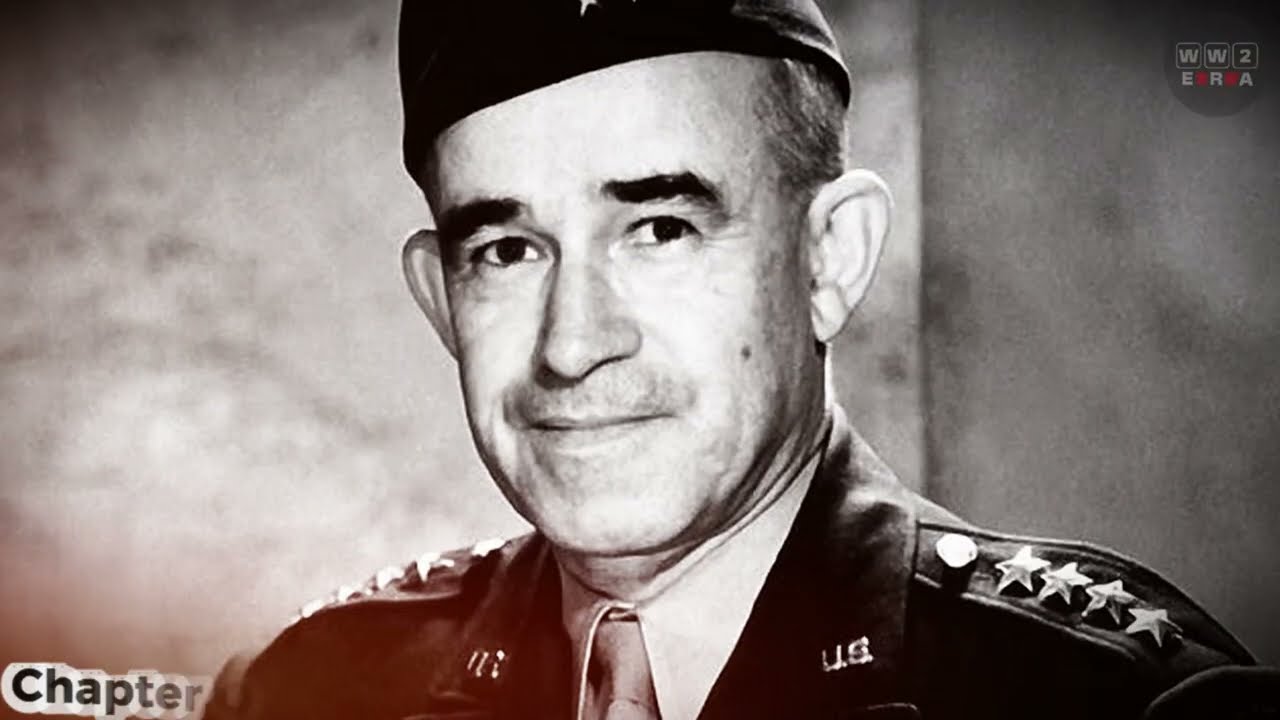 His first directive was to stop a planned American counter-offensive near Houffalize that Bradley and First Army commander Courtney Hodges had already drawn up. Montgomery instead ordered further strengthening of the line, a more cautious, defensive-oriented approach consistent with his public reputation for methodical planning. The interpretations split sharply even among historians.
Some say the caution reflects common sense given the uncertain German intentions; others argue that the delay, which postponed Allied counter-offensives by approximately two weeks, allowed the German forces time to strengthen positions that had been vulnerable. What is undeniable is that the operational tempo under Montgomery differed significantly from the combat pace American units were accustomed to and from what Bradley had orchestrated in other command theaters.
What is no longer under adjud, under the new command architecture, is the friction that became a constant reality of experienced infantry units as they ground through the same terrain. Reports from the front described constant potential hitch: American units developed fast infantry speed and bold initiative; Don’t expect they had to pause to coordinate with flanking British elements; urgent field requests were delayed waiting for formal approval across different authority chains. One American colonel described the experience as “like tying a hand shaped shackle to the main service.”
It wasn’t that anyone deliberately sabotaged the tempo, but that two operational systems were now trying to work as one. Every hour lost in coordination was an hour German infantry used to dig in deeper, to reinforce. Bradley, watching with his reduced command, did not see an abstract argument about strategic approach: he saw delayed evacuations, halted advances, and, in the view of many American commanders at the scene, opportunities squandered blueprints that had been planned and then postponed before they could be exploited.
There is also the matter of public credit, which would submerge the entire 𝒶𝒻𝒻𝒶𝒾𝓇 in municipal crisis. By January 7, the Ardennes attack had been stabilized. But Montgomery called a press conference that day after the casualties had been counted, during the actual peak of the battle’s final dangerous phase.
In that meeting, to which only a corpus aggregator had access (accredited press corps?) he gave what became one of the most controversial briefings of the entire coalition’s cooperation. To be succinct, Montgomery pronounced the battle outcome in an underscoring format that emphasized his command’s contribution to the northern front’s stabilization, but did so with such an insistence that many in the room gathered an interpretation that the British had saved the day; this came at the expense of the incoming—the US majority fatality list seemed to downplay their condition.
Montgomery’s own memoir and sympathetic historians argue his comments were misconstrued by proverb skewed Jeffersonian. The intent was to reaffirm the unity, they said. The reaction within the U.
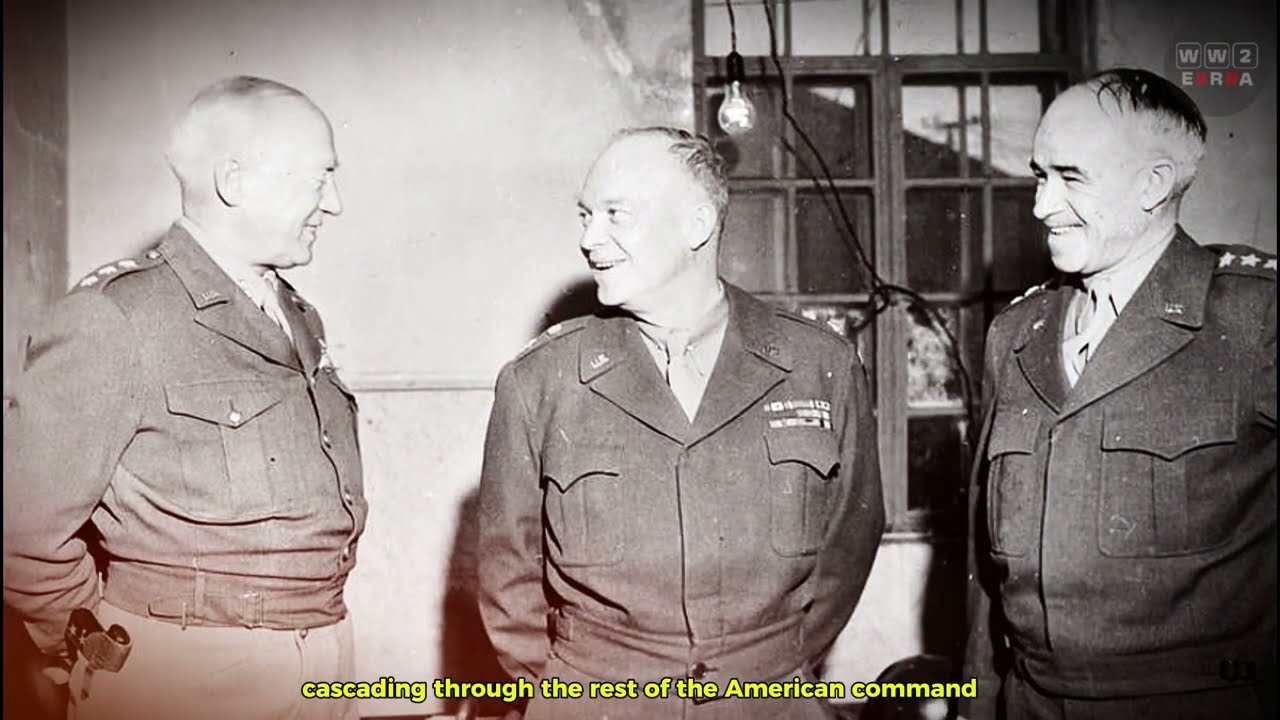 S. leadership hierarchy was swift and visceral. For a command that had just counted one of the most lethal US Army months of the entire war, the briefing appeared to rewrite that sacrifice as an anecdote, something to be superseded by a British general’s victory lap.
Multiple contemporary accounts record the 𝒶𝒻𝒻𝒶𝒾𝓇 as the moment the covenant within the Allied high command truly shattered; there was no more “diplomatic” polish that could smooth over the insult.
It was this environment—a costly battle, a controversial broadcast, and weeks of accumulated operational friction—that led Bradley to pick up the telephone and make the call to Ike. The exact wording of that call has not been preserved verbatim in any documented record. Post-war interviews and biographies strongly agree on the essentials: Bradley told Eisenhower he could not continue to serve in a structure that left U.
S. forces under Montgomery’s direct command and that if the arrangement were maintained, he would prefer to be relieved of command entirely. This was, for the general who spent five years avoiding confrontation, a blockbuster.
He cast the matter not as a point of negotiation but as a quiet ultimatum contradictory: either US troops were returned to a U. S. chain of command, or the highest-ranking American commander in theatre would step aside.
Eisenhower, confronted with a choice between the stability of his own western front and two faltering and – volatile but essential—allied personalities, needed to take the message away. He could not afford a resignation from the commander responsible for the American army’s largest deployed mass. Immediately after receiving word, George Patton, Third Army commander, famously issued support for Bradley’s stand, describing conflict in terms vastly more direct than Bradley employed in public.
Whatever his precise phrases, the historical consensus is this: by early January 1945, the top American leadership had presented Eisenhower a unified position. The current set was no longer feasible. Below, it was released a response fast.
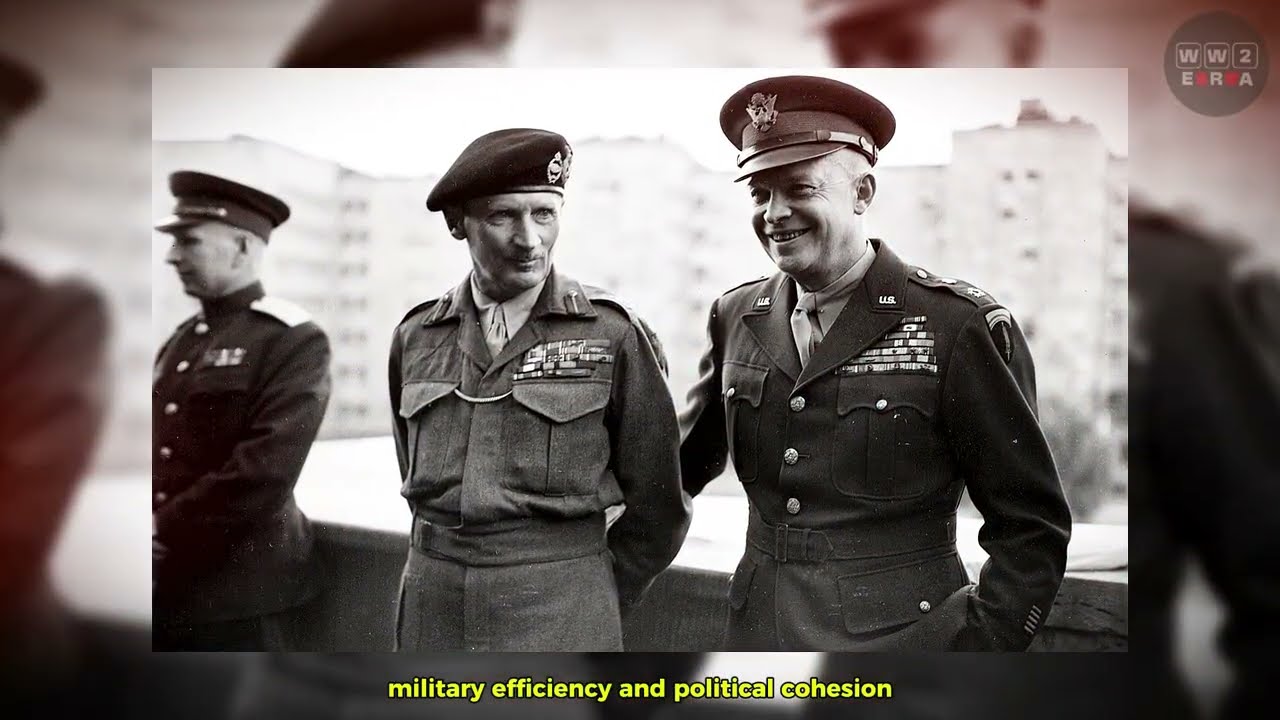 On January 17, 1945, technically just 10 days after the press conference, the U. S. First Army was returned to the 12th Army Group under Bradley’s command, and the reversal came faster than Montgomery had anticipator.
The logistical effect was immediate: freedom from coordinating with the northern command allowed Bradley to tackle operations at a faster clip. His army group pushed toward the Rhine with a speed absent from the prior week, and that velocity set up the scene that many historians interpret as the pragmatic halftime in this argument. Montgomery had spent months preparing for a massive, planned, heavy crossing of the Rhine River in the north—an operation that involved massive logistical, assistive artillery preparations, and was intended to be the first major Allied crossing.
Before that operation began, elements of Bradley’s 9th Armored Division discovered something far more unexpected: the Ludendorff Bridge at Remagen, still standing, reasonably intact, and insufficiently defended. Bradley ordered an immediate crossing without waiting for the broadest sense, without the long triangular pre-coordination that characterized his operating-style under the old front-line structure. A U.
S. force crossed the Rhine days before Montgomery’s elaborate planned operation began. By the time that northern salient got underway, Bradley already had several full divisions seated on the German side of the river.
Military historians leaned heavily to agree that the bridgehead at Remagen accelerated the collapse of German resistance in the west, shortening the campaign by a tangible degree. It was also a quiet practical retort to the January narrative disputes, a strong not came in the editorial board but on the map.
The professional relationship between Bradley and Montgomery never fully recovered. For the remainder of the war, Bradley’s operations were coordinated with the 21st Army Group only to the extent required by direct command from Eisenhower. Another apparent shift was observed by officers near Bradley in that period: the general, who once prioritized the smoothness of alliance relations, now prioritized operative independence.
Historians complicate this shift as a turning point in how the American command approach the last months of the European war—less inclined to black defer alliance diplomacy on orders, employing a more calculated tempo that often used autonomous reasoning. The level of pure confidence behind that change versus a breakdown in trust between two partners remains something historians debate to this day. The result, however, is undeniable: in a matter of months, American troops operating with more autonomy played a critical role in the final collapse of German resistance in the west.
The underlying this, under this archival mere dispute over leadership style during the coldest, bloodiest winter of the war, is not it but a study in how alliances survive a combat load, how credit and command intersect to limit the coalition’s effectiveness, and how even the most reserved leader has a break-wall. Omar Bradley had spent nearly the entire conflict stepping back, believing his prudent skill, without force, would be recognized. This assumption held—until December 1944.
For a few tenuous days, it did not. What followed was not just the return of an army to his control. It rewrote the conduct of the rest of the war in the west, according to reintroducing to him a ruthless independence that forced everyone to reconsider the dynamics of partnership in the shadows of the final victory.


