The life and death of Edward Eastman, the man the world knew as Monk, presents a paradox so profound that it seems to embody the very chaos of the city that spawned him. He was a man who could order a murder for the price of a suit, yet who wept over a wounded pigeon. He was a terror of the Lower East Side, a brute whose cauliflower ears and broken nose made him the cartoonish ideal of a thug, yet he died a decorated war hero, mourned by thousands and eulogized by a city that had once feared his very name.
As the press struggled to piece together his biography in the days after his death, they found not a single coherent narrative, but a shattered mirror reflecting a hundred different men, each one more contradictory than the last. The mystery of Monk Eastman is not merely a question of historical record; it is a question of whether the city of New York itself can ever be truly understood when its most notorious son remains such an enigma.
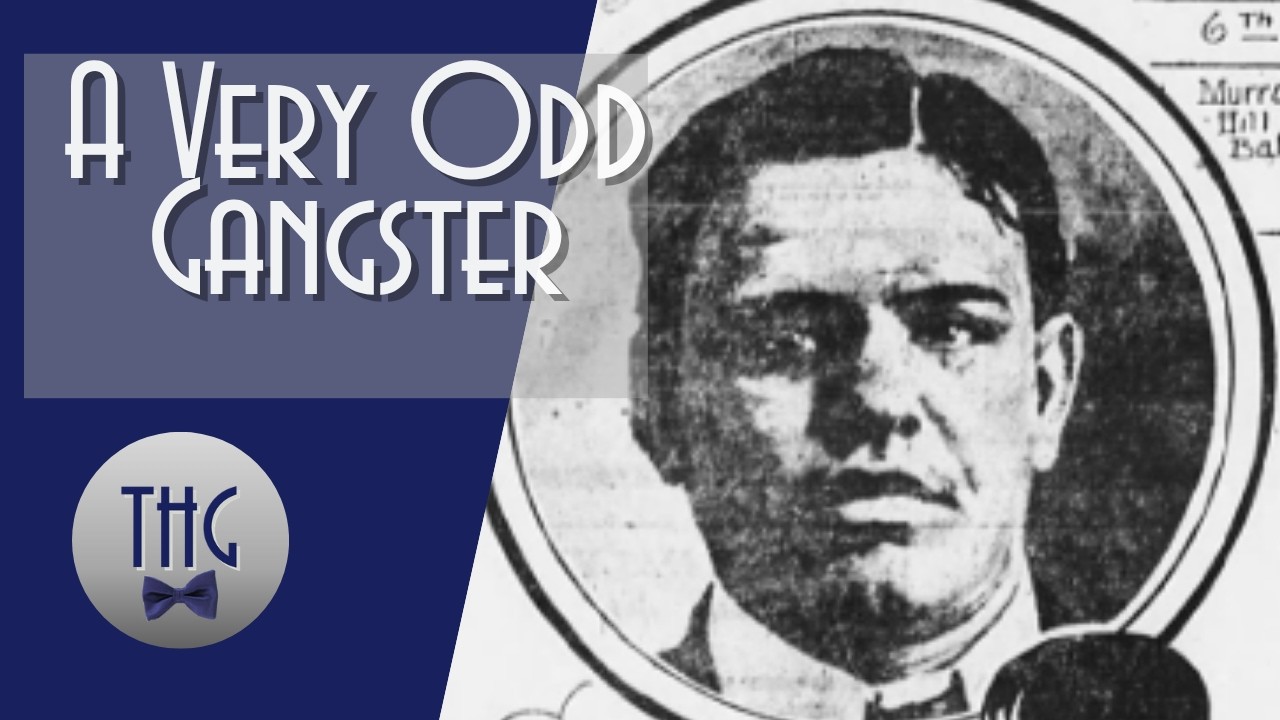 The confusion begins with the most basic of facts, his identity. When he was shot dead on a Manhattan street on December 26, 1920, the newspapers scrambled to report his age, his birthplace, and even his real name. The New York Tribune’s Arnold Prince wrote that less than a month after his passing, the questions about exactly who and what Monk Eastman was remained unanswered.
Was he 47 years old? Or older? Was his real name William Delaney, as he had enlisted under in the Army?
Or was it Edward Eastman, the name he grew up with? The New York Correction History Society later claimed his true name was Edward Austerman, and that he had been arrested at least once under the alias Joseph Morris. The United Press noted that no one quite knew whether Monk Eastman was an Irishman or a Jew, an understandable confusion given his long association with Jewish American criminal organizations, though biographers have since pointed to a likely European Protestant background.
Prince himself observed that a casual observer would say he was neither, and that he looked more like an Italian than anything else. In a city built on reinvention, Monk Eastman was the ultimate ghost, a man whose very existence seemed to shift with every telling.
His physical appearance only deepened the mystery. The nickname Monk, according to the New York Correction History Society, was short for monkey, a reference to his rough, simian features. In her seminal book Low Life, author Lucy Sante described him as so crude in appearance that he could model for the stereotypical crook who has continued to show up in cartoons down to the present day.
She painted a portrait of a man with a bullet-shaped head, a broken nose, cauliflower ears, prominently throbbing veins, numerous knife scars, pendulous jowls, and a bull neck. He was, in short, a walking testament to violence, a living map of every battle he had ever survived. And yet, this same man was an animal lover, a self-described pigeon keeper who at one point raised as many as 500 pigeons and more than 100 cats.
He developed a passion for bicycles, and members of his criminal organization would rent bicycles to curry favor with him, a bizarre eccentricity for a man who may well have been the most violent gangster in the entire history of a city of gangs. The inherent contradictions in the nation’s largest city were perhaps no more perfectly represented than in the brute that they called Monk
The violence that defined his early life was not a choice, but a survival mechanism born of the rough and tumble turn of the century New York City. He was scarcely 18 when he had already made himself known as a fighter and a gunman. His body was a canvas of scars, a record of a thousand battles fought in the dirty alleys of unsanitary tenement houses.
When he was once undressed for examination after a particularly brutal knife fight, surgeons were astonished to find a perfect network of old scars, including four stab wounds, several marks left by bullets, and an old wound on the right arm caused by a blow by a heavy club. He persistently refused to tell them who had stabbed him in his last fight. When asked about his other injuries, his answer was jaunty.
“Oh, I’ve been to war.” The Spanish war? inquired one of the strangers.
“No, some little wars we’ve been having down on the east side,” replied the gangster. “But don’t let it worry you, old pal. I gave them a receipt for everything they gave me.”
 His rise to power was inextricably linked to the corrupt political machinery of New York. Among his first mentions in the newspaper was in the Brooklyn Eagle in November of 1901, when he was listed among the gangs organized to debotch the franchise alongside characters with names like Fat Bonner, Kid Griffo, Nutsy Fagan, and Jimmy the Pimp. These gangs were organized around elections and something called repeaters, people who committed voter fraud by casting multiple ballots at the same or different polling places during a single election.
The gangs were divided into two parts, one to do the repeating, the other to act as a strong armed gang who were to assault any deputies or members of the police force who attempt to arrest any of the repeaters. Eastman was one of the latter, and apparently rather good at it. An associate said of him, “Believe me, when it comes to keeping them in line at the polls, that guy’s there.”
Prince gave the background of these gangs, explaining that to understand monk, it was necessary to have known New York when each flop house along the Bowery or in the five points district was filled at election times with from 50 to 200 residents of dubious identity, ready to do their duty to the country by casting their ballot at a dollar a throw for the candidates supported by their leaders. It was simply part and parcel of the city, in the back rooms of the saloons, in the clubs organized for patriotism and existing on gambling. In the shadowy places under the elevated pillars, where the faithful gathered, a thousand feuds, some political and some private, kept the adherence of the factions constantly in fir.
New York was in the process of becoming a really big city, and these were some of the forces helping it towards its goal
But Eastman wasn’t merely the result of a corrupt system. He was a gangster, neither pure nor simple, but a man who actively shaped the violent landscape of his era. A 1903 edition of the Tribune explained the rise of the gang that was central to what they described as a veritable wild west reign of terror on the Lower East Side that would put to shame a frontier hamlet.
In police records, the Monk Eastman’s first came to the front almost 10 years ago. Emerging from the dirty alleys of unsanitary tenement houses in early childhood, they began their criminal life by shooting craps, then moved up a peg and became young crooks when they began a career of thieving by praying upon push carts and fruit stands. At 18, the Eastmans were good crooks, having learned the pickpocket profession.
They became in Bowie Parliament’s mole buzzers, hooks, and dippers, terms that describe street robbery in its various phases. But year by year, they increased in criminal cunning and slowly expanded until today, they were part of the criminal life of the whole city. Eventually, they moved into prostitution, a business that was pleasant, more profitable, and attended with less risk than pocket picking.
They spent their time in cafes and gambling resorts, disposing of the money earned for them by their wretched women
The violence reached its zenith in October of 1903, when the New York Evening World wrote of something truly 𝓈𝒽𝓸𝒸𝓀𝒾𝓃𝑔. Is assassination an industry in Manhattan? They asked.
Have thugs on the Lower East Side added the fine art of murder for hire to their other lawless accomplishments? Can a man for a price secure the murder of a rival or an enemy and be assured of no distressing legal consequences? Reporting on a police investigation of recent crimes, the world reported that police have been able to work out a price list from the Monk Eastmans and their rivals, the Paul Kelly gang.
 An ordinary punching was $5, while a beating that will send a victim to the hospital cost 50. A stabbing cost 75. A murder $100.
And Eastman was in the middle of it all. He was arrested for the first time in 1902 after a battle in which one of the Kelly crowd was killed, but he was discharged for lack of evidence. In 1903, he was arrested again, charged with assault, and discharged again.
The same year, Monk was hired by a notorious Wall Street broker to go over to Freehold, New Jersey, and dose off a businessman who was kicking about a deal. Monk messed up the victim, but didn’t 𝓀𝒾𝓁𝓁 him. He was charged with felonious assault, but acquitted.
A police officer told the Tribune, in the three years I was over there, Eastman was arrested 30 times, but we never got him dead to rights and had to let him go. It was a common saying in those days that no matter on what charge Monk was arrested, he was always acquitted
But the violence that was terrorizing the east side was becoming too much for the politicians. On September 15th, 1903, Eastman’s gang got into a protactic gun battle with Paul Kelly’s Five Points Gang. Prince explained that 50 men in all, including several policemen, stood behind iron pillars and blazed away at one another while the storekeepers in the vicinity hastily sought back rooms and pedestrians fled wildly for cover.
Three were killed, seven were wounded, including Monk, who was also arrested. But everyone stuck to the code and refused to squeal on the other shooters, and Monk was released for lack of evidence. The public outrage of the incident at Rivington Street signaled to politicians that the unconditional support of gangsters could not continue in its current form.
Tam Hall pulled its support of Eastman and Kelly. Police began cracking down on the city’s gangs. The following February, Monk and an accomplice attempted a robbery, a standard stickup on the street, but the young man that they attempted to rob was being protected by the notorious Pinkerton Detective Agency.
When two Pinkerton detectives intervened, New York’s greatest gunman started shooting. The detectives and thieves engaged in a running gun battle, the only victim of which was a $75 plate glass window. Eventually, police nabbed Monk, who gave them the name William Delaney.
He was arrested for felonious assault with attempt to 𝓀𝒾𝓁𝓁. But this time, despite his record of getting off, the police declared that the charge against him will hold. Without his political support, Monk was convicted and sentenced to 10 years in Singh Penitentiary.
While he was in prison, the gang fractured under rival leaders and withered. The New York Herald announced that the day of the gangs has passed. Comically, despite his record of arrest, this was Monk’s first conviction
 He was released in 1909 by the state parole board under a law that made men sentenced for the first time eligible for parole after serving only half their sentence. But his gang was lost to him and he drifted into petty crime. In 1912, he was sentenced to 8 months for smoking opium.
In 1915, he was sentenced to two years 11 months for robbery. And then the truly unexpected happened. Time off for good behavior got Monk out of jail in late 1917.
And in October of that year, when the US entered the war against Germany, Eastman walked into an army recruiting station in Brooklyn and was sworn in as an American soldier. No questions asked. The International News Service wrote, “Chieft of one of the toughest gangs in the history of New York City, owner of a dozen aliases, gunman, robber, and opium smoker, arrested scores of times, imprisoned twice.
Eastman is now a private in the 106th Infantry.” And he excelled at the job. His officers described him as a good soldier, and machine guns were his special delight.
They said Private Delaney bomb and hand crept forward and demolished them with even more enthusiasm than he displayed in early years when he was wrecking a polling place in an anti-tam district. He was simply heroic. One time when his company was relieved after protecting a dangerous section of the line, he volunteered to stay behind.
All through the time that men of his company were resting, Eastman served in the frontline trench, carrying back wounded men to the dressing stations. One time when wounded, he decided he didn’t want to be away from his unit. He managed to escape the hospital, return to combat.
The news service opined that Eastman has come back physically and morally
Owing to his convictions, he had lost the right to vote. But when he returned, his entire regiment asked that his rights be restored. He was pardoned by New York Governor Al Smith, a Taming man.
After the pardon, he simply said, “I am just plain William Delaney, and I am going straight.” The day after Christmas 1920, Monk Eastman, or as newspapers of the time app, whatever his name was, was shot to death by a former associate, a corrupt prohibition agent. The reason is a matter of still ongoing speculation, although at least one historian has surmised that Monk had indeed not gone straight, but that the two men were involved in illegal bootlegging.
The killer received only a single year for manslaughter. Monk Eastman was buried with full military honors. An estimated 4,000 people attended his funeral.
Like the city that was his home, Monk Eastman was a study in contradictions. He so loved animals that at one point he was raising by some accounts as many as 500 pigeons and more than 100 cats. He so loved bicycles that members of his criminal organization would rent bicycles to curry favor with him.
He was at once the city’s most notorious gunman and one of its most famous war heroes. The Daily News said of him, “His story is one of the most peculiarly interesting revelations of a good man and a bad one dwelling in the same human habitation as has ever come to the attention of the psychologists.”