Mia Sara, the actress who captivated a generation as Sloan Peterson, the effortlessly cool girlfriend of Ferris Bueller, has lived a life far more complex than the perfect day her most famous character enjoyed. The girl who seemed to glide through Chicago with such confidence was, in reality, a teenager struggling to navigate a Hollywood machine that would ultimately leave her deeply ambivalent about the very industry that made her famous. Her story is not one of a career that faded, but of a woman who consciously, deliberately, chose a different path, only to find her way back on her own terms nearly four decades later.
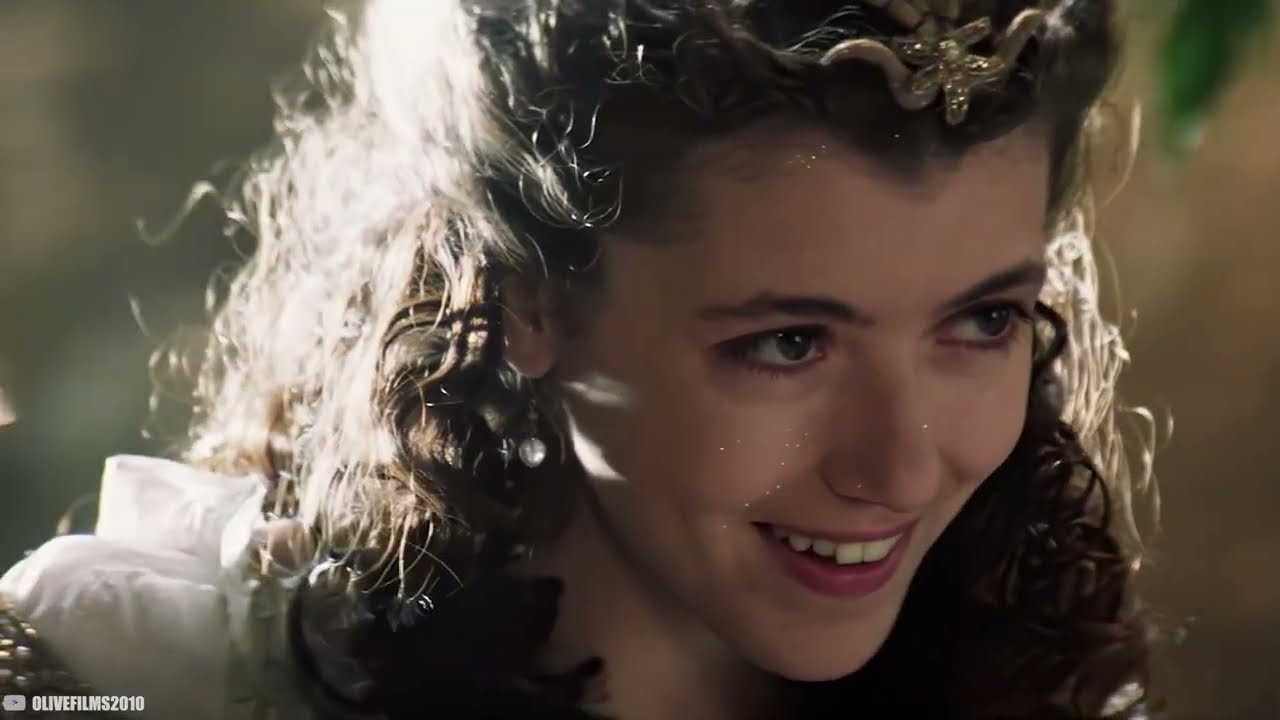
The first time audiences saw Mia Sara, she was already standing inside a world that looked like a dream. As Princess Lily in Ridley Scott’s 1985 fantasy epic Legend, she wandered through an enormous enchanted forest opposite a young Tom Cruise, surrounded by unicorns, goblins, and Tim Curry’s towering Lord of Darkness. But behind the fantasy was an unusually young actress trying to survive her first major film, a production that nearly went up in flames, literally.
 On June 27th, 1984, during a lunch break with only about 10 days of filming left, the entire forest set at Pinewood Studios caught fire. Flames shot more than 100 feet into the air while smoke could be seen from miles away. Nobody was injured, but the destruction was so dramatic that Sara later remembered returning from lunch to find the sky black and studio personnel crying over what had happened.
The film had cost around $25 million, yet its worldwide theatrical gross fell short of that figure, and critics were harsh. Roger Ebert argued that even the movie’s spectacular effects and makeup could not rescue it. For Sara, her first major Hollywood experience had been both a production disaster and a film that struggled to connect.
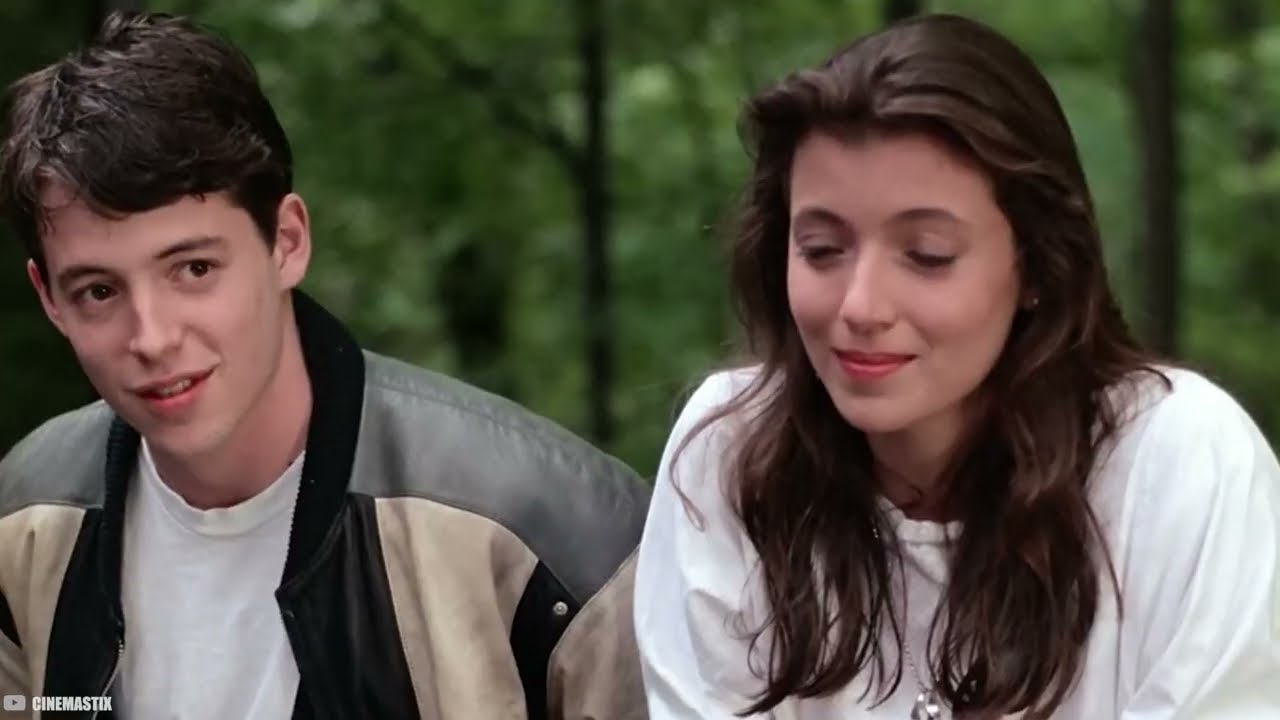
But almost immediately, everything changed. Sara auditioned for John Hughes, who was preparing a completely different kind of movie, Ferris Bueller’s Day Off. Hughes initially wanted someone older to play Sloan, believing a 17-year-old character needed the maturity and dignity of an older actress.
Sara later recalled that Hughes did not even know how young she actually was when she auditioned. When he discovered the truth, he was stunned. Yet, he cast her anyway
The timing made the situation even stranger. Sara was 17 while making Ferris Bueller, surrounded by performers considerably older and more experienced than she was. Matthew Broderick was 23, Jennifer Grey was 25, and Alan Ruck was 29.
Sara was not simply playing a teenager among teenagers. She was a genuine adolescent surrounded by adults who were already experienced performers. Looking back, she said she felt out of her depth and acknowledged that she had not yet developed the emotional maturity to handle other people’s egos or my own.
The most revealing relationship was with the man controlling the entire production, John Hughes. Hughes had already established himself as one of Hollywood’s great chroniclers of teenage life through 16 Candles and The Breakfast Club, and he apparently wanted his young Ferris Bueller cast to bond away from the cameras. He tried to get them together and introduced them to French New Wave films.
But Sara was a New York teenager who had already seen many of those movies, and the attempt at bonding did not go as Hughes intended. Sara says they didn’t get along well and she remembers him as a strange guy
Then there was the secret romance happening just a few feet away from her. Sara has revealed that she had a massive crush on Matthew Broderick while filming the movie. Unfortunately for her, it was completely unrequited.
Broderick was secretly dating Jennifer Grey, the actress playing Ferris’s sister, Jeanie. Grey later confirmed that she and Broderick were together for roughly 2 years and that keeping their relationship hidden while working together was difficult. At one point, she even struggled to contain her laughter during a scene because of the way Broderick looked at her, forcing the crew to send her away to regain her composure.
There were lighter moments, too. For instance, during the famous taxi scene, Sara has recalled that Broderick tickled her feet and knees to make her laugh naturally. In the finished film, you can see Sloan breaking into genuine laughter rather than delivering a perfectly controlled, scripted reaction
And there was one part of filming that Sara remembers with uncomplicated affection, the parade. In the movie, Ferris, Sloan, and Cameron arrive at the Von Steuben Day parade in downtown Chicago. Ferris suddenly climbs onto a float, grabs the microphone, and begins performing, lip-syncing to Danke Schoen, then launching into the Beatles Twist and Shout while Sloan and Cameron dance below with the crowd.
What audiences see as one continuous burst of spontaneous teenage rebellion was actually the result of carefully planned choreography, multiple filming days, and an enormous logistical operation. Choreographer Kenny Ortega later recalled that Broderick was initially a nervous wreck because he had never danced before. The strangest part is that the filmmakers actually inserted themselves into a real Chicago parade.
The crew filmed during the actual Von Steuben Day parade, capturing genuine crowds and long shots before later bringing in additional people after word spread that John Hughes was making a movie. Some reports put the assembled crowd at around 10,000 people. But Sara’s memory of the sequence focuses on something much smaller and more exhausting.
She explained that she and Alan Ruck would perform their dancing, then jump into a van and be driven several blocks away. The camera would then be positioned for another pass. They would perform the dance again, and afterward, they would wait for Broderick and the float to catch up.
Then the whole process happened again and again. Sara remembered it as so crazy and so much fun, precisely because of that frantic quality
There is an even better behind-the-scenes detail involving Broderick. He had injured his knee earlier while filming the sequence in which Ferris runs through neighborhood backyards, leaving him unable to perform much of the elaborate choreography Ortega had prepared. Instead of hiding the problem, Hughes apparently leaned into it.
Broderick recalled Hughes shouting instructions through a megaphone along the lines of doing the number again but not doing the choreography because he wanted the performance to feel messy and spontaneous. That spontaneity is also why the crowd itself became part of the movie. Several people visible in the background, including workers and ordinary spectators, weren’t originally supposed to be performers.
They were simply reacting to the music and dancing. Hughes found their reactions funny enough that he instructed the camera operators to film them
So, while audiences saw Sloan as confident, sophisticated, and completely comfortable in her own skin, the actress portraying her was a 17-year-old trying to understand an adult workplace, a demanding director, and feelings for a co-star who was already secretly involved with someone else. The film became a beloved classic. Sara became immortalized as Sloan Peterson.
But behind that effortless smile was a teenager learning a lesson Hollywood would take years to understand. Becoming famous and actually enjoying the life that made you famous were two very different things
And if Mia Sara had disappeared after Ferris Bueller’s Day Off, Hollywood history would be easy to explain. A teenage actress gets one iconic role, fails to turn it into a lasting career, and fades away. But that is not what happened.
Hollywood just couldn’t figure out what to do with her. In 1987, only a year after Ferris Bueller, she took the lead in Queenie, a lavish television miniseries loosely based on the life of actress Merle Oberon. Sara played Queenie Kelly and Dawn Avalon, working alongside heavyweight performers including Kirk Douglas and Clare Bloom.
 The role itself showed that Hollywood still saw something in her. But Queenie also revealed how unpredictable her career was becoming. The production was physically demanding, and Sara suffered sunstroke while filming.
Yet years later, she remembered the experience warmly and said she loved making it
She continued taking roles instead of chasing another Sloan Peterson. In 1988 came a dark period thriller based on a 1928 crime case in Pennsylvania, with Sara starring alongside Donald Sutherland and Chad Lowe. Then came Shadows in the Storm, followed by television films and miniseries including Daughter of Darkness, Until We Meet Again.
By the early 1990s, however, her career looked increasingly difficult to categorize. She worked with acclaimed director Sidney Lumet on A Stranger Among Us in 1992, appeared in the science fiction series Time Trax in 1993, and continued moving between television and feature films. None of these projects turned her into the next dominant Hollywood star.
But that was not the same thing as failure. Her filmography shows a working actress taking role after role. The problem was that none of them recreated the cultural phenomenon of Ferris Bueller
Then came the role that seemed capable of changing everything again. On September 16th, 1994, Universal released Timecop with Sara starring opposite Jean-Claude Van Damme. This was no obscure television project.
The science fiction action movie opened at number one in North America with more than $12 million in its first weekend, and eventually earned roughly $101 million worldwide. It became Van Damme’s highest grossing starring vehicle at the time. For Sara, the film proved something important.
Eight years after Ferris Bueller, a major studio was still willing to put her in a commercially ambitious movie opposite one of the biggest action stars in the world. And Sara did not merely survive Timecop. She was recognized for it.
She won the Saturn Award for Best Supporting Actress for her performance as Melissa Walker
There was another problem, though, and this one came from inside rather than outside. Sara has since explained that acting itself was never her great passion. What she disliked especially was the machinery surrounding it, the auditions, the constant need to prove herself, and the pressure to keep pursuing the next job.
That changes the entire interpretation of her career. Maybe Hollywood did not fail to figure out what to do with Mia Sara. Maybe Hollywood kept offering her opportunities while Mia Sara was gradually realizing that she did not want the life attached to them.
She continued acting through the 1990s, appearing in projects such as The Pompatus of Love, The Maddening, Undertow, and the television miniseries 20,000 Leagues Under the Sea. She even found another unusual opportunity in Birds of Prey years later
There is a strange pattern running through Mia Sara’s career. Again and again, she came close to projects that could have completely altered the way audiences remembered her. One of the most fascinating examples happened before Ferris Bueller had even reached theaters.
In 1985, Jim Henson was searching for the teenage girl who would become Sarah in Labyrinth. The audition process stretched across months with actresses including Sarah Jessica Parker, Laura Dern, Alli Sheedy, Jane Krakowski, Marissa Tomei, and Mia Sara all reading for the role. Sara auditioned, but Jennifer Connelly ultimately won the part.
Connelly was cast on January 29th, 1985, and filming began that April. Labyrinth became one of the defining fantasy films of its generation,with Connelly permanently associated with Sarah and David Bowie’s Jareth becoming an iconic character. Mia Sara, meanwhile, went in another direction.
Yet, she did not completely lose her connection to Henson’s world. The Jim Henson Company itself points out that several actresses who auditioned for Sarah eventually appeared in Henson related productions, including Sara who later played Andine in Jack and the Beanstalk, The Real Story
That connection became especially significant because Jack and the Beanstalk, The Real Story, released as a television miniseries in 2001, was produced by Brian Henson, Jim Henson’s son. Sara played Andine in the project, one of several fantasy roles that seemed increasingly suited to her. By this point, she had already moved through everything from period dramas and crime thrillers to science fiction and action movies.
Yet fantasy kept pulling her back. Her filmography eventually included Lost in Oz, a 2002 television pilot, and The Witches of Oz, where she played Princess Langwidere. But then came the biggest missed opportunity of all.
In 2002, Sara became Dr. Harleen Quinzel, Harley Quinn, in Birds of Prey. This was years before Margot Robbie’s version turned Harley into a worldwide blockbuster character.
Sara’s version was radically different. Instead of simply being the Joker’s colorful sidekick, she was the psychiatrist who had transformed into Harley Quinn,and was secretly manipulating events from behind the scenes
The timing is almost cruel when viewed from today. Birds of Prey arrived before superhero television had become the enormous commercial machine it is now, and the series was cancelled after a short run. Sara, however, has remembered the experience very differently from the show’s eventual fate.
She has spoken affectionately about playing Harley,and has indicated that she enjoyed the role,and would have liked to continue. Once again, the pattern appeared. She finally found a part she genuinely enjoyed only for the project itself to disappear.
 And this is where Mia Sara’s career becomes difficult to describe as either a success story or a failure. She had played Sloan Peterson in one of the most beloved comedies of the 1980s. She had starred opposite Tom Cruise in Legend.
She had appeared opposite Jean-Claude Van Damme in Timecop,which became a major commercial success. She had worked with Sidney Lumet, Kirk Douglas, and Claire Bloom. She had auditioned for Labyrinth.
She had become Harley Quinn before Harley Quinn became a billion-dollar cultural phenomenon. Yet, none of these opportunities produced the conventional trajectory Hollywood expected from a famous young actress
After Birds of Prey, the pattern became even clearer. Sara still worked, but increasingly sporadically. She appeared in CSI, Den Y in 2005, Nightmares and Dreamscapes in 2006, and Tinsel Town in 2007.
Then came The Witches of Oz around 2011,and Pretty Pretty in 2013. The credits were still there, but the frequency was changing. She wasn’t disappearing overnight.
She was gradually becoming less interested in maintaining a conventional acting career. It is tempting to look at the shrinking filmography,and conclude that Hollywood had finally stopped calling. But that’s not what was happening.
Sara has explained that acting was never really her first love. Writing was. The audition process in particular had never suited her.
And as her family life developed, the incentives for chasing one more role became weaker. What looked from the outside like a career fading away may actually have been something much more deliberate
By the time her screen appearances became rare, Sara had already earned enormous recognition. She had the iconic character, the successful films, and the opportunities. But she also seemed to discover that none of those things necessarily made her happy.
The real turning point was no longer about which role Mia Sara could win. It was about whether she wanted to keep playing the game at all. And she would answer that question soon enough.
By the late 1990s, Mia Sara was still recognizable everywhere she went because of Ferris Bueller. But the roles themselves were no longer the center of her life. In 1996, she married Jason Connery, the son of Sean Connery, after meeting him while working on Bullet to Beijing.
Unlike the image of glamorous celebrity that surrounded her, the marriage was largely private. The couple had a son, Dashiel Quinn Connery, in 1997. And when the marriage ended in divorce in 2002, there was no spectacular Hollywood 𝒔𝒄𝒂𝓃𝒹𝒶𝓁
Then came an almost bizarre Hollywood coincidence. Sara had once auditioned for Labyrinth, the Jim Henson fantasy that ultimately made Jennifer Connelly the heroine Sarah. Years later, she found herself working with Henson’s son, Brian Henson, on Jack and the Beanstalk,The Real Story.
What was not revealed at the time was that their professional relationship eventually became personal,and Sara and Brian Henson married in 2010. They later had a daughter, Amelia. By the end of the 2000s, Sara was no longer behaving like an actress trying to climb back toward the level of fame she had reached in Ferris Bueller.
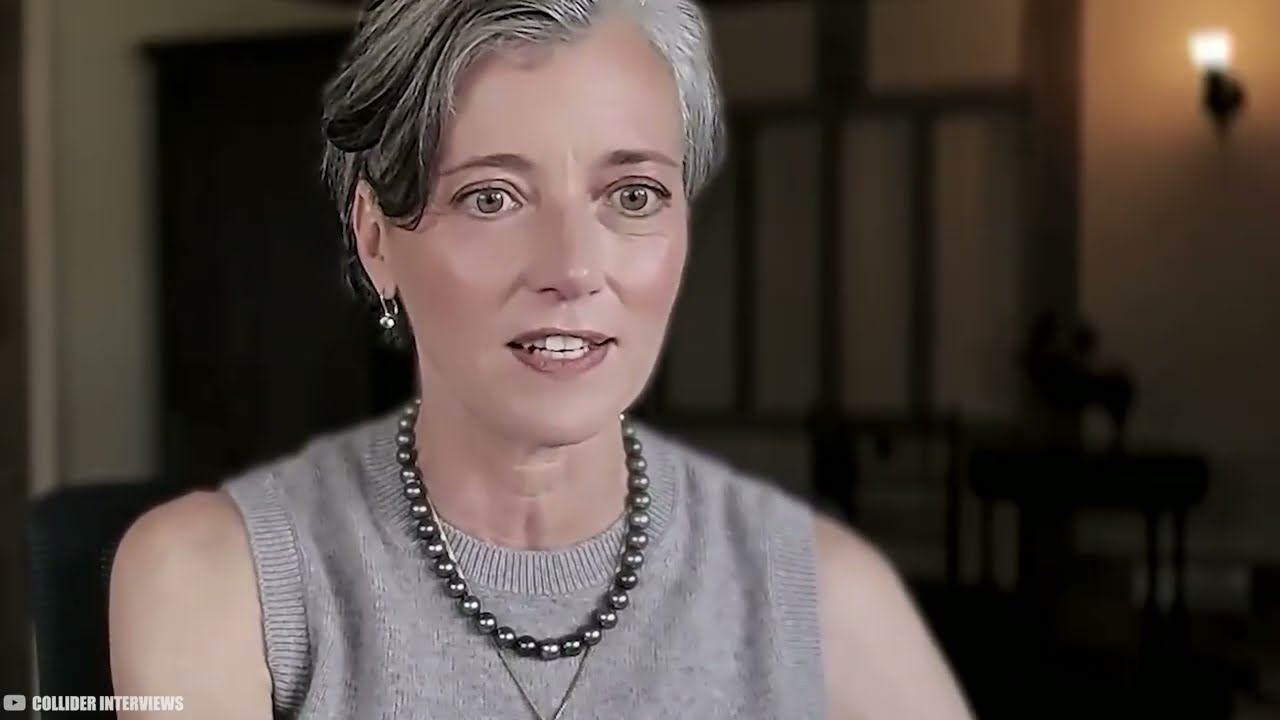
In a 2010 interview with Total Film, she described herself as mostly retired, explaining that she was now a mother with a really noisy, difficult house to maintain. Then came the sentence that perhaps explains her entire disappearance better than any rumor ever could. I’m a poet.
She said that writing poetry had been what she was focusing on for the previous several years
And this was not simply a public relations story about wanting a quieter life. Sara actually built a literary identity. Her published work includes poems,and pieces appearing in publications such as the Valparaiso Poetry Review, The Somerset Review, The Southampton Review, Superstition Review, and Knee Jerk Magazine.
Some of these works date back to the early 2010s. Her own website eventually summarized the transformation with a line that sounds almost like a joke aimed at her former profession. Mia Sara used to be an actress,but recovered her senses,and now she writes.
Fans wanted to know what had happened to Mia Sara. Her answer essentially was that nothing had happened to her. Her definition of a successful life had changed.
Acting had never been the great love people assumed it was,and years later she would explain that she never had the resilience for the audition process. There were parts of her career she was proud of, she said, but overall acting had not been a happy career for her
Her retreat was gradual rather than dramatic. After the birth of her daughter in 2005, Sara took only a handful of screen roles. Her final film before her long hiatus was the short Pretty Pretty in 2013.
By then she had spent roughly three decades moving between enormous productions, television, fantasy films, action movies, and critically uneven projects. She had already experienced the strange phenomenon of becoming famous before she was old enough to understand what fame meant. Now she was choosing something almost unimaginable for someone with her history, privacy.
 She could spend time with her children, write, and live without constantly wondering what Hollywood wanted from her next. And eventually, her life became almost completely disconnected from the image audiences had preserved. While millions still pictured the elegant 17-year-old Sloan Peterson riding through Chicago with Ferris, Sara was living as a wife, mother, and writer
But walking away from Hollywood did not mean Mia Sara hated Ferris Bueller’s Day Off. Her later comments about the film have often been reduced to a much simpler story than the one she actually tells. Yes, Sara has admitted that making the movie was not an especially enjoyable experience for her.
She was 17, surrounded by older actors,and working in an environment where she felt out of her depth. She also recalled a difficult relationship with director John Hughes, whom she later described as a strange guy. But none of that meant she rejected the finished film or resented the audience that loved it.
She could acknowledge feeling young and unprepared. She could say she did not always enjoy the film making process. She could have difficult memories of Hughes,and still recognized that the film had become something genuinely special to millions of people.
The movie was no longer just hers or Hughes’s or Broderick’s. It belonged to audiences who had grown up with it, quoted it, and returned to it for decades. Sara understood that affection even if she never shared every aspect of the public’s nostalgia
And then eventually the story seemed to stop. Her acting became sporadic,and after Pretty Pretty in 2013, there was a long silence. Years passed.
The actress who had once worked with Tom Cruise, Jean-Claude Van Damme, and a generation of Hollywood stars was no longer appearing in major productions. Yet, she was not sitting in Los Angeles waiting for an agent to call. She had moved into a different life.
Then, Mike Flanagan entered the story. The filmmaker behind The Haunting of Hill House,and Midnight Mass was not someone Sara had spent years trying to impress. She and her husband, Brian Henson, had simply become admirers of his work.
Through their social circles, they eventually met Flanagan,and his wife, Kate Siegel,for dinner. Flanagan asked her why she no longer worked. Sara responded that she was ready for a triumphant return.
She had spent years away from the profession,and was unsure whether she wanted to come back. Flanagan then made the question more personal. What if he offered her something?
Sara said if he offered her a role, she would do it. Then Flanagan remembered when he began making The Life of Chuck, his adaptation of Stephen King’s story, he called her
The project was an unusual one for a comeback because it did not ask audiences to pretend time had stopped. Sara was not being brought back as another version of Sloan Peterson. She was cast as Sarah Cray, the grandmother of Charles Chuck Cray, a character whose life forms the emotional center of the story.
Tom Hiddleston played the adult Chuck, while Sara appeared in the section exploring his childhood alongside Mark Hamill as Chuck’s grandfather. The symbolism was striking. Nearly four decades after becoming famous as a 17-year-old playing Ferris Bueller’s teenage girlfriend, Mia Sara returned as a grandmother.
Hollywood audiences who had preserved her image from 1986 were now being asked to see the passage of time rather than ignore it. And the role itself contained an unexpected connection to her earlier work. Sarah Cray teaches young Chuck to dance, creating a quiet echo of the performer who had danced through Legend,and later through the unforgettable parade in Ferris Bueller’s Day Off.
But this time, there was no teenage fantasy,and no need to chase another iconic image. The dance belonged to a grandmother passing something joyful to a child
Sara’s return was not comfortable. After being away from acting for so long, she admitted that she was really scared,and worried about disappointing Flanagan. That fear revealed the difference between abandoning a career,and losing the ability to care about it.
She had stepped away from the constant pursuit of acting. But she had not forgotten what it meant to stand in front of a camera,and wonder whether she was getting it right. Flanagan understood the anxiety.
When she questioned her work, he reassured her that he had what he needed,and encouraged her to trust him. Then there was Mark Hamill. For Sara, playing his wife carried its own surreal dimension.
She joked about being married to Luke Skywalker,but her affection for Hamill was genuine. After years away from sets, she found herself back in an environment with a legendary actor, a director she trusted,and a role that did not require her to prove that she could still be the girl audience remembered. She was allowed to be Mia Sara at her current age, playing a character at the stage of life she had actually reached
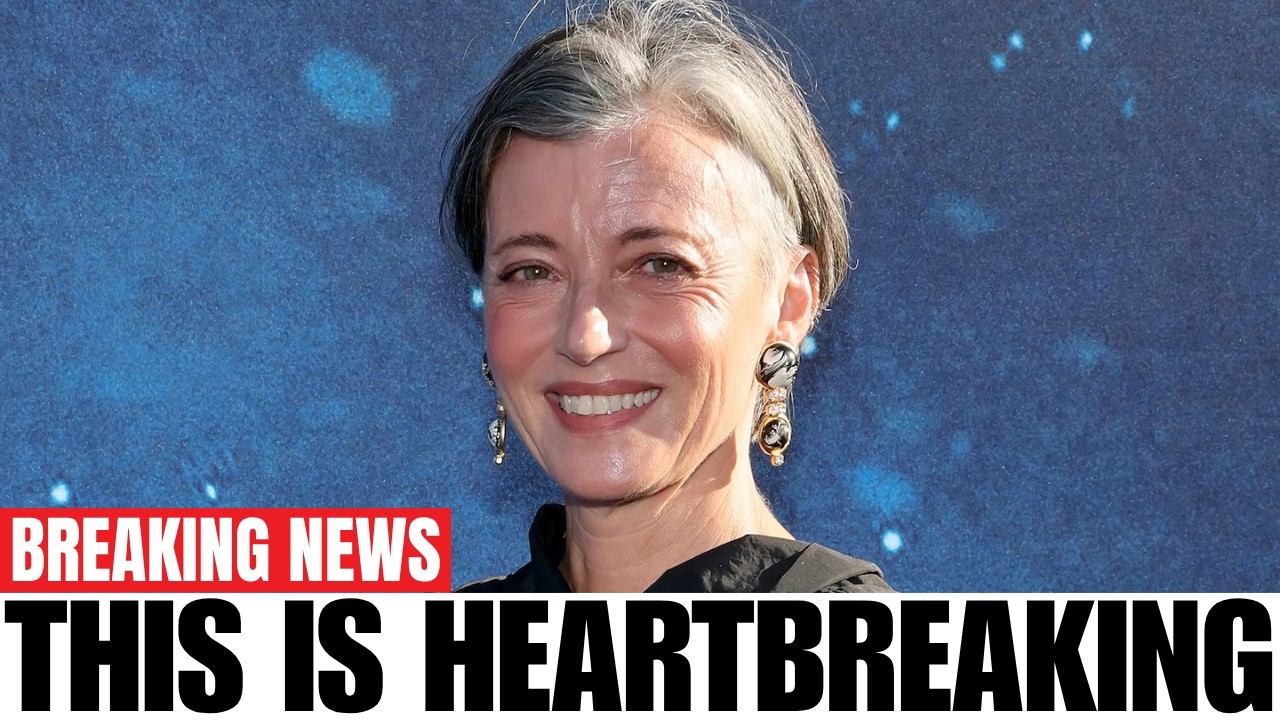
When The Life of Chuck premiered at the Toronto International Film Festival in September 2024, it won the People’s Choice Award, giving the film immediate attention. Sara’s return became even more visible when she appeared at the Los Angeles premiere on June 2nd, 2025. After years of near invisibility in mainstream Hollywood, she was suddenly back on a major red carpet.
To viewers, it looked like the beginning of a classic comeback story. But Sara refused to turn it into that story. Asked whether she was now returning to acting full-time, she made clear that the Life of Chuck was not the opening move in a campaign to reclaim Hollywood.
For her, the project was about Mike Flanagan. If he needed her, she said, she would be there. She walked away because the life she wanted could not be measured by how often she appeared in movies.
She kept the memories she valued, including that wild Chicago parade, let go of the parts she did not miss,and found another creative identity through writing. Then, when the right filmmaker appeared with the right role, she returned without surrendering the life she had built. For once, Mia Sara was not trying to fit herself into Hollywood.
Hollywood had to fit into the life Mia Sara had already chosen