Dodge City, Kansas, in 1878 was a crucible of violence and opportunity, a place where the lines between lawman and outlaw were often blurred by whiskey and gun smoke. It was here, in this cauldron of the Wild West, that one of history’s most legendary friendships was forged not in quiet conversation, but in a moment of extreme, life-threatening peril. A young lawman named Wyatt Earp found himself staring down a gang of desperados, outnumbered and with no visible way out, his life hanging in the balance.
The situation appeared hopeless, a final stand on a dusty street, the kind of grim scenario that would cement a man’s legend or end his life in a blaze of gunfire.
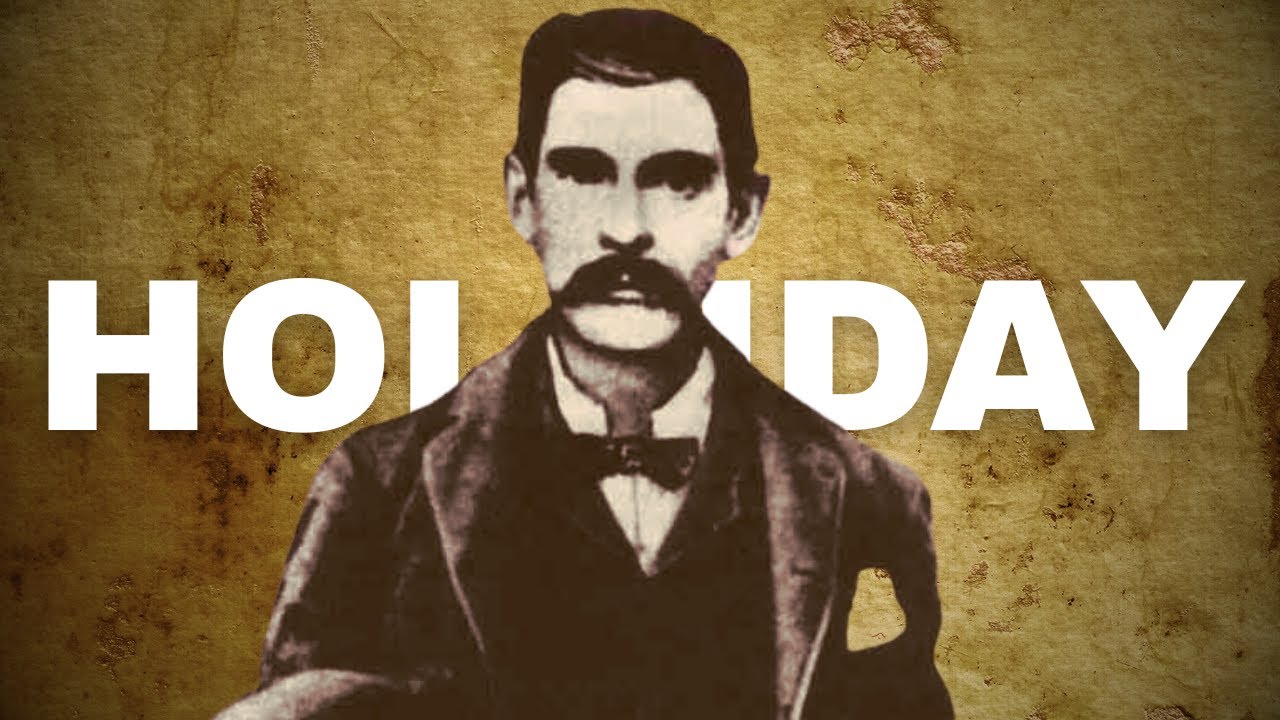 However, the narrative took a sharp turn for the bizarre and heroic. Just as the situation seemed irrevocably dire, a figure burst from a nearby saloon. This was not just any man; it was a dentist and gambler known as John Henry “Doc” Holliday.
With a pistol in each hand, the sickly, coughing writer displayed an unbelievable burst of audacious courage, holding the gang of desperados at bay with the sheer force of his will and the threat of his weapons. This action provided Wyatt Earp with the crucial distraction and cover he needed to place the gang’s leader under arrest. This single, defining moment of loyalty and reckless bravery was the catalyst that turned an acquaintanceship into a brotherhood that would endure through the most famous gunfight in Western history.
Wyatt Earp himself would later recount this exact episode as the very foundation of his bond with Doc Holliday. He would say, “Because of this episode that I became the friend of Doc Holliday ever after.” This event, as retold by Earp, stands in stark contrast to the chaotic and violent path the dentist would take to become a legend.
The friendship was not simply a matter of shared history; it was a, moment of absolute, unflinching salvation. According to Earp’s story, Doc’s sudden appearance, dangerous and with guns blazing, was the reason he walked away from Dodge City that night, and the reason the two men became inseparable in the annals of history.
While this act was heroic, the records of Holliday’s time in Dodge City are a muddled mixture of fact, folklore, and a somewhat quiet reality. While stories swirl of him being a dangerous drunk and a con artist, the official records suggest he kept a relatively low profile, at least in the context of the law. Fellow legendary figure of the West, Bat Masterson, who was then the county sheriff, would later corroborate this, writing that Holliday managed to stay out of trouble for his entire time in the city.
It was a challenge for a man with such a known and turbulent temperament, but he apparently navigated the town with a degree of caution, a stark contrast to their terrifying, all-out encounter with the desperados.
Pushing back against the image of pure brawler, Holliday was, after all a, trained dentist, he took out an advertisement in the local paper, The Dodge City Times, promoting his services. The strange duality of his life—the sickly medical professional and the lethal gambler—often, good. He was said to carry around a “pocket dental office,” a be a small kit of basic tools he would haul beside him in a case, suggesting he was always ready for work.
It paints a picture of a man who was perpetually between a professional life and his more violent, murderous trade, which also leads to a curiosity of how much actual dentist work he did while also dealing with your friend’s drunk.
From Dodge City, the path of Doc and his companion, the infamous “Big Nose” Kate Elder, led them west, pushed by circumstance and possibly a gunfight that went unconfirmed, to Trinidad, Colorado. This town, described then as having “all the various necessary evils you always find in a live wide awake get up and go town,” served as a perfect platform for Doc’s budding trade as a gambler. But it was not a lasting home, as he would again be on the move, heading 130 miles south to Las Vegas, New Mexico, and more specifically, for the mineral baths at the Montezuma Hot Springs.
The effort was to find some reprieve from the tuberculosis that was literally killing him slowly. The hot springs, thought this would have curative effects, were a last desperate hope.
 It was in Las Vegas that Doc’s life continued the chaotic cycle of opening a saloon and using lethal violence. On July 19th, 1879, he walked into a encounter that was both a new beginning and a violent climax. He had just opened his new saloon, but that same day, an Englishman named Mike Gordon was getting drunk and created a scene.
Gordon had tried to force one of the, “sporting girls” to leave with him and when he was refused, he went outside which ready pulled out his gun and fired directly into the saloon. Staunch and deadly as always, Holliday stepped out and put a bullet directly and precisely into Gordon’s chest. A coroner’s inquest occurred, but nobody was willing to identify the shooter, resulting in freedom for Doc, in a typical example of the law being unable to hold him.
Not long after that, the famous trope of the Earp-Holiday partnership was reconfigured in Las Vegas. Wyatt Earp was on his way to the boomtown of Tombstone, Arizona and decided to stop to Las Vegas. Their reunion was horrible, but the tension of it was not unseen, especially with Kate.
Kate’s infamous jealousy over anyone hoarding Doc’s attention, specifically the charismatic Wyatt, caused significant strain. By her own accounts decades later, she said, “I love Doc and thought the world of him, and he was always kind to me until he got mixed up with the Herps.” She was jealous, attributing the end of their happiness to this meeting.
Her fear was that Holliday would forever be bound to Wyatt’s side.
Indeed, that is exactly what happened. The group, which included Kate, headed to Tombstone, Arizona—an appointment with destiny “Green” that neither of them could have ever foreseen. They first for Prescuit, the connection point for the Herp brothers and the so-called, her family.
During that stop, Doc did not exactly make a favorable impression on the wider Earp family, especially with Virgil Earp’s wife, Allie. She once recalled how Doc had been introduced as a dentist to her. She quickly asked if he would extract a loose tooth, to which he stamped, “Keep your baby teeth in your mouth where they belong.
I’ve got no use for them.” This exchange, cold and outright rude, puzzled Wyatt but the relationship was already no to be broken. It was an odd beginning to the cold resilience the group would become, with Wyatt the but the world’s lawman and Doc walk, the destroyer it.
After she,vy and his brother Virgil moved to Tombstone following a few weeks later, Doc and Kate would remain behind in Prescott before he was off. Though Kate seemed to be to root them in, it would not last. That trip to Tombstone was part of a journey leading to the inevitable.
 In the fall of 1880, when Doc Holliday finally got to the famously lawless boom town, he would find the place was a powder keg of ambitious men and ruthless rancher types known as the Cowboys. There was no shortage of threats and revenge. It was there in Tombstone, a month later, that Doc Holliday was at the center of one of his famed incidents, a fight at The Oriental Saloon with a loudmouthed player named Johnny Tyler.
The chaos, rising Tempter, and easily foreseen with Doc at the center. Pistols were drawn, then confiscated, and the man named Milt Joyce ejected Tyler from the saloon. Soon, his anger turned on Doc, he slapped him and threw him and two out onto the street Doc’s fist.
Infuriated, Doc came back later that night with a borrowed revolver, confronting Joyce and shooting him three times, one of which got him good in the hand This violent act, real, and definitive, was the pair a glimpse of the Moto Killers. Joyce survived and would press charges, but the slow wheels of case, in place of attempted murder charge, would be dropped. Holliday would only plead guilty to assault.
The Cypher, with the hand, was the eternal record.
This incident is a stark sign of Holliday’s complete package: “the man” he was, sick and driven over the edge. He was also to carry his routine gambling and mining speculations in Tombstone. Yet, his loyalty to the Earp arms would become his core most important role.
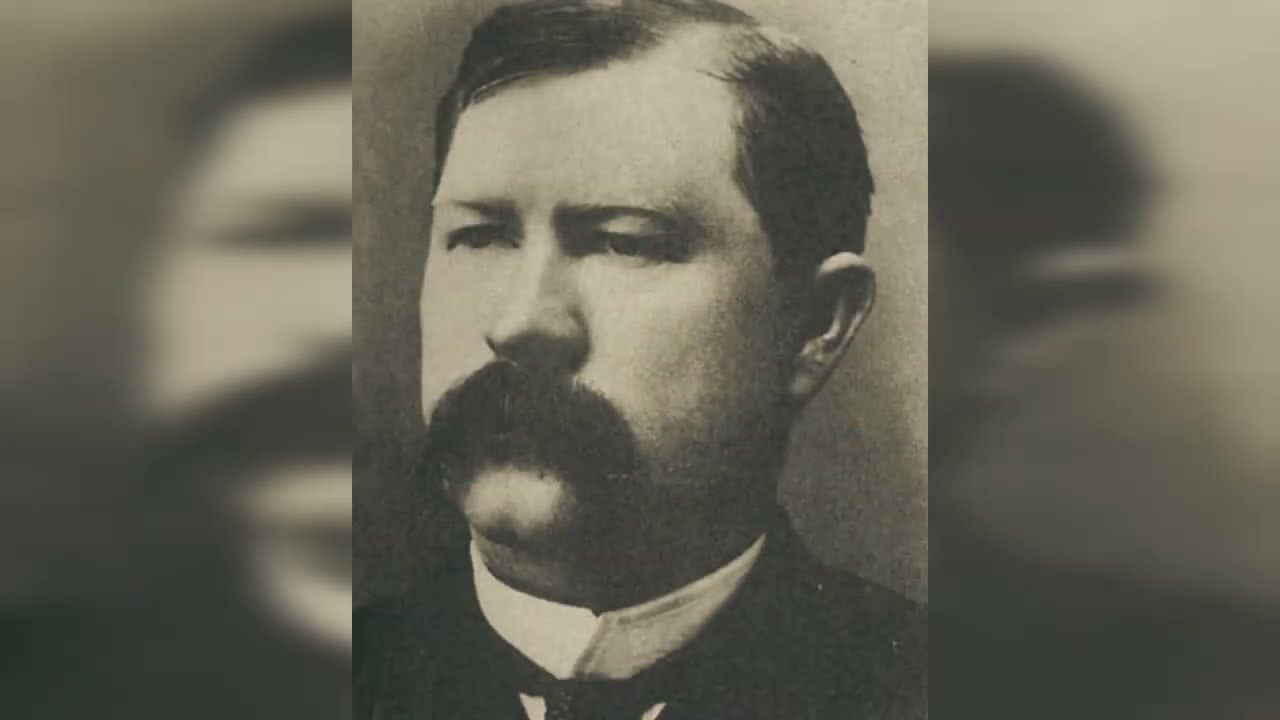
Bat Masterson later saying that Holliday had “his whole heart and soul wrapped up in Wyatt Earp” and was always ready to stake his life in defense of any cause in which Wyatt was interested. This was not just a man hanging on to a coatrail. This was, for a man so isolated by his otherness—the sickness, the law-history—a friendship that becomes the missing piece, the greatest survival anchor.
The powerful narrative, notably pop practice in our movies, “Wyatt Earp is my friend” is exactly how he feels, the bond is the twin sense.
Yet, the turbulent dynamic with Kate would never ease. In March of 1881, a loud row between Doc and Kate would lead to his arrest again, with reports saying that his companion and her furious jealousy had reached a point of screaming and near gunfire. Kate’s growing resentment for Wyatt was the effect that Doc was being pulled away, and under the influence of the lawman was for the worse.
According to her, this was the pivotal moment that marked the “end of the happiness we had enjoyed.” She even was said to have once brandished a knife in response to the suspicion he was with another woman. Her cold, quiet jealousy makes it feel like a lifelong passion for her, a violent and isolated that pushed him into the hands of Wyatt.
 The drive of their relationship quickly starts to be the eventual break, but their paths aren’t quite merged just yet. The reckless and futile of this undeniable bond is intertwined with the Irony of history itself. While the movies novelize the relationship, there is data factual evidence that real lives were about to collide into the largest campaign of violence.
It was a period of uneasiness; this territory was a pool of threats. The Cowboys are a group of rustlers and outlaws that have been stealing cattle and taking stagecoach.
There are Cowboys like “Curly Bill” Brochious, the McClaury brothers, the Clantons (Ike, Phineas and Billy), Johnny Kingo, and a host Peony D. There were are too many of them. With a general interest to ragnarok, they were a constant presence in Tombstone, spending their money in keys, and politically controlled the vote.
When Wyatt Earp resigned his position as deputy sheriff in a protest over the rigging of an election by the cowboy voters, the bed of the conflict with law, local governments, and the career cow is become bed. This election irked of such influences had caused a feeling if the Earp had had, had the man fully irreconciled.
The tension sought to highlight what that when Wyatt offered to drop his lingning against Johnny Behan for the sheriff seat, they made a deal. With Earp dropping the, he would be the under sheriff and, more importantly, Behan would split the tax revenue they collected. As sheriff, that is just how the money flow.
When Behan received the appointment, he absolutely [] regaled and reneged on the entire promise. This broken pledge deeply embites the, Wyatt Herp felt personally insulted. This deception would push the Earps directly into opposition with the for ruling, and a neighbor that to a final, violent cease.
It is this backdrop, rife with political snubs, to be inside, `bank robberies, and personal vendettas, that Holliday and Herpe finally steed deep in the middle of the most infamous feud in the American West. Meanwhile, Doc Holliday’s life had always been the story for, survival verses. He is a professional who became a criminal, a gentleman who was known in peaceful territory, but a bastard of violent action.
He was about to enter his final game, the one that would define him. His bond with Wyatt was the proactive factor that kept getting him into these pickles. But at the same time, it was also a key why he would go to the infamous draw, the meeting at OK Corral.
The years leading to that fatal day are a prophecy of gun smoke and personal vengeance on a barren, desert street. The combustible mixture of Doc’s reckless nature and his total devotion to Wyatt Earp was about to be unleashed in a hail of bullets. Their friendship formed in Dodge, was about to be tested in Tombstone with the most violent climax possible.
As history notes, the CowboyTombs were a secret movement, but the Earps, local law, and Doc as a loyal zealot, would bring the house down. In that sweeping testament to history, Doc was not just a friend, but a soldier of social acceptance. He had found, amidst the desolate and violent towns, the one man who had faith in him, and that was a cause to die for.