The rooms were elegant, the conversation relaxed, and the wine flowed freely, but hidden within the walls of Trent Park and the Virginia wilderness surrounding Fort Hunt, the most revealing intelligence of World War II was being harvested from the unguarded lips of German prisoners of war. Separated by an ocean but united by a common purpose, these two allied facilities ran parallel operations with a single goal: get captured German generals, and the regular soldiers, comfortable enough to forget they were still prisoners. When they did, the microphones came alive.
The result was not a trove of battle plans or secret codes, but something more enduring, a psychological profile of the Western Allies, filtered through the anxious and often awestruck voices of the Wehrmacht. It is a profile that challenges easy assumptions about how the war was won.
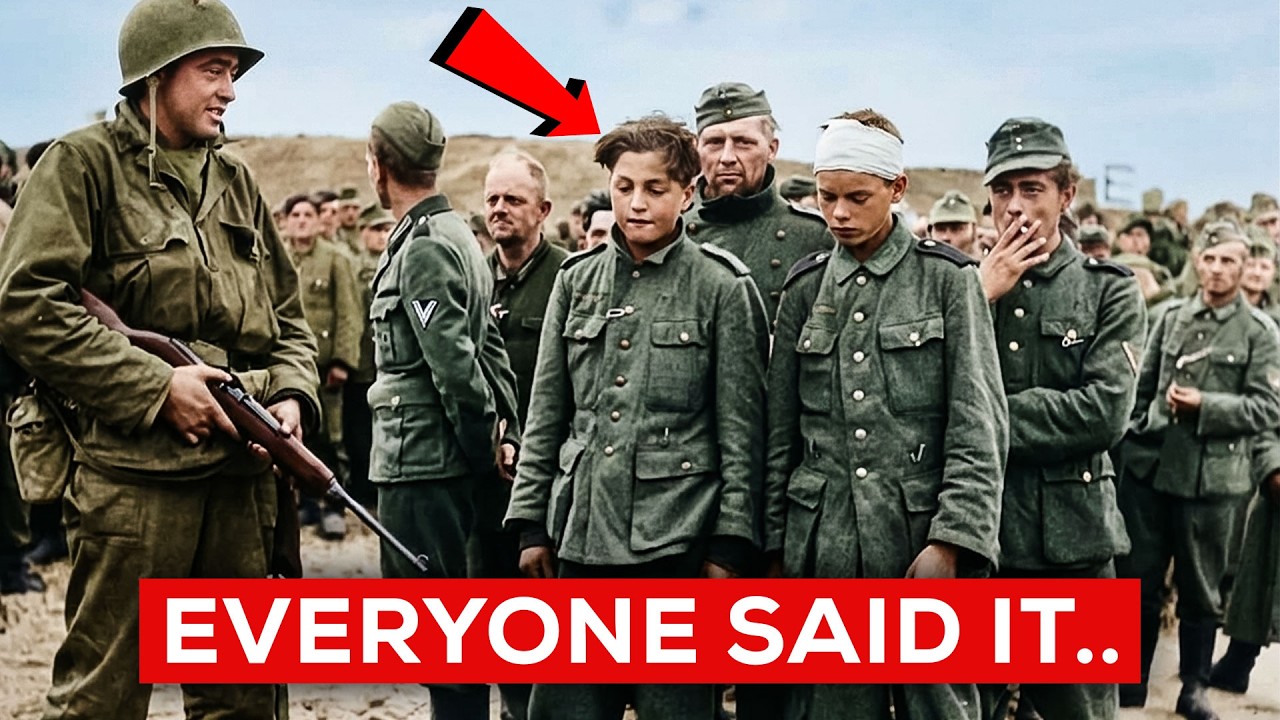 Since 1942, British intelligence hosted senior German officers at Trent Park, while their American counterparts operated a shadowy site known simply as PO Box 1142 or Fort Hunt. No formal interrogation was needed; the men were allowed to stroll the gardens, dine in comfort, and commiserate with their fellow countrymen over their slide toward defeat. In the entirety of their stay, they did not know that every phrase, every laugh, and every frustrated complaint about their predicament was being absorbed by listening devices.
These hidden transcripts, now declassified and meticulously analyzed by historians like Sönke Neitzel, show a defeated force trying to comprehend the illogical nature of the enemy that had conquered them.
The picture they painted was less about the industrial might of Detroit, which they could see in the sheer volume of equipment, and more about the baffling, almost mechanistic way American firepower was organized. The common refrain, repeated across four years of war and three continents, was not the guts of the G. I.
, nor the mobility of the Sherman tank, but the terrifying responsiveness of the American artillery system. It was a feedback loop that shredded the very core of German tactical doctrine, providing fire support that was less a grinding drumroll and more a laser-guided scalpel, and revealing a fundamental gap in the philosophy of war that no amount of training or courage on their part could close.
When German interrogators pieced together the fragments of these complaints, a singular portrait of their enemy emerged. It was the image of a man they began to despise, not for his brutality, but for his methodical and latent advantages. Brigadier General Fritz Bayerlein, commander of the elite Panzer Lehr Division, a man who had bled in North Africa and suffered the maelstrom of the Eastern Front, consistently brought his wartime experiences back to this very point.
“I have never seen such rapid and effective fire direction,” he reportedly stressed, describing an enemy who could put an artillery barrage onto a suspected position faster than he could formulate a plan to reduce it, heaving a heavy weight onto the shoulders of any German attack.
Bayerlein watched his division, which started the Normandy campaign at full strength, disintegrate not from a single, massive battle, but from a thousand minute, precise, and well-fed offensives by a Yankee fire control system that never tired. The German system was precise, but American coordination was a relay between a forward observer with a radio and multiple batteries, forming a closed loop. This was the “Conveyor Belt” effect.
Where the Germans saw the ground warfare of attrition and individual tactical brilliance, they saw an American enemy that did not mass the guns to fire in ignorance, but triggered individual, rapid converging fire missions, giving them a scale of precision that paralyzed them just as effectively, if not more so, than massed soviet steel. The effect was both physical and psychological.
Adding to this sense of being institutionally overwhelmed was the ceiling, or the lack of one. When the air was clear, the ground was death. In 1944, German troops wouldn’t be surviving Russian crossfire, they would be ground down by an invisible but absolute force above them.
 Fatigued and brittle, the Wehrmacht observed the manual entry of a new god of war: the American fighter-bomber. The Luftwaffe, now a shadow of its 1940s self, could not contest the skies. The Rolands P-4 and P-17 that tackled the soldiers packed more than ordinance.
A combination of speed, accuracy, and the integrated lethal nature of field weapons, stuck to a grid coordinate not only made a machine gun nest a pile of rubble but saw reconnaissance aircraft spot staged tank columns and return with rockets. This wasn’t just airpower gone massive; it was a seamless extension of an overall system. Comms from the high command to the CJAM link structures on the other side brought the sky down like a blanket.
This “sky that stopped working” changed the temp of the war. For the German army, night was no longer the domain of rest, but the only time one could unsafely move to attack position, a logistical nightmare that neurolinguistically denied the mobility of the reserves.
Yet, was it not the Soviet Union’s endless artillery that taught the German how to endure fire? The “Stalin Organ” cursed there also broke their minds over the west. However, the veteran survivor of the east articulated the answer was the “why” versus “how” When facing the Red Army, the German could predict.
The Great Patriotic War dominated a slow, grinding front, where Soviet attacks were delivered in decisive, colossal waves, using strict lethality, that could be mapped and anticipated. They could “depend” on the stages of the attack. In the West there were no stages.
The observation was clear in a 1945 transcript from Trent Park where an older field officer, costing a year in battle against the Soviets, described his time against Americans in the Ardennes as “impossible.” The adjustments were instantaneous. There was no time to catch a breath.
“A 30 minute gap of quiet in battle,” he said, taking a low break from one line, “allowed his troops to relax their defense, and it was in the first gap that the American called on a battery.”
The crucial difference was this systemic intertwining of every force limb. Drawing by radios toted by infantry sergeants connected directly to the fire support cell, and airborne spotters. This closure of command loop was a doctrinal edge.
 Unlike their Soviet adversary, were the advance designed to be slow and relative to its weight, the American gave everything the ability to adapt, and then they shielded it with armor of supply. This is “the conveyor belt” rolled forward.
The transcript at Trent Park often referred to “the feather pileup” or “mass effect of supply” where the precision is dying as a “cross-sectoral fireplan.” To look at the quantity is to miss the true reason the German pleaded these walls. They could not be so spare with ammunition because German logistical capacity could not approximate the American ability to bring calories, fuel, and ammunition from the port clear to the Charlie Company.
When an American soldier was in the counterattack, he was not starving. He collected his mail and had a break. He had aload.
This constant. There was no “use low amount.”
The specific nature of the American system, as witnessed at the tragic rout of the Panzer Lehr during Operation Cobra, demonstrates how this undisturbed logistical superiority could be converted into strategic chaos. The concentrated air and artillery weight of an epic proportion smashed the unit. Yet the follow-up destruction was not a “grand push,” it was the completion of the break attributed to that detract.
They would then use the portable nature of their Fuelled rate to not to climate the survivors. This system didn’t need certainty of spectacular to win; it needed correlation. Replace the tanks, replace the men, replace the shells, and cohesion.
Cobra was a day, the “cynosure” line the entire Normandy.
In the end, the German POWs was not an enemy that won through a blind bludgeon. Through what colonel would say about it, it solved. They had lost against the idea of the West as a machine.
 One which methodically applied their strength into the fracture lines of their enterprises. They stepped into a mirror they feared. .
They were “not enough.” Maybe it was that They described Germany with a “soldier front-gn flight” versus, an American system, which with.
That is why the recordings at Trent Park and Fort Hunt are crucial from the war history.
These were “bitter” men. They weren’t try to commiserate.
Looking at the ideology of the system.
> “there is nothing more “gobby” than a system.” A German that American infantry was junior. That average soldier may not as it suffered as well as the German elements, but there was a key.
The general player as a single cohort At the height of improvement all interacted now. They use and get noise at a run.
That is.
The German never could never.