The men who orchestrated the Soviet Union’s victory over Nazi Germany did not perish on the battlefields of the Eastern Front, nor did they fade quietly into the annals of history. Instead, they spent the twelve years following the fall of Berlin locked in a savage, clandestine war against one another, a conflict that would see one of them executed by firing squad and the rest stripped of power, humiliated, and cast into obscurity. The struggle for succession that followed Joseph Stalin’s death in March 1953 was not a sudden eruption of ambition, but the final, violent chapter of a rivalry that had been meticulously cultivated by the dictator himself during his final years.
In the immediate aftermath of the Second World War, these men stood as colossi over a devastated continent. Vyacheslav Molotov, the long-serving foreign minister, was second only to Stalin in the government’s hierarchy. Lavrentiy Beria commanded the NKVD, wielding absolute control over the police, the gulags, and the machinery of political terror.
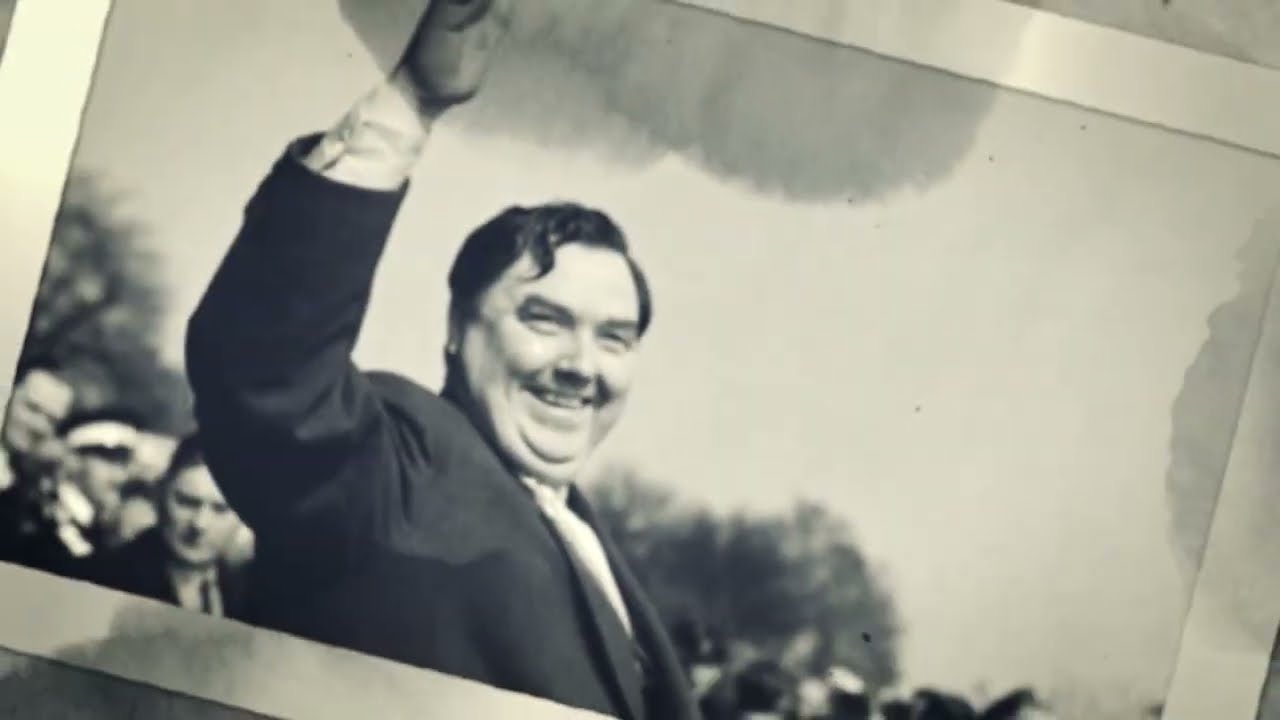
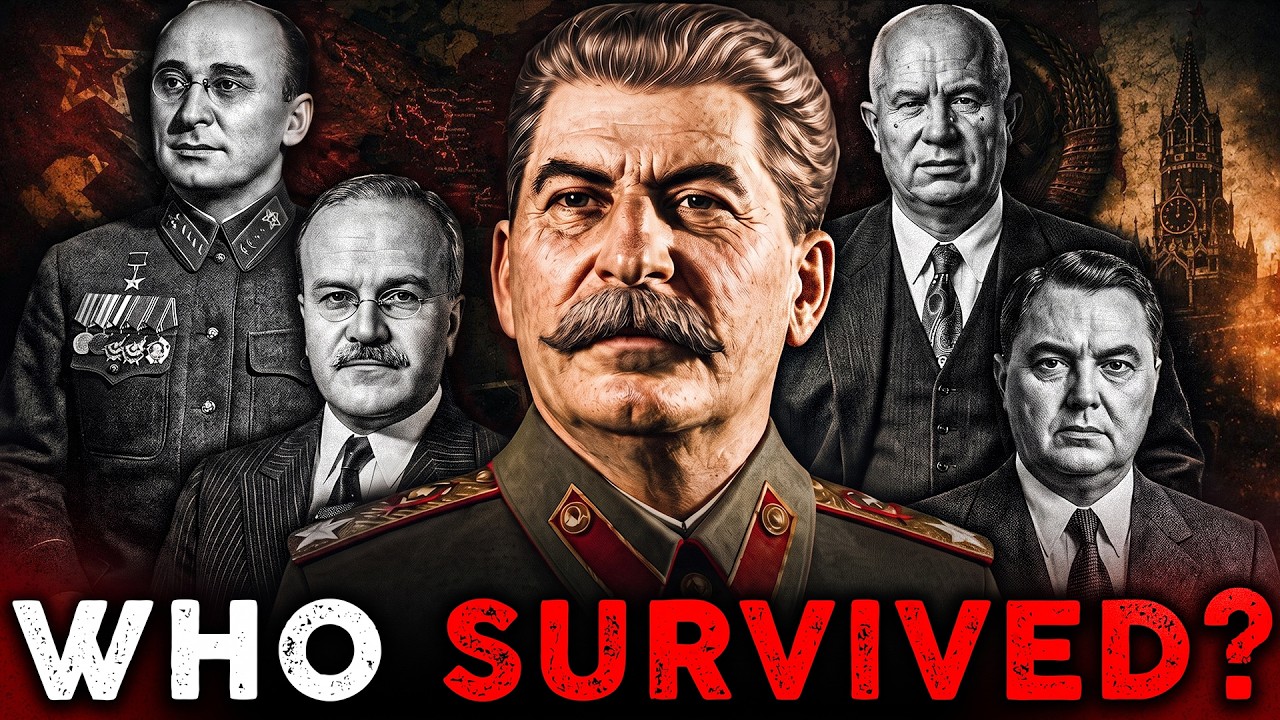 Georgy Malenkov managed the vast apparatus of the Communist Party, deciding who held every senior post in the nation. Nikita Khrushchev governed the crucial republic of Ukraine. Together, they controlled the levers of power in the largest country on Earth, yet their collective authority was a fragile construct, dependent entirely on the whims of the paranoid dictator who had elevated them.
Stalin’s method of rule was to pit his subordinates against each other, fostering an environment of intense suspicion and rivalry. He would periodically discipline one, elevate another, and then reverse course, ensuring that no single individual ever consolidated enough power to challenge him. This dynamic was on full display in the autumn of 1945, when Stalin took his first extended break from Moscow since before the war, leaving his four principal deputies to run the country.
While resting on the Black Sea, he became enraged by foreign press speculation that he might be stepping down in favor of Molotov. Stalin’s response was swift and calculated, setting the stage for the decade of internal warfare that would follow.
He wrote a series of letters to the other three men, ordering them to confront Molotov and accuse him of disloyalty. The chosen trio, which included Beria, Malenkov, and Khrushchev, dutifully summoned their colleague and subjected him to a humiliating interrogation. Molotov, faced with the collective wrath of his peers and the implicit threat of Stalin’s displeasure, broke down, admitting to “mistakes” and weeping.
This incident was a stark demonstration of the precariousness of their positions. They were not allies but rivals, bound together by fear and a shared complicity in the regime’s crimes, yet always ready to turn on one another to prove their loyalty to the man at the top.
The year 1946 saw Stalin systematically dismantle the power bases of his inner circle, one by one. Beria, despite being given control of the atomic bomb project, was stripped of his command of the NKVD. Malenkov was removed from his position overseeing party appointments, his responsibilities handed to supporters of Andrei Zhdanov, the party boss of Leningrad.
Khrushchev, facing a catastrophic harvest failure in Ukraine, was publicly humiliated when his request to reduce grain quotas was denied, and Lazar Kaganovich was sent to Kiev to take over the Ukrainian party leadership. Yet, in a pattern that defined Stalin’s rule, these demotions were not permanent. By the end of 1947, most had been restored to their previous positions, albeit with a clear understanding of their vulnerability.
The only exception to this pattern of temporary disgrace was Marshal Georgy Zhukov, the most decorated soldier of the war. His immense popularity and the adulation of his troops made him a threat in Stalin’s eyes. Accused of claiming personal credit for the war’s major victories, Zhukov was stripped of his command of the Soviet ground forces in 1946 and exiled to a series of provincial military districts.
He remained in obscurity for years, a forgotten hero of the conflict, his fate a chilling warning to anyone who might consider themselves indispensable. Stalin’s discipline of his inner circle was a masterclass in psychological manipulation, leaving each man isolated and uncertain of his standing.
The period of relative stability ended in 1948, when the internal conflict among the deputies escalated into open warfare. The first casualty was Polina Zhemchuzhina, Molotov’s Jewish wife. Her sympathy for the newly founded state of Israel led to her expulsion from the party in December 1948.
 Molotov, in a rare act of defiance, abstained from the vote. This act of disloyalty was not forgiven. Stalin resurrected the 1945 letters about Molotov succeeding him and distributed them to the entire leadership, a clear signal that Molotov was out of favor.
The following day, a broken Molotov withdrew his abstention, and his wife was arrested. She would spend years in the gulags, a hostage to her husband’s political survival.
The same year, the death of Andrei Zhdanov created a power vacuum that Malenkov was quick to exploit. Zhdanov’s protégés, who controlled the party apparatus in Leningrad, were left vulnerable without their patron. In January 1949, a minor procedural violation—a trade fair held without government permission—provided the pretext for their destruction.
Malenkov forwarded the incriminating memo to Stalin, who interpreted the incident as evidence of a plot to build a separate power base in Leningrad. Within months, the city’s leadership was arrested, tortured, and tried in secret. In October 1950, they were executed, along with over two hundred of their associates and relatives.
This “Leningrad 𝒶𝒻𝒻𝒶𝒾𝓇” was a brutal purge orchestrated by Stalin but facilitated by Malenkov, who would later be haunted by his role in the massacre.
Khrushchev, meanwhile, was brought back from Ukraine in late 1949 and given a position in Moscow, where he began systematically replacing officials with his own loyalists. He later claimed he was protecting Moscow from the same fate that had befallen Leningrad, but his actions were also a clear power grab. Beria, despite his success with the atomic bomb, was also under threat.
Stalin’s suspicion of his native Mingrelia region in Georgia led to a purge of Beria’s appointees there, a direct attack on his personal network. By 1952, all four men were isolated, suspicious, and aware that the next purge could be aimed at them. The atmosphere was one of palpable dread, a prelude to the final act.
In October 1952, Stalin convened the party congress for the first time in thirteen years. He used the occasion to attack Molotov publicly, branding him a coward. He then abolished the ruling group that had governed since the war and replaced it with a larger body, ensuring that his deputies were surrounded by new, unknown faces.
The following January, the infamous “Doctors’ Plot” was announced, accusing a group of mostly Jewish physicians of murdering Soviet leaders. The implications were clear: this was the beginning of a new, massive purge. Molotov’s wife was Jewish, and Beria had controlled the security services that had failed to catch the supposed conspirators.
 The inner circle braced for their own destruction, but Stalin’s death intervened.
On March 1st, 1953, Stalin was found collapsed in his dacha. The response of his inner circle was telling. Beria, upon arriving, berated the guards for raising the alarm and left without summoning a doctor, leaving the dictator incapacitated for hours.
As Stalin lay dying, his deputies did not wait for his final breath to begin dividing his empire. Malenkov took control of the government and the party, Beria reclaimed the security services, and Molotov was restored as foreign minister. Khrushchev was left with a minor position among the party secretaries.
The question was not whether they would fight for supremacy, but who would strike first.
The first to act was Beria, who moved with astonishing speed to consolidate his power. He filled the Interior Ministry with his own men, declared the Doctors’ Plot a fabrication, and released over a million prisoners from the gulags. He even proposed abandoning East Germany in favor of a neutral, unified state, a policy that horrified his colleagues.
His ambition was unmistakable, and his control over the police made him a terrifying threat. The others, including Malenkov, Khrushchev, and Molotov, realized that they had to eliminate him before he eliminated them. They knew that arresting Beria would require military force, as the police were loyal to him.
They recalled Marshal Zhukov from his exile and made him deputy defense minister. On June 26th, 1953, army officers arrested Beria at a meeting of the ruling group. He was held for six months before being tried in secret, without defense or appeal.
Accused of treason and spying for foreign powers—charges that were entirely fabricated—he was convicted and shot on December 23rd, 1953. The man who had once controlled the entire Soviet security apparatus was executed by his former colleagues. His death removed the most immediate threat, but it also created a new dynamic among the survivors, who now had to contend with each other for ultimate power.
With Beria gone, the triumvirate of Malenkov, Khrushchev, and Molotov turned on each other. Malenkov, as premier, was the most powerful, but he quickly made a fatal error by ceding control of party appointments to Khrushchev. This allowed Khrushchev to build a vast network of loyalists across the country.
 Malenkov’s downfall was accelerated by the 1954 trial of the security chief responsible for the Leningrad 𝒶𝒻𝒻𝒶𝒾𝓇, which 𝓮𝔁𝓹𝓸𝓼𝓮𝓭 his own role in the massacre. In February 1955, Khrushchev and Molotov attacked Malenkov, accusing him of being too close to Beria, of economic mismanagement, and of defeatism for stating that a nuclear war would destroy civilization. He was stripped of the premiership and sent to manage a power station.
Molotov’s own downfall came swiftly after. His opposition to Khrushchev’s policy of reconciliation with Yugoslavia provided the pretext for his removal as foreign minister in June 1956. Now, only Khrushchev and Molotov remained, along with their allies.
Khrushchev’s position was solidified by his famous “Secret Speech” in February 1956, in which he denounced Stalin’s crimes. While this speech was a calculated political move to distance himself from the past, it also implicated Molotov, Malenkov, and Kaganovich, who had all signed the orders for the purges Khrushchev described. The speech was meant to be secret, but it was soon read aloud at party meetings across the country, turning the population against the old guard.
In June 1957, Molotov, Malenkov, and Kaganovich made their final move, attempting to remove Khrushchev as First Secretary. They had the majority in the ruling group, but Khrushchev refused to accept the decision, demanding that the Central Committee—which was packed with his appointees—be the final arbiter. With the help of Marshal Zhukov, who flew in loyal party officials from across the country, Khrushchev was able to turn the tables.
The Central Committee met for eight days and voted to expel the “Anti-Party Group” from the leadership. Molotov, Malenkov, and Kaganovich were all removed from power, their political careers ended.
Khrushchev had triumphed, but his victory was not absolute. He owed his survival to Zhukov, who had become the second most powerful man in the Soviet Union. Fearing a military coup, Khrushchev moved against his savior with the same ruthlessness he had shown his other rivals.
In October 1957, while Zhukov was on an official visit abroad, Khrushchev had him removed as defense minister, accusing him of preparing to seize power. Zhukov was retired from the army and sent into obscurity, his immense popularity no match for Khrushchev’s political machinations. The last of Stalin’s inner circle had been neutralized, leaving Khrushchev as the undisputed leader.
The fates of these men were a testament to the brutal world they inhabited. Beria was executed. Malenkov was expelled from the party and lived out his days as a private citizen.
Molotov was expelled and readmitted, dying in 1986. Kaganovich, the last survivor, died in 1991, just months before the Soviet Union he had helped build collapsed. Khrushchev himself was ousted in a palace coup in October 1964, accused of the very same arrogance and cult of personality he had condemned in Stalin.
He lived under house arrest until his death in 1971. None of them were defeated by a foreign enemy. They were all destroyed by the men they had once sat beside, the architects of their own downfall.