The most successful fighter pilot in history, Erich Hartmann, spent a decade in Soviet captivity before astonishing the world by returning to a NATO cockpit, a decision that would define a generation of German military aviators navigating the ruins of defeat and the rise of the Iron Curtain. His surrender in May 1945, near the Czech town of Písek, was meant to place him under Western protection, but the Americans instead handed his entire group back to the Soviet Union, marking the start of a brutal decade of imprisonment marked by relentless interrogation and refusal to cooperate.
Under the weight of Soviet accusations regarding war crimes, Hartmann refused to sign any confession, a stance that resulted in persistent solitary confinement and participation in a prisoner revolt seeking better conditions. The formal sentence of 25 years of hard labor in 1949 represented a stark finality and a denial of the usual post-war pathways for surrendering adversaries. Only through Chancellor Konrad Adenauer’s diplomatic mission to Moscow in 1955 did the last German prisoners return home, and Hartmann came back to a country split by the Cold War, but not to rest.
 In a dramatic turn in 1956, Hartmann, with 352 aerial victories, joined the newly established Bundesluftwaffe, serving as the first commander of a dedicated jet fighter wing. His willingness to train on American Sabres and face the Soviet Union from the West underscored a profound shift in loyalties, although his public condemnation of the F-104 Starfighter placed him at odds with his superiors. This second career was dedicated to crafting a new German air force, but ultimately, a disagreement over the aircraft’s safety led to his premature retirement in 1970.
Hartmann’s contemporary, Adolf Galland, the former General of the Fighter Arm, was another ace who did not seamlessly transition into the new German military apparatus. In 1948, Galland chose a different path from a fractured European landscape, traveling to Argentina at the invitation of Juan Perón to help construct a modern air force. He contributed to Kontext of a fledgling aviation industry, sidestepping the rigid structures of a new European command for commercial enterprise.
 Unlike Hartmann’s second command, Galland never wore a German uniform again, and instead he returned to Germany in 1955 as a respected industry consultant, not as a commander. He authored the renowned memoir The First and the Last and formed unexpected friendships with British and American pilots, treating past aerial combat as a professional duel, ultimately reshape his public image for the later history.
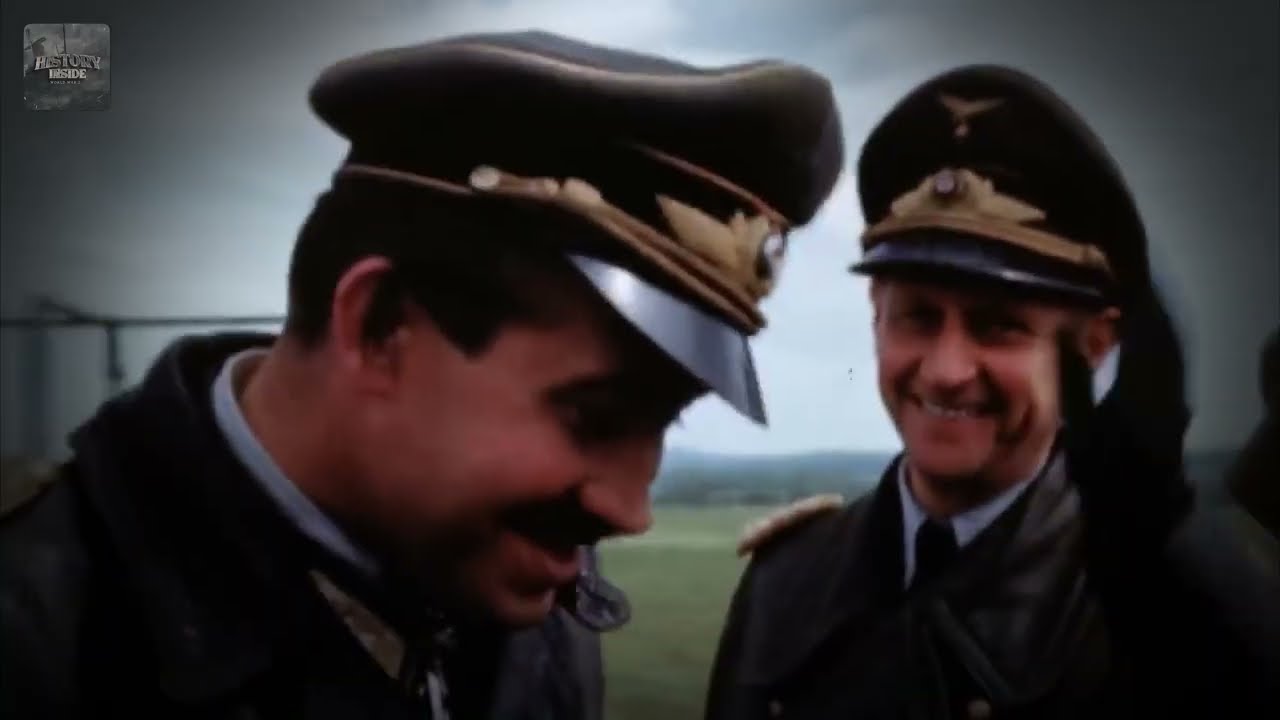 However, the patterns of military renaissance were not uniform, and men like Johannes Steinhoff rose to the highest echelon of NATO itself, proving that former enemies could be trusted at the commanding heights. Steinhoff, despite suffering horrific burns and enduring years of reconstructive surgery, became the Chief of Staff of the West German Air Force and later served as Chairman of the NATO Military Committee, illustrating a seamless and trusted integration into the Western Alliance.
 The other premier ace, Günther Rall, who had achieved 275 victories over the Soviet skies, emulated this path of integration, reaching the rank of Chief of Staff and serving as the German representative to the NATO Military Committee. This was the apex of a strange progression for those who had fought the Red Air Force, now coordinating the defense of Europe against the Soviet Waspact, a stark emblem of the changing global structures. Gerhard Barkhorn, the second-highest scorer, also joined the Bundesluftwaffe, commanding a fighter-bomber wing and serving as a NATO tactical air command chief, only to meet a sudden and tragic end in a car crash in 1983.
A deeper complexity of this reset emerged when, in 1976, the veterans’ reunion for the Immelmann wing highlighted a profound tension at the heart of the new republic. The celebration invited the unrepentant Hans-Ulrich Rudel, a decorated Nazi figure, causing an uproar that ended the careers of two respected generals, including Walter Krupinski. Krupinski, with 192 Eastern Front victories and a co-famed trainer for Hartmann, publicly compared Rudel’s history to modern political figures, Civil Rights upended across the Defense Ministry, forcing his early retirement.
The incident showed that three decades after the war, the debate over how the Third Reich’s traditions would be integrated into the Bundeswehr, was far from theoretical. In distinguishing their past from the state’s, one generation had found a path back into Europe’s arch, and now they had contracted in their own country. Their expertise was integral to the creation of the new military, but the old shadows persisted, forcing the former military leaders of Germany to redefine their own identity between East and West, finally forever enchanted by his transformation, not just the last men of a fallen empire.