One of the most feared figures of the Civil War era was never a traditional soldier. William Clark Quantrill led a band of irregular Confederate guerrillas whose tactics blurred the line between warfare and terrorism, and whose name remains synonymous with atrocity in parts of the American West. Quantrill was born on July 31, 1837, in Canal Dover, Ohio. After working as a teacher, he drifted westward and settled in Kansas in the late 1850s, a region already torn apart by violent conflicts between pro-slavery and anti-slavery factions in the period known as Bleeding Kansas.
When the Civil War broke out in 1861, Quantrill sided with the South. Instead of joining the regular army, he organized a band of irregular fighters known as bushwhackers who waged a brutal campaign along the Missouri-Kansas border. Their tactics were unconventional, their targets were often civilians, and their raids were marked by swift and merciless violence. Quantrill’s most infamous act came on August 21, 1863, when he led nearly 450 men in a dawn raid on Lawrence, Kansas.
Over four hours, his raiders killed approximately 150 men and boys, most of them unarmed civilians, and burned much of the town to the ground. Quantrill claimed the raid was retaliation for Union raids and for the deaths of Confederate women in a Kansas City jail collapse. To his enemies, it was a massacre. To his supporters, it was a dark act of frontier justice.
The Lawrence raid became one of the bloodiest massacres of the Civil War and earned Quantrill widespread infamy. The Union Army responded with fierce reprisals, and Quantrill’s forces began to splinter. His authority weakened as new leaders emerged, including Bloody Bill Anderson, who became known for even more vicious tactics. Meanwhile, some of Quantrill’s followers, including Jesse James and Cole Younger, later applied their wartime skills to bank and train robberies, becoming some of the most notorious outlaws of the post-war West.
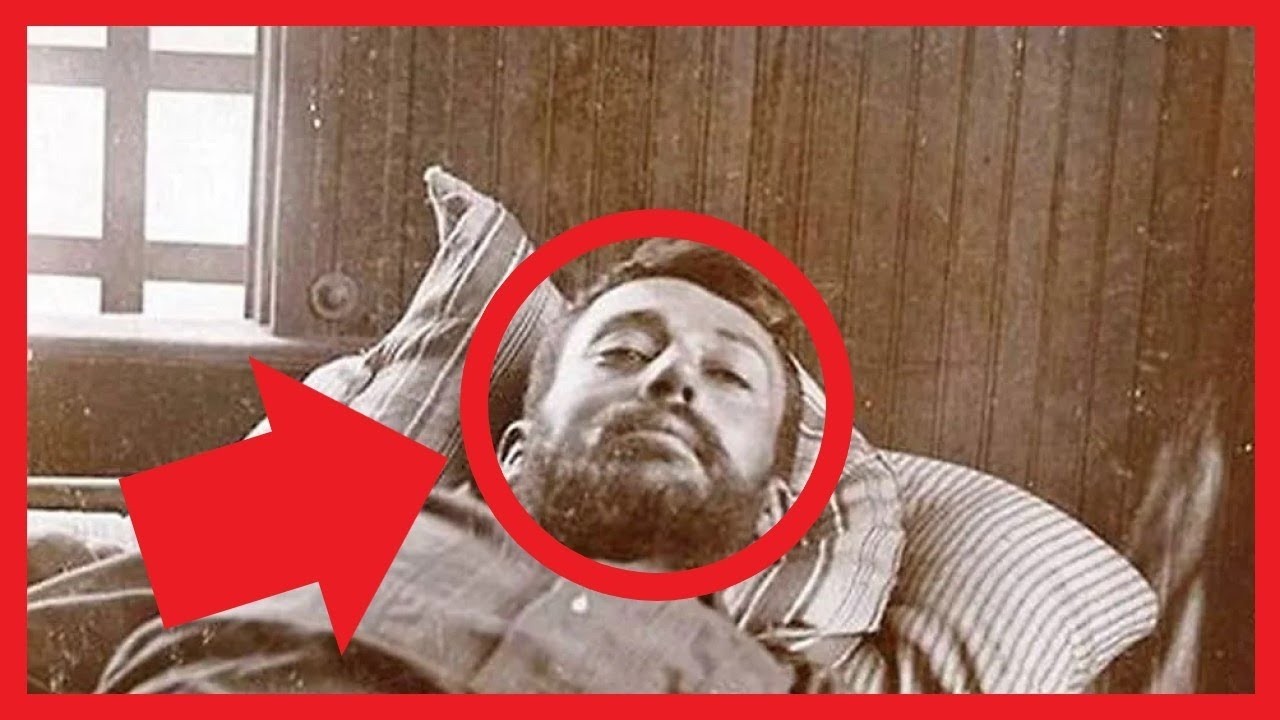
By 1864, Quantrill’s faction was scattered and demoralized. He attempted to regroup in Kentucky, but his time was nearly up. In May 1865, just weeks after the official end of the Civil War, he was ambushed near Taylorville, Kentucky, by Union troops. Shot in the back while trying to flee, he was captured and paralyzed from the wound.
Quantrill died on June 6, 1865, in a military prison hospital in Louisville, Kentucky, at the age of 27. His legacy remained unsettled after death. In Missouri, some former Confederates remembered him as a ruthless defender of Southern rights, while in Kansas his name became a synonym for atrocity. His remains were exhumed and reburied multiple times, and parts of his body, including his skull, were reportedly kept by collectors before being interred in Dover, Ohio decades later.
Modern historians continue to debate Quantrill’s place in history. Some view him as an insurgent who exploited chaos for personal power, while others place his rebellion within the larger political context of a nation at war with itself. His guerrilla tactics influenced asymmetric warfare for generations, even as his actions remain morally condemned. William Quantrill left no monuments in the towns he burned or the lands he raided.
Yet his name lingers in local lore and historical study, a lasting reminder of the darkest edge of the American frontier. A different kind of frontier legend was John Simpson Chisum, one of the most influential cattle barons of the American West. Known for his vast herds and open-range empire, Chisum played a key role in shaping the cattle industry in New Mexico and became entangled in the violent Lincoln County War. Born on August 15, 1824, in Hardin County, Tennessee, Chisum moved with his family to Texas in the 1830s.
He began working as a store clerk before entering the cattle business and eventually built a herd grazing along the Concho River, supplying beef to Confederate forces during the Civil War. In the late 1860s, Chisum moved his operations to the open ranges along the Pecos River in southeastern New Mexico Territory. There he established one of the first and largest cattle ranches in the region, spanning hundreds of miles. His cattle bore the famous jingle-bob earmark, and he employed hundreds of cowboys, including, for a time, a young Billy the Kid.
Chisum’s ranch supplied beef to U. S. Army forts, Native American reservations, and mining camps throughout the Southwest. His trail, often called the Chisum Trail, was one of the major routes for cattle heading north to railheads in Kansas.
At his peak, he reportedly owned over 100,000 head of cattle. In the 1870s, Chisum became embroiled in the Lincoln County War, a deadly power struggle between rival economic factions. He backed the anti-monopoly faction led by Alexander McSween and the Tunstall group against a corrupt monopoly run by Lawrence Murphy and James Dolan, who dominated the region’s mercantile trade and controlled local law enforcement. Chisum did not participate directly in the violence, but he financed the anti-Murphy faction and supported the Regulators, the group that included Billy the Kid.
His involvement helped tip the scales in a conflict that left dozens dead and destabilized the region for years. Following the war, Chisum tried to distance himself from the violence. He refused to continue paying Billy the Kid for his services, which led to a personal rift. Billy the Kid later accused Chisum of owing him $500, and when Chisum refused to pay, the outlaw resorted to rustling his cattle.
Despite these troubles, Chisum remained a towering figure in New Mexico’s ranching world. He worked closely with prominent cattlemen such as Charles Goodnight and Oliver Loving, helping develop major cattle trails and shaping ranching practices in the territory. He never married and had no legitimate heirs, though he was rumored to have fathered children with a former slave named Jensie. By the early 1880s, the cattle frontier was changing.
The open range was closing, barbed wire was dividing the land, and railroads were reshaping transportation. Chisum, now aging and ailing, recognized the end of an era. In 1884, Chisum traveled to Eureka Springs, Arkansas, for treatment of what was believed to be cancer or kidney disease. He died there on December 22, 1884, at the age of 60.
His body was returned to Paris, Texas, and buried in Evergreen Cemetery. Chisum left behind no written memoir, but his story has been dramatized in Western films and novels as a symbol of frontier enterprise. The town of Chisum in New Mexico was named in his honor, and his life remains a vivid window into the ambition, expansion, and conflict that defined the American frontier in the second half of the 19th century. Another figure who bridged the myth and reality of the West was Charlie Siringo, a cowboy, detective, and author.
Born February 7, 1855, in Matagorda County, Texas, Siringo began his cowboy career at age 15, riding trails and working with outfits like the LX Ranch in the Texas Panhandle. Siringo became an expert in all things ranching, breaking horses, branding cattle, and enduring the punishing miles of the trail. He worked the Goodnight-Loving Trail and helped drive herds along the Chisum Trail, living the hard life that dime novels only dreamed of. In 1885, Siringo published “A Texas Cow Boy,” one of the first memoirs written by a working cowboy.
The book became wildly popular, offering readers a vivid account of cattle drives, saloons, and shootouts that painted an authentic picture of frontier life. In 1886, Siringo joined the Pinkerton National Detective Agency, a move that transformed him from cattleman to undercover lawman. He served with the agency for over two decades, operating under assumed names and infiltrating some of the most dangerous criminal organizations in the country. His most famous case was his pursuit of the Wild Bunch gang led by Butch Cassidy and the Sundance Kid.
Siringo spent years tracking their movements, helping lay the groundwork for the gang’s eventual downfall. He preferred working alone, traveling thousands of miles by horse, rail, and foot to gather evidence and make arrests. Siringo’s loyalty to the Pinkertons began to fray in the early 1900s. He grew disillusioned with the agency’s increasing involvement in labor disputes, where operatives were hired to break strikes and infiltrate unions.
When he began writing about his Pinkerton work, the agency sued him and forced him to redact or alter entire sections of his manuscripts. He pushed forward anyway. His books, including “A Cowboy Detective,” offered rare glimpses into the life of an undercover agent in the Old West and were rich with stories of manhunts, shootouts, and standoffs with some of the most wanted criminals of his era. Siringo retired from active detective work around 1907 but remained a passionate chronicler of the West until his death.
He moved to California, where he continued to write and speak about the era he had helped define. He even worked briefly in Hollywood as a technical adviser on early Western films, though he quickly grew frustrated with their inaccuracies. In his later years, Siringo became increasingly vocal about preserving the truth of the frontier. He saw how legend had eclipsed fact and how men he had known, some brave and some brutal, were being romanticized beyond recognition.
He believed the West didn’t need myths; it needed memory. Charlie Siringo died on October 18, 1928, in Altadena, California, at the age of 73. Though not as instantly recognizable as the outlaws he chased, his legacy is enduring.
He was a cowboy who became a detective, a lawman who became a historian, and a man who told the truth about the frontier as he saw it.