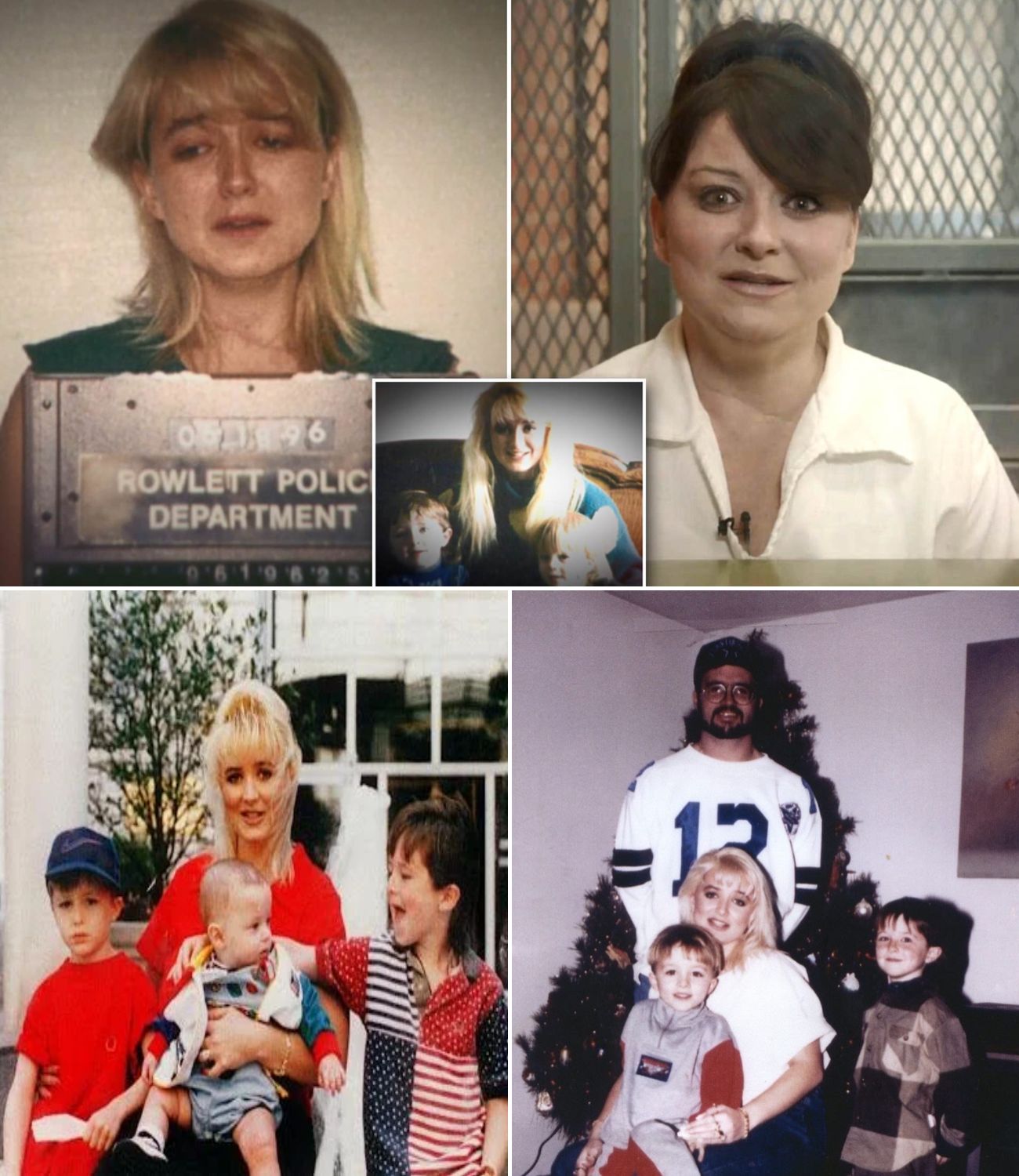
HUNTSVILLE, Texas — Darlie Routier has now spent nearly three decades on Texas death row, making her one of the longest-serving female inmates awaiting execution in the state’s history.
In June 1996, Routier’s two young sons, 5-year-old Damon and 6-year-old Devon, were brutally stabbed to death in their suburban home in Rowlett, Texas. Routier herself was also injured in the attack. She told police an intruder had broken into the house and attacked her family. However, investigators quickly focused on Routier as the prime suspect.
Prosecutors argued that blood spatter evidence, inconsistencies in her story, and her behavior in the days following the murders pointed to her guilt. The case gained national notoriety when a video of Routier singing “Happy Birthday” at her sons’ gravesite just eight days after the killings was shown widely on television. Many viewed it as cold and inappropriate, further turning public opinion against her.
In 1997, a jury convicted Routier of murdering Damon and sentenced her to death. Devon’s murder was not included in that trial. Over the years, Routier’s legal team has fought for a new trial, pointing to what they call serious flaws in the original investigation, including potential mishandling of DNA evidence and alternative suspects.
Supporters of Routier’s innocence have maintained a vocal presence for decades, arguing that key questions about the crime scene were never adequately answered. They believe the real killer may have escaped justice.
The case remains deeply divisive. For some, the evidence against Routier is overwhelming and the conviction was just. For others, the case represents a possible miscarriage of justice fueled by media sensationalism and tunnel vision by investigators.
As Routier approaches 30 years on death row, her fate continues to spark passionate debate about the death penalty, maternal filicide, and the reliability of forensic evidence. Whether she will ever be executed or granted a new trial remains uncertain.
The story of Darlie Routier is far from over. It stands as a haunting example of how one night of unimaginable violence can forever divide a community, a family, and a nation.