
LONDON — In a move that sent shockwaves through the highest echelons of the British government, approximately 400 military personnel and police officers launched a dramatic, unannounced armed takeover of Heathrow Airport in June 1974, an operation that Prime Minister Harold Wilson privately believed was a thinly veiled warning shot from a cabal of right-wing plotters intent on orchestrating a military coup.
The lightning-fast seizure saw armored vehicles establish checkpoints and roadblocks across the sprawling airport complex, the busiest in the UK and one of the world’s most critical aviation hubs. Armed soldiers and police meticulously stopped vehicles and demanded documentation from drivers, effectively placing the entire facility under military jurisdiction without any prior warning to airport management. The official press release framed the action, codenamed Operation Marmion, as a routine anti-terrorist drill, a plausible cover in an era plagued by global terrorist outrages.
 However, the reality was far more sinister, as the operation had been executed without the knowledge or consent of the Prime Minister or his cabinet, a constitutional breach of staggering proportions that triggered immediate and profound alarm within 10 Downing Street.
For Wilson, the unauthorized military action was not an isolated incident but the culmination of years of growing paranoia and mounting evidence that he was the target of a shadowy conspiracy involving elements of the security services, the military, and the media elite. The seizure of Heathrow was interpreted by Wilson and his inner circle as a deliberate flexing of military muscle, a demonstration of raw power designed to show that the armed forces could, if they so chose, seize control of the nation’s critical infrastructure and, by extension, the state itself. The notion that the British Army would stage a coup against a democratically elected government seemed ludicrous to the public, but within the corridors of power, the fear was visceral and real.
The roots of this extraordinary crisis can be traced back to Wilson’s first term as Prime Minister, which began in October 1964 with a precarious majority of just four seats. After consolidating power with a larger mandate in March 1966, Wilson faced a nation in deep economic turmoil. The value of the pound was plummeting, exports were falling, and strike action was crippling key industries.
In November 1967, Wilson was forced into the humiliating devaluation of the pound from $2. 80 to $2. 40, followed by severe public spending cuts and increased taxes on cigarettes, alcohol, and petrol.
As unemployment rose and traditional industries like coal mining and shipbuilding contracted, the country appeared to be on the brink of chaos, leading certain powerful figures to contemplate solutions far outside the bounds of democratic process.
On May 8, 1968, a secret meeting took place in London that would become the stuff of political legend. The gathering was convened at the request of Cecil King, the powerful chairman of the Daily Mirror newspaper and the International Publishing Corporation, who also held a directorship at the Bank of England and maintained close ties with both MI5 and the CIA. Also present were Hugh Cudlipp, chairman of the International Publishing Group, Sir Solly Zuckerman, the government’s chief scientific adviser, and the most dangerous figure of all, Admiral of the Fleet the Earl Mountbatten of Burma, a revered World War II hero, former Chief of the Defence Staff, and the great-uncle and mentor to Prince Charles.
 King painted a dire picture of a nation on the verge of disintegration, predicting bloodshed in the streets and the inevitable involvement of the armed forces. He proposed that Mountbatten, a respected national hero, should step forward as the temporary leader of a new administration to restore order, backed by other capable men. When King asked Mountbatten directly if he would accept such a role, the room fell silent.
Zuckerman, aghast, declared the plan amounted to treason and promptly left the meeting. Mountbatten, realizing the gravity of the proposal, also agreed it was treason and departed, leaving King isolated in his ambition.
Undeterred, King took the extraordinary step of overriding the editorial independence of his own newspaper, the Daily Mirror, instructing it to publish a front-page article he had personally written that demanded Wilson’s removal through extra-parliamentary action. The board of the International Publishing Corporation, horrified by this breach of editorial protocol and the incendiary nature of the content, demanded King’s resignation. When he refused, he was summarily dismissed on May 30, 1968.
While King’s overt plot collapsed, the embers of sedition continued to smolder. Research by noted biographers has since suggested that the Queen herself was aware of the coup plot and Mountbatten’s involvement. Reportedly, she was “desperately worried” and denounced the plan as “rank treachery,” effectively talking Mountbatten out of any further participation, acutely aware that a coup led by a member of the Royal Family would precipitate a catastrophic constitutional crisis that could bring down the monarchy itself.
The conspiracy, however, did not die. It burrowed deeper into the heart of the British state, specifically within MI5, the domestic security service. MI5 had maintained a file on Harold Wilson for decades under the code name “Henry Worthington,” fueled by suspicions that he was a Soviet agent.
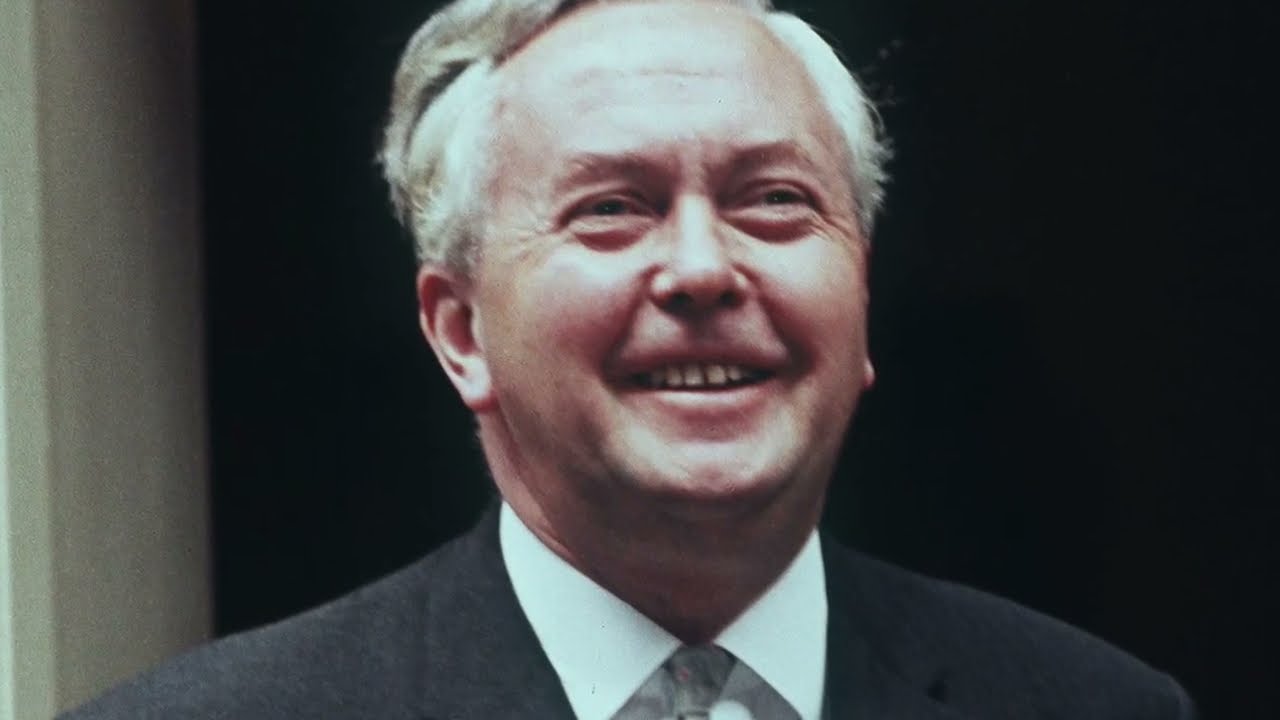 This suspicion had been ignited in 1964 when James Angleton, the head of Counter-Intelligence at the CIA, passed on information alleging Wilson was a KGB asset. Further damaging information came from Czechoslovak defectors who claimed the Labour Party had been infiltrated by Soviet intelligence, providing lists of MPs and trade unionists who were allegedly agents. The allegations were never proven, but they poisoned the well of trust.
In his controversial 1987 book “Spycatcher,” former MI5 deputy head Peter Wright revealed the depth of the paranoia, recounting how MI5 suspected that Wilson’s predecessor, Hugh Gaitskell, may have been assassinated by the KGB to pave the way for Wilson’s leadership. Wright detailed how a doctor reported Gaitskell’s death from a rare disease as suspicious, and how experts at Porton Down, Britain’s chemical warfare establishment, were baffled by the illness. This atmosphere of suspicion within MI5 was toxic, with some officers holding a “very dim view” of Wilson.
Wright quoted one young officer as saying in 1974, “Wilson’s a bloody menace and it’s about time the public knew the truth.” He confirmed that some 30 MI5 officers approved of a scheme to leak damaging intelligence on Wilson and other Labour figures to sympathetic journalists and politicians.
The June 1974 takeover of Heathrow, followed by similar operations in July and September of the same year, all under the guise of anti-terrorist drills, convinced Wilson that the plotters were still active and closing in. The operations were not isolated incidents but part of a broader pattern of intimidation. At the same time, a separate, even more insidious campaign was being waged from within the security services.
Codenamed Operation Clockwork Orange, named after the Stanley Kubrick film, this was a black propaganda operation run by right-wing elements within the military and intelligence community, primarily focused on Northern Ireland. With the province in a state of civil war, many senior army and intelligence officers believed Wilson was too soft on the IRA. To undermine him, the Clockwork Orange group, which possibly included a unit of the SAS, launched a smear campaign against Labour MPs and journalists.
 They forged documents purporting to show Labour MPs speaking at Irish Republican rallies or receiving secret deposits in Swiss bank accounts. These forgeries were then briefed to journalists from foreign news organizations, creating a climate of distrust and delegitimizing the government.
The plotting extended beyond the intelligence services. Senior retired military leaders were actively creating private militia groups, effectively private armies, to assist in domestic matters should the need arise. General Sir Walter Walker, a hero of the Malayan campaign, publicly warned of a “communist Trojan horse in our midst,” while David Stirling, the legendary founder of the SAS, argued for a volunteer organization to be in place in case of a crisis.
Brian Crozier, a journalist and senior staff member of the secretive Information Research Department, gave talks to serving army officers discussing the benefits of military coups. The atmosphere was electric with sedition, and Wilson felt increasingly isolated and besieged. He later told journalists that he was certain an element within MI5 was behind a plot to force his resignation, and he spoke openly of two military coups plotted against him, one in the late 1960s and another in the mid-1970s.
The pressure took a devastating toll. Wilson’s second term was marked by economic hardship, with the top rate of income tax reaching 83% and unemployment passing one million in April 1975. The global recession and stagflation caused by the 1973 oil crisis compounded the misery.
On March 16, 1976, in a dramatic and sudden announcement that stunned the nation, Wilson declared he would resign as Prime Minister, effective April 5. He was just 60 years old and cited physical and mental exhaustion. While official history records a man worn down by the pressures of office, many believe the relentless secret scheming and the very real fear of a military coup were the true reasons for his abrupt departure.
He was replaced by James Callaghan, whose government staggered on until 1979, beset by the infamous “Winter of Discontent” with unburied bodies and rubbish piling up in the streets. It was into this chaos that Margaret Thatcher emerged, winning a landslide victory in 1979. Her hardline conservative policies aligned remarkably with the views of the coup plotters, delivering, through democratic means, the right-wing revolution that the conspirators had once sought to impose by force.
Harold Wilson, the man who had been haunted by the specter of treason, died from cancer and Alzheimer’s disease in May 1995, at the age of 79, his legacy forever shadowed by the dark and secret war waged against him from within his own state.


