The volley of shots that tore through Friedrich Fromm’s chest on the morning of March 12, 1945, did not merely end the life of a disgraced general; it detonated a shockwave that would ripple through the lives of his descendants for decades, casting a long shadow over a family forced to navigate the smoldering ruins of a shattered Reich.
Executed by firing squad at Brandenburg-Görden Prison on the personal orders of a paranoid Führer, Fromm’s final declaration, “I die because it was ordered. I had always wanted only the best for Germany,” was a final, futile attempt to frame his own demise as a martyrdom for a nation he had served with calculated ambiguity.
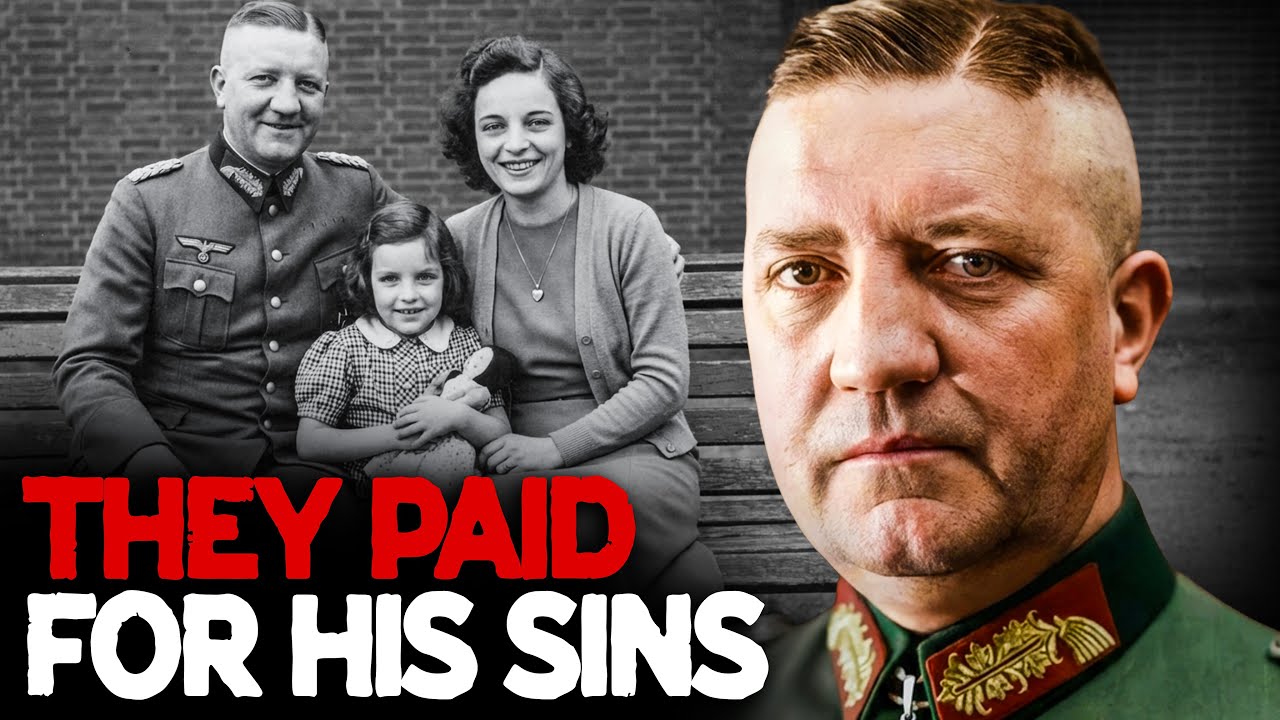 But for his daughter, Helga, his wife, and his grandchildren, the execution was not a conclusion but a brutal prologue to an ordeal of flight, dispossession, and the agonizing reconstruction of identity in a world that had been burned to the ground.
The family’s story, now illuminated by archival records and the meticulous research of military historians, reveals the profound and often overlooked human cost paid by those who stood on the periphery of Nazi power, a cost that extended far beyond the gallows and the firing squad.
Friedrich Wilhelm Waldemar Fromm was not a simple man, and his legacy defies the easy categorization of hero or villain that often defines the narratives of the Second World War.
Born in Charlottenburg, Berlin, in 1888, he was a product of the German Empire, a professional soldier whose career trajectory mirrored the turbulent history of his nation.
An artillery officer in the First World War, he emerged from the trenches with a profound understanding of the mechanics of modern industrial warfare, a knowledge that would propel his rise through the ranks of the Reichswehr during the interwar years.
By the late 1930s, Fromm had established himself as one of the most capable military administrators in Germany, a master of logistics, procurement, and personnel, working under the tutelage of General Ludwig Beck.
His expertise was not in the glory of battlefield command, but in the unglamorous, essential machinery of military organization, the intricate systems of supply, training, and replacement that kept an army fighting.
In 1939, as Germany plunged Europe into war, Fromm was appointed Chief of Army Equipment and Commander of the Replacement Army, a position that placed him at the very nexus of the Nazi war machine.
Hitler himself called him his “strong man in the homeland war zone,” a testament to the extraordinary power Fromm wielded, controlling the vast industrial apparatus that armed the Wehrmacht and overseeing the training and deployment of every replacement soldier sent to the front lines.
From the frozen approaches to Moscow to the deserts of North Africa, every vacancy created by death or injury was filled by Fromm’s organization, making him arguably one of the most powerful military figures in the Third Reich after the field commanders themselves.
Yet, Fromm was also a pragmatist, a man who understood the grim arithmetic of attrition earlier than most of his contemporaries.
By the autumn of 1941, as Operation Barbarossa stalled before the gates of Moscow and the United States entered the war, Fromm recognized a catastrophic truth that the Nazi leadership refused to accept: the war could not be won.
In October 1941 and again in November 1942, he formally recommended to Hitler that Germany seek a negotiated peace with the Soviet Union, laying out in stark memoranda the reality of exhausted stockpiles and an industrial capacity dwarfed by the Allied powers.
Hitler dismissed his advice with contempt, and Fromm’s influence at court began to wane, his counsel ignored as the Führer retreated further into a fantasy of total victory.
Despite his growing disfavor, Fromm’s position remained central, and it was this centrality that would draw him into the most dangerous conspiracy of the war, the July 20th Plot of 1944.
The conspiracy to assassinate Hitler had deep roots, and by 1944, it had coalesced around a plan that centered on Fromm’s own headquarters, the Bendlerblock in Berlin.
Colonel Claus von Stauffenberg, the plot’s principal architect, served as Fromm’s chief of staff, and General Friedrich Olbricht, another key conspirator, reported directly to him.
The plotters used Fromm’s office as their nerve center, forging his signature to activate Operation Valkyrie, the emergency plan they had secretly modified to seize power in the aftermath of Hitler’s death.
Fromm knew about the conspiracy, a fact beyond historical dispute, yet he maintained a position of calculated ambiguity, tolerating the plotters and refusing to report them to the Gestapo, while simultaneously refusing to commit himself to their cause until success was assured.
This fence-sitting, this careful hedging of bets, would prove fatal.
On July 20, 1944, Stauffenberg flew to Hitler’s headquarters at the Wolf’s Lair, carrying a briefcase containing a bomb.
The explosion at 12:42 killed four people, but Hitler survived, protected by the heavy oak table and a colonel’s decision to move the briefcase.
Stauffenberg, believing Hitler was dead, flew back to Berlin to activate Operation Valkyrie, but hours of delay and a failure to cut communications allowed news of Hitler’s survival to reach the capital.
When Fromm learned that Hitler had survived, he made a sudden and desperate shift, moving to arrest the conspirators.
He was quickly overpowered by the plotters and locked in a cell in his own headquarters, where he sat imprisoned for hours while the coup unfolded and then collapsed around him.
When loyalist troops freed Fromm, he moved with desperate speed, convening a summary court-martial that condemned Stauffenberg, Olbricht, and two other officers to death.
He allowed General Ludwig Beck to attempt suicide, and when Beck’s wound failed to 𝓀𝒾𝓁𝓁 him, Fromm ordered him shot.
Shortly before midnight, the four condemned officers were executed by firing squad in the courtyard of the Bendlerblock, their bodies hastily buried in a shallow grave.
Fromm’s frantic attempt to eliminate witnesses to his own complicity failed to save him.
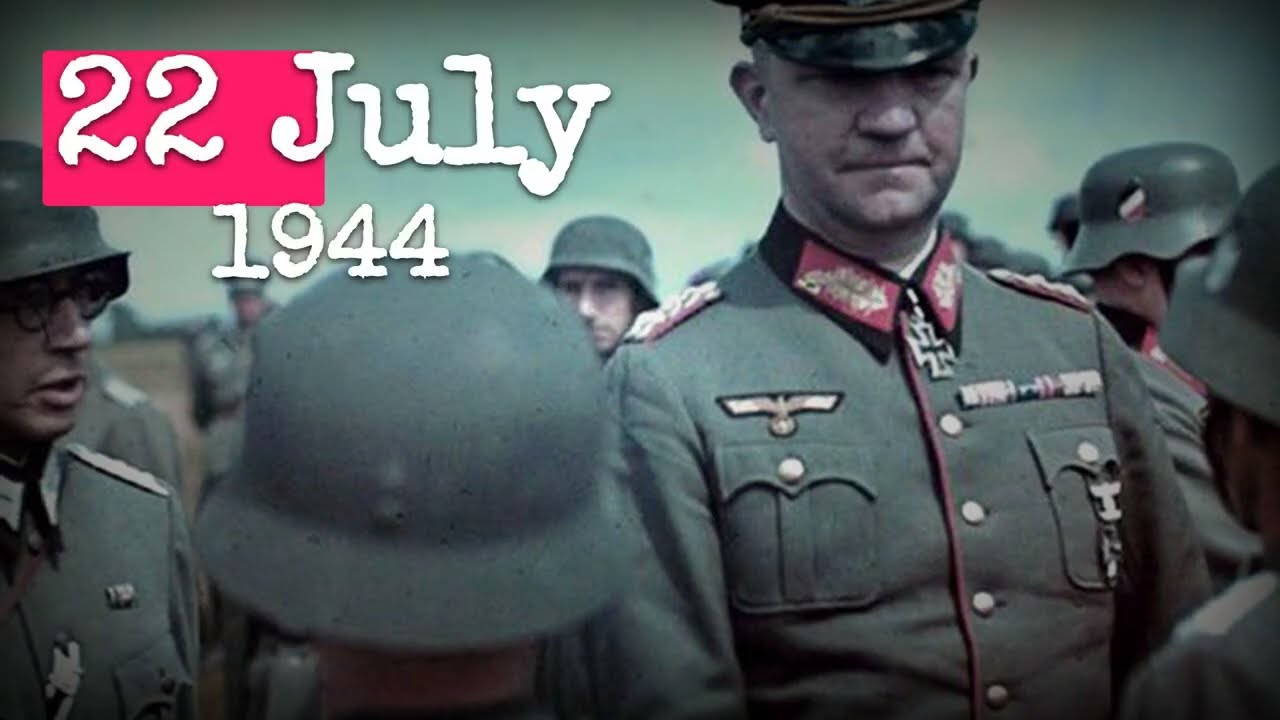
On July 22, 1944, he was arrested by Heinrich Himmler, stripped of his rank, and thrown into prison.
For months, the Gestapo investigated, but they could not prove that Fromm had actively participated in the conspiracy.
Instead, on March 7, 1945, he was convicted of cowardice before the enemy for failing to suppress the conspiracy more forcefully, a charge that acknowledged his knowledge of the plot without implicating him in its execution.
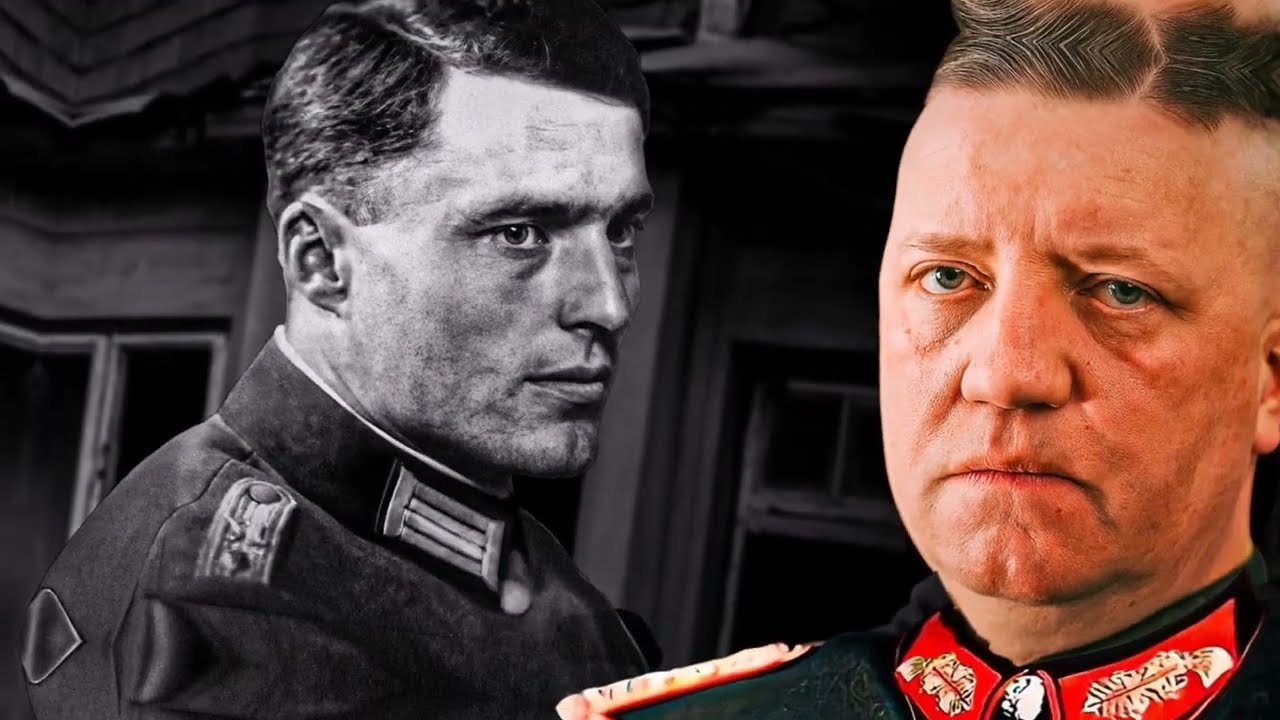 The sentence was death, and Hitler personally commuted the method from hanging with piano wire to a more honorable death by firing squad.
Five days later, Friedrich Fromm was executed, his life ending in a hail of bullets just two months before the Third Reich itself would cease to exist.
For his daughter, Helga Anna Clara Hela Fromm, the execution was the beginning of a harrowing new chapter.
Born in 1913 in Naumburg, Helga had watched her father rise through the ranks of the German military, a witness to the transformation of her nation from empire to republic to dictatorship.
She was an educated woman for her time, having studied geography, history, and world economics at the universities of Rostock and Berlin, and she had worked as a secretary at IG Farben, the chemical conglomerate infamous for its production of Zyklon B.
She married Hans Günter Hanka, and together they built a life that included an estate in West Prussia, a region that had been re-annexed by Nazi Germany following the invasion of Poland in 1939.
For Helga and her husband, the estate represented prosperity and status, a foothold in the eastern territories that the Nazi regime claimed as German living space.
By early 1945, that life was disintegrating as the Soviet offensive pushed inexorably westward.
German civilians in the eastern territories faced a desperate choice: flee westward and risk the chaos of the collapsing front, or remain and face the advancing Red Army.
Reports of Soviet atrocities, some genuine and some exaggerated by Nazi propaganda, spread panic through the population, triggering one of the largest forced migrations in human history.
For Helga, the choice was made more urgent by her father’s arrest and execution, as the Fromm name now carried the taint of treason in the eyes of the Nazi regime.
The Gestapo had already demonstrated its willingness to apply Sippenhaft, the doctrine of collective family punishment, to the relatives of the July 20th conspirators, arresting families and confiscating their property.
Helga could not know whether her father’s case would trigger similar reprisals, so in the final weeks of the war, she gathered her children and fled westward, leaving behind the estate in West Prussia and the life she had built.
The roads were clogged with refugees, horsedrawn carts, automobiles, and people on foot streaming westward in endless columns, while Allied bombers struck rail lines and bridges.
Temperatures plummeted, food was scarce, and disease spread through the refugee columns, with thousands dying of exposure, starvation, or Soviet attack.
Helga and her children managed to reach Brandenburg in the heart of Germany as the war drew to its close, but May 1945 brought the German surrender, not peace.
Germany was divided into four occupation zones, and Brandenburg fell within the Soviet zone, placing Helga and her children under the authority of the Soviet military government.
For the next three years, they lived in the Soviet zone, enduring harsh conditions as the region was systematically stripped of its industrial equipment and resources as reparations.
Food was rationed and often unavailable, the economy collapsed, and the black market flourished as the formal economy disintegrated.
Former members of the Nazi party and their families faced particular scrutiny, and Helga’s father had been a Generaloberst, one of the highest ranks in the German military.
His execution by the Nazi regime did not necessarily absolve the family of association with the war effort in the eyes of Soviet authorities, who were understandably skeptical of Germans claiming to have been secret opponents of the regime.
In 1948, Helga made a fateful decision, taking her family and crossing into the British occupation zone, settling in Lüchow-Dannenberg in Lower Saxony.
The move transformed the family’s status, as they reunited with her husband Hans Günter Hanka, who had made his way to the British zone separately.
In the west, they became officially recognized as expellees, Germans who had been driven from their homes in the former eastern territories.
Millions of such refugees had flooded into the western occupation zones, and by 1950, over seven and a half million expellees had settled in West Germany.
Many lived in camps for years, others crowded into requisitioned housing, often in unheated attics or converted barns, facing discrimination from local populations who resented the competition for scarce resources.
The experience of expulsion shaped Helga’s post-war identity in ways that would define her political career.
In the early 1950s, she became involved with the Bund der Heimatvertriebenen und Entrechteten, the League of Expellees and Disenfranchised, known as the BHE.
This political party had been founded in Schleswig-Holstein in January 1950 to represent the interests of expellees and other Germans who felt disenfranchised by the postwar settlement.
The party quickly spread across the country, tapping into a vast reservoir of grievance and displacement, and at the federal election of 1953, it won 5.9% of the vote and entered the Bundestag, becoming a coalition partner in Chancellor Konrad Adenauer’s government.
The party represented a complex mix of legitimate grievances and troubling undercurrents, as many of its leaders had been members of the Nazi party, with several having served in the SS or SA.
 The party called for compensation for expellees, an end to denazification, and in some cases the return of German territory lost in 1945, yet it also represented millions of ordinary Germans who had lost everything and sought a voice in the new democracy.
Helga Hanka rose through the ranks of expellee politics, becoming deputy state chairwoman of the working group of liberal parents and educators and a member of its federal advisory board.
Her political trajectory carried her into the Lower Saxony state parliament, the Landtag, where she served from May 6, 1955, to June 20, 1970, spanning five consecutive electoral terms.
This fifteen-year tenure in elected office made her one of the longer-serving members of the Lower Saxony Parliament of her era.
Initially, she represented the All-German Block and League of Expellees and Disenfranchised, as the party was formerly known after 1952, but as the party declined in the late 1950s and early 1960s, its members faced a choice.
The BHE had failed to clear the 5% threshold in the 1957 federal election, losing all its seats in the Bundestag, as the economic miracle of the Wirtschaftswunder was reducing the urgency of expellee grievances.
Younger Germans had no memory of the eastern territories, and the party’s membership was aging and shrinking, with some former BHE members drifting toward the far right while others sought accommodation with the major democratic parties.
In December 1961, Helga Hanka joined the Free Democratic Party, the FDP, aligning herself with West Germany’s liberal tradition.
The FDP occupied the center of West German politics, sometimes governing in coalition with the Christian Democrats, sometimes with the Social Democrats, and for an expellee politician like Helga Hanka, joining the FDP represented integration into the mainstream of West German democracy.
From July 1968 to June 1969, she served as deputy chairman of the FDP parliamentary group in the Lower Saxony Landtag, one of the more prominent positions available to a state legislator.
Her political career reflected the broader transformation of West German society in the postwar decades, as the expellee question, so urgent in the 1950s, gradually faded as a political force.
The economic miracle brought prosperity that helped integrate refugees into mainstream society, as expellees found jobs, built homes, and started businesses.
The generation born after 1945 had little memory of the lost eastern territories and little interest in pursuing claims to lands that had become part of Poland, the Soviet Union, or Czechoslovakia.
The BHE collapsed as a political force, its members absorbed into the major parties or marginalized into political insignificance, yet Helga Hanka’s commitment to representing expellees remained constant throughout her fifteen years in the Landtag.
What of her personal relationship with her father’s legacy?
The historical record offers few direct statements, but the Documentation Center for Flight, Expulsion and Reconciliation in Berlin holds materials related to Helga Hanka’s life, including private correspondence with her mother and files on the family estate in West Prussia.
These materials suggest a woman who maintained close ties with the remaining members of her family while building a new identity in West Germany.
She did not renounce her father, but neither did she make his memory the center of her public identity, as her political career focused on the expellees, on the practical questions of compensation, housing, employment, and integration, rather than on the contested legacy of the July 20th plot of 1944.
The broader historiography of Friedrich Fromm has undergone significant evolution since 1945.
For decades, Fromm was remembered primarily for his actions on the night of July 20, 1944, particularly his hasty execution of the conspirators, and he was dismissed as an opportunist, a fence-sitter who tried to eliminate witnesses to his own complicity when the plot failed.
The verdict seemed clear: Fromm was neither a hero of the resistance nor a loyal servant of the regime, but merely a self-serving careerist who failed at the decisive moment and then panicked.
In 2005, the military historian Bernhard R. Kroener of the University of Potsdam published a monumental biography that challenged this simplistic narrative.
The book, titled “Der starke Mann im Heimatkriegsgebiet,” ran to over a thousand pages and drew on more than a decade of research in archives across Germany and beyond.
Kroener reconstructed Fromm’s entire life, from his origins in Charlottenburg through his rise in the military, his role in German rearmament, his service during the war, and his final months in prison awaiting execution.
The biography revealed a more complex figure than the caricature suggested, showing that Fromm had been a talented organizer, one of the key figures responsible for the rebuilding of the German military in the 1930s after the restrictions of the Versailles treaty.
He had advocated for ending the war as early as 1941 when most of the Nazi leadership refused to acknowledge the possibility of defeat, and his relationship with the conspirators was complicated by genuine sympathy for their goals combined with profound skepticism about their chances of success.
Kroener argued that Fromm was neither a coward nor an opportunist in any simple sense, but a man trapped by circumstances and his own indecision.
Kroener’s biography did not absolve Fromm of responsibility, nor did it transform him into a resistance hero, but it restored a measure of complexity to a figure who had been reduced to a single night’s panic-driven decisions.
The subsequent publication of Fromm’s service journals, a project Kroener continued with colleagues at the University of Potsdam, added further depth to the historical picture.
These journals, kept by Fromm’s chief of staff and discovered in the Imperial War Museum in London after being deposited there by British intelligence after the war, documented the daily operations of the replacement army from 1938 to 1943.
They revealed the strains and pressures of maintaining the German war machine, the growing exhaustion of resources, the impossible demands from the front, and the mounting desperation of the final years.
 For the Fromm family, this historiographical evolution offered a more nuanced understanding of the man they had lost.
Friedrich Fromm was neither the simple villain of postwar condemnation nor the secret hero of resistance mythology.
He was a product of his time, a professional soldier who served a criminal regime, who recognized its crimes, who advocated for ending the war, who knew of the conspiracy against Hitler, who failed to report it, who failed to join it decisively, and who ultimately fell victim to the regime’s own paranoid violence.
His family bore the consequences of that complicated legacy.
Helga Hanka died on January 25, 2004, at the age of 90.
She had outlived the Third Reich by nearly six decades, watching Germany divided and reunified, seeing the Berlin Wall rise in 1961 and fall in 1989, and witnessing the Cold War from its beginnings to its end.
She had participated in the rebuilding of German democracy as an elected representative in Lower Saxony for fifteen years, and her children and grandchildren grew up in a Germany that had confronted its past, however imperfectly, and built a prosperous democratic future on the ruins of dictatorship and war.
The Fromm family’s story differs markedly from those of other Nazi-era families whose names became synonymous with the regime’s crimes.
Friedrich Fromm was not Hermann Göring, the Reichsmarschall whose daughter Edda defended her father’s memory until her death in 2018 and whose grand-niece Bettina chose sterilization to end the line.
He was not Heinrich Himmler, the Reichsführer-SS whose daughter Gudrun spent her life supporting former SS members through organizations like Stille Hilfe and never expressed remorse for her father’s crimes.
Fromm occupied a more ambiguous position in the Nazi hierarchy, serving the war machine at its highest levels, knowing about the conspiracy to 𝓀𝒾𝓁𝓁 Hitler and doing nothing to prevent it until the moment of failure.
He was executed by the regime he served, not for opposing it, but for failing to serve it with sufficient zeal.
This ambiguity shaped the family’s postwar experience, as they did not face the intense scrutiny applied to families directly connected to the Holocaust’s architects.
They were not subjected to Sippenhaft in the manner of the Stauffenberg children, who were taken from their families and placed in orphanages under assumed names.
They did not become symbols of either Nazi evil or German resistance, but instead became part of the vast mass of ordinary Germans who had to navigate the postwar landscape bearing names and histories that connected them to the catastrophe without defining them entirely by it.
The experience of Helga Hanka’s political career illustrates a broader phenomenon in postwar German history, the integration of expellees, former Nazi party members, and their families into West German democracy.
This was a complex process that unfolded over decades, with some, like many BHE leaders, maintaining connections to far-right ideologies and seeking to rehabilitate aspects of the Nazi era, while others like Helga Hanka in her later career with the FDP found accommodation within the mainstream democratic parties.
The Federal Republic’s success in building a stable democracy depended in part on incorporating these populations while simultaneously establishing clear boundaries against the recurrence of totalitarianism.
The Documentation Center for Flight, Expulsion and Reconciliation in Berlin now holds the Hanka family papers as part of its mission to preserve the stories of Germans displaced after World War II.
These materials include private correspondence with Helga Hanka’s mother, documents related to the family estate in West Prussia that was lost to flight and expulsion, and records of her postwar political activities.
They offer a window into how one family navigated the transition from war to peace, from east to west, from the chaos of the Third Reich’s collapse to the stability of the Federal Republic.
Friedrich Fromm’s execution at Brandenburg-Görden Prison on March 12, 1945, marked the end of his life, but not the end of his story.
His family carried forward, adapting to circumstances that no one could have predicted in the chaos of the war’s final weeks.
His daughter built a career in democratic politics, representing the interests of expellees in a parliament that would have been unimaginable under the regime her father served.
His name, once associated with the ambiguities of military service under dictatorship, faded from public memory as Germany rebuilt itself around new foundations.
The Fromm family’s experience mirrors that of countless German families who had to reckon with legacies shaped by choices made under extraordinary circumstances.
Some embraced denial, refusing to acknowledge the crimes of the regime their relatives served.
Some sought confrontation with the past, writing books, giving interviews, and sometimes taking dramatic steps to distance themselves from their family history.
Most simply moved forward, building new lives in a changed world while carrying the weight of history in private.
Their stories remind us that the aftermath of totalitarianism extends far beyond the fall of regimes and the execution of leaders, reaching into the lives of ordinary people, shaping families and communities for generations after the guns have fallen silent.